The Grand Bleu de Gascogne: A Rare and Regal French Scenthound
Are you seeking a unique, majestic hound with an exceptional nose and the athleticism to hunt tirelessly all day? The Grand Bleu de Gascogne may be the dog of your dreams. But be warned, this is no ordinary family pet. This rare French breed has the independent spirit and intense exercise needs that make them a challenge for the casual owner. Let‘s dive into what makes the Grand Bleu de Gascogne so special.
Noble Heritage as a Hunting Hound
With a history dating back to the early 20th century in southwestern France, the Grand Bleu de Gascogne was developed by crossing the Gascon Saintongeois with the Bleu de Gascogne. The intent was to create a powerful scenthound well-suited for hunting large game like deer and wild boar in the mountainous terrain of the Pyrenees.
Renowned for their agility, endurance, and keen nose, the Grand Bleu has long been a favorite of hunters in France. Their stamina and determination allows them to track game for miles over rugged ground. While still uncommon, they were recognized by the FCI in 1963. Today, they remain a highly coveted hunting breed in their homeland.
A Nose for the Hunt
The Grand Bleu de Gascogne is a master of scent, thanks to their large, prominent nose and deep chest that allows for maximum lung capacity. Their sense of smell is estimated to be 40 times more powerful than a human‘s, making them exceptional at tracking wounded game over vast distances.
In the field, the Grand Bleu works methodically and independently to unravel even the faintest scent trails. They have a unique voice described as sonorous and deep, which they use to communicate their progress to the hunters following behind. Once they‘ve cornered their quarry, they use their powerful jaws and fearless nature to hold the animal at bay until the hunter arrives.
Training a Grand Bleu for the hunt is a process that begins early. From a young age, they‘re exposed to the scents of game animals and taught to track caged rabbits or artificial lures. As they mature, they graduate to more challenging quarry and learn to work in conjunction with a pack and respond to horn calls from the hunter. Frequent training sessions are key to honing their skills and keeping them sharp outside of hunting season.
Striking Appearance and Stature
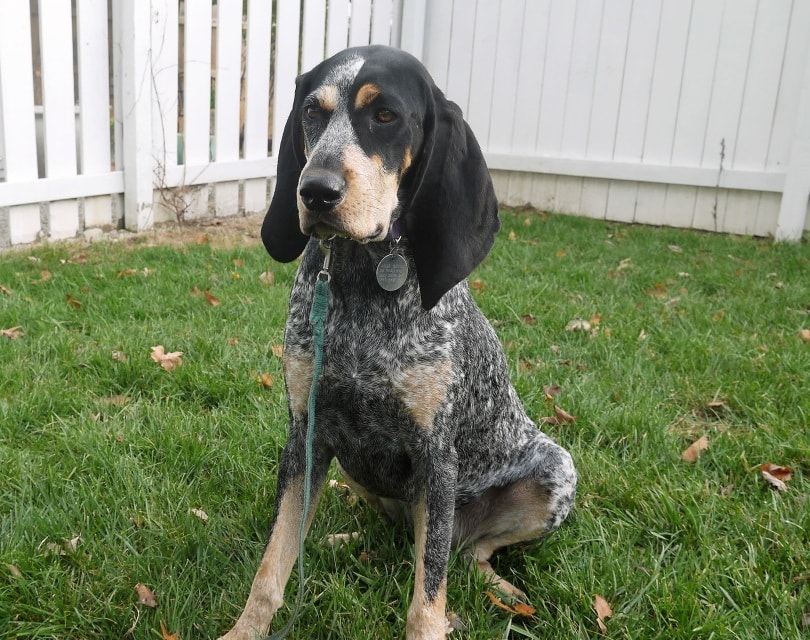
One glance reveals the Grand Bleu de Gascogne is no lap dog. Males stand an imposing 25-28 inches at the shoulder, with females only slightly smaller at 24-26 inches. Weighing in at 75-95 pounds, they have a muscular, athletic build designed for long days in the field.
The breed‘s short, dense coat is a striking mottled pattern of black and white. The long, velvety ears frame a noble head with an elongated muzzle perfect for scenting. Deep-set brown or hazel eyes convey a soulful, gentle expression. Powerful jaws hint at their ferocity when pursuing game.
Independent Spirit and Strong Drive
The Grand Bleu de Gascogne is known for having an independent streak. They are intelligent problem solvers, but that doesn‘t necessarily make them easy to train. Hounds are bred to work at a distance from humans, making decisions on their own. This can translate to a stubborn attitude and selective hearing when it comes to obeying commands.
Couple this independent spirit with an extremely high prey drive, and you have a dog that lives to follow a scent trail. They become so focused on a scent that they tune out everything else. Recall training is a must, or they‘re liable to wander off after an interesting smell, deaf to your calls.
While generally even-tempered and not aggressive towards people, the Grand Bleu de Gascogne has strong instincts to pursue game. They require early and extensive socialization to coexist peacefully with small pets. Even then, their urge to hunt can kick in unexpectedly, so caution is warranted.
Providing an Outlet for Boundless Energy
The Grand Bleu de Gascogne is an athletic working dog, through and through. Bred to hunt all day, they have immense stamina and energy that needs an outlet. Simply put, this is not an ideal breed for the couch potato. Apartment life will not suit these large hounds who bark and bay with excitement.
They require vigorous daily exercise, more than just a walk around the block. A large, securely fenced yard is a must, as they‘ll need space to run and burn off steam. Even better is the opportunity to pursue their natural hunting instincts with trackwork or field trials. Without a job to occupy their keen mind and boundless energy, they can become bored and destructive.
When not out hunting or exploring, the Grand Bleu de Gascogne is a calm, affectionate companion. They bond closely with their families and are quite gentle with children when properly socialized. While not outright clingy, they do best when not left alone for long periods.
Breed Rarity and Population
One of the most notable things about the Grand Bleu de Gascogne is their scarcity, even in their native France. According to the SCC (French Kennel Club), only about 300-400 puppies are registered each year, making them one of the rarest of the French hound breeds.
Several factors contribute to their limited numbers. Historically, the Grand Bleu has been confined to a relatively small region in southwest France. As a hunting breed, their breeding has been tightly controlled to maintain working ability rather than to produce pets. And in an increasingly urbanized world, fewer hunters are able to provide the time and space these large, energetic hounds require.
Despite their rarity, breed enthusiasts are dedicated to promoting and preserving the Grand Bleu de Gascogne. The Club du Bleu de Gascogne, Gascon Saintongeois & Ariegeois is the official breed club in France, where they organize field trials, conformation shows, and other events to showcase the breed‘s capabilities. In the United States, the Grand Bleu de Gascogne Club of America serves a similar role, though membership is small given the breed‘s scarcity outside of Europe.
Health and Lifespan
The Grand Bleu de Gascogne is generally a robust, long-lived breed, with an average lifespan of 10-14 years. As with many large, deep-chested breeds, bloat is a concern. Avoiding strenuous exercise right after meals and feeding smaller portions throughout the day can help mitigate the risk.
Hip dysplasia is another potential issue, given the breed‘s size and active nature. Responsible breeders screen their breeding stock to help prevent passing on this hereditary condition. Keeping your Grand Bleu lean and well-muscled with regular exercise can also reduce the impact of hip dysplasia if it does develop.
Other health concerns to be aware of include ear infections, given the breed‘s long, floppy ears that can trap moisture. Regular cleaning and checking can prevent painful infections from taking hold. Occasionally, Grand Bleus may develop a condition called ectropion, where the eyelid rolls outward. Surgery can correct this issue if it causes problems.
Overall, Grand Bleu de Gascognes are a relatively healthy breed. With proper nutrition, exercise, and preventive care, they can bring their trademark energy and enthusiasm to your life for many years. As with any breed, it‘s important to work with a reputable breeder who health tests their dogs and to keep up with routine veterinary check-ups.
Is the Grand Bleu de Gascogne Right For You?
The Grand Bleu de Gascogne is a magnificent animal, but not the right fit for the majority of households. Their exercise requirements, prey drive, and potential for stubbornness make them a poor choice for novice owners. They need an experienced handler who understands hound behavior and is committed to training and plenty of daily activity.
Hunters looking for an agile, tenacious, committed working partner may find their ideal match in a Grand Bleu. With their keen nose, boundless stamina, and courage, these hounds thrive when given a meaningful job to pursue their instincts. When those needs are met and they‘ve had plenty of exercise, they make calm, devoted companions.
If you‘re up for the challenge and can provide an outlet for their immense drive and energy, you may find the Grand Bleu de Gascogne to be a once-in-a-lifetime dog. Their rarity, striking appearance, and incredible capabilities in the field make them a treasured companion for the dedicated owner. With structure, training, and room to run, they‘ll be your majestic, determined partner for all of life‘s adventures.
Breed Comparison Chart:
| Breed | Height (in) | Weight (lbs) | Coat Type | Prey Drive | Trainability | Energy Level |
|———————–|————-|————–|—————|————|————–|————–|
| Grand Bleu de Gascogne| 24-28 | 75-95 | Short, dense | High | Moderate | High |
| Basset Bleu de Gascogne | 13-15 | 35-40 | Short, dense | High | Moderate | Moderate |
| Petit Bleu de Gascogne | 19-22 | 45-55 | Short, dense | High | Moderate | High |
| Bloodhound | 23-27 | 80-110 | Short, dense | High | Moderate | Moderate |
Supporting Grand Bleu de Gascogne Rescue
As a rare breed, the Grand Bleu de Gascogne is not often found in rescue. However, like all breeds, they can occasionally fall on hard times and need a new home. Breed-specific rescues are often the first line of support for these hounds.
Gina Smith, breed rescue coordinator for the Grand Bleu de Gascogne Club of America, explains, "We typically see only a handful of Grand Bleus come into rescue each year, but we feel a responsibility to be there for every one of them. These are not easy dogs to rehome, given their size, energy, and drive. It takes a special adopter to provide the structure and exercise they need."
When a Grand Bleu does come into rescue, the GBGCA works to place them in an experienced foster home that can assess their personality, provide training if needed, and help them decompress. They then carefully screen potential adopters to find a good match. "Our goal is always to set both the dog and the adopter up for success," says Smith. "We‘d rather take our time and find the right fit than rush into a placement that won‘t stick."
If you‘re interested in adopting a Grand Bleu de Gascogne, be prepared to wait patiently for one to become available. In the meantime, you can support rescue efforts by donating to the GBGCA rescue fund or volunteering your time or skills. Even if you can‘t bring a Grand Bleu into your home, you can still play a vital role in protecting this rare and remarkable breed.