The Rottle: Your Guide to the Loyal and Lovable Rottweiler-Poodle Mix
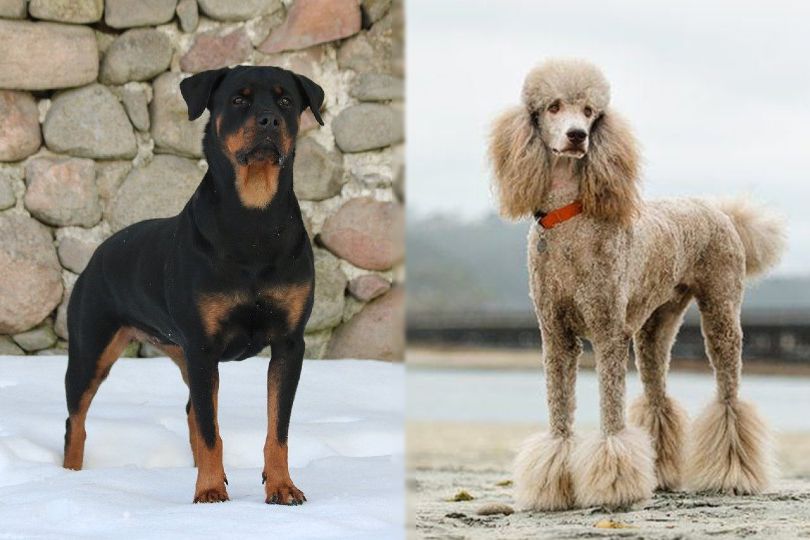

Are you craving canine companionship that combines the courage of a Rottweiler with the cleverness of a Poodle? If so, the Rottle may be your dream dog! This designer breed has been wagging their way into hearts and homes since they first appeared in the 1980s. With their teddy bear looks, keen intelligence, and unwavering loyalty, Rottles are quickly gaining fans in the dog world.
Whether you call them Rottie Poos, Rottie Doodles, or Rottle Poos, these hybrid hounds are anything but average. But is the Rottle the right dog for you and your family? Let‘s dive in and discover all you need to know about these remarkable Rottweiler-Poodle mixes!
The History of the Rottle
The Rottle is a relatively new hybrid dog breed, with the first intentional crosses happening in the United States during the 1980s. The goal was to create a dog with the protective instincts, trainability, and muscular build of a Rottweiler combined with the intelligence, low-shedding coat, and reduced genetic health issues of a Poodle.
While Rottweilers have an unfair reputation as aggressive, they are actually very trainable and excel as police and military K-9s, service dogs, and family guardians. Standard Poodles, despite the prissy show cut, were originally bred as hunting companions and are known for their smarts and athletic ability.
By crossing these two purebreds, the hope was to produce a dog with the best qualities of each parent breed and reduce the incidence of certain health problems. As with any mixed breed dog, it‘s impossible to predict exactly how the Rottie and Poodle genes will combine. But with luck and careful breeding, the result is a loyal, loving, and low-shedding companion.
Rottle Characteristics
How Big Do Rottles Get?
The Rottle‘s adult size can vary quite a bit depending on the size of their Poodle parent and their unique genetic makeup. Most weigh between 60-90 pounds with a height of 16-27 inches at the shoulder. Males are usually larger than females.
Here is a breakdown of the average size ranges for Rottles:
| Sex | Height | Weight |
|---|---|---|
| Male | 22-27 inches | 70-90 pounds |
| Female | 16-22 inches | 60-80 pounds |
Keep in mind that these are just averages and individual Rottles may fall outside these ranges. To get a better idea of your puppy‘s adult size, look at the size of their parents.
What Do Rottles Look Like?
Rottles are usually sturdy, muscular dogs with a somewhat squarish Rottweiler-like head and body but a softer, curlier Poodle coat. Their ears may be floppy like a Poodle‘s or upright like a Rottie‘s. Most have the classic black and tan Rottweiler markings on their face, chest, and legs.
Coat colors and patterns vary depending on the parents but common colors include:
- Black
- Black and tan
- Chocolate
- Chocolate and tan
- Blue
- Red/apricot
- Parti (white with patches of another color)
- Phantom (tan points with another main body color)

The Rottle‘s coat texture and length also varies. Some have the short, dense coat of their Rottweiler parent while others inherit the longer, looser curls of the Poodle. Wavy fleece coats that fall somewhere in between the two are also common. In general, expect your Rottle‘s coat to be longer than a Rottie‘s but not as long or curly as a Poodle‘s.
Rottle Temperament and Personality
Rottles are known for forming incredibly strong bonds with their humans. These devoted dogs want nothing more than to be with their families and will follow you from room to room. They can be aloof or suspicious with strangers, an instinct inherited from their Rottweiler forebears who were bred to be guardians.
With proper socialization, this wariness usually manifests as alert watchdog behavior rather than aggression. Rottles have a deep bark that sounds scary enough to make intruders think twice! But with people they know and trust, Rottles are big softies who adore getting attention and don‘t realize they‘re too large to be lapdogs.
The Poodle genes give Rottles a high intelligence and keen perception of human emotion. They are very in tune with their owners and sensitive to tone of voice and body language. This makes them easy to train and a good fit for advanced obedience, agility, and other dog sports. It also means they don‘t respond well to harsh corrections or an angry tone. Positive reinforcement with treats and praise works much better.
Most Rottles are good with kids, especially when raised with them. They are usually gentle and patient, although their large size means they can accidentally knock small children down in their enthusiasm. Some can be mouthy and nippy as puppies but this is normal for retriever and guardian breeds. Consistent training and providing appropriate chew toys can help them grow out of this stage.
Rottles typically get along well with other dogs, particularly if socialized with them from a young age. They tend to be most comfortable with dogs of a similar size and play style. Because of their Rottweiler heritage and breeding as livestock guardians, some Rottles may have a high prey drive and view cats and other small animals as something to chase. Early exposure and training can help minimize this but Rottles with a strong prey drive may never be fully trustworthy around small pets.
Rottle Training
The saying "a tired dog is a good dog" is especially true when it comes to Rottles! These intelligent, high-energy dogs need a job to do or a way to burn off steam or they can become bored and destructive.
Mental stimulation is just as important as physical exercise. Puzzle toys, games, and training sessions engage their eager minds and help prevent problem behaviors. Obedience training is a must and many Rottles excel at advanced skills like scent detection, tracking, and even herding. Getting involved in a dog sport together is a great way to build your bond while keeping your Rottle happy and out of trouble.
Like all dogs, Rottles do best with positive reinforcement training using ample treats and praise. A harsh correction will make them shut down. They also don‘t respond well to boring, repetitive training. Keep sessions short and fun, gradually increasing the difficulty as your Rottle masters each skill.
Rottles can have a stubborn streak, especially as adolescents testing their limits. Be firm and consistent in your expectations. Once your Rottle knows a command, insist that they obey it before getting what they want, whether that‘s their meal, a toy, or going outside. This establishes you as the leader in a loving way.
Early socialization is essential for Rottles to ensure they grow up to be confident, well-adjusted dogs. From 8-16 weeks old, they are most open to new experiences. Take them to puppy playtime, enroll in a socialization class, invite friends over, go on car rides, walk on different surfaces — expose them to as many sights, sounds, people and other dogs as possible.
Proper socialization doesn‘t mean overwhelming your puppy or forcing them into situations they find frightening. Let them approach new things at their own pace and never punish them for being scared. The goal is pleasant exposure without pressure.
Rottle Exercise Needs
As mentioned earlier, Rottles are high-energy dogs that need extensive daily exercise to be calm and content. Expect to provide at least 60-90 minutes per day broken up into multiple sessions.
A few 30 minute walks won‘t cut it — Rottles need more vigorous and engaging exercise like:
- Off-leash romps in a securely fenced area
- Hikes or jogs alongside a bike
- Play sessions with other dogs
- Swimming (many Rottles love the water!)
- Fetch, tug, and other active games
- Dog sports like rally, agility, flyball, etc.

If your Rottle doesn‘t get enough physical and mental stimulation, that pent-up energy will likely come out in undesirable ways like barking, digging, or destructive chewing. A tired Rottle is a well-behaved Rottle!
Because of their size and activity level, Rottles are usually too much dog for apartment living. They do best with a securely fenced yard to romp in. If you don‘t have an enclosure, long walks on leash and regular trips to the dog park can suffice. Just be sure your Rottle has excellent recall and manners before letting them off leash in public.
Rottle Health
Rottles are generally healthy dogs but like all breeds, they can be prone to certain genetic health conditions. Working with a responsible breeder who health tests their dogs is essential.
According to a survey from the Rottle Club of America, the most common health issues reported by Rottle owners were:
- Hip dysplasia (18% of Rottles)
- Elbow dysplasia (7%)
- Hypothyroidism (6%)
- Von Willebrand‘s disease (5%)
- Epilepsy (4%)
- Progressive retinal atrophy (PRA) (2%)
- Heart murmurs (2%)
Of course, this doesn‘t mean your Rottle will develop these problems. It just means the breed as a whole has a higher incidence compared to the general dog population. Many Rottles live long, healthy lives free of major medical issues.
To increase your odds of getting a healthy pup, choose a Rottle breeder who does the following health tests on their breeding stock:
- Hip dysplasia: PennHIP or OFA evaluation
- Elbow dysplasia: OFA evaluation
- Eyes: OFA eye exam to check for PRA and other heritable eye diseases
- Heart: Exam by a veterinary cardiologist
- von Willebrand‘s disease: DNA test
- Hypothyroidism: Thyroid panel
In addition to picking a pup from health-tested parents, keeping your Rottle at a healthy weight, feeding a quality diet, providing regular exercise, and scheduling annual vet checkups are key to ensuring they live the longest, healthiest life possible.
Rottle Grooming and Care
One of the many things that attracts people to Rottles is their low-shedding coats. While no dog is truly hypoallergenic, most Rottles shed far less than the average canine. They‘re a great choice for neat freaks or those with mild dog allergies.
How much time you spend on coat care will depend on whether your Rottle inherits more of the Rottweiler‘s short double coat or the Poodle‘s longer, curlier single coat.
Shorter coats tend to be very wash-and-wear: a good brushing once or twice a week and a monthly bath is usually enough to keep them looking sharp. Longer, fluffier coats prone to matting will need daily brushing and may require professional grooming every 4-8 weeks to prevent painful mats and tangles. Either way, regular maintenance is much easier than dealing with a matted mess!
Rottles with longer coats may also need their facial fuzz trimmed periodically to keep it out of their eyes. Keeping the hair around their ears plucked or shaved can also help prevent ear infections, as can weekly ear cleaning with a vet-approved solution.
No matter the coat type, all Rottles need their nails trimmed regularly to prevent painful overgrowth. Dental care is also important. Daily toothbrushing is ideal but if your schedule is tight, aim for a minimum of three times per week, supplemented by dental chews, chew toys, and an annual professional dental cleaning.
Is a Rottle Right For You?
Now that you‘ve learned all about the remarkable Rottle, how do you decide if one would be a good fit for your lifestyle? Consider the following factors:
You may be a great match for a Rottle if you:
- Want a medium-to-large dog with protective instincts
- Enjoy an active lifestyle and spending lots of time outdoors
- Are willing to provide plenty of daily exercise and mental stimulation
- Have experience with intelligent, high-energy dogs
- Don‘t mind regular brushing and occasional trips to the groomer
A Rottle is probably not the right dog for you if you:
- Live in an apartment or don‘t have a securely fenced yard
- Work long hours and can‘t bring your dog along
- Prefer a couch potato canine or have limited mobility
- Want a dog that can reliably be off leash
- Have young children, cats, or other small pets
- Are a novice dog owner
Of course, every Rottle is an individual. Some are more energetic than others, some have higher prey drives, and some are more easygoing with strangers. Talking to breeders and owners about their experiences can give you a better idea of what to expect.
If you feel confident that a Rottle would be a good fit, your next step is finding a responsible breeder or rescue organization. Avoid pet stores and online ads, as these puppies often come from puppy mills. Instead, ask for referrals from your vet or local breed clubs.
Responsible breeders health test their dogs, provide a written contract and health guarantee, and insist on meeting potential buyers in person. They should allow you to tour their kennel, meet the puppies‘ parents, and ask plenty of questions.
If you‘re open to a Rottle that‘s past the puppy stage, consider adopting from a breed-specific rescue. Most are young dogs who have lost their homes due to no fault of their own and just need a second chance at a loving family.
Living With a Rottle
Adding a Rottle to your family is the beginning of a beautiful friendship but it also comes with significant responsibility. These unique dogs need dedicated owners willing to provide lifelong care and training. In return, Rottles give their hearts fully and remain steadfast in their devotion.
Living with a Rottle is an active lifestyle. Be prepared for wet kisses in the morning, romps in the park after breakfast, games of tug and training sessions throughout the day, and snuggles on the couch each evening. Rottles thrive on human companionship and won‘t be content with a life spent alone in the backyard.
Your Rottle needs you to be their leader, their playmate, their hiking buddy, and their best friend. When you make that commitment, you‘ll be blessed with an incredible dog who fills your days with laughter, love, and the very best kind of chaos.
Raising a Rottle from puppyhood through their senior years isn‘t always easy but for dog lovers up to the challenge, there is no greater joy or privilege. If you‘re ready to welcome a Rottle into your heart and home, you‘ll never walk alone!