The Ultimate Guide to Grooming Your Beagle at Home
As a veterinarian and lifelong beagle lover, I know that grooming is about far more than just appearances. Regular coat maintenance and hygiene care are essential for the comfort, health and happiness of this endearing breed. While the beagle‘s short, practical coat is one reason they make such great family companions, these merry little hounds still need a consistent grooming routine to look and feel their best.
In this comprehensive guide, I‘ll walk you through everything you need to know to tackle beagle grooming with confidence at home—from the tools you need to step-by-step instructions for coat brushing, bathing, ear cleaning, and more. Whether you have a new beagle puppy or a senior hound, keeping on top of grooming will help your dog stay healthy, comfortable and beautiful at every stage.
Beagle Coat Basics
Before we dive into the brushing process, let‘s cover some important facts about the beagle coat:
-
Beagles have a short, dense double coat made up of a hard, protective outer coat and a soft, insulating undercoat. This weatherproof coat allowed them to comfortably work outdoors in all conditions as scent hounds.
-
They are moderate shedders year-round, but will heavily "blow coat" seasonally in the spring and fall as their coat adapts to changing temperatures. During these shed cycles, you may find hair everywhere!
-
Beagle puppies are born with a single soft, fuzzy coat that is replaced by the adult double coat around 6-12 months of age. The puppy coat requires less intensive grooming than the adult coat.
-
The most common beagle coat colors are the classic tricolor (black, white and tan) and the red and white (ranging from lemon to deep rust red). Ticking and other white markings may also be present. Color does not affect grooming needs.
-
Due to their double coat, beagles should never be shaved down except under the advice of a veterinarian (such as for a surgical procedure). Shaving can permanently damage the coat and actually make temperature regulation more difficult.
Brush for Success

Regular brushing is the foundation of a healthy beagle coat. (Image source: Pixabay)
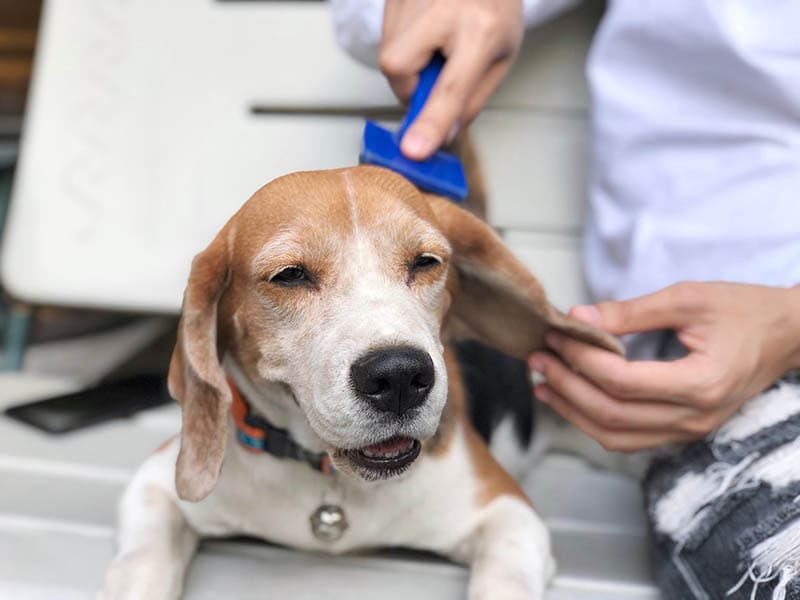
Brushing your beagle at home is the single most important thing you can do to keep their coat and skin in top condition. Not only does it remove debris, dead hair and tangles, it also stimulates blood flow and spreads healthy oils through the coat.
Aim to brush your beagle at least 1-3 times per week, and up to daily during periods of heavy shedding. Frequent brushing is better than longer, more spread out sessions. Just 5-10 minutes of brushing a few times a week can make a big difference in the amount of hair you find on your furniture and clothes.
Tools of the trade
Using the right brushes and grooming tools makes all the difference in your beagle‘s coat quality and in making the experience more enjoyable for you both. Here are my top picks for every beagle grooming kit:
-
Slicker brush: This is your primary beagle brushing tool for removing loose hair and preventing mats. Choose a firm, rectangular brush with fine wire pins. My favorite is the Hertzko Self-Cleaning Dog & Cat Slicker Brush.
-
Bristle brush: A good all-purpose brush for smoothing and finishing the coat. Look for tightly-packed natural bristles. I like the ConairPRO Dog & Cat Soft Bristle Brush.
-
Undercoat rake: This specialized comb reaches deep into the undercoat to remove debris and dead hair, especially during shedding season. Try the Pat Your Pet Undercoat Rake.
-
De-shedding tool: For heavy-duty hair removal, you can‘t beat the classic Furminator Undercoat Deshedding Tool. Use it sparingly to protect the topcoat.
-
Rubber curry brush: Curry brushes are great for removing hair and giving a gentle massage. Beagles often love the rubber nubs. The Kong ZoomGroom is a versatile option.
Step-by-step brushing
-
Begin with the slicker brush and work in the direction of hair growth using gentle pressure. Start at the head and ears and brush all the way down to the tail. Take extra care on sensitive areas like the belly.
-
Next, go over the entire coat with the bristle brush to smooth and distribute oils. Again, always brush in the direction the hair grows.
-
Use the undercoat rake on areas that tend to accumulate dead hair and mats, like the rump, chest and back of the legs. Carefully work out any tangles with your fingers before brushing.
-
During heavy shedding periods, follow up with a few strokes of the de-shedding tool to remove excess undercoat. Use a light touch and don‘t overdo it, as this tool can damage the topcoat if used too aggressively.
-
Finish with the rubber curry brush or your hands to remove any remaining loose hair and give your beagle a nice massage.
Remember to always be gentle and patient when brushing your beagle. Offer plenty of treats and praise to make it a positive bonding experience. If you encounter any painful mats or skin issues during grooming, stop and consult with your veterinarian.
Bath Time Basics

With the right techniques and products, bathtime can be a pleasant experience for your beagle. (Image source: Unsplash)
Even though beagles don‘t need frequent bathing, it‘s still an important part of their overall hygiene routine. Washing your beagle every 1-3 months (or as needed when they get into something messy) is enough to keep them clean without stripping too many of their natural skin oils.
I suggest using a gentle, moisturizing dog shampoo formulated for sensitive skin, like Earthbath Oatmeal & Aloe Dog & Cat Shampoo or Burt‘s Bees Hypoallergenic Dog Shampoo. Stick to shampoos made specifically for dogs, as human products can be too harsh.
Step-by-step bathing
-
Brush your beagle thoroughly before the bath to remove any mats or debris, which will be harder to deal with once the coat is wet.
-
Place a rubber bath mat or towel in the tub to prevent slipping. Fill the tub with a few inches of lukewarm water (not too hot or cold).
-
Wet your beagle‘s coat down to the skin, taking care not to get water into the ears or eyes. Use a wet washcloth to gently wipe the face if needed.
-
Apply a small amount of shampoo and massage it into the coat, starting at the neck and working your way down to the feet and tail. Avoid the eye area.
-
Rinse the coat thoroughly with clean, lukewarm water until no shampoo residue remains. This step is crucial to prevent skin irritation.
-
Wrap your beagle in a large, absorbent towel and gently squeeze out excess water. Avoid vigorous rubbing, which can tangle the coat.
-
Allow your beagle to air dry in a warm, draft-free area, or use a dog-safe blow dryer on the lowest setting if needed. Brush the coat out once it‘s completely dry.
Bathing tips
-
Be sure to protect your beagle‘s ears from getting water inside the canal, which can lead to infections. Try placing a large cotton ball just inside each ear before the bath.
-
If your beagle has any skin folds (like around the face and lips), be sure to clean and dry them thoroughly to prevent moisture and bacteria from building up.
-
Never use human shampoo or any products containing harsh chemicals, artificial fragrances, sulfates, or parabens on your beagle. These can strip the natural oils and cause skin and eye irritation.
-
For beagles with very dry or sensitive skin, follow up the shampoo with a moisture-rich conditioner like Warren London Hydrating Butter Leave-In Conditioner.
-
If your beagle hates baths or gets anxious in the tub, try using a calming pheromone spray or diffuser in the room, playing soothing music, and keeping your voice gentle and positive.
Ear Care Essentials

Beagles need regular ear cleanings to prevent painful infections. (Image source: Shutterstock)
With their adorably floppy ears and love of exploring, beagles are predisposed to ear problems like infections and wax build-up. The long, drooping ear flap (called the pinna) can trap dirt, debris and moisture inside the ear canal, creating an environment where yeast and bacteria thrive.
According to a 2021 study in the Journal of the American Veterinary Medical Association, otitis externa (infection of the outer ear canal) was diagnosed in 16.4% of beagle visits to the veterinarian. This was significantly higher than the 7.3% incidence in the overall dog population, highlighting how important it is for beagle owners to be proactive about ear care.
In addition to any issues you may notice like head shaking, scratching at the ears or a smelly discharge, I recommend gently cleaning your beagle‘s ears at least once a week using a veterinarian-approved ear cleaner. These products help break up wax and kill the microorganisms that lead to infection.
My go-to ear cleaner is Virbac Epi-Otic Advanced Ear Cleaner. It has a gentle yet effective low-pH formula that removes debris and dries the ear canal. To use it:
-
Lift your beagle‘s ear flap and fill the ear canal with the cleaning solution.
-
Gently massage the base of the ear for 15-20 seconds to dislodge any debris.
-
Allow your dog to shake their head, then use a clean cotton ball or soft cloth to wipe away any loosened wax and excess cleaner. Never use cotton swabs, which can damage the delicate inner ear.
-
Repeat with the other ear. Give a treat for a job well done!
While some discharge and wax is normal, contact your veterinarian right away if you notice any of these signs of a potential ear infection:
- Redness or swelling of the ear canal
- Excessive scratching or rubbing of the ears
- Sensitivity or pain when touched around the ears
- Copious dark discharge or unpleasant odor
With prompt treatment, most ear infections clear up quickly and without complications. However, untreated infections can spread deeper into the ear canal and lead to serious issues like hearing loss and neurologic damage. When in doubt, always consult with your vet!
The Bottom Line
As a veterinarian, one of the most common misconceptions I hear from beagle owners is that these "wash and wear" dogs require minimal grooming. While it‘s true that beagles are lower maintenance than some long-haired or curly-coated breeds, they still need a consistent routine to keep their skin and coat in peak condition. By committing to regular brushing, bathing, ear cleaning and health checks, you can help your beagle look and feel their best at every life stage.
Not only does a good grooming regimen make for a cleaner, prettier dog, it also supports their overall wellness in numerous ways. Here are just a few of the health benefits associated with keeping your beagle well-groomed:
-
A brushed coat is less likely to develop painful mats and tangles, which can lead to skin irritation, infections and even restrict blood flow to the area.
-
Routinely shampooing and conditioning the coat washes away allergens and bacteria while keeping the skin moisturized and healthy.
-
Frequently cleaned ears have a lower risk of developing itchy, smelly infections that can impact hearing if left untreated.
-
The handling required for grooming makes your beagle more comfortable with being touched all over, which allows you to notice any new lumps, bumps or sensitive areas that may need veterinary attention.
-
The one-on-one time spent grooming provides a calm bonding experience and chance to destress together, enhancing your human-hound connection.
If you‘re new to beagle ownership or just want to step up your grooming game, I hope this guide has given you the information and tools you need to feel more confident caring for your dog at home. Remember, the key is to start slowly, be patient and gentle, and make it rewarding for your beagle. If you have any concerns about your individual dog‘s grooming needs or encounter issues during grooming, don‘t hesitate to partner with a trusted veterinarian or professional groomer for personalized advice and assistance.
With love, patience and maybe a few extra treats, you and your beagle can enjoy a lifetime of healthy, shiny coats and happy bonding through grooming. Happy brushing!
References
-
American Kennel Club. Beagle Grooming Tips. Apr 2016. https://www.akc.org/expert-advice/health/beagle-grooming/
-
AVMA. Canine otitis externa – an update on diagnosis and treatment. Oct 2021. https://www.avma.org/javma-news/2021-11-01/canine-otitis-externa-update-diagnosis-and-treatment
-
Beagle Welfare. A New Owner‘s Guide to Beagles. https://www.beaglewelfare.org.uk/a-new-owners-guide-to-beagles/
-
Kimberly M. Coyner, DVM, DACVD. Otitis externa: A clinician‘s guide to diagnosis, treatment, and prevention. DVM360. Oct 2020. https://www.dvm360.com/view/otitis-externa-a-clinician-s-guide-to-diagnosis-treatment-and-prevention