
Weimaraner vs. Doberman: Key Differences (With Pictures)
Weimaraner vs. Doberman: A Comprehensive Comparison
When it comes to choosing a loyal, athletic, and intelligent canine companion, both the Weimaraner and Doberman Pinscher are popular choices. While these noble breeds share some similarities, there are also distinct differences that may make one a better fit for your lifestyle and family. In this comprehensive comparison, we‘ll take an in-depth look at the Weimaraner and Doberman, exploring their unique histories, physical characteristics, temperaments, and more to help you determine which breed is right for you.
Breed Origins and History
The Weimaraner and Doberman both hail from Germany, but their origins and original purposes are quite different. Weimaraners, often called "Gray Ghosts" due to their stunning silver-gray coats, were developed in the early 19th century by the noblemen of the Weimar court in Germany. They were bred as versatile hunting dogs, prized for their speed, stamina, and keen nose. Weimaraners were used to hunt big game like boar, bear, and deer, as well as smaller prey such as foxes and rabbits.
In contrast, the Doberman Pinscher is a relatively newer breed, first developed in the late 19th century by Karl Friedrich Louis Dobermann, a German tax collector and dog breeder. Dobermann sought to create the ideal guard dog – one that was loyal, intelligent, and fearless. He crossed various breeds, likely including the Rottweiler, Black and Tan Terrier, and German Pinscher, resulting in the sleek and powerful Doberman we know today. Dobermans quickly gained a reputation as excellent police and military dogs, as well as devoted family protectors.
Physical Characteristics and Appearance
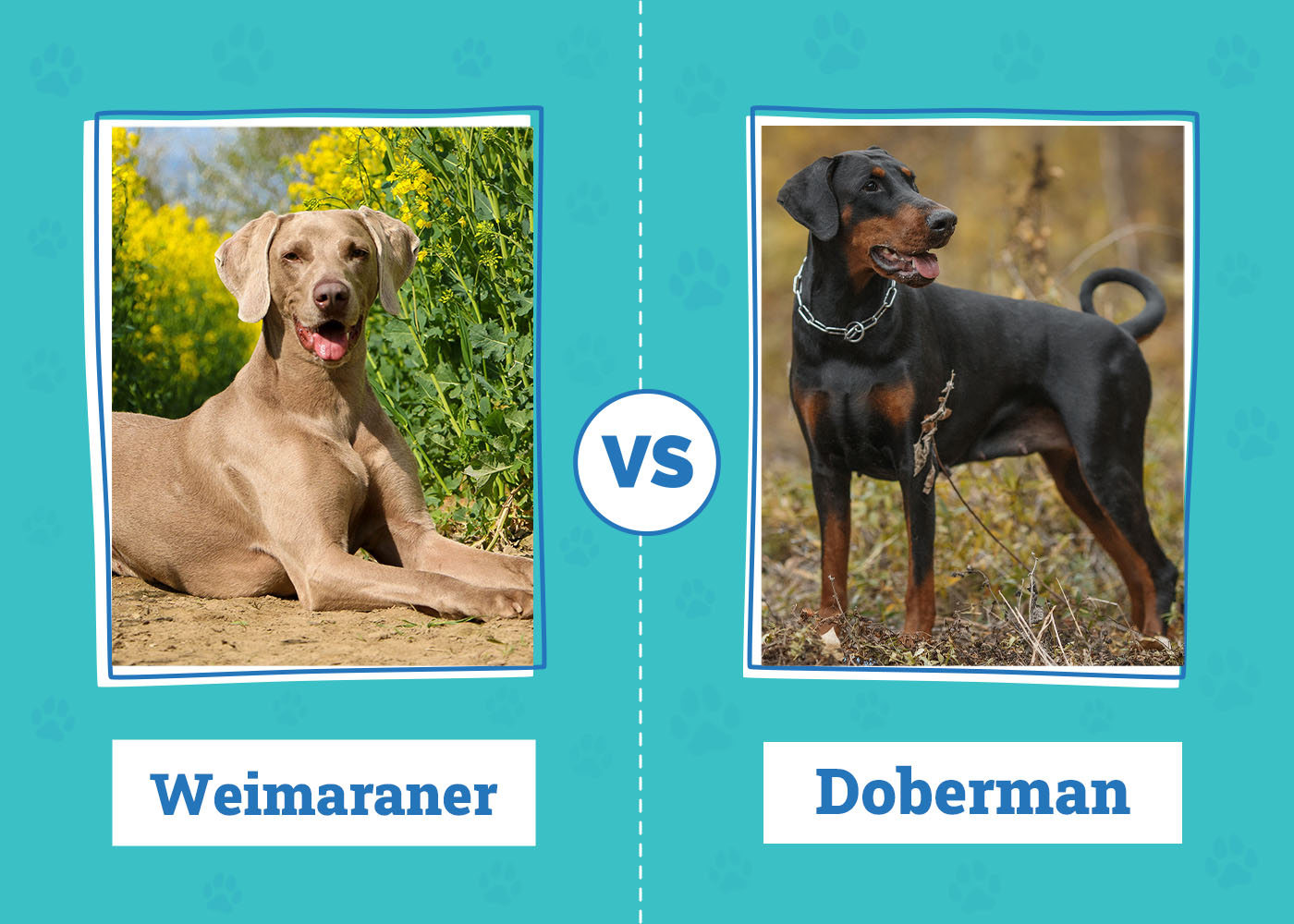
While both breeds are athletic and muscular, there are notable differences in their size and appearance. Weimaraners are slightly taller and heavier, with males standing 25-27 inches at the shoulder and weighing 70-90 pounds, and females measuring 23-25 inches and weighing 55-75 pounds. They have short, smooth coats in shades of silver-gray, with amber or blue-gray eyes and long, floppy ears.
Dobermans are a bit more compact but still impressive in size, with males standing 26-28 inches and weighing 75-100 pounds, and females 24-26 inches and 60-90 pounds. They have short, sleek coats in black, red, blue, or fawn with rust-colored markings. Dobermans are known for their alert, wedge-shaped heads, dark eyes, and often cropped ears (though many owners now opt to keep them natural).
Temperament and Personality
Weimaraners and Dobermans are both intelligent, loyal, and affectionate breeds, but there are some key differences in their personalities. Weimaraners are known for their strong bonds with their families and can be quite clingy, earning them the nickname "Velcro dogs." They crave attention and interaction, and can suffer from separation anxiety if left alone for long periods. Weimaraners are also high-energy dogs with a strong prey drive, so they need plenty of exercise and mental stimulation to stay happy and well-behaved.
Dobermans, while also devoted to their families, tend to be more independent and self-assured. They are naturally protective and make excellent watchdogs, as they are alert and wary of strangers. However, with proper socialization and training, Dobermans can be friendly and accepting of new people and situations. Like Weimaraners, Dobermans are highly intelligent and energetic, requiring consistent training and exercise to channel their energy positively.
Exercise Needs and Living Requirements
As athletic and active breeds, both Weimaraners and Dobermans have high exercise needs. Weimaraners, with their hunting background, require at least an hour of vigorous exercise daily, such as running, hiking, or playing fetch. They also enjoy swimming and other outdoor activities. Dobermans, while not as intensely focused on prey as Weimaraners, still need plenty of exercise to stay physically and mentally fit. A minimum of an hour of daily activity, including walks, runs, and playtime, is essential.
Due to their size and energy levels, both breeds are best suited to homes with securely fenced yards where they can run and play. They can adapt to apartment living if given sufficient exercise and attention, but it‘s not ideal. Weimaraners and Dobermans both thrive on human companionship and should not be left alone for extended periods, as they can become bored, anxious, and destructive.
Grooming and Health
Weimaraners and Dobermans are relatively low-maintenance in terms of grooming, thanks to their short, smooth coats. Weekly brushing with a soft bristle brush or hound glove will help remove loose hair and keep their coats shiny. Both breeds shed moderately year-round, with heavier shedding during spring and fall. Regular nail trimming, ear cleaning, and dental care are also important for their overall health.
As with all purebred dogs, Weimaraners and Dobermans are prone to certain genetic health issues. Weimaraners may be susceptible to hip dysplasia, bloat, hypothyroidism, and certain eye disorders. Dobermans can be prone to dilated cardiomyopathy (DCM), hip dysplasia, von Willebrand‘s disease, and progressive retinal atrophy (PRA). Working with a reputable breeder who health tests their breeding stock can help minimize the risk of these issues. Regular vet check-ups, a balanced diet, and keeping your dog at a healthy weight are also key to supporting their health.
Training and Socialization
Both Weimaraners and Dobermans are highly intelligent and trainable, but they can also be strong-willed and stubborn at times. Consistent, positive reinforcement training from an early age is essential for both breeds. Socialization is also crucial, exposing them to a variety of people, animals, and environments to help them grow into well-adjusted, confident dogs.
Weimaraners can be especially challenging for first-time dog owners due to their high energy, strong prey drive, and potential for separation anxiety. They require a firm but gentle hand, as well as plenty of mental stimulation and engagement to keep them from getting bored and destructive. Dobermans, while generally more even-tempered than Weimaraners, can also be a handful for inexperienced owners. They need consistent leadership and training to harness their natural protective instincts and prevent aggressive or guarding behaviors.
Family and Lifestyle Compatibility
When raised with proper training and socialization, both Weimaraners and Dobermans can make wonderful family pets. They are loyal, affectionate, and protective of their loved ones. However, due to their size and high energy levels, they may not be the best fit for families with very young children, as they could accidentally knock them over during play.
Weimaraners, with their strong desire for human companionship, are best suited to families where someone is home for most of the day. They can become anxious and destructive if left alone for long periods. Dobermans, while also loving and devoted, are a bit more independent and can handle some alone time better, as long as they get enough exercise and attention when their family is home.
Both breeds can get along well with other dogs and pets if raised together, but their high prey drive (especially in Weimaraners) may make them less suitable for homes with small animals like cats or rabbits.
Owner Experiences and Anecdotes
To get a better idea of what it‘s really like to live with a Weimaraner or Doberman, we reached out to owners of each breed to share their experiences.
"My Weimaraner, Luna, is the most loving and loyal dog I‘ve ever had," says Sarah, a Weimaraner owner from Colorado. "She‘s always by my side, whether I‘m working from home or out hiking in the mountains. She does require a lot of exercise and attention, but it‘s worth it for the incredible bond we share."
John, a Doberman owner from New York, shares, "My Doberman, Max, is a true gentleman. He‘s protective of our family but also so gentle and patient with my kids. He‘s a bit more independent than some other breeds I‘ve owned, but he‘s still incredibly affectionate and loves to cuddle up with us at the end of a long day."
Costs and Considerations
When deciding between a Weimaraner and a Doberman, it‘s important to consider the costs associated with each breed. Both are relatively large dogs with high exercise needs, which can translate to higher food bills and more wear and tear on toys and gear. They also require regular vet care, including check-ups, vaccinations, and preventative treatments.
The initial cost of a puppy from a reputable breeder can also vary. As of 2024, Weimaraner puppies typically cost between $1,200 to $2,500, while Doberman puppies range from $1,500 to $3,000. Adopting an adult dog from a rescue or shelter can be a more affordable option, with adoption fees usually ranging from $200 to $600.
Conclusion
Weimaraners and Dobermans are both remarkable breeds with much to offer the right owner. They are intelligent, loyal, and affectionate, with striking good looks and athletic abilities. However, they also require significant time, energy, and commitment to meet their physical and mental needs.
When choosing between a Weimaraner and a Doberman, consider your lifestyle, living situation, and experience with dogs. If you have an active family, a securely fenced yard, and plenty of time to devote to training and exercise, either breed could be a great fit. However, if you‘re a first-time dog owner or have a more low-key lifestyle, you may want to consider a less demanding breed.
Ultimately, the key to success with either a Weimaraner or Doberman is providing them with the love, attention, training, and exercise they need to thrive. With the right care and commitment, these magnificent dogs can be loyal companions for many happy years to come.




)