10 Best Brushes for Labradoodles in 2026 – Reviews & Top Picks
Best Brushes for Labradoodles in 2024: An Expert Groomer‘s Guide
Labradoodles are an incredibly popular dog breed, loved for their fun-loving personalities, trainability, and low-shedding coats. But don‘t be fooled by the "low-shedding" label – Labradoodle coats still require regular maintenance to stay healthy and tangle-free. As a professional dog groomer with over 15 years of experience, I‘ve worked with countless Doodles. One of the most common issues I see is owners who aren‘t brushing frequently or thoroughly enough, leading to painful mats and skin problems. Using the right brushes makes a world of difference!
In this guide, I‘ll walk you through the best brush options for Labradoodles in 2024. We‘ll cover the different coat types you might encounter in this mixed breed, and which tools work best for each one. I‘ll also share my top product picks, along with tips and techniques for optimal brushing. By the end, you‘ll be empowered to keep your Doodle‘s coat looking and feeling its best.
Understanding Labradoodle Coat Types
Labradoodles are a cross between Labrador Retrievers and Poodles. As a relatively new "breed," there‘s a lot of variance in their coats depending on which genes they inherit. In general, Labradoodle coats fall into three categories:
-
Hair coats: Wavy or slightly curly, hair coats are the most similar to a Labrador‘s. The hair is fairly fine and sheds moderately. These coats tend to be the easiest to maintain.
-
Fleece coats: With a soft, fleecy texture, these coats have gentle waves or loose curls. They‘re less likely to shed but more prone to tangles.
-
Wool coats: Very curly and dense, wool coats have a coarse, almost wiry texture. They shed very minimally but mat very easily without diligent brushing. This is the most high-maintenance Doodle coat type.
Most Labradoodles have coats that fall somewhere on a spectrum between these three types. To figure out which category your dog falls into, look closely at the hair near their skin, not just the top layer. The tighter the curls, the more grooming they‘ll need. Puppies may start out with straighter hair that gets curlier as they mature.
No matter the coat type, regular brushing is a must to prevent tangles and mats from forming. Matted hair isn‘t just unsightly – it‘s downright painful for your dog. Tight mats pull on the skin and can lead to irritation, infections, and even open wounds in severe cases. Consistent grooming helps avoid these issues. It also helps distribute your dog‘s natural skin oils, leaving their coat shiny and healthy.
Choosing the Right Brushes
With so many options out there, selecting the best brush for your Labradoodle can feel overwhelming. Different brushes serve different purposes, from detangling to finishing. Here‘s what you need to know about each type:
Slicker Brushes
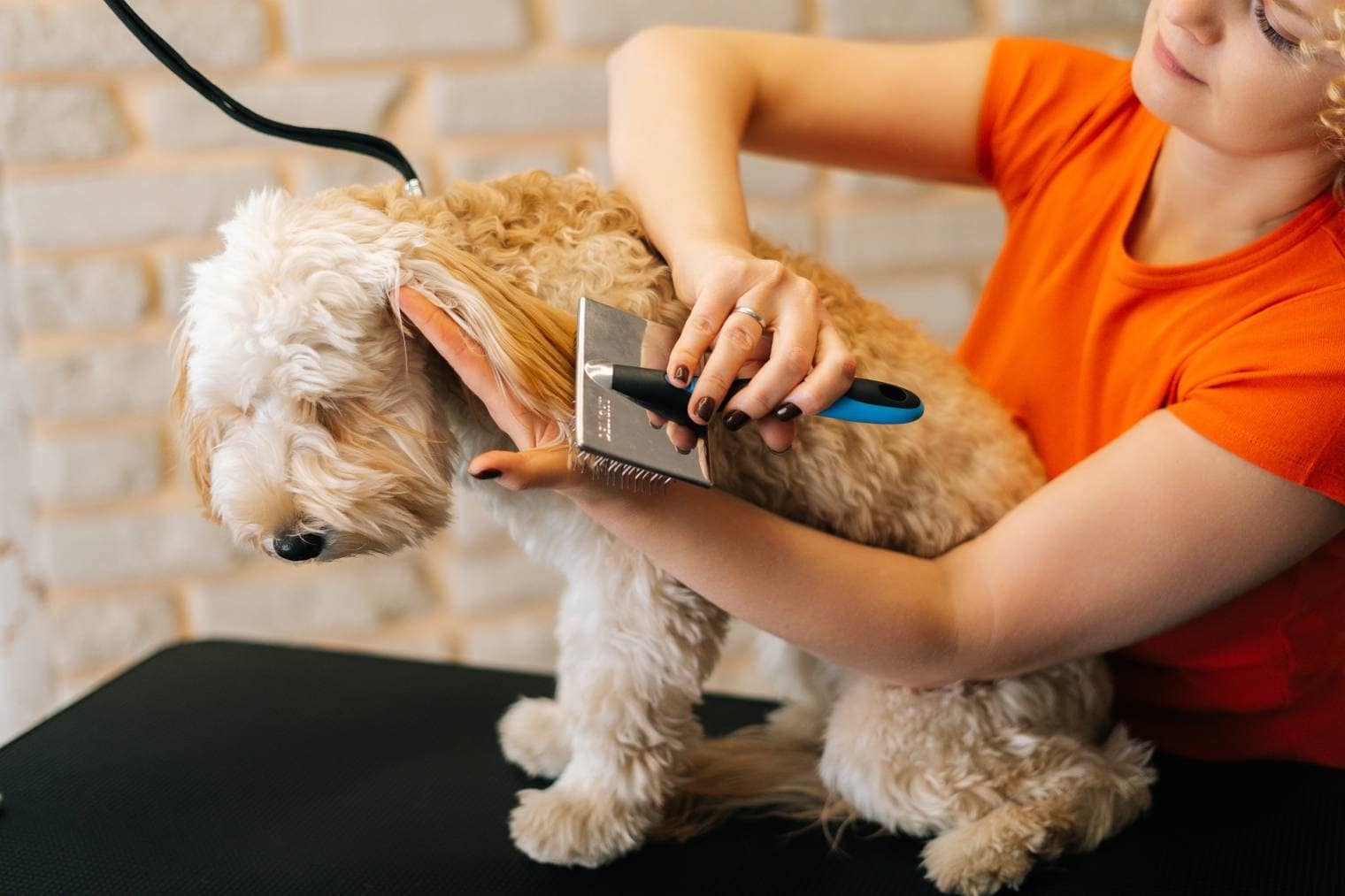
A slicker brush is a must-have for most Labradoodle owners, especially those with curly wool coats. The fine wire bristles are great for working through tangles and removing debris. Look for a brush with flexible pins that won‘t irritate your dog‘s skin. I also recommend a self-cleaning feature to help with hair removal between strokes.
My top pick: Hertzko Self-Cleaning Dog & Cat Slicker Brush
Pros:
- Gently detangles without scratching skin
- Retractable bristles for easy cleaning
- Comfortable, anti-slip handle
Cons: - May not stand up to very heavy matting
- Pin tips aren‘t rounded
This affordably-priced slicker from Hertzko makes brushing quick and efficient. The bristles are flexible enough to be gentle on skin while still tackling tangles. A self-cleaning button retracts the pins for fuss-free hair removal. While it works great on moderate mats, you‘ll want a sturdier slicker or dematting tool for very densely matted areas.
Honorable mentions: Chris Christensen Big G Dog Slicker Brush, Artero USA Universal Slicker
Pin Brushes
With wider-spaced wire pins, pin brushes are ideal for breaking up minor tangles and finishing your dog‘s coat. They‘re gentler than slickers and work well on wavy fleece coats or straighter hair coats. Look for pins with rounded tips to avoid scratching the skin. An ergonomic handle is also a plus, especially if you‘ll be brushing for longer periods.
My top pick: Chris Christensen Oval Pin Brush (20mm pins)
Pros:
- Lightweight beechwood construction
- Smooth, rounded pins glide through coat
- Durable cushioned pad
Cons: - More expensive than some options
- Longer pins may be too much for smaller dogs
A longtime favorite among show dog handlers and groomers, this Chris Christensen pin brush is worth the splurge. The 20mm pins easily navigate through thick Doodle coats without snagging. Polished beechwood and a subtly curved handle make for comfortable brushing sessions. This high-quality brush should last for years with proper care.
Honorable mentions: Andis Premium Large Pin Brush, Bass Brushes The Green Standard Pin Brush
Bristle Brushes
Made with tightly-packed natural or synthetic bristles, bristle brushes are designed for finishing your dog‘s coat. They help smooth the hair while distributing natural oils for shine and damage protection. You likely won‘t use a bristle brush every day, but it‘s great for sprucing your Doodle up between baths or before a special occasion.
My top pick: ConairPRO Pet-It Boar Bristle Brush
Pros:
- 100% natural boar bristles massage skin
- Stimulates circulation and oil production
- Attractive bamboo handle
Cons: - Not ideal for detangling
- Some bristles may fall out over time
With its eco-friendly bamboo and natural boar bristles, this Conair brush looks as good as it feels. The densely-packed bristles redistribute oils and remove dirt and dander. Use it as a finishing touch on freshly-brushed hair or to refresh your Doodle‘s coat between grooming sessions. Just keep in mind this isn‘t a detangling tool and will work best on already tangle-free hair.
Honorable mentions: Burt‘s Bees Double Bristle Dog Brush, Safari Bamboo Bristle Dog Brush
Combs
A good comb is indispensable when it comes to keeping Labradoodle coats mat-free, especially in hard to reach areas like behind the ears, armpits, and groin. Choose a comb with both wide and fine teeth to work through various types of tangles. The teeth should be smooth and rounded at the ends to avoid poking your pup‘s skin.
My top pick: Andis Steel Pet Comb (7.5")
Pros:
- Durable stainless steel teeth
- Wide and fine teeth for versatility
- Lightweight and easy to maneuver
Cons: - Some dogs dislike the sound/feel of metal combs
This sturdy steel comb from Andis is great for taking care of tangles and preventing mats in tricky areas. Start with the wider teeth to break up bigger knots, then use the finer end to comb through any remaining tangles. The smooth teeth shouldn‘t irritate skin. It‘s also easy to sanitize between uses. Some groomers prefer plastic or carbon combs, but I find they‘re more prone to creating static.
Honorable mentions: Poodle Pet Tuffer Than Tangles Dematting Comb, Resco Pro Series Rotating Pin Comb
Dematting Tools
For serious mats and tangles that don‘t come out with brushing alone, a dematting tool is a lifesaver. These rakes or combs have sharp blades that actually cut through mats, breaking them up so you can brush them out. While regular brushing should prevent most matting, dematting tools are good to have on hand for stubborn knots. Use them sparingly and carefully as the blades can nick skin if you‘re not cautious.
My top pick: GoPets Dematting Comb with 2 Sided Professional Grooming Rake
Pros:
- Double-sided design with 12 and 23 teeth
- Sharp teeth shred mats quickly
- Ergonomic gel handle
Cons: - Blades may be too sharp for thin-coated dogs
This dematting tool from GoPets offers two toothed options in one – a 12-tooth side for severe mats and a 23-tooth side for tighter tangles. The teeth are precision-sharpened to make quick work of even the gnarliest mats. A non-slip gel handle offers good control and comfort. Go slowly and keep the teeth angled slightly away from the skin to prevent accidentally cutting your dog.
Honorable mentions: Pat Your Pet Two-Sided Undercoat Rake, Safari De-Matting Dog Comb
Tips for Optimal Brushing
The right tools are important, but so is using the correct technique. These tips will help make grooming a positive experience for you and your Labradoodle:
-
Brush often and thoroughly. For most Labradoodles, I recommend brushing at least 3x per week, more often if your dog has a curly wool coat. Each brushing session should last 15-30 minutes to fully remove debris and tangles.
-
Brush in layers. Labradoodle coats are often very thick, so you‘ll need to brush in sections to reach down to the skin. Start with the bottom layer near the skin and work your way to the top layer. Don‘t just move the top layer of hair around.
-
Always brush before bathing. Water makes mats tighter and harder to remove. Brush out as many tangles as possible before getting your Labradoodle wet. If you do find mats after a bath, apply a detangling spray or conditioner before attempting to comb them out.
-
Be gentle around sensitive areas. Go slowly and carefully when brushing near your dog‘s ears, armpits, groin, and other thin-skinned areas. Stop brushing if you notice any redness or irritation.
-
Keep sessions short and fun. Most dogs don‘t love being brushed, so it‘s important to make grooming a positive experience. Offer plenty of praise, petting, and treats throughout each session. Try to keep brushing to less than 30 minutes at a time. You can always come back to problem areas later.
-
Invest in detangling products. A good detangling spray or leave-in conditioner can make brushing much easier and more comfortable for your dog. I‘m a fan of products like The Stuff Conditioner and Detangler and Warren London Hydrating Butter Leave-In Conditioner.
-
Know when to call a pro. While you can handle minor tangles on your own, leave severe matting to a professional groomer. We have the tools and experience to safely remove mats without injuring your dog. If you‘re unsure, err on the side of caution and book an appointment.
Other Grooming Considerations
Brushing is just one part of a well-rounded grooming regimen. In addition to brushing, your Labradoodle will need:
- Baths every 3-6 weeks using a gentle, dog-specific shampoo
- Regular nail trims to prevent overgrowth and splitting
- Ear cleanings to remove dirt, debris, and wax buildup
- Dental care including tooth brushing and professional cleanings
- Haircuts or trims every 6-8 weeks if you keep your Labradoodle in a longer coat style
While some owners prefer to handle grooming on their own, others find it easier to schedule regular appointments with a professional. Look for a groomer who has experience with Doodles and uses positive reinforcement techniques. Many groomers offer package deals that include multiple services at a discounted rate.
If you do opt to cut your Labradoodle‘s hair at home, be sure to invest in a good set of clippers and scisso. Go slowly and carefully to avoid accidentally nicking your dog‘s skin. It‘s often helpful to have a second person assist with keeping your dog still and calm during haircuts.
Frequently Asked Questions
Q: What kind of brush is best for a Labradoodle puppy?
A: Puppies have more delicate skin and coats, so opt for softer bristles or pins. Slicker brushes like the Hertzko Self-Cleaning Brush or pin brushes like the Paw Brothers Soft Pin Brush are good options. Start with short, gentle brushing sessions early on to get your puppy used to being handled.
Q: How can I tell if my Labradoodle‘s coat is matted?
A: Mats feel like solid, tightly-packed clumps of hair. You won‘t be able to easily see through them or brush them out with a regular brush. Mats are most common behind the ears, in the armpits, and in the groin area. If you notice any, use a dematting tool or see a groomer ASAP.
Q: How often should I bathe my Labradoodle?
A: Unless your dog gets very dirty, limit baths to once every 3-6 weeks. More frequent washing can strip natural oils and dry out your Labradoodle‘s skin and coat. When you do bathe, use a gentle shampoo made for dogs and follow up with a moisturizing conditioner.
In Closing
Regular brushing is key to keeping your Labradoodle‘s coat healthy, shiny, and tangle-free. By selecting the right tools and sticking to a consistent grooming routine, you can avoid painful mats and keep your Doodle looking their best. Remember to be patient, gentle, and positive during grooming sessions – your dog will thank you for it!
With the right approach, brushing can be a bonding experience for you and your Labradoodle. You‘ll get to know their coat intimately and spot any potential issues early on. Plus, all that one-on-one attention is great for strengthening your relationship. While it takes some time and effort, prioritizing your Labradoodle‘s grooming needs is well worth it. A healthy coat is a reflection of a healthy, well-cared-for dog.