10 Vet-Approved Dachshund Facts & Information
10 Fascinating Facts Every Dachshund Lover Should Know
With their long, low bodies, stubby legs, and lively personalities, Dachshunds are one of the most beloved and iconic dog breeds in the world. These cute little "wiener dogs" have a devoted following thanks to their playful, affectionate natures. But how much do you really know about Dachshunds? Here are 10 interesting facts that provide a glimpse into the history, appearance, and unique traits of this remarkable breed.
-
Dachshunds come in two sizes.
While Dachshunds are known for their diminutive stature, they actually come in two distinct size varieties: standard and miniature. Standard Dachshunds typically weigh between 16 and 32 pounds, while miniatures tip the scales at 11 pounds or less. However, both share the same unmistakable elongated body shape that almost seems to stretch as far as possible between their little legs. Miniature Dachshunds tend to live slightly longer on average compared to standards. -
Dachshunds can have smooth, long, or wire-haired coats.
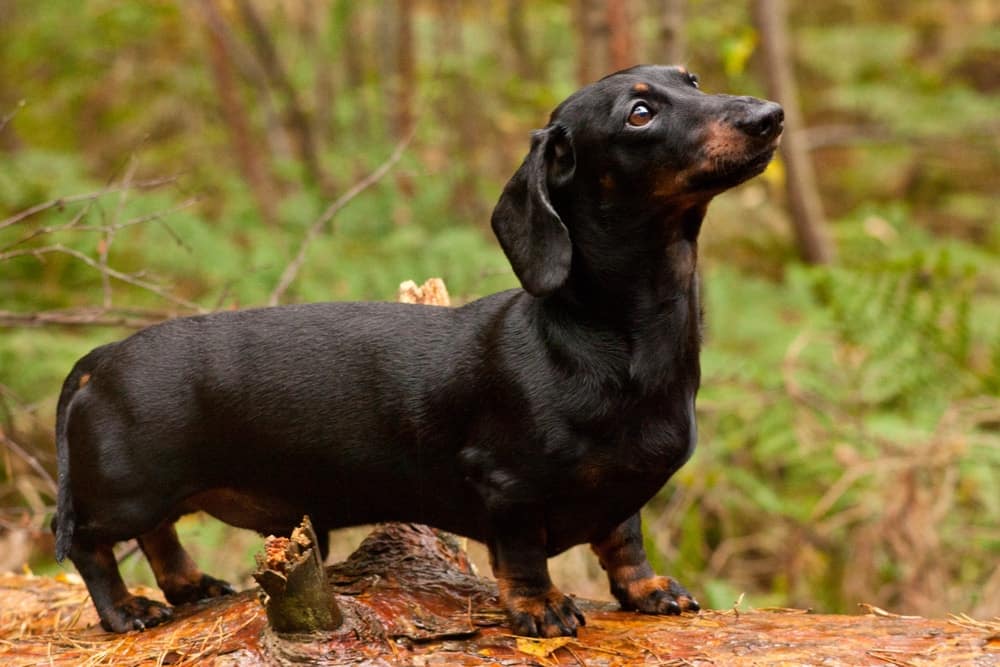
When picturing a Dachshund, most people probably imagine the smooth-coated variety with its sleek, shiny fur. But did you know Dachshunds also come in two other coat types? Long-haired Dachshunds have sleek, slightly wavy hair that is longer than the smooth variety, especially around the ears, legs, and tail. Wire-haired Dachshunds have a dense, wiry topcoat with a soft undercoat underneath, giving them bushy eyebrows and beards. Grooming needs vary based on coat type, with smooth coats being the easiest to maintain. -
This breed comes in a rainbow of colors and patterns.
Dachshunds‘ coats come in a wide array of colors and patterns, from solid shades like red and cream to striking two-tone combinations like black and tan or chocolate and tan. "Dapple" Dachshunds have irregular mottled patches and are created by breeding one dog with the merle gene. Brindle Dachshunds have tiger stripe-like markings, while sable ones have black-tipped hairs that give them an overall dark appearance. Some Dachshunds are "piebald," with irregular white spotting over a darker base color. The double dapple coloration, while striking, is associated with increased health issues like blindness and deafness. -
Dachshunds were bred to hunt badgers and other den animals.
Dachshund literally means "badger dog" in German, offering a clue to their original purpose. These tenacious little hounds were developed in Germany over 300 years ago to hunt badgers and other den-dwelling animals like rabbits and foxes. Their fearless nature and long, low bodies allowed them to pursue prey right into their underground burrows. Dachshunds‘ paddle-shaped paws and powerful legs made them expert diggers as well. Larger Dachshunds were sometimes used to track and hunt wild boar in packs. Today, some Dachshunds still participate in Earthdog trials to test their hunting instincts. -
Queen Victoria played a big role in popularizing Dachshunds.
While Dachshunds started gaining attention outside of Germany in the mid-1800s, it was Britain‘s Queen Victoria who really helped launch them into the spotlight. An ardent dog lover, Queen Victoria bred and showed her own Dachshunds in the late 19th century. She was particularly fond of the smooth-coated variety. The Queen‘s influence helped establish Dachshunds as fashionable companions for the British upper class and they steadily grew in popularity. Dachshunds later made their way to the United States, where they have consistently ranked as one of the top ten most popular breeds for decades. -
Back problems are sadly common in Dachshunds.
Behind those adorably stubby legs and elongated spines, many Dachshunds struggle with back issues. Their body shape makes them genetically prone to intervertebral disc disease (IVDD), a condition where the jelly-like discs between the vertebrae bulge or burst, causing pain, nerve damage, and even paralysis. An estimated 25% of Dachshunds will experience some degree of IVDD during their lifetimes, with some needing expensive surgery to recover. Keeping Dachshunds fit and not allowing them to jump on and off furniture or navigate stairs can help lower the risk. Providing ramps and always supporting their backs and rear ends when holding them is also important. -
Dachshunds are the smallest dog breed used for hunting.
When you think of hunting dogs, Dachshunds may not be the first that come to mind. But these little hounds were bred to fearlessly pursue much larger prey underground. Their compact size allowed them to fit into narrow animal burrows, while their deep, resounding barks helped hunters locate them when they were out of sight. Larger, standard-sized Dachshunds weighing 30-35 pounds were used to hunt badgers and boar, while smaller 16-22 pound Dachshunds specialized in hares and foxes.
Despite their small stature, Dachshunds‘ loud barks and bold demeanors earned them the nickname "little armored knights." They still accompany hunters as "teckels" to track and dispatch wounded game concealed in heavy brush. Rabbit and hare hunting are also common jobs for Dachshunds in Europe. Some compete in field trials and Earthdog den trials to test their hunting skills.
- Waldi the Dachshund was the world‘s first official Olympic mascot.
The 1972 Olympic Games in Munich made history, thanks in part to a colorful little dachshund. Waldi, created by German designer Otl Aicher, became the first official Olympic mascot, starting a tradition that endures today. Waldi had a long, pastel-striped body and sported the Olympic rings for a necklace. Meant to represent the tenacity, agility and resistance required by athletes, the Dachshund was a natural choice given its German origins.
Waldi‘s popularity led to the production of over 2000 different souvenir items like buttons, posters and plush toys, paving the way for the extensive Olympic merchandise we associate with the games today. The Olympic marathon route was even designed in the shape of Waldi‘s body, with runners crossing the wagging tail to enter the stadium for the exciting finish. From Munich to the recent Tokyo games featuring Miraitowa the animated mascot, Waldi the Dachshund blazed the trail.
- Dachshunds tend to live longer than many other breeds.
One potential perk of owning a Dachshund is that you‘ll likely get to enjoy their company for many years to come. Dachshunds have an average lifespan of 12-16 years, which is longer than many other purebred dogs. Like with most breeds, miniature Dachshunds tend to live slightly longer than their standard-sized counterparts.
Several factors influence a Dachshund‘s longevity, including genetics, lifestyle, and spay/neuter status. Keys to helping your Dachshund thrive well into their teens include feeding them a high-quality diet, ensuring they get adequate age-appropriate exercise, staying on top of veterinary check-ups and preventative care, and keeping them at a healthy body weight. Avoid overfeeding and resist giving too many treats, which can quickly pack extra pounds onto Dachshunds‘ compact frames.
- These clever, lively dogs need an outlet for their energy.
Don‘t let the short legs fool you – Dachshunds are active, intelligent dogs with a zest for life. Bred to work closely with hunters, these hounds are independent thinkers who need daily mental stimulation to prevent boredom and destructive behaviors. While a brisk 20-30 minute walk each day will meet most Dachshunds‘ physical exercise needs, they also benefit from indoor games, food puzzles, and reward-based training activities.
Dachshunds retain a strong prey drive, so a securely fenced yard is a must if you plan to let them off-leash. Invest time in positive reinforcement training and socialization from an early age to nurture a well-mannered, confident companion. And don‘t forget – those powerful paws and noses mean Dachshunds have a natural instinct to dig, so supervise them closely in the garden and redirect them to a designated digging spot if needed.
Conclusion
From their quirky good looks to their larger-than-life personalities, Dachshunds have captured the hearts of dog lovers around the world for centuries. These charismatic little hounds pack a lot of boldness and vigor into their compact frames. Fearless and full of curiosity, they make lively, affectionate companions with the tenacity to overcome challenges that arise. While their unique body shape requires a little extra TLC, Dachshunds‘ vibrant spirits and devotion to their families have firmly established them as an iconic, cherished breed for generations. For those who appreciate an active, clever dog with a clownish streak, it‘s hard to resist the charms of a dashing Dachshund.