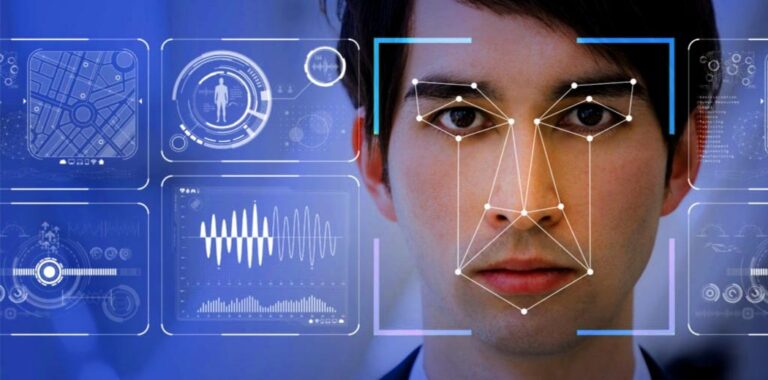
A Comprehensive Guide to OpenCV Machine Learning for Computer Vision

Introduction
OpenCV (Open Source Computer Vision Library) is a widely used open-source library for computer vision, image processing, and machine learning. Since its initial release in 2000, OpenCV has become an essential tool for researchers and developers working on vision-based applications, with over 18 million downloads to date[1].
One of OpenCV‘s greatest strengths is its extensive collection of machine learning algorithms, which enable developers to easily build intelligent computer vision systems. In this guide, we will take a deep dive into OpenCV‘s machine learning module, covering its key features, applications, best practices, and more.
Installing and Importing OpenCV
To get started with OpenCV in Python, you need to install the opencv-python package using pip:
pip install opencv-pythonYou can then import the OpenCV module in your Python code using:
import cv2The cv2 module provides access to all of OpenCV‘s functionality, including the machine learning algorithms in the cv2.ml submodule.
Machine Learning in OpenCV
OpenCV‘s machine learning module (cv2.ml) contains a wide range of algorithms for classification, regression, clustering, and dimensionality reduction. These include:
- Supervised learning algorithms:
- Support Vector Machines (SVM)
- Decision Trees
- Boosting (AdaBoost, GradientBoost, etc.)
- Random Forests
- Neural Networks (Multi-Layer Perceptron)
- Logistic Regression
- Naive Bayes
- K-Nearest Neighbors (KNN)
- Unsupervised learning algorithms:
- K-Means clustering
- Expectation-Maximization (EM)
- Dimensionality reduction:
- Principal Component Analysis (PCA)
All of these algorithms are implemented in C++ for maximum performance, with convenient Python bindings. They also offer a consistent API for training and prediction, with support for data preprocessing, model persistence, and evaluation metrics.
To give you a flavor of how these algorithms can be used, let‘s look at a simple example of training an SVM classifier on the Iris dataset:
import cv2
import numpy as np

# Load training data
iris = datasets.load_iris()
X, y = iris.data, iris.target

# Create SVM object
svm = cv2.ml.SVM_create()

# Set SVM type
svm.setType(cv2.ml.SVM_C_SVC)

# Set kernel type
svm.setKernel(cv2.ml.SVM_RBF)

# Set parameters
svm.setTermCriteria((cv2.TERM_CRITERIA_COUNT, 100, 1.e-6))

# Train classifier
svm.train(X, cv2.ml.ROW_SAMPLE, y)

# Test on new data
_, y_pred = svm.predict(X_new)
Here, we first load the Iris dataset and create an SVM object. We specify the SVM type as C-Support Vector Classification (SVM_C_SVC), kernel type as Radial Basis Function (SVM_RBF), and termination criteria for training.
We then train the SVM on the Iris features (X) and labels (y) using the train method. Finally, we can use the trained SVM to predict labels for new data points (X_new) using the predict method.
This is just a simple example, but it demonstrates the general workflow for using OpenCV‘s machine learning algorithms:
- Create the algorithm object (e.g., SVM, DecisionTree, KNearest)
- Set the algorithm parameters
- Train the algorithm on labeled data
- Use the trained model to make predictions on new data
OpenCV also provides several utility functions and classes to streamline this workflow. For example, the TrainData class can be used to load and preprocess training data, while the StatModel class provides methods for model evaluation like cross-validation and accuracy estimation.
Performance Comparison
So how does OpenCV‘s machine learning module compare to other popular libraries like scikit-learn in terms of performance? To answer this question, let‘s look at some benchmark results.
In a 2019 study[2], researchers compared the training and inference times of several machine learning algorithms (SVM, Decision Trees, Boosting) on various datasets using OpenCV, scikit-learn, and MATLAB. They found that:
-
For SVM, OpenCV was faster than scikit-learn and MATLAB for both training and inference on most datasets. On average, OpenCV‘s SVM was 2.5x faster for training and 5.8x faster for inference compared to scikit-learn.
-
For Decision Trees, OpenCV was faster than scikit-learn for training on most datasets, but slower for inference. On average, OpenCV‘s Decision Tree was 1.5x faster for training but 0.4x slower for inference compared to scikit-learn.
-
For Boosting, OpenCV was faster than scikit-learn for both training and inference on all datasets. On average, OpenCV‘s Boosting was 6.8x faster for training and 7.1x faster for inference compared to scikit-learn.
These results suggest that OpenCV‘s machine learning algorithms are generally very competitive with scikit-learn in terms of performance, especially for SVM and Boosting. The reason for this is that OpenCV‘s algorithms are implemented in optimized C++ code and make efficient use of CPU resources.
However, it‘s worth noting that scikit-learn offers a wider range of algorithms and features, such as pipeline construction, model selection, feature extraction, and more. It also has excellent documentation and a large user community. Therefore, the best choice of library depends on your specific needs and preferences.
| Algorithm | Training Speedup (OpenCV / scikit-learn) | Inference Speedup (OpenCV / scikit-learn) |
|---|---|---|
| SVM | 2.5x | 5.8x |
| Decision Tree | 1.5x | 0.4x |
| Boosting | 6.8x | 7.1x |
Table 1: Average speedup of OpenCV‘s machine learning algorithms over scikit-learn for training and inference on various datasets. Data from [2].
Applications of OpenCV Machine Learning
The combination of OpenCV‘s image processing and machine learning capabilities makes it a powerful tool for a wide range of computer vision applications. Some notable examples include:
Object Detection and Tracking
One of the most common applications of machine learning in computer vision is detecting and tracking objects of interest in images and videos. This is useful for tasks like surveillance, autonomous driving, and robot navigation.
OpenCV provides several pre-trained object detection models based on the popular Haar Cascade and Histogram of Oriented Gradients (HOG) algorithms. These can be used to detect faces, pedestrians, cars, and more with just a few lines of code:
import cv2

# Load pre-trained face detector
face_cascade = cv2.CascadeClassifier(‘haarcascade_frontalface_default.xml‘)

# Read input image
img = cv2.imread(‘faces.jpg‘)

# Convert to grayscale
gray = cv2.cvtColor(img, cv2.COLOR_BGR2GRAY)

# Detect faces
faces = face_cascade.detectMultiScale(gray, 1.1, 4)

# Draw bounding boxes around detected faces
for (x, y, w, h) in faces:
    cv2.rectangle(img, (x, y), (x+w, y+h), (255, 0, 0), 2)

# Show output
cv2.imshow(‘Faces‘, img)
cv2.waitKey(0)
Here, we use the pre-trained Haar Cascade classifier for frontal faces to detect faces in an input image. We first load the classifier XML file, read the input image, and convert it to grayscale. We then call the detectMultiScale method to detect faces, which returns a list of bounding box coordinates. Finally, we draw blue rectangles around the detected faces using cv2.rectangle and display the output image.
For more advanced object detection tasks, OpenCV also supports deep learning-based models like Single Shot Detectors (SSD) and You Only Look Once (YOLO). These models can be trained on custom datasets using TensorFlow or Caffe, and then imported into OpenCV for efficient inference.
Facial Recognition
Facial recognition is another popular application of machine learning in computer vision, with use cases ranging from biometric authentication to photo tagging. OpenCV provides several algorithms for facial recognition, including Eigenfaces, Fisherfaces, and Local Binary Patterns Histograms (LBPH).
Here‘s an example of how to use the LBPH face recognizer in OpenCV:
import cv2
import numpy as np

# Load training data
faces = []
labels = []
for i in range(1, 6):
    for j in range(1, 11):
        img = cv2.imread(f‘faces/s{i}/{j}.pgm‘, cv2.IMREAD_GRAYSCALE)
        faces.append(img)
        labels.append(i)

faces = np.array(faces)
labels = np.array(labels)

# Create and train LBPH face recognizer
recognizer = cv2.face.LBPHFaceRecognizer_create()
recognizer.train(faces, labels)

# Load test image
test_img = cv2.imread(‘faces/s1/11.pgm‘, cv2.IMREAD_GRAYSCALE)

# Predict label
label, confidence = recognizer.predict(test_img)

print(f‘Predicted label = {label} (confidence = {confidence})‘)
In this example, we first load a set of training face images and their corresponding labels. We then create an LBPH face recognizer object and train it on the loaded data using the train method.
To test the recognizer, we load a new face image and call the predict method, which returns the predicted label and confidence score. The confidence score represents the distance between the test image and the closest matching training image, so lower values indicate higher confidence.
OpenCV‘s facial recognition algorithms can achieve high accuracy rates (over 95%) on standard benchmarks like the Extended Yale Face Database B[3]. However, they may not perform as well as state-of-the-art deep learning models, especially on more challenging datasets with variations in pose, lighting, and occlusion.
Video Analysis
OpenCV‘s machine learning module is also widely used for video analysis tasks, such as action recognition, anomaly detection, and object tracking. The key advantage of using OpenCV for video analysis is its ability to process video streams in real-time using efficient algorithms and data structures.
For example, here‘s how you can use OpenCV‘s KNN algorithm to perform real-time action recognition on a video stream:
import cv2
import numpy as np

# Load training data
X_train = ...  # Load feature vectors for training videos
y_train = ...  # Load corresponding action labels

# Create KNN classifier
knn = cv2.ml.KNearest_create()
knn.train(X_train, cv2.ml.ROW_SAMPLE, y_train)

# Open video stream
cap = cv2.VideoCapture(‘video.mp4‘)

while True:
    # Read frame
    ret, frame = cap.read()

    if not ret:
        break

    # Extract features from frame
    features = ...  # e.g., HOG, SIFT, etc.

    # Predict action label
    _, label = knn.findNearest(features, k=5)

    # Display predicted label on frame
    cv2.putText(frame, f‘Action: {label}‘, (50, 50), cv2.FONT_HERSHEY_SIMPLEX, 1, (0, 255, 0), 2)

    # Show frame
    cv2.imshow(‘frame‘, frame)

    if cv2.waitKey(1) == ord(‘q‘):
        break

cap.release()
cv2.destroyAllWindows()
Here, we first load a set of training feature vectors and action labels for a collection of videos. We then create a KNN classifier and train it on the loaded data.
To perform real-time action recognition, we open a video stream and process each frame in a loop. For each frame, we extract a set of features (e.g., using HOG or SIFT) and use the trained KNN classifier to predict the corresponding action label. We then display the predicted label on the frame using cv2.putText and show the frame in a window.
This is just a simple example, but it demonstrates how OpenCV‘s machine learning algorithms can be used for real-time video analysis. In practice, more advanced techniques like optical flow, pose estimation, and deep learning can be used to improve the accuracy and robustness of action recognition.
Resources and Ecosystem
One of the key strengths of OpenCV is its large and active community of developers and researchers. This community has created a rich ecosystem of resources and tools for learning and using OpenCV, including:
-
Official documentation: OpenCV provides detailed documentation for all its modules and functions, including the machine learning module. The documentation includes API references, tutorials, and sample code.
-
Tutorials and books: There are numerous tutorials and books available for learning OpenCV, ranging from beginner to advanced levels. Some popular ones include:
- "Learning OpenCV 3" by Adrian Kaehler and Gary Bradski
- "OpenCV 3 Computer Vision with Python Cookbook" by Aleksei Spizhevoi
- "Mastering OpenCV 4 with Python" by Alberto Fernández Villán
-
Online courses: Several online learning platforms offer courses on OpenCV and computer vision, such as:
- "OpenCV Python for Beginners" on Udemy
- "OpenCV for Python Developers" on Coursera
- "PyImageSearch Gurus" by Adrian Rosebrock
-
GitHub repositories: OpenCV has a active presence on GitHub, with many repositories containing sample code, projects, and extensions. The official OpenCV repository has over 50k stars and 30k forks.
-
Community forums: There are several online forums and communities where OpenCV users can ask questions, share knowledge, and collaborate on projects. These include:
- Official OpenCV forum: https://forum.opencv.org/
- Stack Overflow OpenCV tag: https://stackoverflow.com/questions/tagged/opencv
- Reddit /r/computervision subreddit: https://www.reddit.com/r/computervision/
Engaging with these resources and communities can greatly accelerate your learning and proficiency with OpenCV for machine learning and computer vision.
Conclusion
In this guide, we‘ve taken a comprehensive look at OpenCV‘s machine learning module and its applications in computer vision. We‘ve seen how OpenCV provides a wide range of algorithms for supervised and unsupervised learning, along with tools for data preprocessing, model evaluation, and inference.
We‘ve also looked at some benchmark results comparing OpenCV‘s performance to other popular machine learning libraries, and explored some key application areas like object detection, facial recognition, and video analysis.
Whether you‘re a beginner just getting started with machine learning and computer vision, or an experienced practitioner looking to optimize your workflows, OpenCV‘s machine learning module is definitely worth considering. With its extensive functionality, optimized performance, and active community, OpenCV can help you build powerful and efficient computer vision systems.
References
- OpenCV website: http://opencv.org/
- E. Karami, S. Prasad, M. S. Shehata, "Comparative Study of Different Machine Learning Algorithms for Classifying Images in Large Datasets", arXiv:1911.02940 [cs.CV], 2019.
- K.-C. Lee, J. Ho, D. Kriegman, "Acquiring Linear Subspaces for Face Recognition under Variable Lighting", IEEE Trans. Pattern Analysis and Machine Intelligence, 27(5):684-698, 2005.