The AI Revolution in Food Service: How Artificial Intelligence is Transforming the Restaurant Industry
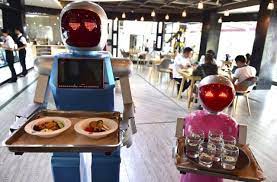
Artificial intelligence (AI) is no longer a futuristic concept; it‘s a transformative force that is already reshaping industries across the globe. In the food service sector, AI is revolutionizing everything from how kitchens operate to how customers interact with restaurants. As an AI and machine learning expert, I‘ve witnessed firsthand the incredible potential of these technologies to streamline operations, enhance the dining experience, and unlock new opportunities for growth and innovation.
In this in-depth article, we‘ll explore the many ways AI is being leveraged in the food service industry, backed by the latest research, data, and insights from industry leaders. Whether you‘re a restaurant owner, a foodie, or simply someone interested in the future of technology, this guide will give you a comprehensive understanding of how AI is transforming the way we eat.
The Rise of Robotics in the Kitchen
One of the most visible manifestations of AI in the food service industry is the growing use of robotics in restaurant kitchens. Companies like Miso Robotics and Moley Robotics are developing sophisticated robotic systems that can perform a wide range of cooking tasks with remarkable speed, precision, and consistency.
Miso Robotics‘ flagship product, Flippy, is an AI-powered robotic arm that can grill burgers, fry chicken wings, and even plate dishes. Using computer vision and machine learning algorithms, Flippy can detect the type and quantity of food items, monitor their cooking progress, and make real-time adjustments to ensure optimal results. According to Miso Robotics, Flippy can cook up to 300 burgers per hour, a rate that would require several human workers to match.
Similarly, Moley Robotics has developed a fully automated kitchen system that can prepare complete meals from scratch, guided by the movements of human master chefs. The system, which is expected to launch commercially in 2022, uses a pair of robotic arms equipped with tactile sensors, 3D cameras, and machine learning algorithms to replicate the precise techniques of professional chefs. Moley claims its robot can cook over 5,000 different recipes with the skill and flair of a Michelin-starred chef.
The benefits of robotic kitchens are numerous. For one, they can operate around the clock without breaks, enabling restaurants to serve customers 24/7. They can also ensure consistent quality and portion control, reducing food waste and improving customer satisfaction. Moreover, by automating repetitive and dangerous tasks like deep frying, robotic systems can improve kitchen safety and free up human workers to focus on more complex and creative tasks.
However, the adoption of kitchen robotics is not without challenges. The systems can be expensive to install and maintain, and they may require significant changes to a restaurant‘s layout and workflow. There are also concerns about the potential impact on employment, as automation could displace some kitchen workers. Nonetheless, many experts believe that kitchen robotics will ultimately create new jobs in areas like robot maintenance, programming, and culinary innovation.
AI-Powered Food Quality and Safety Monitoring
Another promising application of AI in the food service industry is in the realm of food quality and safety monitoring. Using computer vision and deep learning algorithms, AI systems can automatically detect signs of spoilage, contamination, or other quality issues in food products.
For example, Agshift, a Silicon Valley startup, has developed an AI-powered platform that can grade the quality of produce and other food items based on visual inspection. By analyzing images of food samples captured by smartphones or other devices, Agshift‘s algorithms can detect defects, assess ripeness, and even predict shelf life with high accuracy. This not only helps restaurants ensure they are serving the freshest and safest ingredients but also enables them to optimize their inventory management and reduce waste.
Other companies are using AI to monitor food safety throughout the supply chain. IBM‘s Food Trust platform, for instance, leverages blockchain and machine learning to create a transparent and traceable record of a food product‘s journey from farm to table. By analyzing data from IoT sensors, RFID tags, and other sources, the platform can quickly identify and isolate potential safety issues, such as contamination or improper handling.
The benefits of AI-powered food quality and safety monitoring are significant. According to a report by the World Health Organization, foodborne illnesses affect nearly 1 in 10 people worldwide each year, causing 420,000 deaths and $95 billion in economic losses. By catching quality and safety issues early, AI systems can help prevent outbreaks, protect public health, and save restaurants from costly recalls and lawsuits.
Enhancing the Customer Experience with AI
AI is also transforming the way restaurants interact with customers, both in-store and online. From personalized recommendations to voice ordering and beyond, AI-powered tools are making the dining experience more convenient, engaging, and tailored to individual preferences.
One area where AI is making a big impact is in menu personalization. Using machine learning algorithms, restaurants can analyze a customer‘s past orders, dietary preferences, and even social media activity to generate customized menu suggestions. For example, Starbucks‘ mobile app uses AI to recommend new drinks based on a customer‘s previous orders and current location. Similarly, Pizza Hut‘s mobile app uses AI to suggest personalized pizza toppings based on a customer‘s flavor profile.
AI is also enabling new ordering and payment methods that are faster, easier, and more natural for customers. Many restaurants now offer voice ordering through virtual assistants like Amazon Alexa or Google Assistant, allowing customers to place orders using simple voice commands. Others are experimenting with facial recognition technology to enable "face-based" payments, where customers can pay for their meals simply by looking at a camera.
In addition to these customer-facing applications, AI is also being used behind the scenes to optimize restaurant operations and marketing. For example, McDonald‘s acquired the AI company Dynamic Yield in 2019 to help personalize its digital drive-thru menus based on factors like time of day, weather, and customer traffic. The company has reported that the AI-powered menus have helped boost sales and customer satisfaction.
Another area where AI is making a splash is in delivery and logistics. Companies like DoorDash and Postmates are using machine learning algorithms to optimize delivery routes, predict demand, and match orders with the most efficient drivers. Some are even experimenting with autonomous delivery robots and drones to further streamline the process.
The potential benefits of AI for the customer experience are vast. By making ordering and payment more convenient, personalized, and engaging, restaurants can increase customer loyalty, frequency, and spend. According to a study by Boston Consulting Group, personalization can lift restaurant revenues by 6-10%, a significant boost in an industry known for thin margins.
The Future of AI in Food Service
As AI continues to advance, its impact on the food service industry will only deepen. In the coming years, we can expect to see even more sophisticated applications of AI, from fully automated restaurants to AI-powered "food printers" that can create intricate dishes on demand.
One exciting area of development is in the realm of flavor and recipe generation. Companies like Gastrograph and Analytical Flavor Systems are using machine learning to create novel flavor combinations and optimize recipes for specific target audiences. By analyzing vast amounts of data on consumer preferences, these AI systems can help restaurants and food manufacturers develop products that are more likely to succeed in the market.
Another promising avenue is the use of AI for food waste reduction and sustainability. According to the United Nations, roughly one-third of all food produced globally is lost or wasted, contributing to greenhouse gas emissions and food insecurity. By using AI to optimize inventory management, predict demand, and create new products from surplus ingredients, restaurants can significantly reduce their environmental footprint and operating costs.
However, the rise of AI in food service also raises important ethical and social questions. As automation displaces some workers, there will be a need for retraining and upskilling programs to help them transition to new roles. There are also concerns about algorithmic bias and data privacy, as AI systems become more deeply embedded in the industry.
To address these challenges, it will be crucial for restaurants, technology providers, and policymakers to work together to develop responsible and inclusive AI practices. This may involve establishing industry standards for data collection and use, investing in worker training and support programs, and fostering greater transparency and accountability around AI decision-making.
Conclusion
The AI revolution in food service is well underway, and its impact is only set to grow in the coming years. From robotic kitchens to personalized menus and beyond, AI is transforming the way restaurants operate and the way customers experience dining. While there are certainly challenges and uncertainties ahead, the potential benefits of AI for the industry are immense.
As an AI and machine learning expert, I believe that the key to success in this new era will be to approach AI as a tool for augmenting and enhancing human capabilities, rather than replacing them outright. By leveraging the power of AI to automate routine tasks, optimize operations, and create new value for customers, restaurants can free up their staff to focus on what they do best: providing exceptional hospitality and culinary creativity.
Ultimately, the restaurants that thrive in the age of AI will be those that can effectively balance innovation with ethics, efficiency with empathy, and technology with the human touch. By staying at the forefront of this exciting and transformative trend, the food service industry can not only survive but thrive in the years ahead.