American Eskimo vs Pomeranian: The Ultimate Comparison Guide
As a lifelong dog lover and veterinarian, I‘m often asked my opinion on different breeds. Two of the most popular small spitz-type dogs I‘m asked about are the American Eskimo and the Pomeranian. While these fluffy white companions may look similar at first glance, there are some important differences to consider when choosing between them. In this ultimate comparison guide, we‘ll take an in-depth look at the history, appearance, temperament, training, health, and more of the American Eskimo dog and Pomeranian. By the end, you‘ll have all the information you need to decide which of these beautiful breeds is the best fit for you.
Breed History and Origin
American Eskimo Dogs
Despite their misleading name, the American Eskimo dog actually has its roots in Germany, not the Arctic. The breed descended from the German Spitz, a type of working farm dog brought to the United States by German immigrants in the early 1900s. According to the American Kennel Club, the name "American Eskimo" was given to the breed in 1917 to avoid using the German name during World War I.
In the 1930s and 40s, American Eskimo dogs rose to fame as circus performers. Their intelligence, trainability, and striking white coats made them natural entertainers. They traveled the country with the Barnum and Bailey Circus and other troupes, amazing audiences with elaborate routines and tricks like tightrope walking and riding bicycles. Many of the Eskies performing in circuses during this time came from the same bloodlines, which helped create the foundation for the breed as we know it today.
The American Eskimo Dog Club of America was formed in 1985 and the breed was officially recognized by the AKC in 1995. Today, Eskies are still known for their performance skills and excel in sports like obedience, agility, and rally. They also make wonderful therapy dogs thanks to their gentle, intuitive nature.
Pomeranians
Pomeranians may be tiny in stature, but they have a fascinating history. The breed traces its roots back to the Pomerania region of northeast Germany and northwest Poland in the 1800s. However, the original Pomeranians were much larger, weighing up to 30 pounds. It wasn‘t until the breed was refined and miniaturized in England that they became the toy dogs we know today.
Pomeranians caught the eye of Queen Victoria, who fell in love with the breed during a trip to Italy in 1888. She brought several Poms back to England and began breeding and showing them herself. Queen Victoria favored the smaller size, and as a result, Pomeranians were selectively bred down from 30 pounds to just 3-7 pounds on average.
As the breed‘s popularity grew, Pomeranians became fashionable companions to royalty and nobility across Europe. They were one of the earliest breeds recognized by the American Kennel Club in 1888. According to the AKC, Pomeranians consistently rank as one of the most popular toy breeds in the United States today.
Size and Appearance
American Eskimo Dogs
One of the first things to know about American Eskimo dogs is that they come in three distinct size varieties:
| Size | Height | Weight |
|---|---|---|
| Toy | 9-12 inches | 6-10 pounds |
| Miniature | 12-15 inches | 10-20 pounds |
| Standard | 15-19 inches | 18-35 pounds |
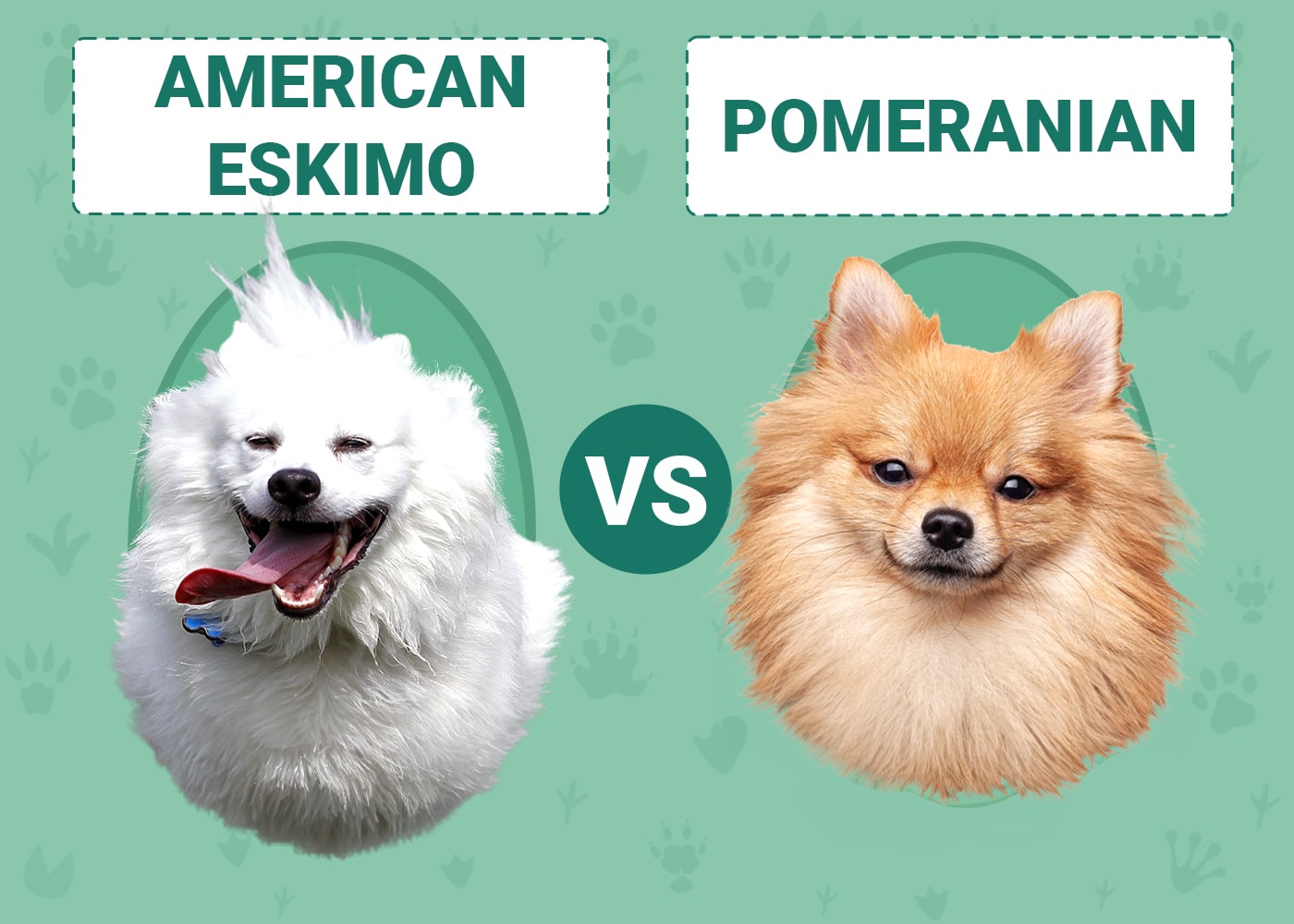
No matter the size, all American Eskimo dogs share the same general appearance. They have a compact, balanced body that is slightly longer than tall. Their head is wedge-shaped with a short, blunt muzzle and small, triangular ears that stand erect. Eskies have dark, expressive eyes and a cute "smile" created by the upturned corners of their mouth.
The American Eskimo dog‘s most striking feature is its thick, fluffy white double coat. The outer coat is long and straight, standing off from the body, while the undercoat is short and dense. They have a ruff of fur around the neck and chest, giving them a lion-like appearance. The tail is heavily plumed and carried up and over the back.
The Eskie‘s white coat is naturally eye-catching and beautiful, but it does require regular grooming to maintain. According to professional groomers, Eskies need to be brushed at least 2-3 times per week to prevent mats and tangles, and more frequently during shedding season. They also need a bath every 1-2 months, nail trims, ear cleaning, and dental care. Many Eskie owners opt to have their dog professionally groomed every 4-8 weeks to keep them looking their best.
Pomeranians
Pomeranians are the smallest of the spitz breeds, typically weighing just 3-7 pounds and standing 6-7 inches tall at the shoulder. They have a compact, square body with a fluffy chest and a heavily plumed tail that fans out over the back.
Poms have a foxy face with a short, pointed muzzle, alert eyes, and small, erect ears. Their head is slightly rounded with a pronounced stop. Poms can come in a wide variety of colors and patterns including red, orange, black, brown, white, cream, blue, sable, brindle, and parti-colors.
The Pomeranian‘s double coat is one of the breed‘s most distinctive features. The outer coat is long, straight, and harsh in texture, while the undercoat is soft, thick, and fluffy. Poms have a ruff of fur around the neck, giving them a mane-like appearance, and fluffy "pantaloons" on the hind legs.
Like the American Eskimo dog, Pomeranians require regular grooming to keep their coat healthy and free of mats. They need to be brushed at least 2-3 times per week, and sometimes daily during periods of heavy shedding. Poms also need a bath every 2-4 weeks, nail trims, ear cleaning, and dental care. Many Pom owners have their dog professionally groomed every 4-6 weeks to maintain the breed‘s signature fluffy look. According to a 2018 study by Petco, the average cost of grooming a Pomeranian is around $50 per session.
Temperament and Personality
American Eskimo Dogs
American Eskimo dogs are known for their friendly, alert, and outgoing personalities. They are intelligent, trainable, and deeply devoted to their families. Eskies are often described as having a clownish, comedic streak and a zest for life. They love being the center of attention and thrive on interaction with their humans.
While Eskies are generally friendly with everyone, they can be reserved or cautious around strangers if not properly socialized. Early exposure to new people, places, and experiences is important to help them develop into confident, well-rounded dogs.
As watchdogs, American Eskimo dogs are alert and vigilant. They will quickly sound the alarm if they sense a potential threat, making them excellent guardians for the home. However, their propensity to bark at every new sight and sound can become a nuisance if not managed with training.
Eskies are highly adaptable and can thrive in many different living situations, from apartments to homes with yards. They are active indoors and do well with several daily walks and play sessions. Eskies crave companionship and do best with an owner who is home often or another canine playmate.
Pomeranians
Pomeranians may be small in stature, but they have big personalities. Poms are known for being lively, intelligent, and inquisitive. They are also highly affectionate and love being the center of attention. Poms bond closely with their owners and can be quite protective of their favorite humans.
Despite their cute appearance, Pomeranians have a bold, feisty streak. They are not always aware of their small size and may try to boss around larger dogs or chase smaller pets. Early socialization and training is essential to help Poms develop good manners and confidence.
Pomeranians are alert and vigilant, making them excellent watchdogs. They will bark to let you know if someone is at the door or if they sense a potential threat. However, Poms can also become yappy if allowed to bark excessively, so training a "quiet" command is important.
Like American Eskimo dogs, Pomeranians are adaptable to many living situations as long as their exercise and companionship needs are met. They do well in apartments with daily walks and playtime. Poms also enjoy participating in dog sports like agility and obedience.
Training and Exercise
American Eskimo Dogs
American Eskimo dogs are highly trainable thanks to their intelligence and desire to please their owners. They excel in obedience, agility, rally, and other dog sports. Eskies also make wonderful therapy dogs thanks to their gentle, intuitive nature.
Like all dogs, Eskies do best with positive reinforcement training methods such as clicker training and rewards-based techniques. They are sensitive and do not respond well to harsh corrections or punishment. Consistency, patience, and a sense of humor are key when training an Eskie.
One of the biggest training challenges with American Eskimo dogs is their tendency to bark excessively. Teaching a "quiet" command and providing plenty of mental stimulation can help curb nuisance barking. Eskies also have a high prey drive and may chase small animals, so a strong recall is essential.
As active dogs, American Eskimo dogs need plenty of exercise to stay happy and healthy. They require at least 30-60 minutes of physical activity per day, which can be broken up into several walks, jogs, or play sessions. Eskies also enjoy hiking, swimming, and playing fetch. Mental exercise is just as important for this clever breed, so puzzle toys and learning new tricks are a must.
Pomeranians
Pomeranians are intelligent and eager to learn, but they can also have a stubborn streak. Like Eskies, Poms respond best to positive reinforcement training with lots of praise and rewards. Short, frequent training sessions work well for this clever but sometimes easily distracted breed.
One of the most important things to teach a Pomeranian is good manners and self-control. Poms can be prone to "small dog syndrome," where they become demanding, snappy, or protective if not properly trained. Teaching a Pom to greet people politely, wait for attention, and respect boundaries is essential.
Housetraining can sometimes be a challenge with toy breeds like Pomeranians due to their small bladders and fast metabolism. Frequent potty breaks, close supervision, and consistency are key. According to a 2019 survey by the AKC, 32% of Pomeranian owners reported that housetraining was the most challenging part of owning the breed.
Despite their small size, Pomeranians still need daily exercise to stay fit and happy. A couple 15-30 minute walks per day plus some indoor playtime or training is usually sufficient. Poms also enjoy participating in dog sports like agility, obedience, and rally. Mental stimulation is important to prevent boredom and destructive behaviors, so puzzle toys and games are recommended.
Health
American Eskimo Dogs
As a purebred dog, American Eskimo dogs are prone to certain genetic health conditions. Some of the most common health issues seen in the breed include:
- Hip dysplasia (abnormal formation of the hip joint)
- Luxating patellas (dislocated kneecaps)
- Progressive retinal atrophy (degenerative eye disease)
- Autoimmune thyroiditis (thyroid disorder)
According to the Orthopedic Foundation for Animals, about 8.3% of American Eskimo dogs screened have hip dysplasia and 7.3% have luxating patellas. Responsible breeders test their breeding stock for these conditions to help produce healthier puppies.
Other health concerns in American Eskimo dogs include dental disease, obesity, and skin allergies. Regular vet check-ups, a healthy diet, and proper grooming can help prevent or manage these issues in many cases.
The average lifespan for an American Eskimo dog is around 13-15 years. A 2021 study published in the journal Canine Medicine and Genetics found that the median age at death for Eskies was 12.7 years, with the oldest dog living to 19 years old.
Pomeranians
Like all purebred dogs, Pomeranians have some genetic health predispositions to be aware of. Some of the most common health issues seen in Poms include:
- Luxating patellas (dislocated kneecaps)
- Tracheal collapse (weakening of the trachea)
- Dental disease
- Hypothyroidism (underactive thyroid)
- Heart disease
According to a 2020 study by the Universities Federation for Animal Welfare, the most common disorders reported by Pomeranian owners were dental disease (42.1% of dogs), luxating patellas (7.1%), and heart murmurs (5.5%).
Pomeranians‘ small size also makes them prone to injuries from jumping off furniture or rough handling. They can also be sensitive to anesthesia, so finding a veterinarian experienced with toy breeds is important.
Other health concerns in Pomeranians include eye problems like cataracts and distichiasis (extra eyelashes that rub against the eye), skin allergies, and seizures. Regular vet check-ups, genetic testing of breeding dogs, and keeping Poms at a healthy weight can help prevent or catch these issues early.
The average lifespan for a Pomeranian is around 12-16 years. A 2013 UK Kennel Club study found that the median age at death for Poms was 12.5 years, with the oldest dog living to 21 years old.
Which Breed is Right for You?
Now that we‘ve covered all the key aspects of American Eskimo dogs and Pomeranians, let‘s summarize which breed might be the best fit for different types of owners and lifestyles.
An American Eskimo dog may be right for you if:
✔️ You want a lively, outgoing companion who will keep you laughing with their clownish antics
✔️ You enjoy training and doing dog sports/activities like obedience, agility, and therapy work
✔️ You can provide at least an hour of exercise and plenty of mental stimulation each day
✔️ You don‘t mind some barking and regular brushing/grooming
✔️ You have a securely fenced yard or a plan for plenty of on-leash exercise
A Pomeranian may be right for you if:
✔️ You‘re looking for a tiny but mighty companion with a big personality
✔️ You live in an apartment or small space and need a portable, adaptable dog
✔️ You want an affectionate lapdog who will also keep you on your toes
✔️ You can commit to daily walks and playtime plus regular training
✔️ You don‘t mind a little extra grooming and dealing with potential housetraining challenges
Of course, these are just general guidelines and every individual dog, even within the same breed, has their own unique personality. The best way to decide between an American Eskimo dog and Pomeranian is to meet both breeds in person, talk to reputable breeders and owners, and assess your own lifestyle and preferences.
As a veterinarian and dog lover myself, I‘ve had the pleasure of working with many American Eskimo dogs and Pomeranians over the years. I‘m always impressed by the Eskie‘s intelligence, trainability, and zest for life. They have a special sparkle that brings joy to everyone they meet.
Pomeranians, on the other hand, never fail to make me smile with their big personalities packed into such a tiny body. They may be small, but they have the courage and confidence of a dog ten times their size. Poms are also so intuitive and in tune with their owners‘ emotions.
Whichever breed you choose, know that you are getting a loyal, loving companion who will bring laughter, joy, and fluffy snuggles to your life for many years to come. Just be sure to do your research, find a responsible breeder, and commit to providing your new best friend with everything they need to thrive.