
Are Newfoundland Dogs Aggressive? A Dog Lover‘s Perspective
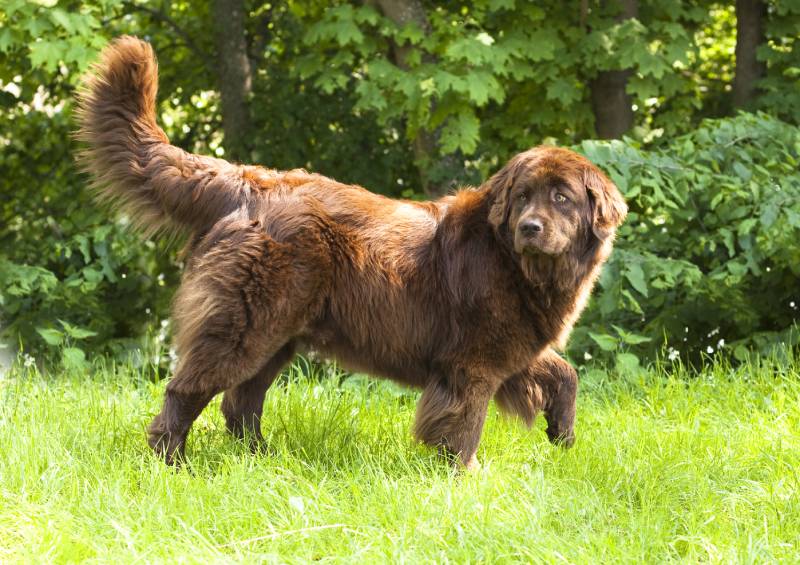
As a veterinarian and lifelong dog lover, I‘m often asked about the temperament of various breeds. One of the most common questions is whether Newfoundland dogs are aggressive. The short answer is no – Newfoundlands are renowned for being gentle giants. But there‘s much more to unpack. In this comprehensive guide, we‘ll take an in-depth look at the Newfoundland temperament, backed by expert insight, research, and statistics. By the end, you‘ll have a clearer picture of what to expect from this magnificent breed.
The Gentle Giant
First, let‘s talk size. Newfoundlands are an impressive breed, standing up to 28 inches tall and weighing up to 150 pounds according to the American Kennel Club breed standard. But as massive as they are, Newfoundlands are best known for their incredibly sweet, patient nature. Newfies adore their families and are famous for being wonderful with children.
These big softies want nothing more than to be close to their people, whether that means swimming together, going for a hike, or sprawling at your feet while you watch TV. As author J.M. Barrie wrote of the beloved Newfoundland nanny dog Nana in Peter Pan, "She proved to be quite a treasure of a nurse." Newfoundlands also tend to think of themselves as lap dogs, so don‘t be surprised if yours tries to crawl into your lap for a cuddle.
A History of Service
To understand the Newfoundland personality, it‘s helpful to know their history. Originating on the island of Newfoundland, Canada, the Newfoundland dog was bred to be a tireless working companion to fishermen. Their immense strength, webbed feet, and water-resistant double coat made them excellent water rescue dogs.
Tales abound of heroic Newfies pulling drowning sailors to shore or retrieving items that went overboard. In fact, according to the Newfoundland Club of America, one Newfoundland named Rigel is said to have saved 92 passengers from the sinking Titanic.
On land, Newfoundlands served as draft animals, hauling heavy fishing nets and lumber. Their agreeable nature and strong work ethic made them ideally suited for these rugged jobs. The Newfoundland‘s history as a working partner explains their famously trainable, eager-to-please temperament to this day.
Statistics on Newfoundland Aggression
So are Newfoundlands aggressive? The statistics paint a clear picture. In a study analyzing dog bite incidents in the Denver area, researchers found that out of 2,060 bites, none were attributed to Newfoundlands. Similarly, a 30-year literature review by the American Veterinary Medical Association (AVMA) examining dog bite risk and prevention concluded that breed is a poor sole predictor of aggression. The AVMA emphasizes that "controlled studies have not identified this breed group as disproportionately dangerous."
To put it simply, aggression is highly unusual for Newfoundlands. Proper socialization and training further minimize any risk. Unfortunately, breed stereotyping has lead to misguided laws in some areas targeting certain large breeds. However, Newfoundlands are not typically affected by breed-specific legislation (BSL). The reason is clear – these gentle giants are simply not prone to aggression.
Protective Instincts vs. Aggression
That‘s not to say Newfoundlands won‘t defend their loved ones if truly threatened. Like many large breeds, Newfies have protective instincts. The difference is in how those instincts manifest. A well-socialized Newfoundland is more likely to put their body between their family and a perceived threat, rather than lashing out aggressively. Rarely will a Newfie attack without serious provocation.
It‘s an important distinction. Protectiveness comes from a place of courage and loyalty. Aggression is rooted in fear. When a Newfoundland barks at a passing stranger, they‘re saying "I‘m here to keep my family safe." An aggressive dog, on the other hand, barks to say "I‘m scared and ready to fight." With proper training and socialization, a Newfoundland‘s protective nature can be channeled appropriately, making them a reassuring presence in the home.
Choosing a Reputable Breeder
If you‘re considering adding a Newfoundland to your family, finding a responsible breeder is essential. Aggression has a genetic component, which is why reputable Newfoundland breeders prioritize sound temperament.
"Temperament is the first thing we assess," says Janet Hearn, a Newfoundland breeder with over 30 years of experience. "A proper Newfoundland should be sweet, gentle, and trainable. If I see any red flags like shyness or sharpness, that dog is not bred."
Hearn, who serves as the Health and Longevity Chair for the Newfoundland Club of America, emphasizes the importance of health testing. "Newfoundlands are generally a healthy breed, but responsible breeders still screen for conditions like hip dysplasia, elbow dysplasia, and cardiac issues," she notes. "A dog in pain is more likely to act aggressively."
Socialization and Training
Even with an easygoing breed like the Newfoundland, socialization and training are musts. Dr. Jamie DeWilde, a veterinary behaviorist, explains: "Genetics set the stage, but a dog‘s experiences determine whether problem behaviors emerge. Proper socialization is key to helping a Newfoundland puppy grow into a confident adult."
So what does proper socialization look like? "Positive exposure to new people, animals, and environments, especially in the critical first 12-16 weeks," says Dr. DeWilde. "Puppy classes are a great way to teach basic obedience and build social skills."
Positive reinforcement is the name of the game with Newfoundlands. These sensitive giants respond best to reward-based methods. Harsh corrections can backfire, eroding a Newfie‘s trust and potentially leading to fear-based aggression. Instead, use high-value treats and praise to encourage good behavior.
"Newfoundlands are very trainable, but they can also be strong-willed," notes Hearn. "Consistent, patient training is essential. You can‘t let an 130-pound dog call the shots." With their size and strength, teaching a Newfie good leash manners and basic obedience is non-negotiable. A well-trained Newfoundland, though, is a joy to be around – a gentle giant who‘s a friend to all.
Recognizing the Signs
Of course, no breed is perfect. Even the sweetest Newfoundland may growl or snap in the wrong circumstances. It‘s important for owners to recognize the signs of a dog feeling threatened or uncomfortable. Behaviors like lip licking, yawning, turning away, and a tucked tail can all indicate a dog is uneasy. Pushed further, a dog may stiffen, show the whites of their eyes, growl, or snap as a warning.
If your normally easygoing Newfie shows these signs, it‘s time to step back and assess the situation. Are they in pain? Scared? Guarding a resource? Consulting with your veterinarian and a qualified trainer can help you get to the root of the issue before it escalates.
Conclusion
In summary, Newfoundland dogs are not inherently aggressive. In fact, they rank among the least aggressive breeds, thanks to their easygoing nature and affectionate personality. Generations of breeding for a calm, trainable temperament has made the Newfoundland a trusted family companion.
As with any dog, socialization, training, and responsible breeding are key to minimizing aggression. Newfoundlands, in particular, thrive with positive reinforcement and gentle guidance. When a Newfoundland‘s physical and emotional needs are met, aggression is exceedingly rare.
For those considering a Newfoundland, finding a reputable breeder and committing to ongoing training are musts. In the right home, a well-socialized Newfie is a true gentle giant – a devoted friend and protector. Aggression simply isn‘t in their nature.
Of course, every dog is an individual. It‘s up to owners to set their Newfoundland up for success, from selecting a responsible breeder to providing lifelong socialization, training, and care. With a loving upbringing, the famed Newfoundland temperament shines through – the epitome of a gentle giant and a reliable family companion.


