
Belgian Malinois vs. German Shepherd: Differences Explained (With Pictures)
Belgian Malinois vs German Shepherd: A Detailed Comparison
Introduction
If you‘ve ever seen a lean, agile dog that looks like a smaller version of a German Shepherd, chances are you spotted a Belgian Malinois. These two herding breeds share many similarities in appearance and temperament, but they also have some key differences. As a veterinarian and dog lover, I‘m often asked about how the Malinois and GSD compare. While both make loyal, intelligent companions in the right homes, one may be a better fit for you than the other. Let‘s take an in-depth look at the Belgian Malinois vs German Shepherd.
History and Origins
The Belgian Malinois and German Shepherd Dog (GSD) were both originally developed in the late 1800s as herding and working dogs. The Malinois takes its name from the Belgian city of Malines, where it was bred to be a tireless sheep herder. The breed‘s working ability and drive were prioritized over its appearance.
Meanwhile in Germany, Captain Max von Stephanitz set out to create the ideal herding dog and later police/military dog – one that combined intelligence, loyalty, athleticism, and a strong work ethic. Von Stephanitz admired dogs with these qualities from different regions of Germany, and bred them together to produce the foundation of the German Shepherd breed.
The GSD came to America in the early 1900s and rapidly grew in popularity as both a working dog and family pet. The Malinois arrived around the same time but remained more of a niche breed. In recent decades, the Mal has become increasingly common as a military and police dog thanks to its extreme athleticism, intensity, and trainability.
Physical Characteristics
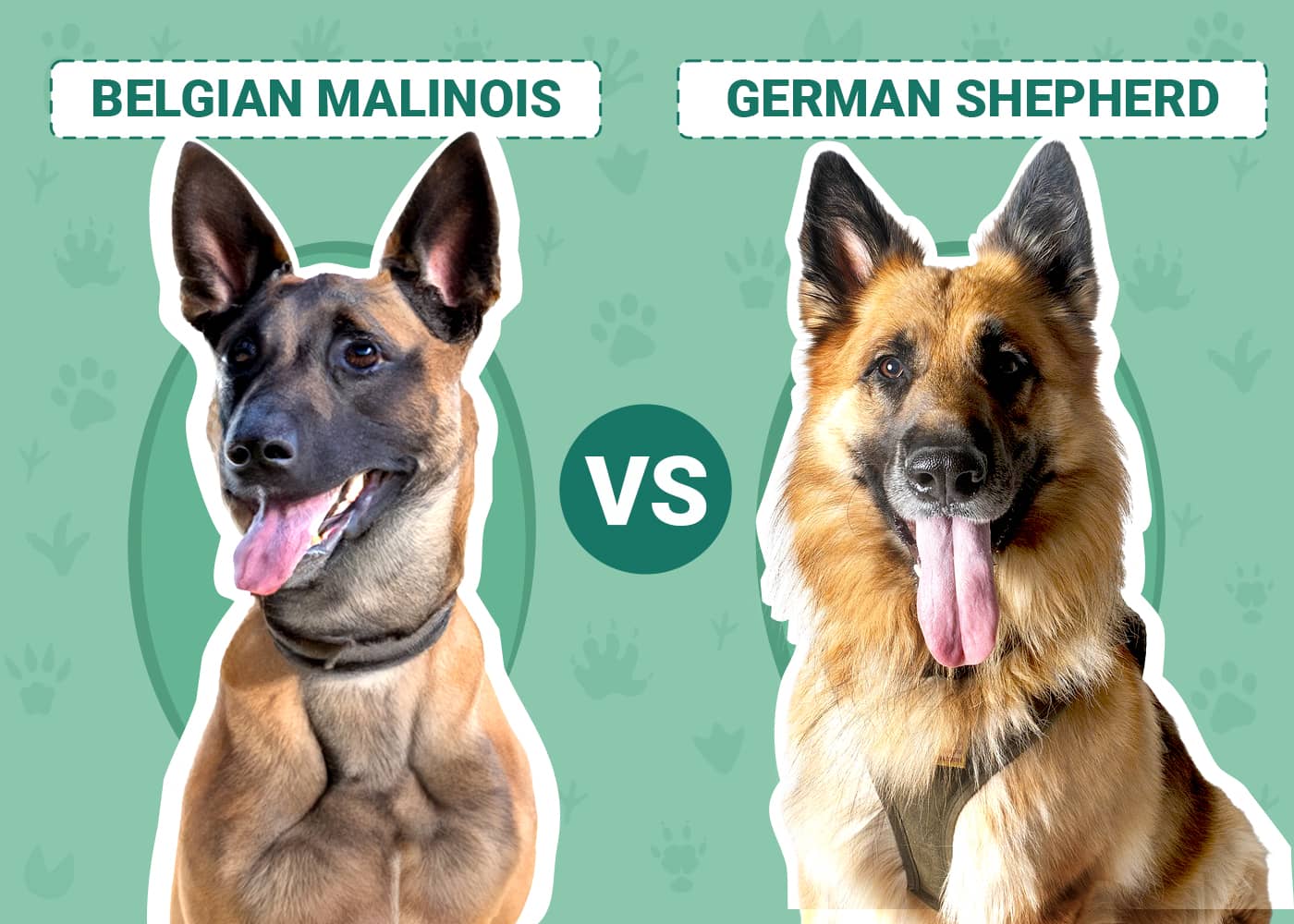
While similar in coloring and basic body shape, the Malinois and GSD have some noticeable physical differences. The Mal looks like a leaner, lighter-boned version of a German Shepherd. Most Malinois stand 22-26 inches tall and weigh 40-80 pounds, with females smaller than males. GSDs have a larger, sturdier build at 50-90 pounds and 22-26 inches tall.
The Malinois has a short, straight coat that sheds moderately year-round. It‘s usually fawn colored with a black mask and ears. The GSD‘s medium-length double coat sheds heavily and comes in more colors – most commonly black and tan or sable. GSDs typically have a longer, more tapered muzzle and a sloped back compared to the Mal‘s straight topline.
Both breeds have brown, almond-shaped eyes, pricked ears, and a long, tapered tail. They may look intimidating to some but have an elegant, regal appearance when well cared for.
Temperament and Personality
Belgian Malinois and German Shepherds share many core temperament traits. Both are immensely loyal, intelligent, confident, and full of energy. They bond very closely with their owners and need lots of interaction and inclusion in activities. Left alone too much, they may develop separation anxiety, destructive behavior or incessant barking. These are not low-maintenance "set it and forget it" type of dogs.
When responsibly bred and properly raised, both Mals and GSDs have stable, friendly personalities. However, poor breeding and lack of socialization can result in fearful, anxious, or aggressive dogs. Both breeds are naturally aloof with strangers and have strong protective instincts. Early, positive exposure to many people is essential for them to distinguish real threats from normal life. The GSD tends to be more tolerant and easygoing with kids and other animals, while the Mal is often more intense and easily aroused.
Properly channeling their energy is key – bored, underexercised Mals and GSDs will make their own fun by digging, chewing and escaping. The Malinois has extremely high drive and excels at fast-paced sports like agility, flyball, herding trials, Schutzhund and dock diving. GSDs also enjoy an active lifestyle but are a bit more versatile in their interests. Many thrive as service dogs, therapy dogs, search and rescue K9s, and family companions.
Trainability and Intelligence
The Malinois and GSD both rank at the top of the dog world in trainability and work intelligence. They excel at learning complex tasks, following instructions, and problem solving. In experienced hands, both breeds readily pick up basic obedience as well as specialized skills needed for police, military, detection and service work.
The Malinois has laser-like focus, a strong desire to cooperate with its handler, and an incredible work ethic. This makes them relatively easy to train in a short period of time for demanding real-world jobs. However, they have extremely high mental and physical stimulation needs that aren‘t a good fit for the average home.
GSDs are a bit more forgiving and adaptable as companions. They still require dedication to training and plenty of exercise, but can settle into family life better than most Malinois when their needs are met. Many GSDs excel in dog sports and work but don‘t need a "job" to the same degree as a Mal.
Positive reinforcement methods work best for both breeds. They need motivational, reward-based training and ongoing mental enrichment throughout their lives. Harsh corrections, boring repetition and babying will backfire. Set clear rules and boundaries from puppyhood and be consistent.
Exercise and Activity Level
If you‘re considering a Belgian Malinois vs German Shepherd, be prepared to become much more active yourself! Both of these breeds need serious physical and mental exercise every single day to be happy and well-behaved. A few walks around the block won‘t cut it.
Expect to provide at least two hours per day of heart-thumping aerobic activity for a Mal or GSD. This could include running, biking, swimming, fetch, frisbee, hiking, etc. Ideally, break it up into a couple sessions with one longer outing. Interactive play sessions and food-dispensing puzzle toys help meet their mental stimulation needs.
Most Mals are insanely high energy and need even more intense activity than a typical GSD. They make great running partners and often do best when competing in a dog sport. Malinois puppies are adorable little sharks that will run you ragged with their mouthiness and zest for life.
If you can‘t commit to an active lifestyle long-term, you‘ll likely end up with a neurotic, destructive dog. A tired Mal or GSD is a good Mal or GSD!
Health and Lifespan
Both the Belgian Malinois and German Shepherd are generally healthy breeds, but they can inherit some genetic disorders. GSDs in particular have seen their lifespan and health decline over decades of being bred for an extremely sloped back and sharply angled hind legs.
The average lifespan of a GSD is 7-10 years, while Malinois tend to live longer at 14-16 years. Responsible breeders will screen their stock for common issues in each breed:
Malinois:
- Hip and elbow dysplasia
- Eye disorders like progressive retinal atrophy
- Certain cancers like hemangiosarcoma
German Shepherd:
- Hip and elbow dysplasia
- Degenerative myelopathy (spinal cord disorder)
- Exocrine pancreatic insufficiency (EPI)
- Bloat (GDV)
- Allergies and other skin problems
- Eye problems like pannus
Both breeds can be prone to anxiety, noise phobias and obsessive behaviors if not properly bred, socialized and exercised. Choosing a puppy from health-tested parents and a responsible breeder is the best way to stack the odds in your favor.
Grooming and Care
Grooming is a bit easier for the Malinois vs GSD. The Mal‘s short, dense coat sheds an average amount and benefits from weekly brushing. The German Shepherd is a heavy shedder, especially during seasonal coat blows. Expect hair on your clothes and furniture and frequent vacuuming. Brush the thick double coat a few times a week.
Nails should be trimmed regularly if not worn down naturally. Check the ears for wax buildup, redness or odor that could indicate an infection. Brush the teeth several times a week to prevent gum disease and bad breath. GSDs in particular may develop plaque and tartar quickly.
Both breeds are athletic and prone to joint disorders, so maintaining a lean, healthy weight is critical. Feed a balanced, age-appropriate diet and limit treats. Mals and GSDs often do well with foods marketed for active or working dogs.
Which Breed is Right For You?
Deciding between a Belgian Malinois vs German Shepherd is a big commitment either way. These are both loyal, trainable, high-energy breeds that will be your constant shadow. In general, the Malinois is more intense, higher drive, and needs an experienced owner dedicated to providing tons of exercise and training. They excel as elite working dogs but tend to be "too much dog" for the average family.
A well-bred GSD is often a better choice for an active household that wants an intelligent, protective companion to join in hiking, camping and other adventures. They still need firm, consistent training and at least a couple hours of exercise daily to be the great dogs they‘re meant to be.
If you can meet their physical needs, provide mental stimulation, and navigate the ups and downs of owning a powerful working breed, a Belgian Malinois or German Shepherd will reward you with unwavering loyalty and a one-of-a-kind bond.


)