
Black and Tan Dachshund: Facts, Origin & History (With Pictures)
Black and Tan Dachshund: A Comprehensive Guide to This Classic Wiener Dog
You know a dachshund when you see one – that unmistakable elongated body, short legs, and oversized personality in a pint-sized package. But did you know these spunky "wiener dogs" come in several coat colors and patterns? One of the most iconic and popular is the black and tan dachshund.
Whether you‘re already a devoted dachshund owner or considering adding one of these playful pups to your family, you likely have questions about the breed and this particular color variety. As a veterinarian and lifelong dachshund devotee, I‘m here to give you the full scoop on black and tan doxies, from their physical characteristics and temperament to their health needs and ideal home environment.
Breed Overview
The dachshund is a lively, clever, and courageous dog breed that originated in Germany several hundred years ago. Their name literally means "badger dog" in German, reflecting their original purpose of fearlessly hunting small game like badgers and rabbits, flushing them out of their dens.
Modern dachshunds still have a strong prey drive, but they are primarily companion dogs today. They come in two sizes – standard and miniature. Within those sizes, there are three coat types – smooth (short), long-haired, and wire-haired. And there are several coat colors and patterns, including the striking black and tan.
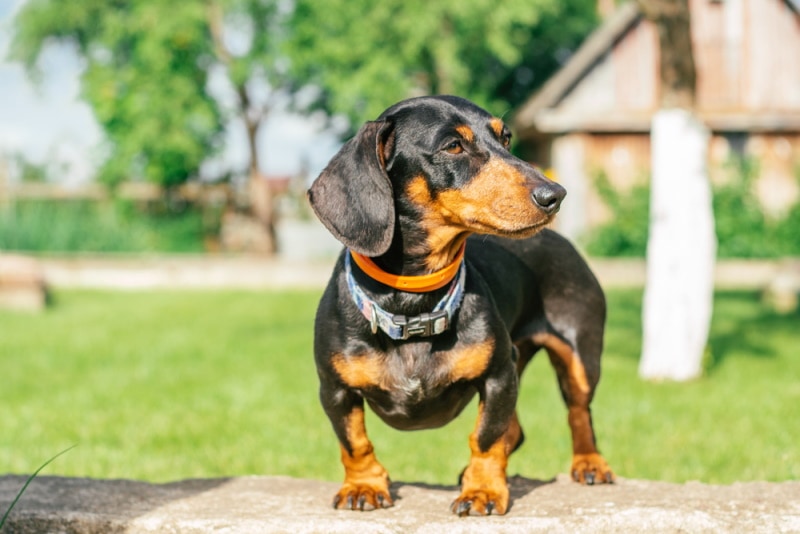
According to the breed standard, a black and tan dachshund has a base color of black with tan "points" above each eye, on the sides of the muzzle, on the cheeks, inside the ears, on the chest/throat, on the lower legs, and under the tail. The black should be a deep, rich color and the tan a vibrant shade.
This coloration is a result of the agouti gene, which causes banding of color in individual hairs. Black and tan puppies are born almost entirely black and develop their tan points as they grow and their adult coat comes in.
Characteristics and Temperament
Black and tan dachshunds have the same general temperament as all their doxie cousins – friendly, curious, lively, and affectionate with their families. They tend to bond very closely with their owners and can even get jealous or anxious if not given enough attention. Early socialization is important to prevent overly possessive behavior.
These clever dogs have a moderate to high energy level and need plenty of mental stimulation in addition to physical exercise. A bored doxie is likely to get into mischief! They enjoy brisk walks, games of fetch, puzzle toys, learning tricks, and competing in dog sports like earthdog trials that let them use their keen noses. About 30-60 minutes of activity a day is ideal for most.
With their alert nature and tendency to bark at any strange sound or sight, dachshunds make excellent watch dogs. However, those same traits mean a lot of barking that you‘ll need to work on controlling. While generally good with other dogs and pets, their strong prey drive means they‘ll likely chase small animals like cats unless socialized with them from a young age.
Despite their small size, doxies have big personalities and an independent streak. They require a firm but loving approach to training and plenty of positive reinforcement. Dachshunds are clever and food motivated, so they pick up new commands quickly – when they feel like it! Patience and consistency are key.
Grooming and Care
As with all smooth-coated doxies, black and tans have short, shiny, dense fur that sheds moderately. Weekly brushing and the occasional bath is generally sufficient to maintain their coat. They don‘t need haircuts, but their fast-growing nails should be trimmed regularly. Don‘t forget to brush their teeth and clean their ears too!
Because of their long spine and short rib cage, dachshunds are prone to back problems like intervertebral disc disease (IVDD). Using a harness instead of a collar, supporting their backs when holding them, and preventing them from jumping off furniture can all help protect that long back.
Other health issues seen in the breed include eye problems like glaucoma, heart disease, hypothyroidism, and more. Genetic testing before breeding is critical. The average lifespan is 12-15 years.
Fun Facts
So now you have a good overview of what it‘s like to own a black and tan dachshund. Here are a few fun facts about the breed and color to leave you with:
-
Dachshunds are the smallest dog breed in the hound group. The first doxies were larger dogs weighing 30-35 pounds that could fight badgers. Smaller sizes were later bred to hunt rabbits and foxes.
-
The dachshund was a popular mascot for political parties and patriotic organizations in Germany in the early 1900s. In America, they are sometimes used as mascots for hot dog companies.
-
Some famous owners of black and tan dachshunds include artist Pablo Picasso, actor Jack Black, and President John F. Kennedy.
-
A red (diluted black) and tan dachshund named Chanel, born in 1988, held the world record for oldest dog before passing away at 21 years old in 2009.
-
Black and tan dachshunds often have adorable "tan points" or dots above their eyes that look like eyebrows!
Whether you call them doxies, wiener dogs, or sausage pups, black and tan dachshunds are adorable little hounds with big dog attitudes. If you can handle their strong-willed nature and give them lots of love and attention, they make devoted companions for many happy years.



)