Boerboel vs. Cane Corso: A Comprehensive Comparison of Two Powerful Guardian Breeds
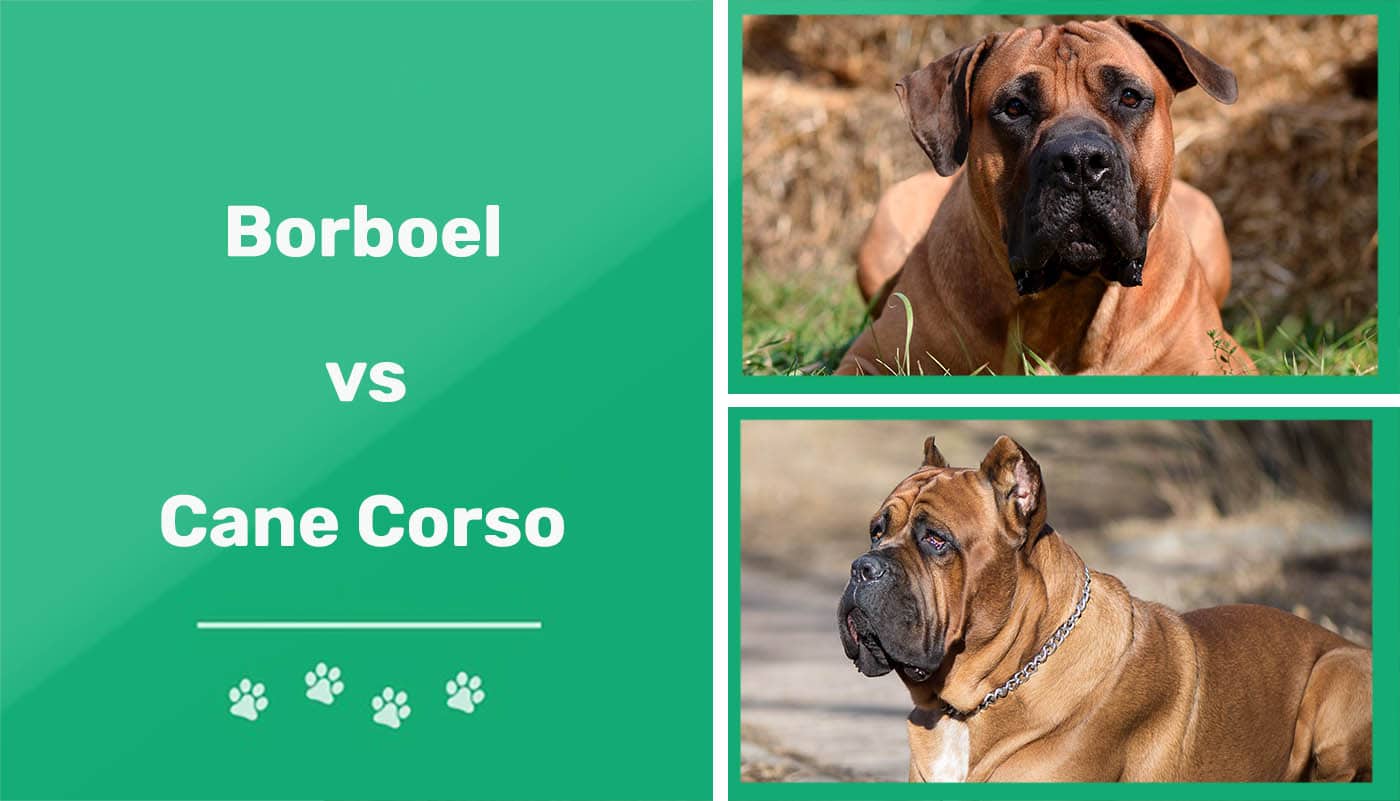
If you‘re looking for a loyal, protective companion, you may have come across the impressive Boerboel and Cane Corso in your research. Both of these large guardian breeds have rich histories and admirable qualities—but they also have some key differences that are important to understand before deciding which one is right for you.
In this in-depth guide, we‘ll explore the origins, physical attributes, temperaments, and care requirements of the Boerboel and Cane Corso. By the end, you‘ll have a clear picture of what it‘s really like to live with each of these majestic dogs.
Breed History and Origins
The Boerboel: South Africa‘s "Farmer‘s Dog"
The Boerboel‘s roots trace back to the 17th century, when Dutch settlers brought large Mastiff-type dogs to South Africa. These dogs were bred with indigenous African breeds to create a formidable working dog perfectly suited to guarding remote homesteads from predators like lions and baboons. In fact, the name "Boerboel" derives from the Afrikaans/Dutch words for "farmer‘s dog."
Although the breed‘s numbers dwindled in the early 20th century, a group of dedicated Boerboel enthusiasts revived the lineage in the 1980s. Their careful breeding helped restore the Boerboel to its original impressive stature and stable temperament. Today, this beloved breed serves as a capable working dog and devoted family guardian.
The Cane Corso: An Ancient Italian Molossus
Like the Boerboel, the Cane Corso descends from ancient Molossus war dogs. The breed‘s name roughly translates from the Latin for "bodyguard dog," reflecting its historic role as a protector and working partner in Italy.
For centuries, the Cane Corso‘s brawn and courage made it an indispensable asset on farms and estates. These dogs herded cattle, hunted large game like wild boar, and fiercely defended property from intruders. As farming became more mechanized in the mid-20th century, the breed nearly went extinct.
Fortunately, a group of Italian fanciers launched a revival effort in the 1970s. They worked tirelessly to preserve the Cane Corso‘s classic type and versatile working ability. While still a relatively rare breed, the noble Cane Corso has gained popularity worldwide as a discerning guardian, athlete, and companion.
Physical Characteristics
Both the Boerboel and Cane Corso are undeniably large, muscular dogs with substantial bone and commanding presence. However, there are some notable differences in their physical attributes.
Boerboel Basics
The Boerboel is a true giant, often weighing over 150 pounds, with some males reaching 200 lbs or more. They typically stand 22-27 inches tall at the shoulder. Despite their imposing size, Boerboels are known for being agile and light-footed.
A few key physical traits of the Boerboel:
- Blocky, broad head with a short muzzle and heavy jowls
- Muscular neck and chest, powerful legs, and a thick tapering tail (traditionally docked)
- Short, dense coat in shades of red, fawn, brindle, or black, with or without white markings
- Dark brown, intelligent eyes and V-shaped ears
Cane Corso Qualities
Standing 23.5-27.5 inches tall and weighing 90-120 pounds on average, the Cane Corso is also an impressive specimen—but packaged in a slightly more compact, athletic frame compared to the giant Boerboel.
Some distinguishing features of the Cane Corso include:
- Elongated, rectangular head with a moderately long muzzle and hanging upper lips
- Thickly muscled, slightly arched neck flowing into a deep chest and taut abdomen
- Short, stiff coat in black, gray, fawn, or red, with or without brindling or white patches
- Almond-shaped, alert eyes and natural or cropped ears carried high and upright
Temperament and Personality
As guardian breeds, both the Boerboel and Cane Corso are naturally wary of strangers and have strong protective instincts. Early, extensive socialization is absolutely essential for them to distinguish real threats from normal human interactions. With proper training and leadership, these dogs can be stable, discriminating protectors.
The Boerboel: Confident and Calm
Boerboels tend to have a somewhat serious, self-assured demeanor. They are deeply loyal to their families and crave being near their people, but they aren‘t overly demonstrative or high-energy like some other big breeds.
While generally good with children when raised with them, a Boerboel‘s sheer size means playtime should always be supervised. They can also get along with other pets if carefully introduced, but some can be same-sex aggressive (especially females) or have a high prey drive.
The ideal Boerboel is a even-tempered, intuitive guardian that displays courage when needed but has an "off switch" to relax at home. Stability is key—shyness, reactivity, and aggression are not correct for this breed.
The Cane Corso: Assertive yet Affectionate
Cane Corsos are known for being highly intelligent, eager to please, and in tune with their humans. They can be aloof or suspicious around strangers but are usually accepting of guests once properly introduced by their owners.
With their families, Cane Corsos tend to be demonstratively affectionate and maybe even a bit silly at times. They enjoy being involved in all household activities and thrive on having a job to do, whether that‘s alerting to visitors or accompanying you on hikes.
Like Boerboels, Cane Corsos can do well with children and other animals when carefully socialized, but their strong guardian instincts, powerful jaws, and low tolerance for rough handling mean interactions must be supervised.
A well-bred, well-raised Cane Corso should be a stable, versatile companion that is attentive to its family while maintaining an air of dignified reserve.
Training and Exercise Needs
As intelligent, strong-willed working breeds, both the Boerboel and Cane Corso require committed training from puppyhood through adulthood.
Boerboel Training Tips
Boerboels are independent thinkers, originally prized for their ability to make decisions while guarding remote homesteads. This means they can be somewhat challenging to train, especially for novice owners. Key tips for success:
- Start training early with positive reinforcement methods; never use harsh corrections
- Keep sessions short and fun to hold your Boerboel‘s attention; be patient and consistent
- Socialize extensively to a wide variety of people, animals, and environments
- Provide plenty of mental stimulation with puzzle toys, scent games, obedience training, etc.
- Aim for at least one hour of exercise daily—Boerboels are big, strong athletes that need outlets
Cane Corso Training Essentials
Cane Corsos also have an independent streak but are generally more biddable and handler-oriented than Boerboels. They excel in obedience, tracking, protection sports, and other dog sports. Some training musts:
- Begin socialization and training as early as possible; enroll in a puppy kindergarten class
- Use positive methods like clicker training and reward-based games; build a bond of trust
- Expose to many different people, places, sights and sounds during critical socialization periods
- Provide ample daily exercise (at least 45-60 minutes)—long walks, hikes, swims, tug, etc.
- Continue training throughout the Cane Corso‘s life to keep them mentally sharp
Both of these guardian breeds need competent, consistent training to bring out their best qualities and channel their natural drives. Professional guidance is highly recommended, especially for first-time owners.
Grooming and General Care
Thanks to their short coats, neither the Boerboel nor the Cane Corso has extensive grooming needs. Brushing with a rubber curry or hound glove once or twice a week, plus the occasional bath, is usually sufficient. However, they do shed moderately year-round and will "blow coat" once or twice a year.
Other care requirements to note:
- Dental hygiene is very important for these large breeds; brush teeth daily if possible and schedule professional cleanings
- Nail trims every few weeks are a must to prevent painful overgrowth and splitting
- Floppy ears should be checked weekly for signs of infection and wiped with a gentle cleanser
- Due to their size, both breeds are prone to joint issues like hip dysplasia; maintain a healthy weight and provide orthopedic beds
While they don‘t need extensive coat care, Boerboels and Cane Corsos do best with a structured daily routine including plenty of exercise, enrichment, training, and quality time with their humans. If you travel frequently or work very long hours, these probably are not the breeds for you.
Health and Longevity
As large, deep-chested breeds, both Boerboels and Cane Corsos are unfortunately predisposed to some significant health issues. Responsible breeders work hard to screen for these conditions, but it‘s important for prospective owners to be aware of them.
Boerboel Health Concerns
- Hip and elbow dysplasia
- Eye problems like ectropion, entropion, and cherry eye
- Cardiac issues like dilated cardiomyopathy and subaortic stenosis
- Bloat/gastric torsion
- Hypothyroidism
- Skin fold dermatitis
The average lifespan for a Boerboel is 9-11 years.
Cane Corso Health Risks
- Hip and elbow dysplasia
- Eye problems like cherry eye, entropion, and ectropion
- Demodectic mange
- Bloat/gastric torsion
- Cardiac conditions like dilated cardiomyopathy
- Autoimmune thyroiditis
The typical life expectancy for a Cane Corso is 9-12 years.
Selecting a Boerboel or Cane Corso puppy from a responsible breeder who does extensive health testing on their breeding stock is crucial for getting the healthiest dog possible. Once you bring your new companion home, keeping them lean, providing joint supplements, and scheduling regular vet check-ups can help support their long-term health.
Breed Availability and Choosing a Breeder
Both the Boerboel and Cane Corso are still fairly uncommon breeds, so you will need to do your research to find a reputable, ethical breeder. Avoid buying from pet stores, puppy mills, or online sellers, as these sources often prioritize profit over the health and temperament of their dogs.
Instead, seek out a preservation breeder who is a member of their breed‘s national club and follows the club‘s code of ethics. Some green flags to look for:
- Health testing of all breeding stock, including hip and elbow x-rays, eye exams, and cardiac evaluations
- Temperament testing of breeding dogs to ensure solid, stable personalities
- Puppies raised in the home with early socialization and enrichment
- Breeder willing to answer all questions and let you meet the puppy‘s parents
- Contract requiring spay/neuter and stating the breeder will take back the dog at any time if needed
Expect to be interviewed in depth about your lifestyle and experience level—responsible Boerboel and Cane Corso breeders are very selective about placing their puppies and want to ensure they are going to appropriate homes.
You may need to join a waiting list for a puppy, as most responsible breeders only produce a few carefully planned litters per year. Prices can vary widely depending on geographic location and the breeder‘s reputation, but expect to pay at least $1500-$2500 for a well-bred Boerboel or Cane Corso pup.
Making Your Decision
Choosing between the mighty Boerboel and noble Cane Corso depends on your experience level, lifestyle, and what you‘re looking for in a canine companion. Both breeds have specific needs that must be carefully considered before making a commitment.
The Boerboel can be an excellent fit for an experienced big-dog owner who wants a calm, stable protector and has the space to accommodate a giant breed. The Cane Corso may be a better choice for an active household that can provide plenty of training and exercise outlets for this smart, athletic breed.
Whichever guardian breed you decide on, investing in their training, socialization, and care will yield a devoted friend for life. With responsible breeding and ownership, both the Boerboel and Cane Corso can be magnificent companions for the right families.