Can I Treat My Dog’s Abscess at Home? Our Vet Explains
How to Treat an Abscess on a Dog at Home: A Vet‘s Step-by-Step Guide
Is your dog suffering from a swollen, pus-filled lump? Abscesses are a common and painful problem in our canine companions. As a veterinarian, I know how worrying it can be to discover an abscess on your furry friend. The good news is, most abscesses can be successfully treated, and many aspects of the treatment can be done at home.
In this article, I‘ll walk you through everything you need to know about identifying, treating, and preventing abscesses in dogs. We‘ll cover when it‘s essential to see your vet, and give you step-by-step guidance on how to care for your pup‘s abscess at home. Let‘s get started!
What is an Abscess?
An abscess is a painful collection of pus that forms under the skin as a result of a localized infection. When bacteria enter the body through a break in the skin or mucous membranes, the immune system springs into action, sending white blood cells to fight off the invaders.
As the battle wages, dead bacteria and white blood cells accumulate, forming a thick, yellowish liquid called pus. The pus is walled off by a capsule to prevent the infection from spreading further. This containment strategy is actually a clever defense mechanism, but it leads to a pressure-filled pocket that can be very sore for your dog.
What Causes Abscesses in Dogs?
Abscesses can form whenever bacteria sneak past your pup‘s natural defenses. Some common causes include:
- Puncture wounds from things like animal bites, thorns, or sharp objects
- Foreign bodies like foxtails or wood splinters getting trapped under the skin
- Dental issues allowing bacteria to invade through decayed teeth or damaged gums
- Blocked anal glands that become infected
- Skin fold pyodermas in wrinkly breeds like Bulldogs and Shar Peis
- Weakened immune system from conditions like diabetes or Cushing‘s disease
Certain locations on your dog‘s body are more prone to developing abscesses too. These abscess "hot spots" include:
-
Anal glands – Located at 4 and 8 o‘clock below the anus, anal sacs can become impacted and abscessed.
-
Tooth roots – Especially the upper 4th premolar and 1st molar. Bacteria can track up the periodontal space leading to swelling under the eye.
-
Paws – Grass awns, splinters, and other foreign objects easily get stuck between the toes.
-
Faces, head and neck – Common sites for bite wound abscesses from scuffles with other animals.
-
Pressure points – Like the elbows, hocks, and hips in large breed or underweight dogs.
Spotting the Signs of an Abscess
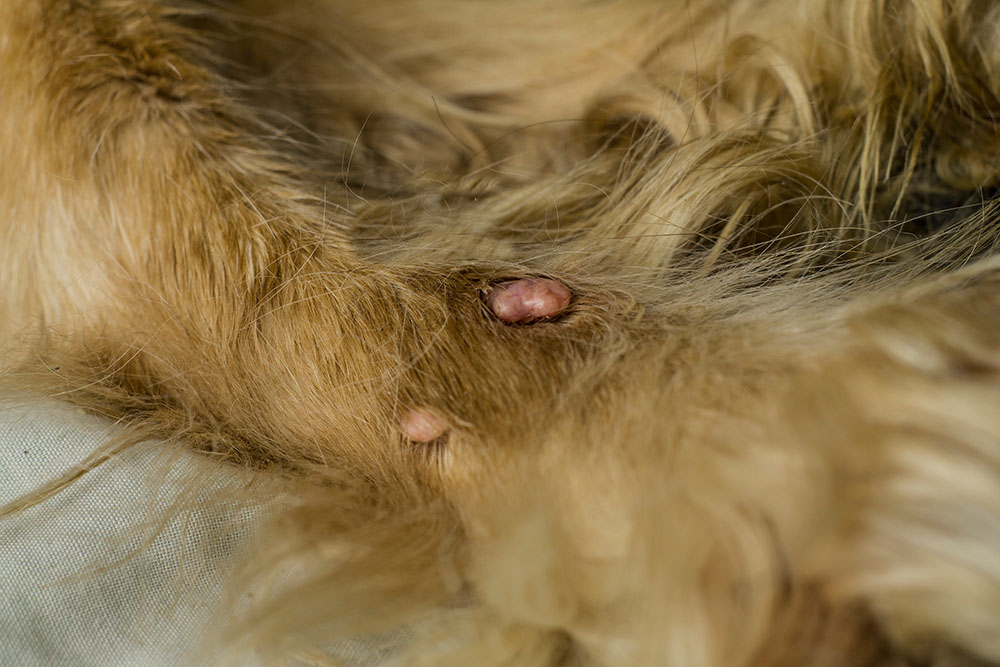
Abscesses often look like a large, semi-soft, fluid-filled lump under your dog‘s skin. If you look closely, you may see a small scab or opening where pus can drain out. Other signs your dog could have an abscess include:
- Incessant licking, chewing or scratching at the site
- Swelling, redness and heat around the lump
- Pus or blood oozing from the area
- Lethargy, fever and loss of appetite in more severe cases
- Hair loss over the affected region
- Limping or a reluctance to move if the abscess is on a leg or paw
- Unpleasant odor coming from the site
Abscesses tend to grow quickly, so if you notice any of these signs, it‘s best to have it checked by your veterinarian right away. Early treatment is key to a faster recovery for your pup.
When to See Your Vet
While there are some aspects of abscess treatment you can do at home, it‘s always best to have your dog evaluated by a veterinarian first. Your vet can determine the severity of the infection, identify the underlying cause, and prescribe appropriate medications to help your dog heal. Situations where you should definitely plan a visit to the animal hospital include:
- You‘re not confident diagnosing the issue as an abscess
- Your dog is very painful or not eating
- The abscess is large or not draining
- There are multiple abscesses
- The abscess keeps recurring despite treatment
- Your dog has a chronic health condition like diabetes
Your vet may recommend sedating your dog to lance and flush out the abscess, place a surgical drain, or perform a dental procedure if a tooth is involved. They‘ll also likely send you home with antibiotics and pain relief medications. Be sure to follow your vet‘s instructions closely and finish the full course of any prescribed meds.
Treating an Abscess at Home
Once your vet has assessed the abscess and shown you what to do, there are several steps you can take at home to help your pup heal:
-
Keep the area clean. Clip away any matted fur and gently clean around the abscess 2-3 times daily with a clean cloth and warm soapy water or a pet-safe antiseptic solution.
-
Apply warm compresses. Hold a warm, damp cloth against the abscess for 5-10 minutes several times per day. This increases circulation, reduces pain, and encourages the abscess to drain.
-
Allow drainage. If the abscess ruptures on its own, let it drain freely. You can gently express the wound to remove pus but never squeeze aggressively.
-
Keep it covered. Place a clean, dry dressing loosely over the draining abscess and change it daily. A baby sock, t-shirt, or soft bandage can work well depending on the location.
-
Prevent licking and chewing. An Elizabethan collar (e-collar or "cone") may be needed to stop your dog from bothering the healing wound. Licking will only introduce more bacteria.
-
Give prescribed medications. If your vet has dispensed antibiotics, pain meds, or topical treatments, give them as directed. Don‘t skip doses or stop early.
-
Monitor for healing. The abscess should heal from the inside out over several days. If you notice increased swelling, redness, pain, or pus production, contact your vet for advice.
With proper home care and veterinary treatment, most abscesses resolve fully within 5-7 days. The fur should start growing back in 1-2 weeks in uncomplicated cases.
Preventing Future Abscesses
As the saying goes, an ounce of prevention is worth a pound of cure! While not all abscesses can be avoided, there are a few steps you can take to reduce your dog‘s risk:
-
Brush your dog‘s teeth daily and have regular dental checkups to prevent tooth root abscesses
-
Check your dog‘s body carefully for wounds, foreign objects, or abnormalities during grooming
-
Keep your dog‘s skin clean and dry, especially in skin folds
-
Have any skin growths or non-healing wounds evaluated by a vet
-
Feed a balanced diet to keep the immune system strong
-
Address chronic health conditions that may allow infections to take hold more easily
-
Safely break up dog fights or interactions with wildlife to avoid bite injuries
When It‘s Not an Abscess
Sometimes lumps that look like abscesses can be something else entirely! It‘s important to have any new swelling checked by your vet since some masses need very different treatment. A few "mimics" that can be mistaken for abscesses include:
-
Sebaceous cysts – common, non-cancerous skin tumors filled with thick, oily material
-
Lipomas – soft, fatty tumors that are usually harmless unless they grow in sensitive locations
-
Mammary tumors – cancerous and non-cancerous masses that develop along the mammary chain, especially in unspayed females
-
Mast cell tumors – potentially aggressive skin tumors that release histamine, causing dramatic swelling
-
Hematomas – blood-filled blisters, often affecting the ear flap, that develop after damage to small blood vessels
The bottom line? When in doubt, get it checked out! Your veterinarian can run tests to determine exactly what you‘re dealing with.
Frequently Asked Questions
Q: Can I use human antibiotics to treat my dog‘s abscess?
A: No, you should never give your dog human medications without consulting your vet first. Many human drugs are toxic to dogs. Your vet will prescribe the most appropriate antibiotic for your dog‘s infection.
Q: My dog‘s abscess burst before we could get to the vet. What should I do?
A: If the abscess opens up on its own, just keep the area clean, apply warm compresses and let it drain. Try to prevent your dog from licking the wound and call your vet for an appointment as antibiotics may still be needed. Watch for signs of excessive bleeding or spreading infection.
Q: Can I put essential oils on my dog‘s abscess?
A: No, most essential oils are too strong for use on dogs, especially on broken skin. Stick to gentle soap and water or an antiseptic solution specifically made for pets. Never apply human topical creams, ointments, or herbal remedies without checking with your vet first.
Q: How can I tell if my dog‘s abscess is healing?
A: A healing abscess will gradually reduce in size, redness, and pain over several days. Pus production should slow and the fluid may turn light pink or clear. Persistent swelling, increased pain, dark red or black skin, or pus with a foul odor are all signs the infection is worsening. Call your vet right away if you notice any of these symptoms.
Armed with the right know-how and a little help from your veterinarian, you can help your dog overcome an abscess and get back to chasing balls and napping in the sun. Remember, when it comes to your best friend‘s health, you have your vet in your corner every step of the way!