
Corgi vs Chihuahua: The Key Differences (With Pictures)
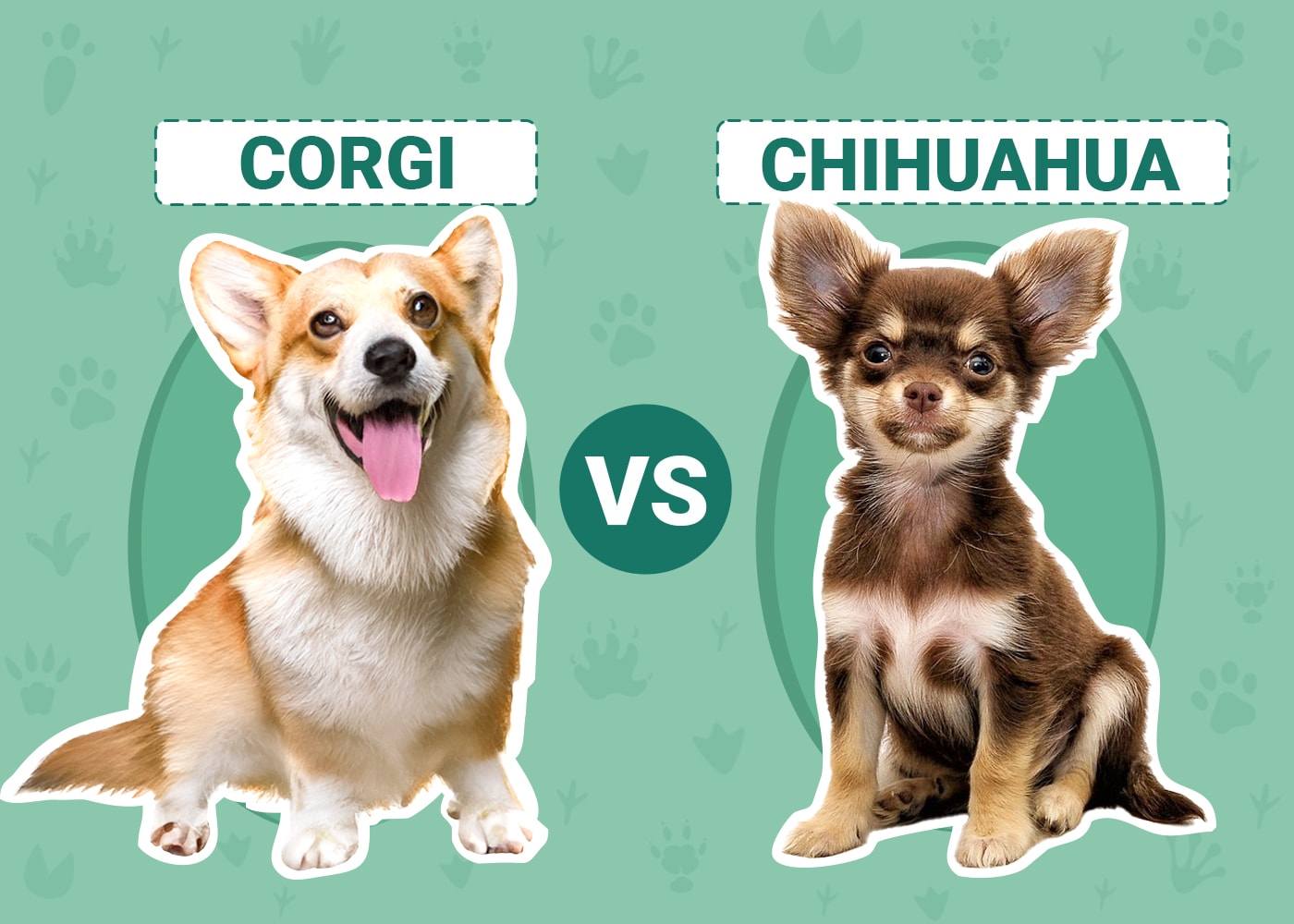
Corgis vs Chihuahuas: Two Popular Small Breeds Compared
Are you trying to decide between a corgi and a chihuahua as your next canine companion? While both are popular small dog breeds, they have quite a few differences in personality, appearance, and care requirements. As a veterinarian and dog lover, I‘ve worked with many corgis and chihuahuas over the years. In this article, I‘ll share my insights to help you determine which of these charming little dogs is the best fit for your lifestyle and family.
A Tale of Two Small Dogs
Despite both being on the smaller side, corgis and chihuahuas have very different origin stories. Let‘s start with a brief look at the history of each breed.
Corgis are an ancient breed that originated in Wales. The two distinct types – the Pembroke Welsh Corgi and the Cardigan Welsh Corgi – are believed to have been separately developed as far back as the 10th century. These low-to-the-ground herding dogs were invaluable to farmers for their ability to nip at the heels of cattle and drive them out to pasture.
Chihuahuas, on the other hand, hail from Mexico. While their exact origins are unclear, some historians believe chihuahuas are descended from an ancient breed called the techichi that was popular among the Toltec civilization as far back as the 9th century. These tiny companions later gained popularity in the U.S. when tourists began bringing them back from Mexico in the late 1800s.
Comparing Corgi and Chihuahua Appearance
One of the most obvious differences between corgis and chihuahuas is their size and body structure. Corgis are longer than they are tall, with an elongated body, short legs, and an overall sturdy build. According to the breed standard, fully grown Pembroke Welsh Corgis typically weigh between 24-30 lbs and stand 10-12 inches tall at the shoulder. Cardigans tend to be slightly larger on average.
Chihuahuas, in contrast, are known for being the smallest dog breed. Per the AKC, chihuahuas should weigh no more than 6 lbs and stand around 5-8 inches tall. Their body is compact and slightly longer than tall, but they don‘t have the same elongated shape and short legs as a corgi.
When it comes to coat type, both breeds have two varieties – smooth and long. Smooth coat corgis have short, dense fur while the long coat (or "fluffy") type has longer hair with more pronounced feathering on the ears, chest, legs and bottom. The smooth coat chihuahua has a short, close-lying coat all over. Long coat chihuahuas have soft, fine guard hairs over their body with a downy undercoat, plus a ruff around the neck and feathering on the ears and legs.
Corgi coats come in five colors per the breed standard: red, sable, fawn, black and tan, and tricolor. White markings are also common. Chihuahuas have a wider range of acceptable colors including fawn, red, cream, chocolate, blue, black, tricolor and merle.
Both breeds are moderate shedders and need regular brushing, but the corgis‘ thick double coat typically requires more frequent grooming to keep shedding under control, especially during seasonal changes. Chihuahuas are lower maintenance in the grooming department.Neither breed requires frequent bathing – once every month or two is usually sufficient unless they get into something messy.
Personality Matters: Corgi and Chihuahua Temperament
Both corgis and chihuahuas are known for being loyal, affectionate companions, but there are some key differences in their overall temperament and personality.
As former herding dogs, corgis tend to be very smart, alert, and active. They‘re usually outgoing and love to be involved in everything their family does. Corgis often retain some of their bossy herding instincts and may try to herd children, other pets, and even their owners by nipping at heels if not given another outlet for the behavior. While generally good-natured, they can be quite willful and independent.
Chihuahuas, in contrast, tend to bond very closely with their owners and are often one-person dogs. They can be wary of strangers if not socialized early and may developed fear-based aggression without proper training. Chihuahuas are also known for being feisty and sassy – the phrase "big dog attitude in a small dog body" was practically coined for this breed. However, they are playful, charming, and fiercely loyal to their people.
In general, corgis tend to be more even-keeled and adaptable than chihuahuas, who are often anxious and high-strung if not carefully bred and socialized. Both are smart, sensitive breeds who respond best to positive reinforcement training methods rather than harsh corrections.
Exercise and Activity Level
With their working dog background, corgis tend to have moderate to high exercise needs. While they make good apartment dogs due to their small size, they still need a couple walks per day plus some playtime and mental stimulation to be happy and well-behaved. Many corgis excel at dog sports like agility, herding, obedience, and rally due to their intelligence and eagerness to please.
Chihuahuas have lower exercise needs and are often content with a couple short walks per day and indoor playtime. They can be good apartment dogs as they don‘t need a yard and are small enough to get a lot of their exercise needs met indoors. However, it‘s still important that chihuahuas get out for regular walks to provide mental stimulation and socialization opportunities. Some enjoy dog sports, but high impact activities are not advisable due to their small, fragile build.
Barking Habits
If you live in an apartment or have nearby neighbors, a dog‘s tendency to bark is an important consideration. Both corgis and chihuahuas are somewhat prone to barking, and their alerts tend to be high-pitched and shrill which can be extra annoying.
As a herding breed, corgis are always on the lookout and quick to sound the alarm at anything new or unusual. They also tend to bark when excited and may use their voice to try and "herd" their family. Chihuahuas are excellent watchdogs and will bark at the sight or sound of anything suspicious. They also often develop a habit of barking for attention if allowed.
For both breeds, training an "enough" or "quiet" cue and providing plenty of mental stimulation can help keep unnecessary barking to a minimum. But if you‘re very noise sensitive, neither is an ideal choice.
Kid and Dog Friendliness
In general, corgis tend to do well with respectful children and have a playful, patient nature. However, they may nip at heels or herd rambunctious kids who run around. As with any dog, children should be taught how to properly interact.
Chihuahuas are often too small, fragile, and quick to snap when uncomfortable to be suitable for families with young kids. They do best with older, calmer children. Many chihuahuas also tend to be fearful or aggressive toward strange dogs and do best as solo pets or with another small, carefully selected canine companion. Corgis tend to be more easygoing with other dogs when socialized early, but same-sex aggression can be an issue, especially between unneutered males.
Health and Life Expectancy
Both corgis and chihuahuas are prone to certain health issues that prospective owners should be aware of. As dwarf breeds, corgis and some chihuahuas can suffer from chondrodystrophy and intervertebral disc disease, which affects the spine. Luxating patellas are another concern for both breeds, especially chihuahuas.
Responsible breeders should screen for inherited issues like hip dysplasia, eye disorders, heart conditions, and Von Willebrand‘s disease in corgis. In chihuahuas, a responsible breeder will evaluate patellas, heart health, and eye conditions.
When it comes to lifespan, chihuahuas live slightly longer on average at 14-16 years compared to 12-13 years for corgis. Of course, many factors like genetics, diet, and veterinary care influence an individual dog‘s lifespan.
Cost Considerations
Adopting a corgi or chihuahua from a rescue typically costs a few hundred dollars, which usually includes vaccinations, spay/neuter, and a microchip. Purchasing a puppy from a reputable breeder is significantly more expensive – often $1000-$2500 for corgis and $500-$1500 for chihuahuas.
Once you have your new companion, budget for one-time expenses like supplies as well as recurring costs for food, toys, grooming, and veterinary care. Corgis tend to have higher food and grooming costs given their larger size and higher-maintenance coat. Both breeds should visit the veterinarian for wellness exams at least once per year, with older dogs going twice yearly. According to a 2018 study from the University of Pennsylvania School of Veterinary Medicine, the average annual cost of owning a dog under 25 lbs is around $2600.
Final Thoughts
Corgis and chihuahuas are both delightful companions for the right person or family, but they do have some significant differences. Consider your lifestyle, home environment, activity level, grooming preferences, and budget when deciding which breed is the best fit.
If you‘re looking for a playful, adaptable small dog that‘s always up for an adventure, a corgi may be your ideal match. Chihuahuas are better suited for someone wanting a tiny, devoted lap dog happy to spend most of their time snuggling and being doted on.
Whichever breed you choose, look for a responsible breeder who health tests their dogs and socializes the puppies or adopt from a rescue. With proper care, training, and love, either a corgi or chihuahua can make a wonderful, long-term addition to your family.




)