Discovering the World‘s Most Exotic Dog Breeds: A Dog Lover‘s Guide
As a lifelong dog lover, I‘ve always been fascinated by the incredible diversity of breeds that exist across the globe. From tiny lapdogs to massive mountain guardians, man‘s best friend comes in an astounding array of shapes, sizes, and personalities. But for me, it‘s the exotic breeds that really capture the imagination. These rare and unusual dogs often hail from far-flung locations and were bred for highly specialized jobs, resulting in unique physical characteristics and temperaments that set them apart from more common breeds.
In this comprehensive guide, we‘ll take a closer look at seven of the most captivating exotic dog breeds, exploring their origins, traits, and what it takes to be a responsible owner of one of these extraordinary canines. Whether you‘re considering adding an exotic breed to your family or simply curious to learn more, read on to discover some of the dog world‘s best-kept secrets.
Defining "Exotic" Dog Breeds
First, let‘s clarify what we mean by "exotic" dog breeds. The term generally refers to breeds that are:
-
Rare: Exotic breeds often have very small population sizes and may be difficult to find outside their native region.
-
Unusual in appearance: Many exotic breeds have striking physical features like hairlessness, a ridge of backwards-growing hair, or an extremely tall and slender build.
-
Specialized in purpose: Most exotic breeds were developed to perform specific jobs, such as hunting large game, guarding livestock, or even foraging for truffles.
-
Unique in temperament: Due to their often ancient origins and specialized breeding, exotic breeds can have personality quirks and instincts that differ from the average pet dog.
It‘s important to note that owning an exotic breed is not for everyone. In addition to often commanding high price tags, these dogs may have more extensive exercise, training, and grooming needs than more conventional breeds. They are a labor of love for experienced owners willing to go the extra mile.
"Exotic breeds are not for the faint of heart. They require an owner who is willing to do their homework and commit to providing the specific care the breed needs to thrive, which may be extensive." – Dr. Jerry Klein, Chief Veterinary Officer of the American Kennel Club (AKC)
7 Incredible Exotic Dog Breeds
Now that we‘ve established what makes a breed "exotic," let‘s meet seven incredible examples and explore what makes them so special.
1. Tibetan Mastiff
Origin: Tibet
Height: 26-30 inches (male), 24-28 inches (female)
Weight: 100-160 pounds (male), 75-125 pounds (female)
Lifespan: 10-12 years
Population: Fewer than 1,000 in the United States
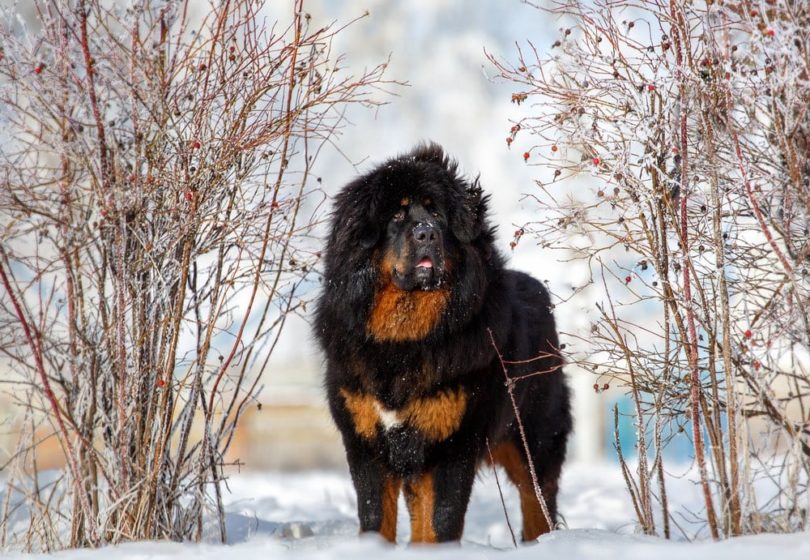
The majestic Tibetan Mastiff is an ancient breed that originated in the Himalayan mountains of Tibet, where they were used by nomads and monks to protect livestock and property from predators like wolves and snow leopards. Weighing up to 160 pounds, they are a truly massive breed with a thick, lion-like mane around the head and shoulders.
Tibetan Mastiffs are known for their independent and protective nature. While utterly devoted to their families, they tend to be aloof with strangers and have strong guarding instincts. Early and ongoing socialization is a must to ensure these natural guardian tendencies don‘t veer into aggression.
As a working breed, Tibetan Mastiffs require ample daily exercise and thrive when given a job to do, whether that‘s patrolling the perimeter of a large property or participating in cart-pulling competitions. They are not well-suited to apartment life or novice owners. Potential health concerns include hip dysplasia, hypothyroidism, and a neurological condition called inherited demyelinative neuropathy.
Fun Fact: In 2011, a red Tibetan Mastiff puppy named "Big Splash" made headlines when he was sold to a Chinese businessman for a jaw-dropping $1.5 million, making him the most expensive dog ever purchased.
2. Peruvian Inca Orchid
Origin: Peru
Height: 9.75-15.75 inches (small), 15.75-19.75 inches (medium), 19.75-25.75 inches (large)
Weight: 8.5-17.5 pounds (small), 17.5-26.5 pounds (medium), 26.5-55 pounds (large)
Lifespan: 12-14 years
Population: Fewer than 1,000 worldwide
The Peruvian Inca Orchid, also known as the Peruvian Hairless Dog, is an ancient breed that has existed in Peru since pre-Incan times. The breed comes in three size varieties and two types: hairless and coated. The hairless variety is the more well-known and is prized for its sleek, elegant appearance.
Peruvian Inca Orchids were historically used for hunting and as companions to ancient Incan royalty, who believed the dogs had mystical healing powers. Today, they are known for their lively, affectionate nature and make playful, entertaining companions.
As sighthounds, Peruvian Inca Orchids have strong prey drives and need securely fenced yards to prevent escapes. The hairless variety requires protection from the elements in the form of dog-friendly sunscreen and coats in cold weather. Skin irritation is also common. The breed is generally healthy but can be prone to dental issues.
Fun Fact: The famous Peruvian explorer Hiram Bingham, who discovered the lost city of Machu Picchu, brought Peruvian Inca Orchids back to the United States in the early 1900s, introducing the breed to the wider world.
3. Azawakh
Origin: Sahel region of the Sahara desert
Height: 25-29 inches
Weight: 33-55 pounds
Lifespan: 12-15 years
Population: Fewer than 200 puppies born worldwide each year
The exotic Azawakh is a tall, extremely slender sighthound that originated with the nomadic Tuareg people of the Sahara desert. Bred to hunt gazelle and other large game in harsh desert conditions, these dogs are lean and quick, reaching speeds of up to 40 miles per hour.
Azawakhs have a regal, almost otherworldly appearance with their long legs, deep chest, and almond-shaped eyes. Their short, fine coat comes in several colors including clear sand, fawn, brindle, and parti-color. Despite their delicate look, they are a rugged and resilient breed.
Extremely loyal to their owners but aloof with strangers, Azawakhs are not always easy to train. They have an independent nature and strong prey drive, requiring patient and consistent training. They bond intensely with their owners and can suffer from severe separation anxiety if left alone too long.
Fun Fact: The Azawakh is named after the Azawakh Valley in the Sahara desert, which spans parts of Niger, Mali, and Burkina Faso.
4. Thai Ridgeback
Origin: Thailand
Height: 20-24 inches
Weight: 35-75 pounds
Lifespan: 12-13 years
Population: Fewer than 1,000 worldwide
The Thai Ridgeback is an ancient landrace breed native to Thailand, where they were originally used to hunt cobras and other dangerous game. They get their name from the ridge of hair growing in the opposite direction along their spine, a trait shared with only two other breeds (the Rhodesian Ridgeback and Phu Quoc Ridgeback).
Highly intelligent and independent, Thai Ridgebacks require extensive training and socialization from a young age to channel their strong drives. They are natural watchdogs with a territorial streak and may not do well in homes with other pets. That said, a well-socialized Thai Ridgeback forms an intensely close bond with its human family.
The short, hard coat is easy to maintain and comes in red, black, blue, and fawn shades. Thai Ridgebacks are muscular, agile dogs who excel at dog sports like agility and lure coursing. They need ample daily exercise to stay happy and healthy.
Fun Fact: In their native Thailand, Thai Ridgebacks are a cherished cultural icon. A Thai Ridgeback named "Siam" is prominently featured on an official Thai postage stamp.
5. Mudi
Origin: Hungary
Height: 15-18.5 inches
Weight: 18-29 pounds
Lifespan: 12-14 years
Population: Around 2,000 worldwide
The Mudi is a medium-sized herding breed from Hungary that nearly went extinct after World War II. Highly versatile farm dogs, they were originally used to herd cattle, sheep, and pigs, but have also excelled in hunting and pest control roles.
Intelligent and energetic, Mudi are extremely active dogs who need a job to do. They thrive when participating in dog sports such as herding trials, agility, and obedience. Mudi can be territorial and make excellent watchdogs, but should never show nervousness or unprovoked aggression.
The Mudi‘s medium-length coat is wavy to curly and comes in several colors including black, brown, white, gray, and merle. Regular brushing is needed to prevent matting and professional grooming every few months keeps the coat looking tidy.
Fun Fact: Hollywood actress Drew Barrymore made headlines when she added a Mudi puppy named "Douglas" to her pack of rescue dogs in early 2023.
6. Lagotto Romagnolo
Origin: Italy
Height: 16-19 inches
Weight: 24-35 pounds
Lifespan: 15-17 years
Population: Around 3,000 in the United States
The Lagotto Romagnolo is a medium-sized breed that originated in the marshlands of the Romagna region of Italy. Initially used as a waterfowl retriever, in recent years the breed has transitioned to a new specialty: truffle hunting! The Lagotto‘s keen nose and eagerness to please make them the perfect truffle-hunting companion.
In addition to their exceptional scenting abilities, the Lagotto Romagnolo is known for its intelligence, affectionate nature, and joyful personality. They bond closely with their owners and are generally good with children and other pets.
The breed‘s curly, wooly coat requires extensive maintenance including regular brushing, detangling, and trimming. They shed very little but the coat can easily become matted without frequent grooming. The breed comes in several colors including off-white, brown, orange, and combinations thereof.
Fun Fact: The Lagotto Romagnolo is Italy‘s truffle-hunting dog breed of choice. Some Lagottos have been sold for as much as $10,000 due to their exceptional ability to sniff out these pricey culinary delicacies.
7. New Guinea Singing Dog
Origin: New Guinea
Height: 17-18 inches (male), 14-15 inches (female)
Weight: 20-30 pounds
Lifespan: 15-20 years
Population: Unknown, but thought to be critically endangered in the wild
The New Guinea Singing Dog is not a conventional domesticated dog breed, but rather a rare wild dog found only on the island of New Guinea. They get their name from their unique vocalizations, which include yelps, howls, and a high-pitched "trill" that sounds almost like singing.
Considered one of the most primitive canines in existence, New Guinea Singing Dogs closely resemble their ancient ancestors. They have a fox-like appearance with a slender build, wedge-shaped head, prick ears, and a tightly curled tail. The short coat is typically red or tan with white markings.
While a few hundred New Guinea Singing Dogs exist in zoos and private collections, they are exceedingly rare in domesticated settings. As essentially wild animals, they have extremely high exercise needs and retain strong hunting and scavenging instincts. They are agile escape artists and can be very difficult to train.
Fun Fact: Some scientists believe the New Guinea Singing Dog may be the direct ancestor of the Australian Dingo, another ancient landrace dog known for its singing vocalizations.
Is an Exotic Breed Right For You?
Now that we‘ve met some of the most fascinating exotic dog breeds from around the world, you may be wondering if one of these unique canines could be the right fit for your family. While owning an exotic breed can be incredibly rewarding, it‘s crucial to carefully consider the challenges and responsibilities that come with these special dogs.
The Pros and Cons of Exotic Dog Ownership
Pros:
- Owning a rare and unusual breed can be a source of pride and fascination
- Many exotic breeds form incredibly deep bonds with their owners
- Some exotic breeds have unique skills like truffle hunting or livestock guarding
- Exotic breeds often have rich histories and cultural significance
- Owning an exotic breed can be an opportunity to help preserve rare canine genetics
Cons:
- Exotic breeds can be extremely expensive, with prices often starting at several thousand dollars
- Many exotic breeds have extensive grooming, exercise, and training needs
- Exotic breeds may be prone to health issues due to small gene pools
- Some exotic breeds have strong independent streaks and are challenging to train
- Finding a reputable exotic breed breeder can be difficult and require long waiting lists
- Veterinarians experienced in treating exotic breeds can be hard to find
Exotic vs. Standard Breeds: Key Differences
| Characteristic | Exotic Breeds | Standard Breeds |
|---|---|---|
| Availability | Very limited, waitlists common | Generally easy to find |
| Cost | $2000+ for a puppy | $500-$2000 on average |
| Grooming | Often extensive and specialized | Varies by breed but generally moderate |
| Training | Can be independent and challenging | Depends on breed but often eager to please |
| Exercise | Typically very high energy | Varies widely by breed |
| Health | Prone to certain genetic disorders | Mixed, but many have robust health |
| Bonding | Often bond intensely to one person | Generally affectionate with family |
Ultimately, the decision to bring home an exotic breed is a highly personal one that should be made with great care and consideration. Prospective owners must be willing to invest significant time, money, and energy into providing these dogs with the specialized care they need to thrive.
For many dog lovers, a more conventional breed is a better choice, particularly for first-time owners or those with busy lifestyles. But for experienced dog handlers seeking a unique and enriching canine partnership, an exotic breed can be an unparalleled joy.
Final Thoughts
From the lion-like Tibetan Mastiff to the sleek and sophisticated Azawakh, the world‘s exotic dog breeds are a testament to the incredible diversity and adaptability of man‘s best friend. These rare and captivating breeds have been shaped by thousands of years of selective breeding to fulfill highly specialized roles in some of the most remote corners of the globe.
For dog lovers, learning about these breeds is a chance to deepen our appreciation for the amazing creatures that share our lives. Whether you‘re drawn to the ancient mystique of the Peruvian Inca Orchid or the irresistible charm of the Lagotto Romagnolo, exotic breeds remind us of the complex history and culture that exists in every dog.
Of course, owning an exotic breed is not for the faint of heart. These dogs often come with significant challenges and responsibilities that require a serious commitment from their owners. If you‘re considering adding an exotic breed to your family, it‘s vital to do your research, choose a reputable breeder, and make sure you have the time, resources, and expertise to provide your new companion with everything they need.
But for those intrepid dog lovers who are up to the task, the rewards of exotic dog ownership are truly unparalleled. From the unbreakable bond you‘ll form with your one-of-a-kind canine to the sense of pride you‘ll feel in preserving a rare and precious piece of dogdom, bringing home an exotic breed is the adventure of a lifetime.
So here‘s to the magnificent Mudis, the captivating Thai Ridgebacks, the noble New Guinea Singing Dogs, and all the other exotic breeds that capture our imaginations and our hearts. May we continue to celebrate and protect these living treasures for generations of dog lovers to come.