Do Poodles Have Hair or Fur? A Dog Lover‘s Guide to Poodle Coats
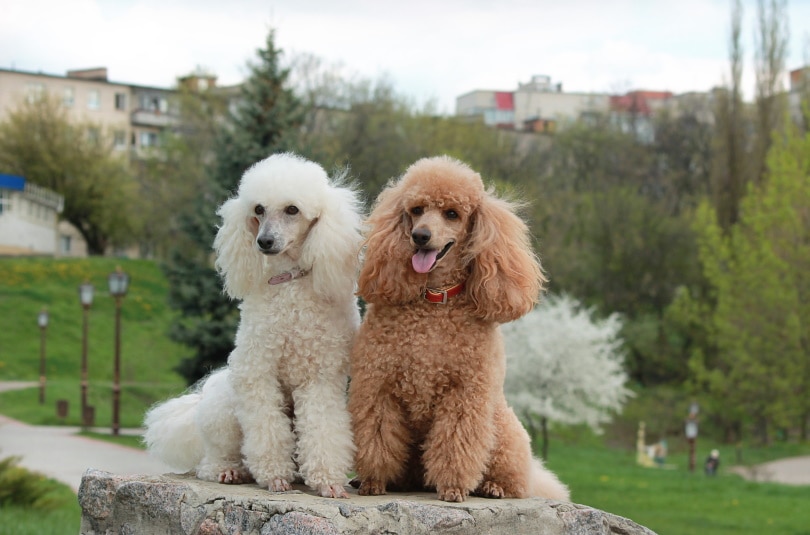
As a dog lover and veterinarian, I‘m often asked whether poodles have hair or fur. It‘s a common question, and an important one for potential poodle parents to understand. The answer is that poodles are one of a handful of breeds blessed with hair instead of fur. But what exactly is the difference? And what does this mean for poodle grooming needs and allergy-friendliness? Let‘s take a closer look at the curly, luxurious locks that make poodles so unique.
Hair vs. Fur: What‘s the Difference?
The main distinction between canine hair and fur lies in the growth cycle. Dog fur grows to a genetically predetermined length, dies, and sheds out to be replaced by new fur growth. This shedding process occurs in seasonal cycles for dogs with double coats, leading to the biannual "blowing coat" many dog owners are familiar with. In contrast, dog hair has a much longer growth phase and keeps getting longer over time, much like human hair.
This extended growth phase is why poodles shed very minimally compared to breeds with fur, but it also necessitates regular haircuts to prevent that hair from getting unruly! Without trimming, a poodle‘s hair will continue to grow indefinitely. As Dr. Jerry Klein, Chief Veterinary Officer for the American Kennel Club, explains: "Poodle hair has the same growth cycle as human hair. It keeps growing, so it requires regular grooming and clipping to maintain a neat appearance and prevent matting."
The differences between hair and fur aren‘t just in the growth cycle, though. Hair is also typically finer, softer, and less densely packed than fur. On a microscopic level, hair shafts are thinner in diameter and have a uniform shape, while fur tends to be thicker and more irregular in shape. Most dogs with fur also have a dense undercoat and stiffer outer guard hairs forming a double coat, while poodles and other hair breeds have a single layer of fine, soft hair instead.
These structural differences mean poodles release significantly less dander (dead skin cells) into the environment compared to heavy-shedding fur breeds. And since pet dander is the primary cause of dog allergies in humans, poodles are often a better choice for allergy sufferers.
However, it‘s important to note that poodles are not truly hypoallergenic. Dr. Klein clarifies that "while poodles and other single-coated breeds may be less likely to trigger allergies, no dog is 100% non-allergenic. Poodles still produce some dander and can cause allergic reactions in some people." So if you have severe allergies, it‘s always wise to spend ample time around poodles before bringing one into your home.
The Scoop on Poodle Hair Types
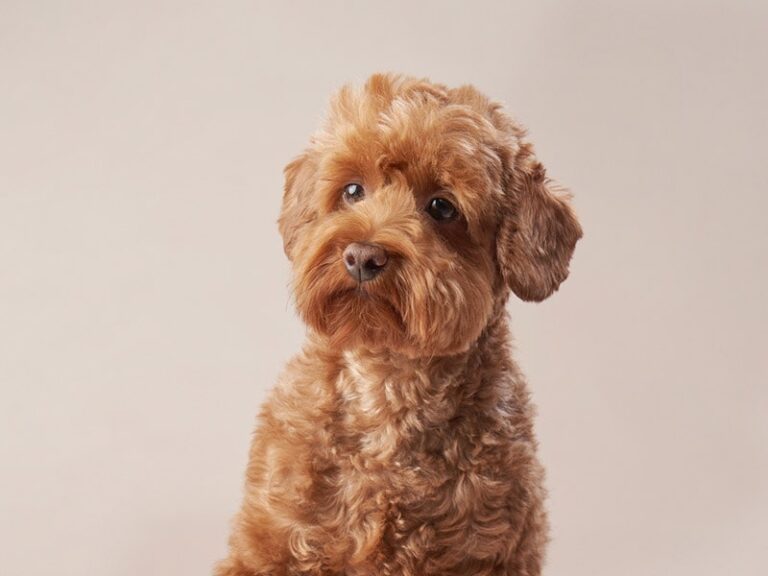
Poodle hair comes in three distinct varieties: curly, wavy, and corded. The vast majority of poodles have the iconic curly coat, with hair that grows in tight corkscrew curls close to the skin. Within the curly coat type, curl tightness can vary from loose spiral curls to the dense, tiny curls giving poodles that signature "woolly" look. Curly poodles are often described as having a "crisp" or "harsh" coat texture.
The wavy coat variety, sometimes called a "loose curl" or "fleece" coat, features hair that grows in gentle waves or loose curls rather than the springy ringlets of the curly coat. Wavy coats tend to feel softer and silkier to the touch. Some poodles even have hair that grows fairly straight!
Finally, the elusive corded coat occurs when the poodle‘s curly hair is allowed to grow long and mat into thin, felt-like cords that dangle from the body. Also called "cords" or "dreadlocks", this eye-catching coat is extremely rare and high-maintenance.
So just how common is each poodle hair type? In a 2019 study of over 1,000 poodles, a whopping 93% had the classic curly coat, while 6% were wavy and less than 1% were corded. The study also found that coat type varies between poodle sizes, with 99% of toy poodles having a curly coat but only 85% of standard poodles.
Grooming Your Poodle‘s Glorious Hair
With the unique properties of poodle hair come some unique grooming needs. That long, continually growing hair can quickly become a matted mess without regular upkeep! Most veterinarians and professional groomers recommend poodles be brushed at least 3 times per week, with daily brushing being ideal. A thorough brushing takes around 10-20 minutes for toy and miniature poodles or 20-30 minutes for larger standard poodles.
Nicole Ellis, a certified professional groomer and Rover‘s resident dog grooming expert, says not to skimp on brushing: "Poodle hair mats and tangles very easily, especially behind the ears, in the armpits, and along the hind legs. Mats can be extremely painful and often have to be shaved out, so frequent brushing is a must!"
In addition to brushing, most owners take their poodles to the groomer every 4-8 weeks for a bath, haircut, nail trim, and ear cleaning. Some dedicated owners learn to groom their poodles at home, but there‘s a definite learning curve. A 2022 survey of poodle owners found that 72% use a professional groomer, 23% groom at home, and 5% use a combination of the two.
When it comes to haircuts, poodle hair can be sculpted and styled into endless adorable trims. The "puppy clip," "lamb clip," "teddy bear clip," and "continental clip" are a few classics, but many owners work with their groomer to customize a cut that suits their pup‘s features and lifestyle.
Poodle Hair and Allergies
As mentioned earlier, poodles‘ single hair coat makes them a popular choice for dog lovers with allergies. But just how hypoallergenic is poodle hair really? The truth is there‘s no such thing as a 100% hypoallergenic dog, as all dogs produce at least some allergy-triggering proteins in their skin, saliva, and urine. However, studies show poodles release far less of these allergens compared to most fur-bearing breeds.
In a 2011 study measuring dog allergen levels in the hair and coat of various breeds, poodles had 64% lower allergen levels than Labrador retrievers and 48% lower levels than Yorkshire terriers. So while no dog is truly non-allergenic, poodles are significantly less likely to cause allergy symptoms than the average canine.
Of course, individual poodles can vary in their allergy-friendliness based on coat type, grooming frequency, and other factors. In general, poodles with curlier, denser coats tend to trap more dander and allergens in the coat, while poodles with looser waves release more dander into the air. Frequent baths and brushing can help reduce allergen levels in the coat, but no amount of grooming will eliminate them entirely.
For this reason, experts recommend allergy sufferers spend plenty of time around their potential poodle before adopting to gauge their reaction. Even then, it‘s important to understand that allergies can develop over time with repeated exposure. Sadly, allergies remain one of the most common reasons owners rehome their poodles.
Fascinating Facts About Poodle Hair
As if poodle hair wasn‘t already interesting enough, here are a few more fun facts:
-
Poodle hair comes in a rainbow of hues, including black, white, brown, gray, apricot, red, cream, and every shade in between. Parti-colored poodles have patches of two or more colors.
-
Toy poodles have the highest hair density of the three poodle sizes, with an average of 14,000 hairs per square inch. Miniature poodles have around 12,000 hairs per square inch, while standard poodles have 7,000-10,000.
-
Poodle hair grows an average of half an inch per month, but growth rates vary between the different poodle sizes. Toy poodles‘ hair grows slowest at around 0.3 inches per month, while standard poodles‘ hair can sprout up to 0.8 inches in the same timeframe.
-
The texture of poodle hair also varies between the sizes, with toys tending to have the finest, softest hair and standards having the coarsest. This is why many poodle mixes, like Goldendoodles and Bernedoodles, use a standard poodle parent to achieve a sturdier, more weather-resistant coat.
-
Poodle hair doesn‘t gray or change color with age like human hair does. Puppies may lighten or darken a bit as they mature, but the color they end up with around 2 years old is typically the color they‘ll keep for life.
-
Poodle hair grows in dense tufts called "pompons" behind the front legs and lower back. These pompons serve as a visual breed trait and are often highlighted in show clips.
Final Thoughts
In conclusion, poodles are undoubtedly a hair breed rather than a fur breed. This key distinction is what gives them their trademark curly, low-shedding coats that are so versatile to style but do require a high degree of maintenance. And while no pup is ever truly hypoallergenic, poodle hair‘s unique properties mean these curly cuties are often a great fit for dog lovers with mild allergies.
Whether you opt for a toy, miniature, or standard in any of the lovely colors poodles come in, you‘re sure to fall head over heels for your new hair-covered companion. Just be sure to keep a few good brushes and a stellar groomer on speed dial!