Doberman vs Great Dane: An In-Depth Comparison
As a lifelong dog lover and veterinarian, I‘ve had the pleasure of working with countless breeds over the years. Two that never fail to impress me with their striking looks and larger-than-life personalities are the Doberman Pinscher and Great Dane. While both originated as working dogs in Germany and can make loyal, devoted companions, there are some significant differences between these noble breeds. In this comprehensive guide, I‘ll share my insights and delve into the history, characteristics, and care requirements of Dobermans and Great Danes to help you determine which might be the ideal fit for your family.
Breed History and Development
The Doberman Pinscher
The Doberman Pinscher was first developed in the late 1800s by Karl Friedrich Louis Dobermann, a German tax collector who desired a medium-sized, intelligent guard dog to accompany him on his rounds. Dobermann served as the dog catcher for his local town and had access to a variety of different breeds. He combined several types of dogs, likely including the German Pinscher, Rottweiler, Weimaraner, and various shepherd dogs to create his ideal working companion.[1]
After Dobermann‘s death in 1894, a German named Otto Goeller is credited with continuing to refine and promote the breed. The German Kennel Club recognized the Doberman Pinscher as a distinct breed in 1900.[2] Dobies made their way to the U.S. in the early 1900s and were recognized by the American Kennel Club in 1908. They served as military working dogs in both World Wars and continue to excel in police work, personal protection, and competitive dog sports today.
The Great Dane
Despite its misleading name, the Great Dane also claims Germany as its country of origin. Depictions of Dane-like dogs have been found in Egyptian artifacts dating back to 3,000 B.C.[3] However, the breed as we know it today can be traced back to 16th century Germany, where these impressive dogs were used to hunt wild boar. When boar hunting waned in popularity, German nobility began keeping the large dogs as estate guardians and companions.
The breed was officially recognized in Germany in 1880 under the name "Deutsche Dogge," which translates to German Mastiff.[4] The Great Dane Club of America was founded in 1889, shortly after the breed arrived in the U.S.[5] While no longer used for hunting, modern Great Danes still retain the courage and chase instincts of their ancestors. Today they are gentle giants known for their affectionate, dependable nature.
Popularity and Vital Statistics
Both Dobermans and Great Danes consistently rank among the most popular breeds in the U.S. according to AKC registration statistics:
- In 2021, the Doberman Pinscher ranked 17th out of 197 breeds.[6]
- The Great Dane came in 16th place in 2021.[6]
Here is a table comparing the key vital statistics of each breed:
| Breed | Height | Weight | Lifespan |
|---|---|---|---|
| Doberman Pinscher | Males: 26-28 in Females: 24-26 in | Males: 75-100 lbs Females: 60-90 lbs | 10-12 years |
| Great Dane | Males: 30-32 in Females: 28-30 in | Males: 120-175 lbs Females: 100-140 lbs | 7-10 years |
As you can see, while both breeds are large dogs, Great Danes are significantly taller and heavier than Dobermans on average. Sadly, the Great Dane‘s massive size contributes to its relatively short lifespan compared to the Doberman and many other breeds.
The average price for a purebred Doberman Pinscher puppy from a reputable breeder is $1500 to $2500, while Great Dane puppies typically cost $1000 to $2000.[7][8] Of course, initial price is only part of the equation, as giant breeds like Great Danes tend to have higher food, medication, and veterinary expenses due to their size.
Appearance
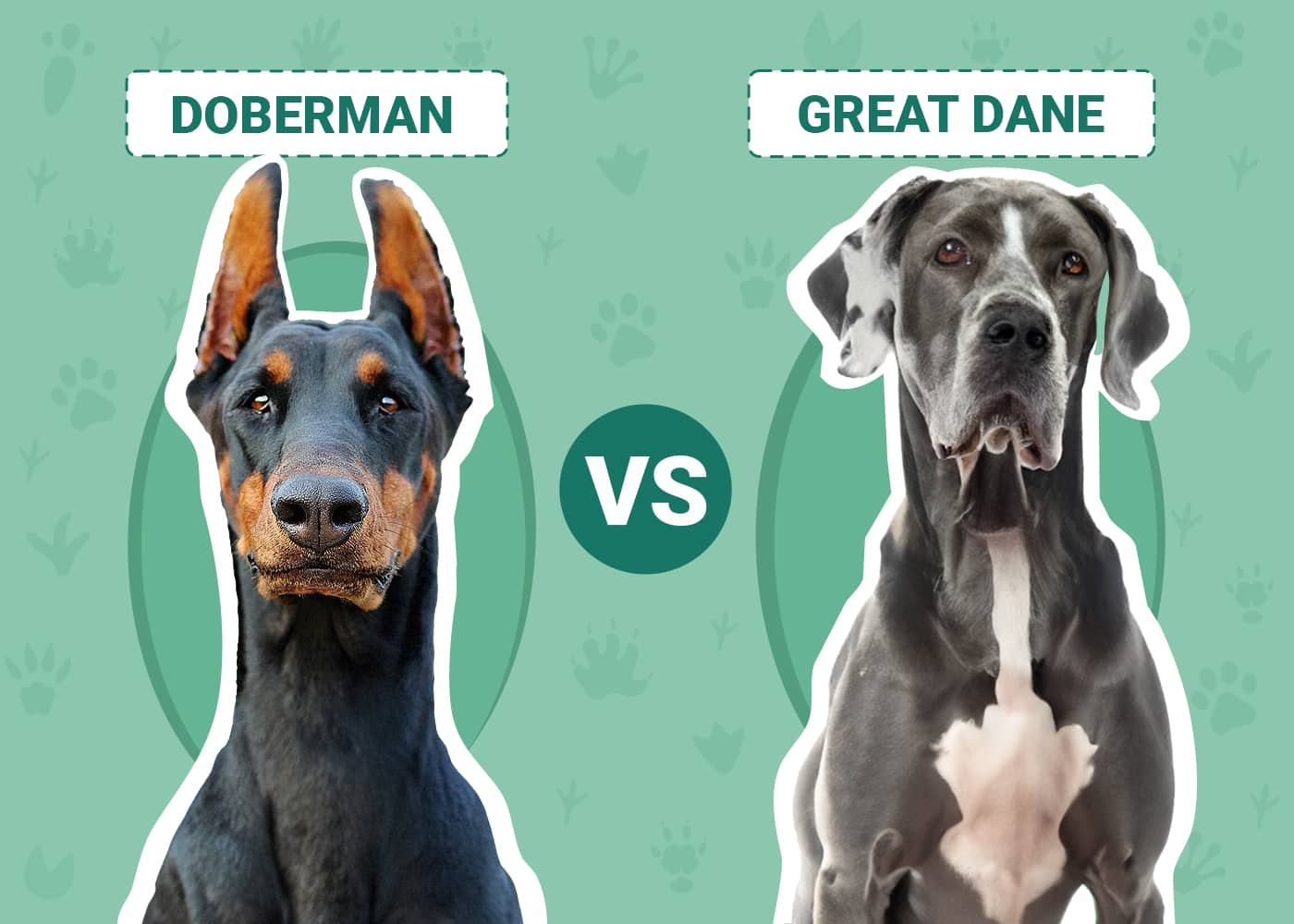
The Doberman and Great Dane may share their German heritage, but their physical appearances are quite distinct. Dobies are known for their sleek, compact, muscular bodies that give them an elegant yet powerful look. Their wedge-shaped heads, often cropped ears, and docked tails are hallmark breed characteristics (although I‘ll note that ear cropping and tail docking are becoming less common and are banned in some countries).
According to the AKC breed standard, the ideal Doberman Pinscher should appear "square" with the length of its body equal to its height at the withers.[9] This balanced proportion contributes to their incredible athleticism. The Doberman‘s short, smooth coat is most commonly seen in black, red, blue or fawn with rust-colored markings on the face, throat, chest, tail, and feet.
In contrast, everything about the Great Dane is supersized, from their towering height to their immense, rectangular frames. A well-bred Dane should give the impression of nobility and dignity, with a massive yet refined head, long neck, deep chest, and strong, straight legs.[10]
Male Danes can stand an impressive 32 inches or more at the shoulder, with some individuals reaching nearly 3 feet tall! However, bigger is not always better when it comes to this giant breed. Dogs that are too large often suffer from more health problems.
Great Danes have similar coat characteristics to Dobermans, with short, thick fur that sheds moderately. The AKC recognizes six colors: fawn, brindle, black, blue, harlequin (white with black patches), and mantle (black with a white chest).[10]
Temperament
One of the biggest misconceptions about Doberman Pinschers is that they are inherently aggressive or vicious. While it‘s true that they were originally bred to be guard dogs, a well-bred, properly socialized Doberman should never show unwarranted aggression. They are highly intelligent, alert, and protective by nature, but also deeply devoted to their owners and eager to please.
I always caution potential Dobie owners that these dogs require extensive training and socialization from an early age. They need firm, consistent leadership and positive reinforcement to become well-mannered companions. Dobermans are incredibly sensitive and will not respond well to harsh corrections or punishment. When their exercise needs and desire for mental stimulation are not met, they can become destructive or develop behavioral issues.
Great Danes, affectionately known as "gentle giants," tend to have calmer, more laid-back personalities than Dobermans. They are known for their patience and tolerance with children, although their large size can inadvertently lead to knocking over small kids. Danes are also sensitive souls that crave human companionship. They may be more prone to separation anxiety than Dobermans if left alone for long periods.
Like Dobies, Great Danes require early socialization to build their confidence and prevent fearfulness of new people, animals, or situations. Positive training methods are a must, as Danes can be quite stubborn if they feel they are being treated unfairly. Many are also motivated by food, so treats can be a powerful training tool!
Both breeds have strong guarding instincts and will be naturally wary of strangers, but should never show unwarranted aggression. Socialization is key to helping them distinguish between normal and suspicious situations. With their families, both Dobermans and Danes are affectionate, loyal companions that thrive on being involved in all aspects of daily life.
Exercise and Training Needs
The Doberman Pinscher is an athletic working breed with high exercise needs. At a minimum, they require 1-2 hours of physical activity per day, broken up into multiple walks, runs, and/or play sessions.[11] Mental stimulation is just as important as physical exercise for this highly intelligent breed. They excel at obedience, agility, tracking, and other dog sports.
Without an outlet for their energy and a job to focus on, Dobermans can quickly become bored and destructive. They are escape artists that need a minimum 6 foot high fenced yard to safely contain them.[11] Dobies also do best with an experienced owner that can dedicate significant time to their training and exercise needs.
Great Danes, on the other hand, are often described as couch potatoes that are content with a few moderate walks per day. As one of the largest dog breeds, they are prone to joint issues and don‘t require (or tolerate) the same level of intensive exercise as Dobermans.[12]
Puppies in particular should not be over-exercised, as their rapid growth makes them susceptible to developing bone and joint problems. Mental stimulation through training, puzzle toys, and games is still important to keep Danes engaged.
Socialization and training from a young age are critical for both breeds. They are sensitive dogs that respond best to positive reinforcement with rewards like praise, treats, and play. Aversive techniques can erode their trust and cause them to shut down. Short training sessions focused on teaching basic obedience, household manners, and impulse control will set them up for success as adult dogs.
Grooming and Care
The sleek, short coats of Dobermans and Great Danes are relatively low-maintenance. Both breeds shed moderately year-round, with heavier shedding during seasonal changes. Weekly brushing with a rubber curry brush or hound glove will help remove loose fur and keep their skin and coat healthy.
Bathing is only necessary every few months, unless they roll in something stinky. When you do bathe them, be sure to use a mild, dog-specific shampoo to avoid drying out their skin. Danes in particular are prone to skin irritation, so pay extra attention to keeping their wrinkly faces clean and dry.[12]
Dental care is often overlooked but is incredibly important for these large breeds. Dobies and Danes are both prone to dental disease, which can lead to painful infections, tooth loss, and other health problems. Brushing their teeth daily, or at least a few times a week, will help maintain good oral hygiene. Providing dental chews and toys can also reduce plaque and tartar buildup.
Regular nail trims, ear cleaning, and anal gland expression (usually done by a groomer or vet) are other essential aspects of grooming. Due to their size, many Dane owners opt to have these tasks done professionally. Teaching Dobies and Danes to tolerate handling from a young age will make grooming a more positive experience for all.
Health Issues
As large and giant breed dogs, Dobermans and Great Danes are both at higher risk for certain health problems. According to the Doberman Pinscher Club of America, the most common issues seen in the breed are:[13]
- Dilated cardiomyopathy (DCM): a heart condition that affects up to 40% of Dobies
- Cervical vertebral instability (CVI): a neurological disorder also known as Wobbler syndrome
- Chronic active hepatitis (CAH): a liver disease that can be fatal
- Hip dysplasia: abnormal development of the hip joint that causes arthritis and lameness
- von Willebrand‘s disease (vWD): a bleeding disorder that affects clotting
For Great Danes, the leading health concerns are:[14]
- Gastric dilatation and volvulus (GDV) or bloat: a life-threatening stomach twisting that requires emergency surgery. Up to 40% of Great Danes may be affected.
- Hip and elbow dysplasia: like Dobies, Danes are prone to these developmental joint disorders
- Osteosarcoma: a highly aggressive bone cancer with a poor prognosis
- Cardiomyopathy: heart disease is a leading cause of death in Danes
- Hypothyroidism: low thyroid hormone levels that can cause skin, coat, and weight problems
Responsible breeders screen their dogs for genetic health issues and strive to produce puppies with stable temperaments and sound structure. Buying from a reputable breeder that performs health testing on their breeding stock is one of the best ways to stack the deck in your favor when it comes to getting a healthy Doberman or Dane puppy.
Of course, no dog is guaranteed to be problem-free. Providing your Dobie or Dane with a nutritious diet, appropriate exercise, regular check-ups and preventive care will help them live as long and healthy a life as possible.
Living Needs
Dobermans and Great Danes can make excellent family companions in the right home, but their size and temperament differences mean they aren‘t one-size-fits-all dogs. Dobies‘ high exercise needs, intensity, and potential for aggression if not properly trained make them better suited for experienced dog owners. They tend to play rough and may be too rambunctious around small children.
A home with a large, securely fenced yard is ideal for the athletic Doberman. They also do best with an owner that enjoys an active lifestyle and can take them on long walks, hikes, runs, and other adventures. When their physical and mental needs are met, they are typically calm indoors and enjoy lounging with their family. Dobies can adapt to apartment living if they get enough daily exercise and enrichment.
Great Danes, despite their giant size, are often described as easygoing gentle giants that are patient with children and adaptable to various living situations. Their lower exercise needs and generally calm demeanor make them a surprisingly good fit for smaller homes or apartments, as long as they get a few good walks each day.
That said, everything about caring for a Dane is supersized, from the amount of food and size of the bed they need to the vehicle required to transport them and the medications needed to treat any health issues. They are also notorious for counter surfing and drooling, which are behaviors that need to be managed through training and housekeeping.
Both breeds are prone to separation anxiety due to their strong attachment to their owners. They do not tolerate being left alone for long periods and need to feel like they are part of the family. Enrolling in a dog daycare, hiring a pet sitter, or arranging for a trusted friend or family member to spend time with them during the day can prevent anxiety-related behaviors if you work long hours.
As a veterinarian, I always encourage potential dog owners to carefully consider the time, energy, and financial commitment required before getting any dog, especially a large or giant breed with specialized needs like the Doberman or Great Dane. If you have the desire and means to provide them with training, socialization, exercise, and preventive care, you will be rewarded with a devoted companion for life.
Which Breed is Right For You?
Only you can decide whether a Doberman Pinscher or Great Dane is the best fit for your lifestyle and family. If you are an experienced dog owner looking for an active, driven companion to keep up with your adventures and provide loyal protection, the noble Doberman might be your ideal match. On the other hand, if you are seeking a gentle giant to be a calm, patient family pet that is happy with a few moderate walks per day, the majestic Great Dane could be the dog of your dreams.
Whichever breed you choose, working with a responsible breeder or rescue group to find a puppy or adult dog that has been well-socialized and matches your energy level is key. Both breeds are affectionate, deeply loyal dogs that bond closely to their family and want nothing more than to be loved in return. If you can meet their training, exercise, and health needs, you will have an incredible canine companion to share your life with.