DragGAN: A Leap Forward in AI-Assisted Image Editing

Introduction
The field of artificial intelligence has made remarkable strides in recent years, particularly when it comes to the generation and manipulation of visual content. From DeepDream to DALL-E, AI has enabled the creation of increasingly sophisticated and realistic images based on learned patterns in data.
Now, a team of researchers from Google, MIT, and the Max Planck Institute have taken AI-assisted image editing to the next level with the development of DragGAN. This groundbreaking tool leverages advanced machine learning techniques to allow users to manipulate images in real-time using a simple point-and-drag interface. The results are nothing short of magical.
How It Works
At the heart of DragGAN are two key technologies: Generative Adversarial Networks (GANs) and latent space manipulation. Let‘s take a closer look at each of these.
Generative Adversarial Networks
First proposed by Ian Goodfellow in 2014, GANs have emerged as one of the most powerful and versatile tools in the AI practitioner‘s toolkit. A GAN consists of two neural networks, a generator and a discriminator, that are trained simultaneously in a competitive fashion.
The generator learns to map random noise to realistic-looking images, while the discriminator learns to distinguish between real images and generated fakes. Over many cycles of competition, the networks sharpen each other, resulting in a generator capable of producing highly convincing synthetic data.
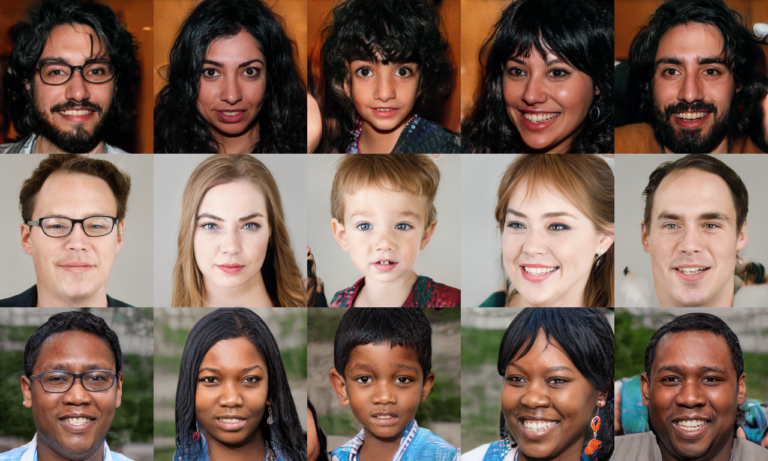
Some of the most impressive applications of GANs to date have been in the domain of image generation. High-fidelity GAN models like StyleGAN can create photorealistic portraits of people who don‘t exist, as showcased by projects like This Person Does Not Exist.
But GANs can be used for more than just generating pretty pictures from scratch. By tweaking the "latent space" that the generator maps from, it‘s possible to modify the content and style of existing images in targeted ways. This is where DragGAN comes in.
Latent Space Manipulation
In a GAN, the latent space refers to the set of compressed, abstract features that the generator network uses as input to produce images. This space has intriguing properties – it turns out that many semantic attributes of images (like pose, shape, texture, etc.) are neatly encoded as smooth, continuous variables.
By identifying latent space directions that correspond to meaningful attributes, it‘s possible to edit those attributes in the generated images. For example, there might be a particular direction in latent space that makes faces look older when moved in the positive direction and younger when moved negatively.
This is the essence of latent space manipulation, but it‘s easier said than done, especially for more complex, localized edits. To tackle this challenge, DragGAN introduces two key innovations:
- An optimization method that can efficiently search the latent space to find an edit direction that matches the user‘s input stroke.
- A point tracking approach that allows fine-grained control over the shape and scale of the deformation while preserving the surrounding image content.
Together, these components allow DragGAN to perform high-quality, targeted image manipulations in real-time based on simple user interactions. Let‘s look at how it works in practice.
Using DragGAN

The DragGAN interface presents the user with an image and a set of control points overlaid on top of it. By clicking and dragging these points, the user can intuitively indicate the desired transformation.
For example, dragging a point on a person‘s mouth upward might make them smile, while pulling it down could give them a frown or an open-mouthed expression. Dragging on the corners of a car could alter its 3D pose and shape as if you were manipulating a CAD model.
As the user drags a control point, DragGAN continuously optimizes the latent code to satisfy two objectives:
- Matching the user‘s edit stroke as closely as possible
- Preserving the visual plausibility and consistency of the image
This is a difficult balance to strike, but DragGAN achieves it through a novel optimization approach. Essentially, it breaks the problem down into a series of smaller, more tractable subproblems that can be solved efficiently using gradient-based methods.
The key is that instead of optimizing the latent code all at once, DragGAN performs a sequence of updates that gently "nudge" the image in the desired direction. At each step, it samples a batch of latent space directions and evaluates them based on how well they satisfy the edit stroke and maintain realism. The best direction is then used to update the current solution before the next iteration.
By following the user‘s edit stroke in small, incremental steps like this, DragGAN is able to accumulate a large, complex deformation while preserving the coherence and fidelity of the image. The point tracking system ensures that the manipulation follows the user‘s intent in a precise, localized way without disturbing the rest of the image.
The end result is an interface that feels fluid, intuitive, and surprisingly powerful. With just a few clicks and drags, users can create dramatic, photorealistic alterations that would typically require painstaking manual editing in Photoshop.
Applications and Implications
So what can you actually do with a tool like DragGAN? The possibilities are vast and exciting. Here are just a few potential use cases:
-
Photo editing: Tweak the facial expressions, poses, and features of portrait photos for creative or corrective purposes. Slim down or bulk up body parts. Adjust the perspective and scale of objects in a scene.
-
Design ideation: Quickly explore variations on a product or character design by manipulating a base image. Test out different hairstyles, outfits, materials, etc.
-
Image retargeting: Adapt an image to fit different aspect ratios or layouts by selectively stretching or compressing regions.
-
Special effects: Create live-action special effects shots by seamlessly manipulating and compositing video frames.
-
Data augmentation: Generate synthetic training data for computer vision models by programmatically applying random DragGAN transformations to real images.
Of course, as with any powerful technology, there are also potential risks and downsides to consider. Photorealistic image manipulation tools can be used to create deepfakes and other deceptive content. This underscores the need for robust authentication methods and media literacy education.
On the positive side, DragGAN‘s code and models are completely open source, which helps to democratize access to this technology and allows the broader research community to audit and build upon it. The more we can engage in responsible, transparent development of AI tools like this, the better equipped we‘ll be to harness their benefits and mitigate their risks.
Technical Details
For the more technically inclined, let‘s dive a bit deeper into the architecture and training of DragGAN.
Model Architecture
DragGAN is built on a GAN backbone called StyleGAN2-Ada, a state-of-the-art model for high-resolution image generation. The generator network in StyleGAN2 is conditioned on a style vector that controls various attributes of the output image at different scales and levels of abstraction.
To enable GAN inversion, DragGAN extends this architecture with an encoder network that learns to map images back to their corresponding style vectors and noise inputs. This allows a real image to be embedded into the generator‘s latent space where it can be manipulated.
Specifically, the DragGAN training pipeline consists of:
- A style-based generator network with 18 layers at resolutions from 4×4 up to 1024×1024
- A multiscale patch discriminator that operates on the full image as well as local patches to enforce both global and local realism
- A style encoder that predicts a 512-dimensional style vector from an input image
- A noise encoder that predicts per-pixel noise maps to capture stochastic variation

Simplified diagram of the DragGAN architecture. (Source: DragGAN paper)
During training, these components are jointly optimized to reconstruct real images while fooling the discriminator. The discriminator in turn is trained to correctly classify reals and fakes. This adversarial feedback loop results in a generator that can produce high-quality images with fine-grained control via the style and noise inputs.
Training Process
The researchers trained DragGAN on a diverse dataset of over 200,000 high-res images spanning portraits, scenery, objects, and more. To improve stability and generalization, they used differentiable augmentations like Gaussian blurring and created a challenging test split for evaluation.
Training was accelerated using NVLink interconnect across 8 NVIDIA V100 GPUs and took around 6 days to converge. The following table shows some key training hyperparameters:
| Hyperparameter | Value |
|---|---|
| Batch size | 32 |
| Learning rate | 0.002 |
| Image size | 1024 |
| Style dimensions | 512 |
| Noise dimensions | 1024 |
| Training steps | 1.2M |
One notable feature of DragGAN‘s training is the use of an auxiliary task to help enforce consistency between input strokes and output edits. In addition to the main GAN objective, the model is trained to directly regress the pixel coordinates of user control points from the corresponding style code edits. This helps ensure that the latent space updates accurately reflect the locations and motions of the user‘s inputs.
Results and Comparisons
So how does DragGAN stack up against existing methods? The authors compared their approach to several state-of-the-art baselines for GAN-based image editing on a range of datasets and editing tasks.
DragGAN outperforms all of these baselines in terms of realism and editability, achieving higher user control scores and lower FID (Fréchet Inception Distance) values. It also beats out commercial tools like Photoshop‘s Liquify feature, which struggles to maintain semantic consistency across large deformations.
Compared to optimization-based GAN inversion methods, DragGAN‘s main advantage is speed and interactivity. By using a trained encoder network for inversion and a lightweight optimization procedure for latent space updates, DragGAN can manipulate images in real-time while preserving quality.
It‘s also more flexible and scalable than many specialized editing tools that rely on hand-crafted 3D representations or dense correspondence fields between images. DragGAN can learn versatile editing capabilities from raw, unlabeled data.
That said, there are still some limitations and failure modes to be aware of. Like other GAN-based models, DragGAN can struggle with the inherent ambiguity of 2D images and may introduce artifacts for extreme edits that push the boundaries of the training distribution. It also requires a large amount of training data and compute to achieve high-quality results.
Overall though, DragGAN represents an exciting step forward in the development of AI-powered content creation tools. It hints at a future where anyone can wield the power of complex, photorealistic image manipulation through intuitive, direct interaction.
Future Directions
So what‘s next for DragGAN and related technologies? There are many intriguing avenues for future research and development:
-
Video editing: Extend DragGAN to support video data by modeling the temporal dynamics and consistency of latent space edits. This could enable powerful video manipulation tools for special effects, animation, and more.
-
3D-aware GANs: Combine DragGAN‘s approach with explicit 3D representations like neural radiance fields (NeRFs) to enable view-consistent editing of 3D shapes and appearances.
-
Semantic control: Incorporate natural language understanding to specify DragGAN edits using plain text descriptions in addition to point interactions. This could make the tool more accessible to non-experts.
-
Few-shot learning: Adapt DragGAN to new image domains and editing tasks with just a few examples, leveraging techniques like meta-learning and fine-tuning.
-
Creative applications: Explore novel use cases for DragGAN in fields like graphic design, digital art, architecture, and gaming. What new kinds of creative workflows and experiences could this enable?
From a broader AI perspective, I believe DragGAN exemplifies the huge potential of combining deep generative models with interactive tools to amplify human creativity and expression. It aligns with the grand vision of AI not as a replacement for human intelligence, but as a powerful augmentation of our capabilities.
At the same time, we must thoughtfully consider the societal impacts of this kind of technology, from the spread of disinformation to the automation of creative labor. It‘s crucial that we develop these AI tools with transparency, accountability, and a commitment to benefiting humanity as a whole.
Conclusion
DragGAN is more than just a cool image editing demo – it‘s a glimpse into the future of human-AI collaboration in the creative process. By harnessing the power of GANs and latent space manipulation, it enables users to intuitively sculpt and manipulate photorealistic images using a simple, flexible interface.
While there are still limitations and open challenges, DragGAN represents a remarkable step forward in the development of AI-assisted content creation. It has the potential to unlock new forms of creative expression and streamline workflows across a variety of domains.
Most importantly, by making their code and models publicly available, the DragGAN team has empowered the broader community to experiment with and build upon this technology. I‘m excited to see how researchers and practitioners will extend and apply DragGAN in the coming months and years.
In the end, I believe tools like DragGAN will serve not to replace human artists and designers, but to augment their capabilities and inspire new frontiers of imagination. The magic of AI-powered creativity is just beginning to be unleashed.