
Dutch Shepherd vs. Belgian Malinois: Differences Explained (With Pictures)
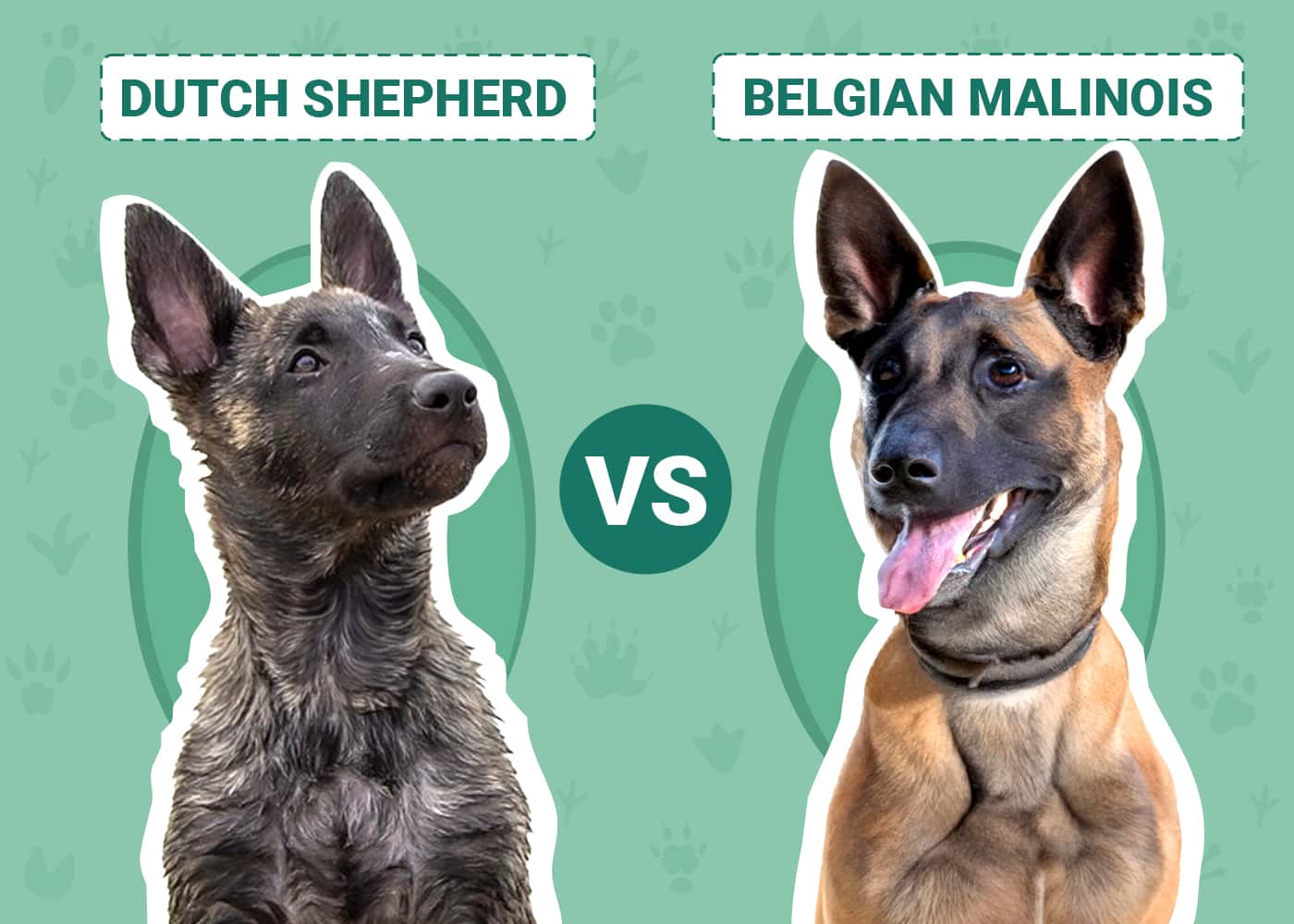
Dutch Shepherds vs Belgian Malinois: A Detailed Comparison
Introduction
At first glance, the Dutch Shepherd and Belgian Malinois may seem nearly indistinguishable. Both bred as herding dogs in the same region of Europe, these agile, muscular working breeds share many physical and behavioral similarities. With keen intelligence, fierce loyalty, and energetic dispositions, they can make wonderful companions for the right owners. However, there are some important differences to consider when choosing between a Dutch Shepherd and a Belgian Malinois.
In this article, we‘ll take an in-depth look at the history, appearance, temperament, care requirements, and more to help you determine which of these impressive herding breeds may be the ideal fit for your lifestyle. While closely related, each has unique characteristics that set them apart.
[Insert image showing a Dutch Shepherd and Belgian Malinois side-by-side]Breed History and Purpose
The Dutch Shepherd and Belgian Malinois descend from common herding stock native to the Netherlands and Belgium. For centuries, these versatile dogs served farmers as tireless sheep and cattle herders, livestock guardians, and all-around farmhands. They were prized for their stamina, work ethic, and adaptability.
In the late 1800s, the Belgian Malinois emerged as a distinct breed named for the city of Malines. Around the same time, the Dutch Shepherd was also selectively bred, with brindle coat color becoming a defining breed characteristic to distinguish them from the Malinois and German Shepherd.
During the world wars, both breeds made excellent military working dogs thanks to their intelligence, trainability, and bold nature. They continue to excel today as police K-9s, search and rescue workers, and competitors in protection sports and obedience trials. While still fairly rare, they‘ve also gained popularity as active companion dogs.
Appearance
The Dutch Shepherd and Belgian Malinois have similar builds – strong, agile, and athletic. Males of both breeds typically stand 24-26 inches tall and weigh 60-80 pounds, while females are slightly smaller at 22-24 inches tall and 40-60 pounds. From a distance, they can easily be mistaken for each other.
Some key physical differences become apparent upon closer inspection:
Coat – The Dutch Shepherd has a dense, weather-resistant double coat that comes in three varieties:
- Short-haired: Quite short and close to the body
- Long-haired: Longer, dense, and straight or slightly wavy
- Rough-haired: Tousled and wiry, about 1-2 inches long
In contrast, the Malinois has a uniformly short, straight coat. The outer layer is dense enough to protect against weather and underbrush, with a soft, dense undercoat. Shedding is average for both breeds.
Color – Per the breed standard, the Dutch Shepherd‘s coarse outer coat only comes in brindle – a tiger-striped pattern of gold and black or silver and gray. The Malinois has a wider range of acceptable colors including fawn to mahogany with a black mask and ears, and varying degrees of black overlay.
Head – The Malinois tends to have a more refined, chiseled head compared to the Dutch Shepherd‘s broader, wedge-shaped head. Ears are triangular and erect in both breeds.
[Insert images showing the coat varieties and colors of each breed]Temperament
Bred to work closely with humans, both Dutch Shepherds and Belgian Malinois are very bonded to their owners. They thrive on interaction and engagement. Left alone too long, they tend to become bored and destructive.
In general, the Malinois is known for being slightly more high-strung and intense, while the Dutch Shepherd leans more easygoing and adaptable. However, temperament can vary significantly between individual dogs.
Some general shared temperament traits include:
Intelligence: Both breeds are extremely bright, picking up new commands quickly and requiring extensive mental stimulation. They excel at obedience, trick training, and complex tasks.
Trainability: Eager to please and highly motivated by praise and play, they take well to reward-based training methods. Early socialization and ongoing training are a must to develop a well-mannered companion.
Energy: Bred for all-day work, they have impressive stamina and strong drives to run, chase, herd, bite and tug. Owners need to provide ample daily exercise and "jobs" in the form of training, sports, or puzzles to keep them content.
Loyalty: Deeply devoted to their owners, they‘re often one-person or one-family dogs. They can be aloof or suspicious around strangers without proper socialization.
Protectiveness: With strong protective and territorial instincts, they make vigilant watchdogs with the courage to back up their bark. This is not uncontrolled aggression, but rather an appropriate guarding nature that requires guidance.
[Insert image of a Dutch Shepherd and Malinois engaged in active play/work]Exercise and Care
The Dutch Shepherd and Belgian Malinois are not the right dogs for couch potatoes. Keeping them happy and healthy requires an active lifestyle and significant daily engagement from their owners. Arguably, the Malinois has an even higher activity level that can be too much for the average pet owner to manage.
At a minimum, they should receive:
- 1-2 hours per day of strenuous exercise like running, biking, hiking, herding, or playing fetch
- Regular mentally stimulating activities like obedience, nose work, agility, or other training
- Socialization with a variety of people, dogs and environments, especially when young
- Opportunities to run and roam in a safely enclosed yard
- Companionship throughout the day – not left alone for long periods
In addition to plenty of exercise and interaction, the Dutch Shepherd and Malinois have fairly straightforward grooming requirements. Weekly brushing and the occasional bath will keep the coat and skin healthy. Nails should be trimmed regularly to prevent overgrowth and splitting.
Training and Socialization
With their keen intelligence and strong work ethic, the Dutch Shepherd and Malinois are highly trainable and well-suited for advanced obedience, protection sports, scent work and service roles. However, they do require a confident, consistent handler to reach their full potential.
The Malinois in particular can be an intense, high-energy handful, reluctant to settle down. They do best with an experienced trainer well-versed in positive motivation and clear guidance. The Dutch Shepherd is often described as slightly softer and more biddable.
Some training tips for both breeds:
- Start socialization and basic obedience from a young age
- Use reward-based methods centered on play, praise and food motivation
- Be patient, calm and consistent – harsh corrections can damage their eagerness to learn
- Provide clear structure and boundaries – they do best with a predictable routine
- Incorporate ongoing training and new challenges throughout their life to keep them sharp
- Extensively socialize them as pups to prevent shyness, fear and overprotectiveness
Health and Lifespan
The Dutch Shepherd and Belgian Malinois are generally healthy breeds with an expected lifespan of 11-14 years. Like all large breeds, they can be prone to hip and elbow dysplasia, a malformation of the joint that causes arthritis and lameness. Responsible breeders will screen for this and other inheritable conditions.
The Dutch Shepherd also has a risk for:
- Pannus: An autoimmune disorder affecting the eyes
- Gastric Dilation Volvulus (Bloat): Life-threatening stomach twisting
- Masticatory myositis: An inflammatory jaw muscle disease
- Pituitary dwarfism: Low production of growth hormone
- Hypothyroidism: Low thyroid hormone levels
- Goniodysplasia: Abnormal eye development in rough-coated varieties
The Belgian Malinois may develop:
- Progressive Retinal Atrophy: Gradual vision loss
- Hemangiosarcoma: An aggressive cancer of the blood vessels
- Epilepsy: Recurrent seizures
Choosing the Right Breed
The Dutch Shepherd and Belgian Malinois may seem like two peas in a highly energetic pod. When raised and trained properly, either can make a loyal, loving companion with the athleticism and work ethic to excel as a K-9 partner, search and rescue worker, competitor or adventure buddy.
However, it‘s important to carefully consider your lifestyle and experience before bringing one home. Both the Dutch Shepherd and Malinois require a tremendous amount of exercise, training and interaction. Without an outlet for their physical and mental energy, they can easily become destructive and difficult to handle.
The Belgian Malinois tends to be the more intense and demanding of the two. Experienced owners seeking a driven, high-octane partner for protection sports or service work may gravitate towards this breed.
The Dutch Shepherd is often described as slightly less excitable and more even-keeled, perhaps a better choice for active families or first-time working dog owners. Their brindle coats also allow them to stand out from the ubiquitous fawn Malinois.
In general, both breeds do best with knowledgeable owners willing to provide:
- An extremely active, engaged lifestyle
- Firm, positive, consistent training and socialization from an early age
- Ample daily exercise and mental stimulation
- Ongoing positive outlets for their strong work and play drives
With their striking good looks, keen intelligence and tireless work ethic, the Dutch Shepherd and Belgian Malinois may seem like the ultimate canine companions. For the right person, they certainly can be. But it‘s essential to do your research and ensure you can meet their significant needs before taking the plunge.
[Insert final image showing a Dutch Shepherd and Malinois ready and eager to work/play with their owner]I hope this overview of the key similarities and differences between Dutch Shepherds and Belgian Malinois has been helpful in your search for the perfect working dog partner. While these closely related breeds have much in common, understanding their unique characteristics can help guide you to the right choice.



)