East Siberian Laika Dog Breed: Info, Pictures, Care & More
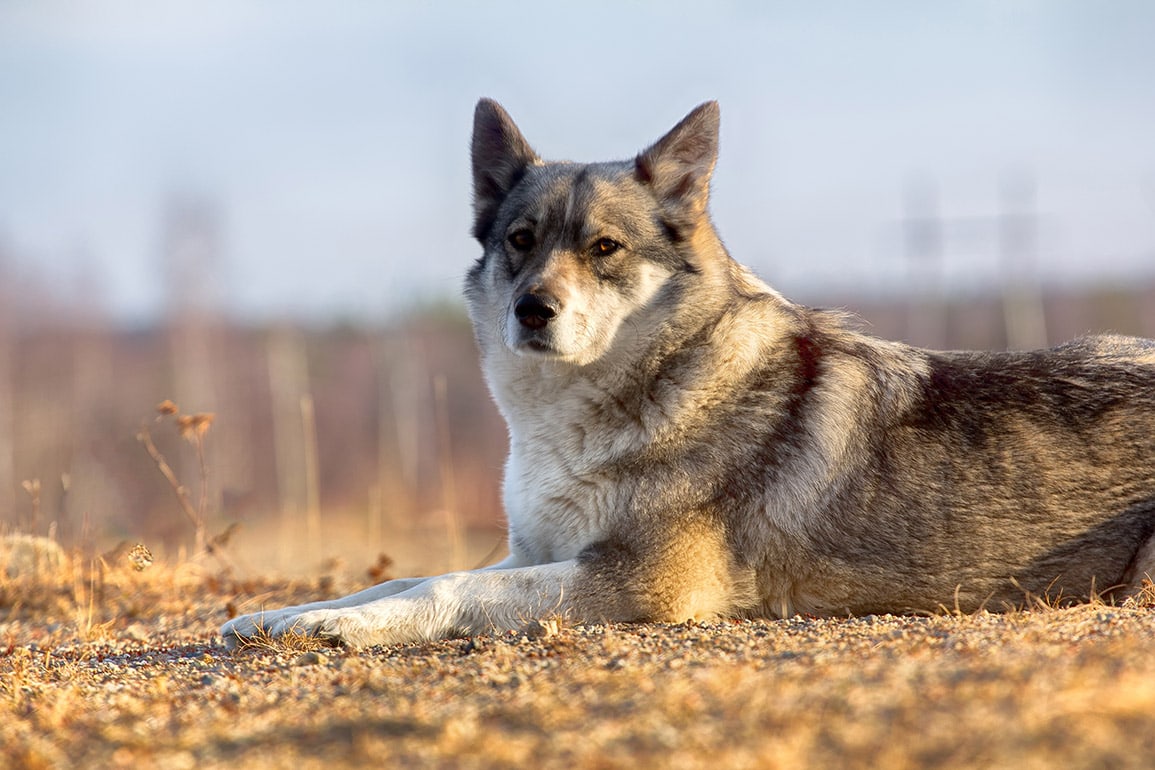
Originating in the remote wilderness of Eastern Siberia, the East Siberian Laika is a hardy, energetic breed with a fascinating history. While this stunning dog is still quite rare outside of its native Russia, it has gained admirers around the world for its intelligence, independent spirit, and prowess as a hunting companion. Could the East Siberian Laika be the right breed for you and your family? Read on to find out everything you need to know about these remarkable dogs.
Breed Overview
The East Siberian Laika belongs to the Spitz family of dogs, which includes other northern breeds like the Husky, Malamute and Samoyed. It‘s a medium-large breed, with males standing 22-26 inches tall at the shoulder and weighing 45-55 pounds, and females slightly smaller at 21-24 inches and 35-50 pounds. The body is compact and muscular, built for power and endurance.
The standout feature is the thick double coat, with a dense undercoat and straight, coarse outer hairs that stand off from the body. The fur is shorter on the head and front of the legs, and longer on the neck, shoulders and tail. Coat colors include solid white, black, gray and brown, as well as black and tan, and piebald. A bushy, fox-like tail is carried curled over the back.
The head is wedge-shaped with erect, triangular ears and expressive almond-shaped eyes. The overall expression is alert, lively and intelligent. This breed matures slowly, not reaching full size until 2-3 years old. Life expectancy is 12-15 years.
A Breed Born to Hunt
The East Siberian Laika‘s history dates back hundreds, if not thousands of years to the indigenous peoples of northeastern Russia. These nomadic tribes depended on hunting to survive, and selectively bred dogs to assist in the pursuit of game like elk, bear, boar and Siberian tigers. They needed an intelligent, brave and independently-thinking dog that could track prey in the vast Siberian forests and hold it at bay until the hunter arrived.
The breed likely descends in part from early sled dog types and aboriginal hunting dogs. Some experts believe it is the most "wolflike" of the Laika breeds, with some wolf ancestry apparent in the head shape, coat and carnivorous nature.
For centuries, the East Siberian Laika remained a well-kept secret in its isolated homeland. But in the early 20th century, Soviet military and political leaders took an interest in native Laika breeds as potential military and working dogs. Selective breeding began in the 1930s, and the first breed standard was published in 1947.
The Soviet government recognized the East Siberian Laika as a national treasure and controlled the breeding and sale of puppies. For decades, it was nearly impossible for anyone outside of Russia to acquire one of these dogs. But with the collapse of the Soviet Union in the early 1990s, a few enterprising breeders were able to export Laikas to Europe and North America. The breed remains extremely rare outside of Russia, but has a devoted following among sled dog and primitive breed enthusiasts.
Physical Characteristics
One of the East Siberian Laika‘s most impressive features is its thick, weatherproof coat. The outer coat is 2-3 inches long, made up of straight, coarse guard hairs that stand off from the body. Beneath is a dense, soft, wooly undercoat. The fur is shorter on the head, ears and front of the legs, and longer on the neck, shoulders, back and tail. The coat is remarkably resistant to snow, ice, and water – an essential adaptation for working in the frigid Russian winter.
The tradeoff is a lot of shedding. Laikas "blow coat" heavily once or twice a year as the seasons change, and shed moderately the rest of the year. Weekly brushing is needed to keep the flying fur under control. Luckily, the coat has minimal doggy odor and sheds dirt easily, so full baths are rarely necessary.
The body is dry and muscular, with a deep chest, straight back, and sturdy bone structure. The legs are powerful and parallel. The large, hare-shaped feet have thick pads and fur between the toes for traction on snowy terrain. The overall build is slightly longer than tall, agile but substantial – a dog that can travel long distances with a heavy pack, and hold its own against formidable prey.
Temperament and Training
East Siberian Laikas were bred to work independently in the field, making decisions on their own. This history has produced a keen intelligence and independent spirit – wonderful traits in a hunting dog, but potentially challenging in a pet. Laikas are strong-willed and can be dominant. They need confident, consistent training from a young age, and a lot of mental stimulation. This is not a breed for first-time or hands-off owners. In the right home, however, Laikas are exceptionally loyal, affectionate and responsive to their people.
Early and extensive socialization is essential for this breed. Their alert, territorial nature and ingrained suspicion of strangers can morph into shyness or aggression without adequate exposure to new people and situations. They have strong instincts to chase prey, so off-leash reliability is a must. Same-sex aggression and dominance toward other dogs is common, especially in males. Many Laikas prefer to be the only dog in the household, or may do best when paired with a dog of the opposite sex. Their strong prey drive also means they usually can‘t live safely with cats or small pets.
Laikas bond intensely with their families and can be affectionate and playful with kids. However, their high energy level and physical strength may be too much for very young children. Interactions between dogs and kids should always be supervised. When raised with children and properly socialized, they can be gentle, tolerant playmates.
Exercise and Living Requirements
The East Siberian Laika is an athletic working breed with significant exercise needs. Prepare to provide a bare minimum of 60-90 minutes per day of vigorous activity – more is better. They thrive on long hikes, jogs, bikejoring and skijoring. Mushing is of course the ultimate way to satisfy their desire to run and pull. Without sufficient exercise, they become bored and prone to destructive behavior like excessive barking, howling, digging and chewing.
A securely fenced yard is a must for this breed. Laikas have strong exploratory instincts and wanderlust, so can never be trusted off-leash in an unfenced area. An underground electronic fence is not sufficient for their high prey drive and desire to roam. Particularly determined Laikas may go over or under a regular fence, so some owners find a 6-foot privacy fence works best.
This is not an apartment-friendly breed. They need space to run and play, and preferably a cooler climate. The thick double coat makes them prone to overheating in hot summer weather. Because they are so people-oriented, they don‘t do well alone for long periods. Consider another breed if you work long hours and can‘t take your dog along.
Finding a Breeder
The East Siberian Laika‘s rarity outside of Russia means you‘ll need to do your homework to find a responsible breeder. Expect to be put on a waiting list. Never buy a puppy sight-unseen from a website or pet store. Always visit the breeder in person to see the conditions the dogs are raised in. Both parents should have health clearances from the Orthopedic Foundation for Animals (OFA) for hips and elbows. If the breeder won‘t let you meet the parents or doesn‘t health test, walk away.
The breed is not currently recognized by the American Kennel Club, but is registered with the Continental Kennel Club and the International Cynological Federation (FCI). Recognized colors are white, black, black and tan, brown or red, and piebald. Be wary of anyone advertising "rare" colors like solid red or blue. There is no such thing as a "miniature" or "teacup" Laika, so avoid breeders selling undersized dogs.
Expect to pay $1500-2500 for a purebred Laika puppy. While adopting is usually preferable to purchasing, you are extremely unlikely to find an East Siberian Laika in a shelter or rescue group. The few that exist in North America are highly valued by their owners and breeders.
Health and Longevity
The East Siberian Laika is a naturally healthy, long-lived breed, having been bred for generations to survive in challenging conditions without veterinary care. Most live 12-15 years. Responsible breeders screen their dogs for hip dysplasia and elbow dysplasia, which occasionally occur. Eye disorders like progressive retinal atrophy (PRA) and cataracts have also been seen. Bloat, or gastric torsion, is a risk in deep-chested dogs; owners should learn the signs and seek immediate veterinary treatment if bloat is suspected.
Interesting Facts
-
The name "Laika" means "barker" in Russian, referring to the breed‘s tendency to bark and howl while hunting. Laikas are famously vocal, so potential owners should be comfortable with some noise.
-
The first living creature sent into orbit, the Soviet space dog Laika, is believed to have been an East Siberian Laika – although some experts think she was more likely a stray mongrel. Either way, the famous space mission demonstrates the East Siberian Laika‘s legendary toughness and adaptability.
-
In its native Russia, the East Siberian Laika is still employed to hunt a variety of big game, including bear, wild boar and moose. These determined dogs have even been known to take down a wolf.
-
The breed nearly went extinct in the 1970s, when only about 40 pedigreed East Siberian Laikas remained in the Soviet Union. Through the dedication of a few passionate breeders, their numbers have slowly increased, although they are still quite rare.
Wrapping Up
So is the East Siberian Laika the right dog for you? This breed can be an outstanding companion for experienced owners who are seeking a rugged, intelligent, independent-minded working dog. They need a lot of exercise, rigorous training and socialization, and do best in a spacious home with a large fenced yard. Novice owners and apartment dwellers should probably look elsewhere.
For the right person, though, the East Siberian Laika is a once-in-a-lifetime dog. Their keen mind, indomitable spirit and intense loyalty are unmatched. If you are willing to put in the considerable work required, you will be rewarded with a capable, affectionate and endlessly fascinating friend to share your life and adventures. After getting to know this breed, you may decide you can never go back to "ordinary" dogs again!