English vs American Labrador: A Dog Lover‘s Guide to Understanding the Differences
As a dog lover and veterinary expert, I have always been fascinated by the distinct characteristics of English and American Labradors. While both types share the endearing qualities that make Labrador Retrievers one of the most beloved dog breeds worldwide, there are notable differences between the two that are worth exploring. In this comprehensive guide, we‘ll delve into the history, physical attributes, temperament, and more to help you better understand these two varieties of Labradors.
The Origin Story: How English and American Labradors Came to Be
The Labrador Retriever‘s journey began in the early 19th century in Newfoundland, Canada, where they were initially bred as working dogs to assist fishermen. These dogs, known as St. John‘s water dogs, were prized for their swimming abilities, strong work ethic, and friendly temperament.
In the late 1800s, English aristocrats visiting Canada were captivated by the Labradors‘ skills and brought some back to England. One of the most influential figures in the development of the English Labrador was the 2nd Earl of Malmesbury, who refined the breed and established the first Labrador kennels in England. The English Labrador quickly gained popularity among the upper class as a gentleman‘s hunting companion and show dog.
Meanwhile, in the United States, breeders focused on developing a Labrador better suited for field work and hunting. American Labradors were bred to be more agile, athletic, and driven, with a keen nose for game. One of the key figures in the development of the American Labrador was Dr. Charles Eley, who imported Labradors from England and bred them for their hunting abilities in the early 20th century.
Physical Characteristics: A Tale of Two Types
Size, Weight, and Build
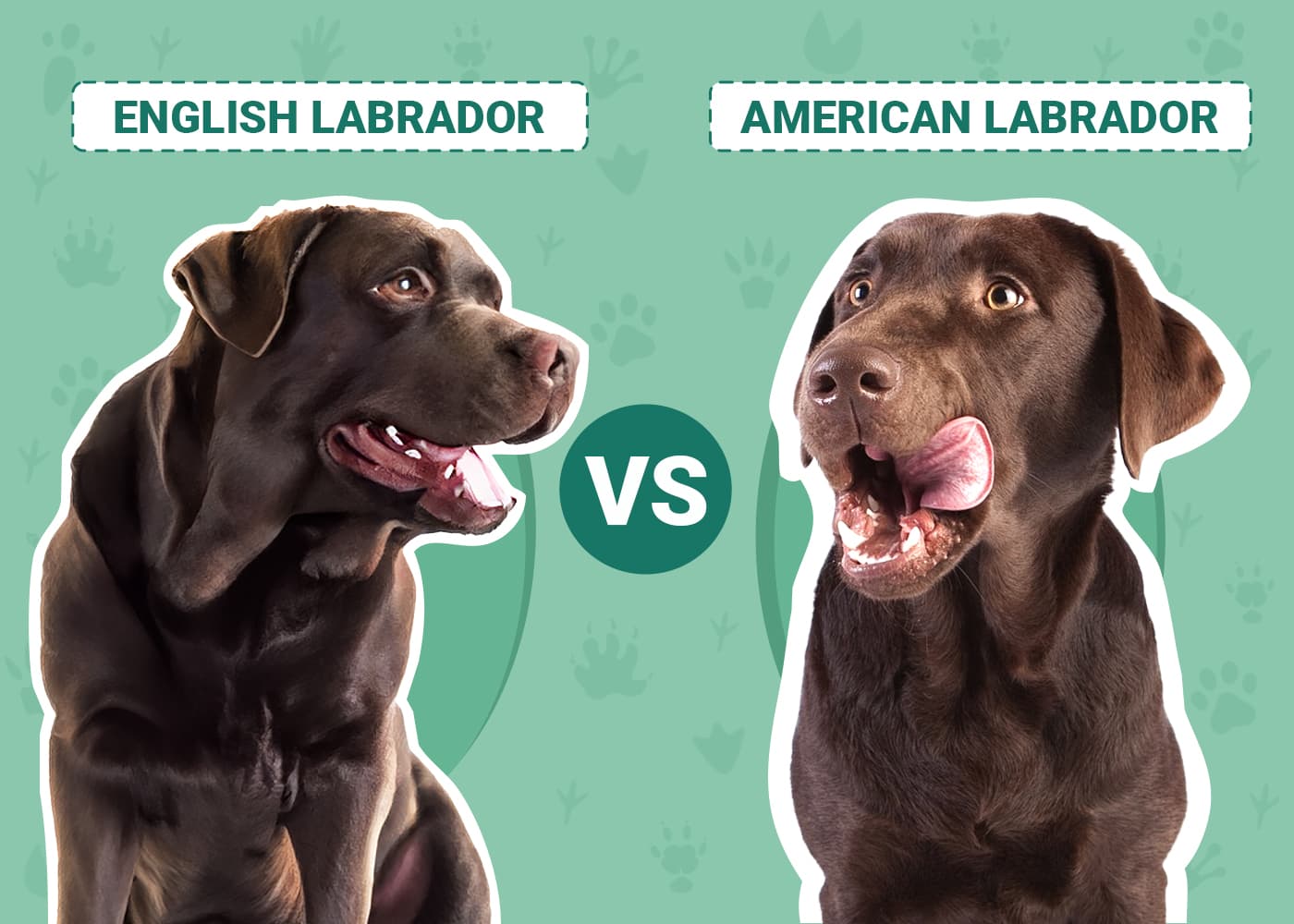
One of the most striking differences between English and American Labradors is their physical appearance. English Labs, also known as "show" or "bench" Labradors, are generally shorter, stockier, and heavier-boned than their American counterparts. They have a more substantial, robust build, with a wide head, thick neck, and deep chest. On average, English Labs weigh between 55 to 80 pounds and stand 21.5 to 22.5 inches tall at the shoulder.
American Labradors, often referred to as "working" or "field" Labs, are taller, lighter, and more athletic in build. They have a narrower head, longer muzzle, and a more streamlined body, which allows for greater agility and endurance in the field. American Labs typically weigh between 55 to 70 pounds and stand 21.5 to 24.5 inches tall at the shoulder.
Coat Colors and Textures
Both English and American Labradors come in three recognized colors: black, yellow, and chocolate. However, there can be slight variations in shade and tone between the two types. English Labs tend to have a thicker, denser coat with a softer texture, which may require more frequent grooming. American Labs often have a shorter, coarser coat that is better suited for working in harsh conditions and may shed slightly less.
Head and Facial Features
The head and facial features of English and American Labradors also differ. English Labs have a broader, more pronounced stop (the point where the forehead meets the muzzle), and their ears are set slightly lower on the head. Their eyes are typically larger and more expressive, giving them a sweet, gentle appearance.
American Labradors have a more streamlined head with a less pronounced stop and higher-set ears. Their eyes are usually smaller and more almond-shaped, conveying a more alert and determined expression.
Temperament and Personality: Different Strokes for Different Folks
While both English and American Labradors are known for their friendly, outgoing personalities, there are some subtle differences in their temperaments that may make one type more suitable for certain lifestyles or roles.
English Labradors are often described as more laid-back, easygoing, and adaptable. They tend to be more content with a slower pace of life and are generally better suited for families with children or those looking for a calm, affectionate companion. Many English Lab owners report that their dogs are more prone to cuddles and have a "softer" personality.
American Labradors, on the other hand, are typically more energetic, driven, and focused. They have a strong work ethic and excel in roles such as hunting, search and rescue, and therapy work. American Labs may require more mental and physical stimulation to keep them happy and well-behaved. Owners often describe their American Labs as having a "harder" personality, with a greater desire to please and a higher drive to work.
It‘s important to note that these temperament differences are generalizations, and individual dogs within each type may vary. Factors such as breeding, socialization, and training also play a significant role in shaping a dog‘s personality.
Health and Lifespan: What You Need to Know
Labrador Retrievers, in general, are a relatively healthy breed with a lifespan of 10-12 years. However, like all breeds, they are prone to certain health issues. Some of the most common health concerns in Labradors include:
- Hip and elbow dysplasia: Developmental disorders that can cause painful joint issues and lameness.
- Eye disorders: Progressive retinal atrophy (PRA) and cataracts are among the most common eye problems in Labs.
- Obesity: Labs have a propensity for weight gain, which can lead to various health issues.
- Exercise-induced collapse (EIC): A genetic disorder that causes muscle weakness and collapse after intense exercise, more commonly seen in American Labs.
While there is no significant difference in the overall health of English and American Labradors, some studies suggest that English Labs may be slightly more prone to obesity due to their stockier build and less active lifestyle. A 2016 study by the University of Cambridge found that English Labs were more likely to be overweight or obese compared to their American counterparts.
To minimize the risk of health issues, it‘s crucial to work with reputable breeders who perform health screenings on their breeding stock and provide documentation, such as hip and elbow scores, eye certifications, and genetic test results. Regular veterinary check-ups, a balanced diet, and appropriate exercise are also essential for maintaining your Labrador‘s health.
Training and Exercise Requirements: Keeping Your Lab Happy and Healthy
Both English and American Labradors are intelligent, eager to please, and highly trainable. However, their training and exercise needs may vary depending on their individual personalities and the roles they are expected to fulfill.
English Labradors, with their more laid-back nature, may be content with moderate exercise, such as daily walks and play sessions. They are well-suited for obedience training and can excel in therapy work or as family pets. English Labs may be more prone to becoming couch potatoes if not given enough activity, so it‘s important to keep them moving to maintain a healthy weight.
American Labradors, given their higher energy levels and working drive, require more rigorous exercise and mental stimulation. They thrive in active households where they can participate in activities like hunting, agility, or field trials. Consistent training and plenty of opportunities to burn off energy are essential for keeping American Labs happy and well-behaved. Without proper outlets for their energy, American Labs may become destructive or develop behavioral issues.
Regardless of type, all Labradors benefit from positive reinforcement training methods and socialization from an early age. Exposing your Lab to various people, animals, and environments will help them grow into confident, well-adjusted adults.
Popularity and Recognition: Labradors Take the Lead
Labrador Retrievers have consistently been one of the most popular dog breeds in both the United States and the United Kingdom for many years. According to the American Kennel Club (AKC), Labradors have held the top spot in registration statistics for an impressive 29 consecutive years, from 1991 to 2019. In the United Kingdom, The Kennel Club reports that Labradors have been the most registered breed since 1990.
While both English and American Labradors are recognized by major kennel clubs, there are some differences in breed standards and show requirements. In the United States, the AKC recognizes Labradors as a single breed, with no distinction between English and American types. However, in the United Kingdom, The Kennel Club has separate breed standards for Show (English) and Working (American) Labradors, acknowledging the differences in their appearance and purpose.
The Working Lab: Roles and Responsibilities
Labrador Retrievers, particularly American Labs, excel in various working roles due to their intelligence, trainability, and strong work ethic. Some of the most common working roles for Labradors include:
- Assistance dogs: Labs are often trained as guide dogs for the visually impaired, hearing dogs for the deaf, and service dogs for individuals with disabilities.
- Therapy dogs: With their gentle, friendly nature, Labs make excellent therapy dogs, providing comfort and support in hospitals, nursing homes, schools, and other settings.
- Search and rescue dogs: Labs‘ keen sense of smell, endurance, and trainability make them well-suited for search and rescue operations, helping to locate missing persons and disaster victims.
- Detection dogs: Labradors are commonly employed as detection dogs, assisting law enforcement and military personnel in identifying explosives, drugs, and other contraband.
While both English and American Labs can succeed in these roles, American Labs are more frequently chosen due to their higher energy levels, drive, and athleticism. However, the individual dog‘s temperament and training are ultimately more important than the type when it comes to their suitability for a specific working role.
Nature vs. Nurture: The Importance of Socialization and Training
While the differences between English and American Labradors are notable, it‘s essential to recognize the critical role that socialization and training play in shaping a dog‘s behavior and temperament. Regardless of type, a Labrador that is properly socialized and trained from an early age is more likely to grow into a well-adjusted, happy, and obedient companion.
Neglecting socialization and training can lead to behavioral issues, such as fear, aggression, or destructive habits, which can be challenging to correct later in life. This is particularly important for Labradors, given their size and strength, as an unruly or poorly behaved Lab can be difficult to control and may pose a risk to themselves and others.
To ensure your Labrador grows into a well-rounded adult, consider the following:
- Begin socialization early, exposing your puppy to a variety of people, animals, and environments in a positive, controlled manner.
- Enroll in a puppy training class to learn basic obedience and manners, and continue training throughout your dog‘s life.
- Provide plenty of mental and physical stimulation through interactive toys, puzzles, and engaging activities.
- Establish clear boundaries and consistent rules to help your Lab understand what is expected of them.
- Use positive reinforcement techniques, such as praise, treats, and playtime, to encourage desired behaviors.
By prioritizing socialization and training, you‘ll lay the foundation for a strong, trusting relationship with your Labrador, regardless of whether they are an English or American type.
Choosing Your Perfect Labrador: Factors to Consider
When deciding between an English and American Labrador, it‘s essential to consider your lifestyle, living situation, and the role you want your dog to play in your life. Some factors to keep in mind include:
- Activity level and exercise requirements: If you lead a more sedentary lifestyle, an English Lab may be a better fit, while an American Lab may be more suitable for an active, outdoorsy family.
- Temperament and personality preferences: Consider whether you prefer a more laid-back, cuddly companion or a high-energy, driven working partner.
- Grooming needs and shedding: Both types shed, but English Labs may require more frequent grooming due to their thicker, denser coat.
- Space and living arrangements: Labradors are medium to large dogs that require ample space to move and play, so ensure your living situation can accommodate their needs.
- Intended purpose: If you plan to involve your Lab in specific activities, such as hunting or therapy work, consider which type is better suited for those roles.
Once you‘ve determined which type of Labrador aligns with your preferences and lifestyle, research reputable breeders who prioritize health, temperament, and adherence to breed standards. A responsible breeder will provide health clearances, answer your questions, and help you find the perfect puppy or adult dog to join your family.
Conclusion: Celebrating the Labrador Retriever
English and American Labradors, while distinct in their own ways, both embody the qualities that make Labrador Retrievers one of the most cherished dog breeds in the world. Their friendly, loyal, and adaptable nature has earned them a place in the hearts of dog lovers across the globe.
As a veterinary expert and dog lover, I have had the privilege of working with countless Labradors of both types, and I can attest to the joy and companionship they bring to their families. Whether you choose an English Lab for their laid-back, family-friendly nature or an American Lab for their energetic, driven personality, you‘ll be gaining a devoted friend that will enrich your life in countless ways.
Remember, the key to a happy, healthy Labrador lies not only in their type but also in the love, care, and commitment you provide as their owner. By staying informed, providing proper training and socialization, and attending to their physical and emotional needs, you‘ll create an unbreakable bond with your Labrador that will stand the test of time.
So, whether your heart belongs to the gentle, easygoing English Lab or the spirited, driven American Lab, embrace the unique qualities that make your furry companion special. Together, you‘ll create a lifetime of cherished memories and unwavering loyalty, proving once again why Labrador Retrievers are truly a dog lover‘s best friend.