
Rottweiler vs Mastiff: The Differences (With Pictures)
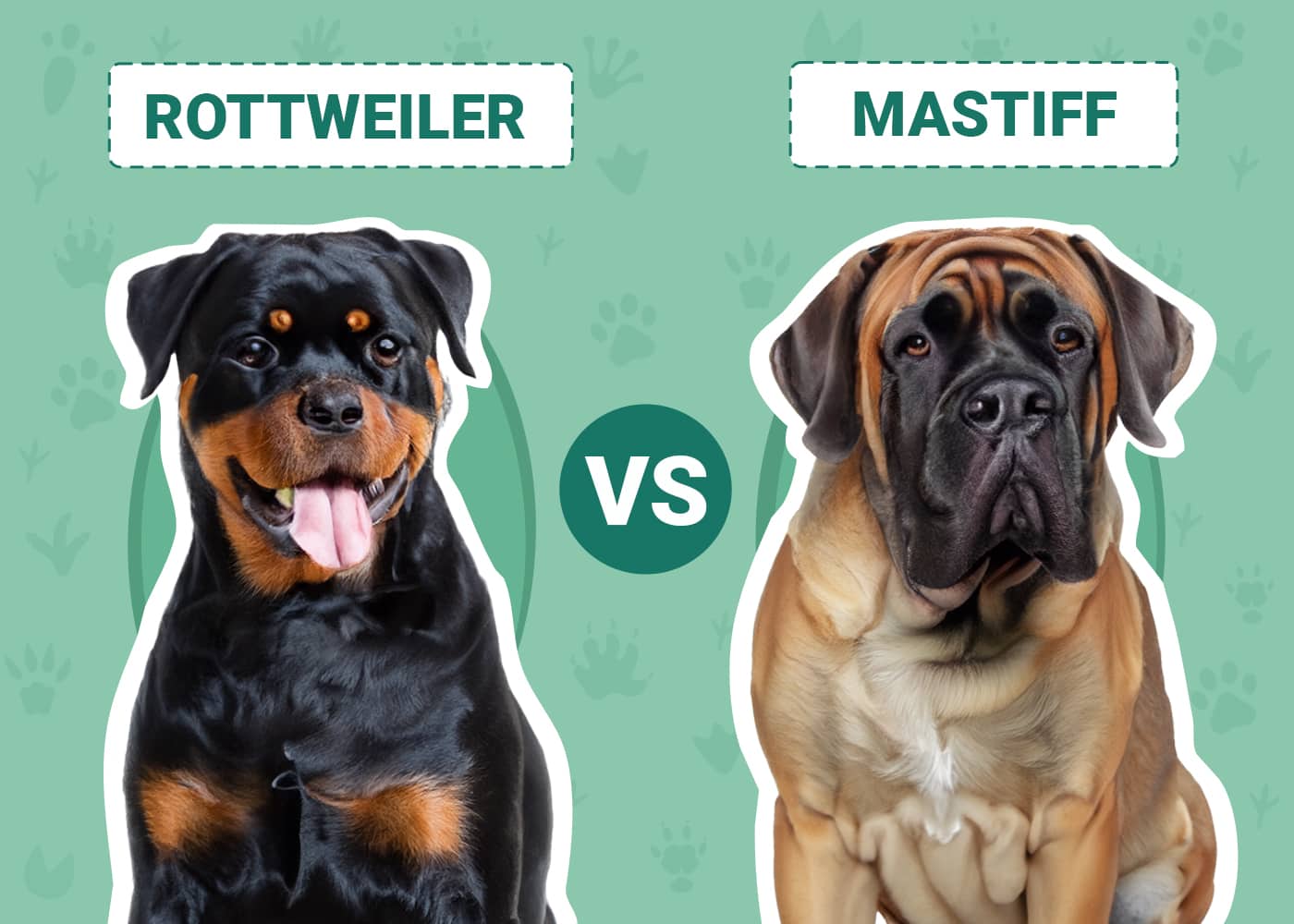
Are you torn between the mighty Rottweiler and the gentle giant Mastiff for your next canine companion? Both breeds are known for their impressive size, strength, and loyalty, but they have distinct differences that may make one a better fit for your lifestyle than the other. In this comprehensive guide, we‘ll explore the key aspects of Rottweilers and Mastiffs, helping you make an informed decision for your family in 2024.
Historical Background and Origins
Rottweilers and Mastiffs share a rich history, with both breeds tracing their origins back to ancient times. Rottweilers descended from the drover dogs of the Roman Empire, used to herd and guard livestock. They later earned the name "Rottweiler Metzgerhund," or "Butcher‘s Dog of Rottweil," for their role in protecting cattle and pulling carts laden with butchered meat to market in the German town of Rottweil.
Mastiffs, on the other hand, have a history that dates back over 5,000 years. The various types of Mastiffs, including the English Mastiff, Bullmastiff, and Neapolitan Mastiff, were used as guardians, war dogs, and even gladiators in ancient civilizations. The English Mastiff, in particular, was prized by British nobility for its size and courage.
Physical Characteristics and Size
One of the most striking differences between Rottweilers and Mastiffs is their size. Rottweilers are large dogs, with males standing 24-27 inches tall at the shoulder and weighing 95-135 pounds. Females are slightly smaller, standing 22-25 inches tall and weighing 80-100 pounds.
Mastiffs, however, are giants among dogs. Male English Mastiffs, for example, can stand up to 30 inches tall at the shoulder and weigh a staggering 160-230 pounds. Females are not far behind, standing 27-29 inches tall and weighing 120-170 pounds. Other Mastiff breeds, such as the Bullmastiff and Neapolitan Mastiff, are similarly large.
Temperament and Personality Traits
Both Rottweilers and Mastiffs are known for their loyal, protective nature. They are devoted to their families and have a natural instinct to guard them against perceived threats. However, there are some differences in their overall temperament.
Rottweilers are confident, courageous, and self-assured. They have a strong work ethic and excel in roles such as police dogs, military dogs, and service animals. They can be aloof with strangers and require firm, consistent training to ensure they understand their place in the family hierarchy.
Mastiffs, while equally protective, are generally more laid-back and easygoing. They are gentle giants with a sweet, affectionate nature. They are patient with children and have a high tolerance for the antics of young family members. However, their size alone can be intimidating, and they require early socialization to prevent shyness or fearfulness.
Exercise Requirements and Energy Levels
Despite their size, Rottweilers are relatively active dogs that require daily exercise. They enjoy long walks, hiking, and playing fetch. They also thrive when given a job to do, such as participating in obedience trials or agility courses. Without sufficient physical and mental stimulation, Rottweilers may become bored and destructive.
Mastiffs, in contrast, have lower energy levels and require less exercise. A daily walk and some playtime in the yard are usually sufficient to keep them happy and healthy. They are not well-suited to long runs or intense exercise, as their large size puts them at risk for joint problems and overheating.
Training and Socialization
Both Rottweilers and Mastiffs require early socialization and training to ensure they grow into well-behaved, well-adjusted adults. However, there are some differences in their training needs.
Rottweilers are highly intelligent and eager to please, making them relatively easy to train. However, they can also be stubborn and dominant, requiring a firm hand and consistent leadership. Positive reinforcement techniques, such as praise and treats, are most effective in training Rottweilers.
Mastiffs, while also intelligent, can be more challenging to train due to their size and independent nature. They respond best to short, positive training sessions that keep them engaged and motivated. Like Rottweilers, they require consistency and patience in training.
Socialization is crucial for both breeds, as they can be wary of strangers and protective of their families. Regular exposure to new people, places, and experiences from a young age can help prevent shyness, fearfulness, and aggression.
Grooming and Health Concerns
Rottweilers have a short, dense coat that is relatively easy to maintain. They require weekly brushing to remove loose fur and keep their coat shiny and healthy. They shed moderately throughout the year, with heavier shedding during seasonal changes.
Mastiffs have a short, smooth coat that is also easy to groom. However, they are heavy shedders and may require more frequent brushing to keep their coat under control. Some Mastiffs, such as the Neapolitan Mastiff, have loose skin and wrinkles that require regular cleaning to prevent skin infections.
Both breeds are prone to certain health issues, including hip and elbow dysplasia, eye problems, and bloat. Rottweilers may also be susceptible to certain cancers, while Mastiffs are prone to heart disease and joint problems. Regular veterinary check-ups, a healthy diet, and moderate exercise can help prevent or manage these health concerns.
Living Situations and Family Compatibility
Rottweilers and Mastiffs are both loyal, protective breeds that thrive in family environments. However, their size and exercise needs may make them better suited to certain living situations.
Rottweilers are adaptable and can do well in a variety of living situations, including apartments, as long as they receive sufficient exercise and mental stimulation. They are best suited to active families who can provide them with plenty of attention and opportunities to use their intelligence and work ethic.
Mastiffs, due to their large size and tendency to drool, may be better suited to larger homes with ample space to move around. They are generally good with children and other pets, but their size can be intimidating to smaller family members. They are best suited to families who are home often and can provide them with plenty of love and attention.
Frequently Asked Questions
-
Are Rottweilers and Mastiffs good with children?
Both breeds can be excellent with children when properly socialized and trained. However, their large size can be intimidating or even dangerous to small children, so supervision is always necessary. -
Do Rottweilers and Mastiffs shed a lot?
Rottweilers shed moderately throughout the year, with heavier shedding during seasonal changes. Mastiffs are heavy shedders and may require more frequent brushing to keep their coat under control. -
Are Rottweilers and Mastiffs good guard dogs?
Yes, both breeds have a natural instinct to protect their families and make excellent guard dogs. However, they should never be trained to be aggressive, as this can lead to dangerous behavior. -
How much exercise do Rottweilers and Mastiffs need?
Rottweilers require daily exercise, such as long walks or playtime in the yard. Mastiffs have lower exercise needs and can usually get by with a daily walk and some playtime. -
Are Rottweilers and Mastiffs easy to train?
Rottweilers are highly intelligent and eager to please, making them relatively easy to train. Mastiffs can be more challenging to train due to their size and independent nature, but respond well to positive reinforcement techniques.
Conclusion
Choosing between a Rottweiler and a Mastiff ultimately comes down to your lifestyle, living situation, and personal preferences. Both breeds are loyal, protective, and loving companions that thrive in family environments. However, their size, exercise needs, and training requirements may make one breed a better fit for your family than the other.
By understanding the unique characteristics and needs of each breed, you can make an informed decision and provide your new furry friend with the love, care, and attention they deserve. Whether you choose a confident, courageous Rottweiler or a gentle, easygoing Mastiff, you are sure to have a devoted companion by your side for years to come.


)