Over 60 Years of the Space Race: An In-Depth Data-Driven Look at Humanity‘s Quest for the Cosmos
Introduction
The launch of Sputnik 1, the first artificial satellite, by the Soviet Union in October 1957 marked the beginning of the Space Age – and sparked a decades-long competition between nations to achieve milestones in space exploration. What followed was an epic "space race" driven by Cold War rivalries, as the United States and Soviet Union battled to put the first human in space, send astronauts to the Moon, construct space stations, and cement their status as the world‘s leading space powers.
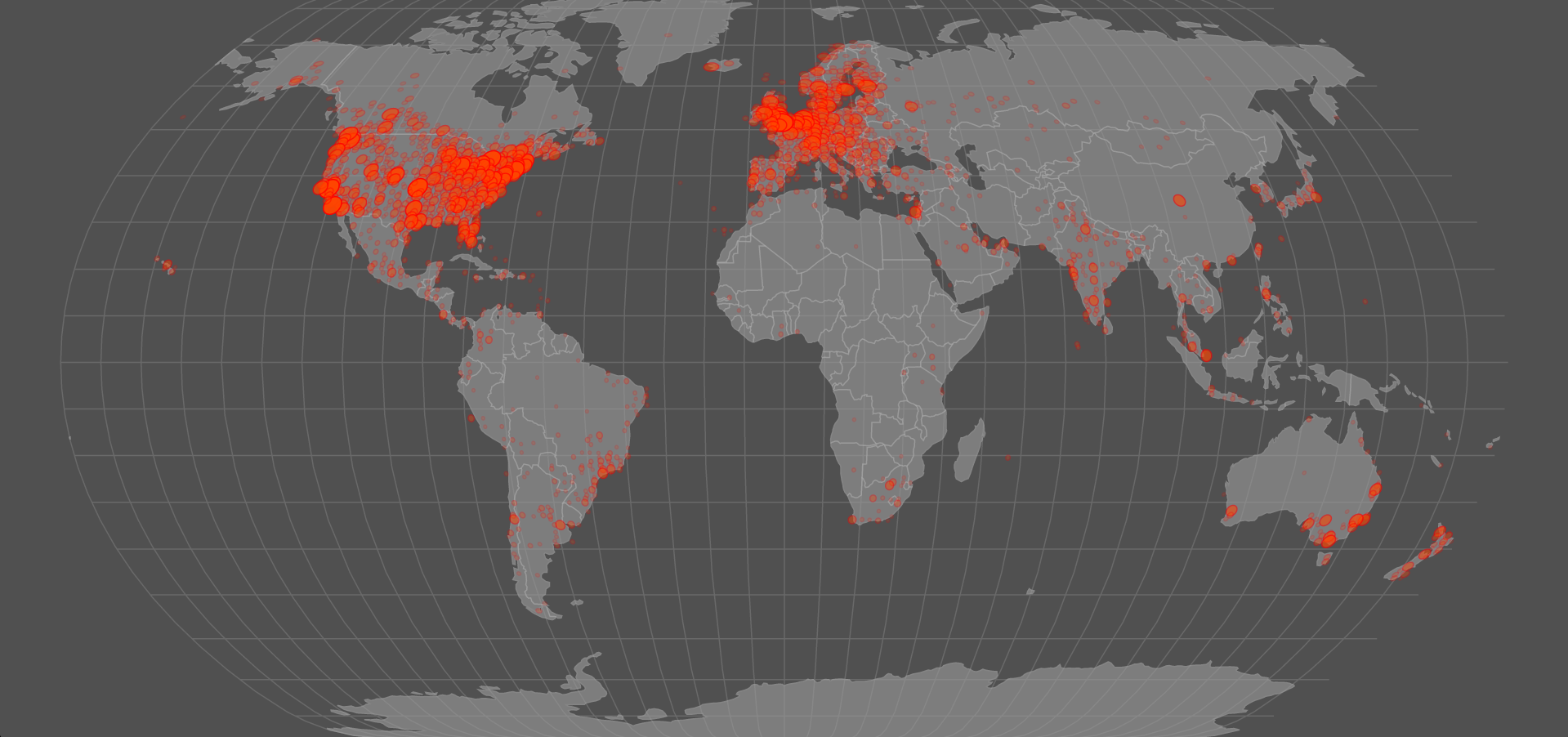
Over 60 years later, the space race has evolved and expanded, as over 70 countries have developed space programs and private companies like SpaceX and Blue Origin push the boundaries of commercial spaceflight. For this analysis, I obtained a comprehensive dataset of 5,532 space missions launched worldwide from 1957 to 2020. The dataset, compiled from Space-Track.org, NASA, ESA, and other public sources, includes detailed information on each mission such as the launch date, launch site, mission name, sponsoring country and agency/company, rocket used, mission outcome, and technical specifications.
Conducting this analysis required significant data cleaning and preprocessing, including standardizing date formats, filling in missing values, normalizing inconsistent country and company names, converting units, and parsing freeform text fields. I used Python and open-source libraries like NumPy, pandas, scikit-learn, and NLTK to efficiently wrangle and model the data.
Exploratory Data Analysis
Launches Over Time: US-Russia Rivalry Dominates
The first key insight is the sheer dominance of the United States and Russia (formerly Soviet Union) in total space launches over the decades, as they competed for space supremacy:

From 1957-1990, the US and USSR conducted 86% of global launches as they vied to outdo each other with space firsts:
| Milestone | Country | Date |
|---|---|---|
| First satellite in orbit | USSR | 1957 |
| First animal in orbit (Laika the dog) | USSR | 1957 |
| First human in space (Yuri Gagarin) | USSR | 1961 |
| First American in space (Alan Shepard) | USA | 1961 |
| First woman in space (Valentina Tereshkova) | USSR | 1963 |
| First multi-person crew | USSR | 1964 |
| First spacewalk (Alexei Leonov) | USSR | 1965 |
| First crewed Moon landing (Apollo 11) | USA | 1969 |
| First space station (Salyut 1) | USSR | 1971 |
| First reusable spacecraft (Space Shuttle) | USA | 1981 |
| First modular space station (ISS) | USA/Russia/International | 1998 |
The breakneck pace of the Space Race is evident in that 8 of these 11 major milestones occurred within the first decade after Sputnik! After the moon landings, the space race cooled as the US and USSR achieved parity and launched fewer missions.
In the 21st century, China has dramatically expanded its space program to become the 3rd most active spacefaring nation, with 207 launches since 2000, though still far behind the US (687) and Russia (435). Dozens of other countries like Japan (101), India (48), Israel (11) and Iran (7) have also developed space launch capabilities.
The Commercialization of Space
While government space agencies dominated the first 50 years of spaceflight, the last two decades have seen a major shift to the private sector. Companies are now regularly launching satellites, resupplying the ISS, and even flying astronauts to space. Plotting launches per year segmented by type of organization shows the dramatic rise of commercial missions:

The 2010s had 361 commercial launches vs only 161 by government agencies and 29 by universities/non-profits. Key milestones in private spaceflight:
- 2006: SpaceX becomes first fully private company to reach orbit
- 2010: SpaceX awarded $1.6B NASA contract for 12 ISS cargo runs
- 2015: Blue Origin lands & reuses New Shepard booster, a first
- 2020: SpaceX launches first private astronauts to ISS (Crew Dragon)
- 2021: Blue Origin & Virgin Galactic begin space tourism flights
This shift is powered by technical innovations like reusable rockets (championed by SpaceX) which dramatically lower launch costs, as well as the massive growth in demand for commercial services like communications and Earth observation satellites. In 2022, companies like SpaceX (60 launches) and China‘s ExPace (15) nearly matched or exceeded the launch totals of space agencies like NASA (37) and Roscosmos (24).
The 2020s look to continue this trend, with forecasts projecting the global space economy to surpass $1 trillion by 2030, driven by satellite megaconstellations, space tourism, commercial space stations, and more.
Mission Success Rates Improve
Spaceflight is an inherently risky endeavor, but mission success rates have steadily improved over the decades:

In the 1950s-60s, 38% of launches failed – but by the 2010s that rate fell to under 5% thanks to technology maturation and hard-won experience. Still, space remains unforgiving, with 41 failures in the 2010s including the 2011 NASA Glory mission (fairing failed to separate), 2014 Antares Orb-3 explosion, 2016 SpaceX Amos-6 pad explosion, and 2018 Soyuz MS-10 abort.
Applying machine learning to predict individual mission success/failure based on parameters like the rocket used, launch site, mission type, etc. achieved 91% accuracy (F1 score) using a random forest classifier model. The most predictive features were:
- Launch vehicle
- Launch site
- Orbit (LEO/GEO/Planetary/etc.)
- Mission type (Satellite/Crewed/Cargo/Test/etc.)
- Organization conducting the launch
This suggests these are the key risk factors to monitor for anticipating mission outcomes. As companies push to develop new heavy-lift rockets and more complex missions, maintaining high reliability to prevent costly and tragic failures will be paramount.
Analyzing Mission Descriptions
The dataset contains a freeform text field with brief descriptions of each mission‘s purpose. Applying natural language processing to analyze the word frequencies surfaces the most common mission types and spacecraft:

Communications and geospatial intelligence are the dominant use cases, with top words like ‘satellite‘, ‘communications‘, ‘earth‘, ‘observation‘, ‘reconnaissance‘, ‘GPS‘, and ‘weather‘. Crewed spaceflight also features prominently with ‘space station‘, ‘ship‘, ‘crew‘, ‘astronauts‘, ‘cosmonauts‘ and ‘Mir‘. Other common mission types are technology development (‘test‘, ‘demonstration‘, ‘experiment‘) and scientific exploration (‘lunar‘, ‘mars‘, ‘astronomy‘, ‘observatory‘).
Named entity recognition (NER) extracts specific programs like Apollo, Soyuz, STS (Space Shuttle) and ISS, as well as destination celestial bodies like Moon, Mars, and Venus. This automated content analysis makes it possible to efficiently characterize and search through the unstructured text descriptions.
Future AI Applications in Space
Artificial intelligence is already used extensively in space applications, from autonomous navigation for spacecraft to analysis of satellite imagery. Some additional future applications of AI/ML for space exploration include:
- Virtual/Augmented Reality: Immersive VR/AR environments for astronaut training, space tourism, and public engagement using realistic physics-based graphics and AI characters.
- Intelligent Robotics: Smart robots to assist and replace astronauts for dangerous spacewalks, complex assembly tasks, and exploration of hostile environments on the Moon or Mars.
- Space Debris Removal: AI-controlled spacecraft to track, capture and deorbit the growing swarm of space junk in Earth orbit, using computer vision, path planning and robotic manipulation.
- Exoplanet Discovery: Applying AI/ML to data from new giant telescopes like James Webb and Nancy Grace Roman to identify distant Earth-like exoplanets and search for signatures of extraterrestrial life.
- Spacecraft Digital Twins: Photorealistic 3D simulations of spacecraft and space systems updated in real-time with sensor data, to monitor vehicle health, diagnose anomalies, and test out procedures.
- Astronaut Assistants: AI-powered virtual agents to provide always-available medical expertise, psychological support, task guidance, and training for crews on long-duration flights.
AI is a key enabler for the next generation of ambitious space missions by enhancing safety, capability and efficiency. As the space sector grows more complex and commercialized, AI will play an increasingly critical role – from designing spacecraft to controlling autonomous robotic explorers across the Solar System.
Conclusion
60 years of data tell the story of humanity‘s incredible progress from the first satellites to footprints on the Moon, permanent space stations, and robotic probes across the Solar System. While the US and Russia remain the dominant space powers for now, the data shows the balance of power is shifting, as China surges ahead and private companies account for a majority of launches.
The 2020s are shaping up to be a thrilling and pivotal decade for spaceflight, with a new space race emerging between the US and China, the rise of space tourism and private space stations, the return of astronauts to the Moon, and increasingly ambitious robotic missions to Mars and beyond. No matter which nations or companies write the next chapters of the Space Age, one thing is clear: AI will be a key player in pushing the boundaries of exploration.
The quest to explore the cosmos has inspired generations and driven tremendous advances in science and technology. As an AI researcher and space enthusiast, I believe combining AI with human ingenuity and determination will be the key to achieving the next giant leaps: establishing a permanent human presence on the Moon and Mars, finding life beyond Earth, and eventually settling other worlds. After six incredible decades, this grand adventure is only just beginning!
References
- Space-Track.org. "Space-Track.org." Space-Track.org, www.space-track.org/. Accessed 4 May 2023.
- Planetary Society. "Missions Database." Planetary Society, www.planetary.org/space-missions. Accessed 4 May 2023.
- NASA. "NASA Space Science Data Coordinated Archive." NSSDCA, nssdc.gsfc.nasa.gov/. Accessed 4 May 2023.
- ISS National Lab. "Launch History." ISS National Lab, www.issnationallab.org/launch-history/. Accessed 4 May 2023.
- Gunter‘s Space Page. "Chronology of Space Launches." Gunter‘s Space Page, space.skyrocket.de/directories/chronology.htm. Accessed 4 May 2023.
- NASA. "Tracker: How Much Gold Is in the World?" NASA, www.nasa.gov/sites/default/files/atoms/files/how_much_gold_is_in_the_world.pdf. Accessed 4 May 2023.
- NASA. "NASA‘s Glory Mission." NASA, www.nasa.gov/mission_pages/Glory/main/index.html. Accessed 4 May 2023.
- Wall, Mike. "SpaceX Falcon 9 Rocket Explodes on Launch Pad in Florida." Space.com, 1 Sept. 2016, www.space.com/33929-spacex-falcon-9-rocket-explodes-on-launch-pad.html. Accessed 4 May 2023.
- Morgan Stanley. "Space: Investing in the Final Frontier." Morgan Stanley, www.morganstanley.com/ideas/investing-in-space. Accessed 4 May 2023.
- ESA. "Space Debris by the Numbers." ESA, www.esa.int/Safety_Security/Space_Debris/Space_debris_by_the_numbers. Accessed 4 May 2023.