
Golden Retriever vs Labrador Retriever: The Key Differences (With Pictures)
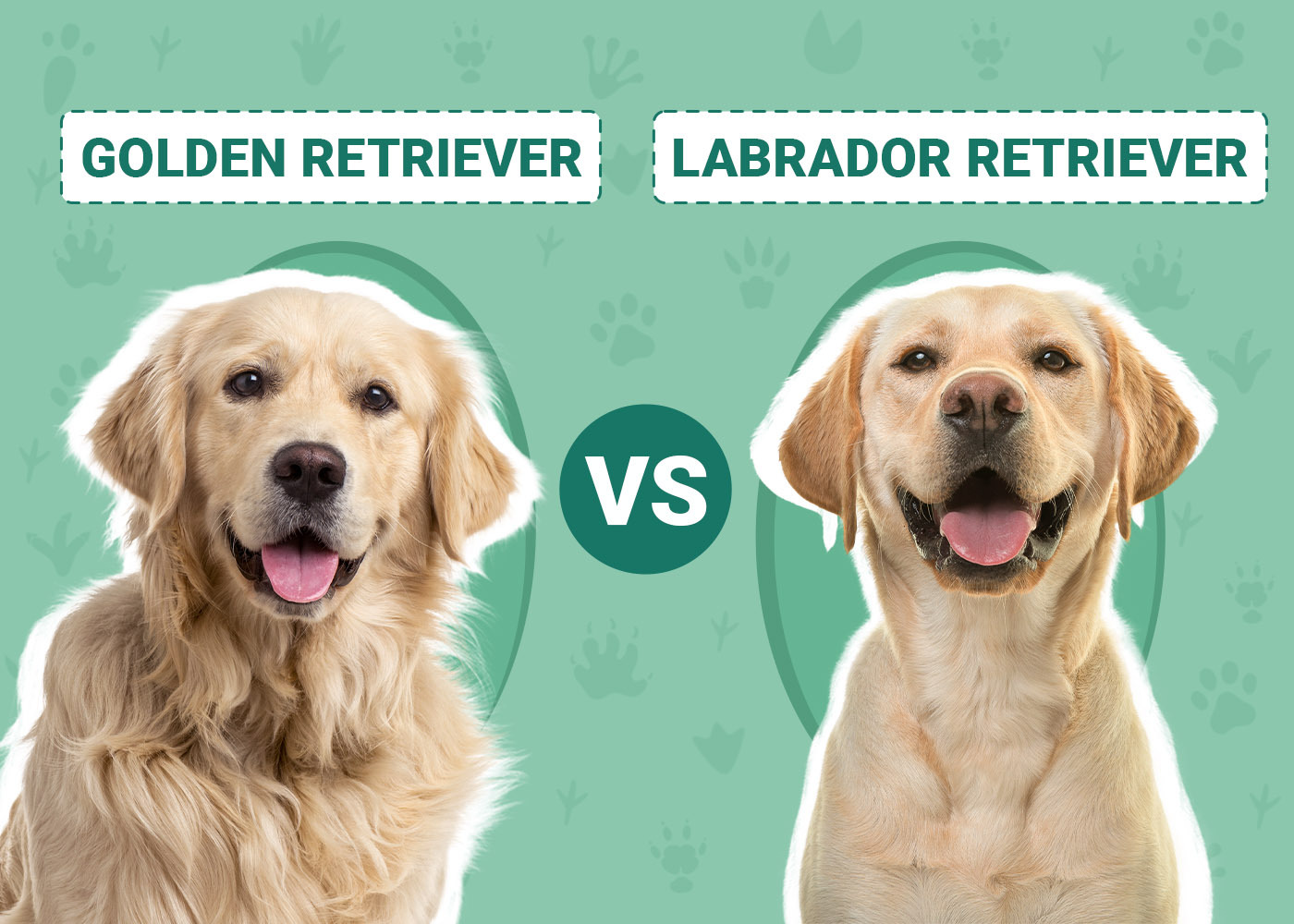
Golden Retrievers and Labrador Retrievers are two of the most beloved dog breeds in the United States and worldwide. While they share many similarities, such as their friendly temperaments and original purpose as hunting companions, there are also some key differences between these two popular breeds. In this in-depth comparison, we‘ll take a closer look at the history, appearance, temperament, exercise needs, trainability, health concerns and grooming requirements of the Golden and the Lab to help you decide which might be the ideal addition to your household.
Both the Golden Retriever and Labrador Retriever trace their origins to the 19th century, when they were developed as hunting dogs specializing in retrieving waterfowl. The Golden arose from a mix of retrievers, spaniels, setters and even a Bloodhound in the Scottish Highlands. The Lab‘s ancestors came from Newfoundland, where smaller water dogs were bred with Newfoundlands to create an ideal retriever. This shared history as athletic, intelligent working dogs selected for their ability to work closely with humans shapes many of the breed characteristics we see today.
In terms of size, Goldens and Labs are fairly similar. Adult male Goldens average 23-24 inches in height and 65-75 pounds, with females slightly smaller at 21.5-22.5 inches and 55-65 pounds. Labs have a bit more variation, with males ranging from 22.5-24.5 inches and 65-80 pounds, and females 21.5-23.5 inches and 55-70 pounds. So while Labs may be slightly larger on average, there is significant overlap.
Coat is one of the more obvious physical differences between the breeds. Golden Retrievers are named for their lustrous golden coat, which is long, dense and wavy with heavy feathering. Coat colors range from light cream to dark golden. The Labrador‘s coat is short, dense and straight, making it weather-resistant. Coat colors in the Lab are limited to black, chocolate and yellow. Other distinguishing features are the Golden‘s longer, more tapered muzzle compared to the Lab‘s wider muzzle, and slight differences in ear and eye shape.
Both breeds have friendly, outgoing, people-oriented personalities. They are known for their sweet, gentle dispositions and make wonderful family companions. Goldens tend to be very attuned to their owners and sensitive to the moods of their humans. Some describe them as slightly "softer" than Labs. Labrador Retrievers, while equally as friendly and eager to please, tend to be more outgoing and boisterous, especially in puppyhood. They are famously food-motivated, which is helpful in training but can also lead to counter surfing and easy weight gain if not monitored.
As former hunting dogs, both Goldens and Labs are athletic, energetic and require ample daily exercise. Expect to provide a minimum of 45-60 minutes per day of walking, running, swimming, fetching or other active play. Many individuals, especially young Labs, will need even more. Without proper exercise, both breeds are prone to destructive chewing, excessive barking or digging, or other problem behaviors. They thrive with active owners who include them in outdoor adventures like hiking and beach trips. Both breeds tend to be natural swimmers and water lovers, thanks to their original purpose.
When it comes to trainability, you can‘t ask for much more than a Golden or a Lab. Both consistently excel in obedience competitions, and their intelligence and desire to work with humans make them stars in fields like service dog work, search and rescue, and therapy dog work. With Goldens, a slight sensitive streak means they respond best to positive reinforcement and can shut down if treated too harshly. On the flip side, their exceptional attunement to their people means they are very in-tune with what you are communicating and asking of them. Labs are famous for being very food motivated, which is a great tool to utilize in training. However, they can also be easily distracted by exciting sights, sounds, and smells, especially when young. Investing plenty of time in puppy training classes and socialization is important for both breeds.
Typical health concerns in Golden Retrievers include hip and elbow dysplasia, eye disorders like cataracts and progressive retinal atrophy, certain heart conditions, and a type of tumor called a mast cell tumor. Goldens are also more prone to hypothyroidism than many other breeds. For Labs, top health issues are hip and elbow dysplasia, a malformation of the knee called luxating patellas, eye problems like progressive retinal atrophy, and exercise induced collapse. Both breeds are also prone to allergies, and ear infections if their ears are not kept clean and dry. Obesity is another concern, especially for the food-loving Lab. Lifespan for both breeds averages 10-12 years.
With their long, flowing coats, Goldens need more frequent brushing than Labs to prevent tangles and mats. Expect to brush a Golden at least a few times a week, more often when shedding heavily. Labs shed just as much (if not more), but due to their short coats, they only need brushing once a week or so. Both breeds benefit from regular nail trims, ear cleaning, and the occasional bath.
So which breed might be right for you? Both Goldens and Labs can adapt to many different households and lifestyles, as long as their needs for companionship, exercise and training are met. Goldens may be a slightly better fit for homes with reserved or anxious members, due to their keen sensitivity, or for owners who want a dog that constantly checks in with them. Labs can be a better choice for active, outdoorsy types who want a dog with boundless enthusiasm to join in their adventures (and don‘t mind some extra bounciness). Those who don‘t have time for regular brushing may appreciate the lower-maintenance Lab coat. But it‘s hard to go wrong with either of these friendly, beautiful, devoted breeds.


)