
Pitbull vs German Shepherd: Main Differences (With Pictures)

Pitbulls vs German Shepherds: A Comprehensive Comparison
If you‘re deciding between adopting a pitbull or German shepherd, you may be wondering how these two popular dog breeds stack up. While they share some similarities, like being loyal and protective of their families, there are also some key differences to consider.
In this in-depth comparison, we‘ll explore the history, appearance, temperament, training needs, health concerns, and suitability as family pets for both pitbulls and German shepherds. By the end, you‘ll have a clearer picture of which breed may be the best fit for your lifestyle and home.
Origins and History
The pitbull and German shepherd actually have quite different histories. Pitbulls were originally bred in England and later America for the cruel sports of bull baiting and dog fighting, which thankfully are now illegal. When these blood sports were outlawed in the 1800s, pitbulls transitioned to being all-around farm dogs and companion animals valued for their tenacity, strength and loyalty.
In contrast, German shepherds were developed in Germany in the late 1800s primarily for herding sheep. They were carefully bred to be intelligent, trainable, obedient and protective of their flocks. German shepherds later became popular as police and military dogs due to these same desired qualities. Both breeds arrived in the United States in the early 1900s and have ranked consistently among the most popular breeds for decades since.
Appearance and Build
In terms of size, male German shepherds tend to be larger at around 24-26 inches tall and 65-90 pounds, while male pitbulls average 18-21 inches tall and 35-60 pounds. Females of both breeds are slightly smaller than the males.
Pitbulls have a stocky, muscular build with a short, smooth coat that can come in many colors including black, white, brindle, fawn, blue and red. Their head is large and broad with round, wide-set eyes and short, pointed ears that typically fold over.
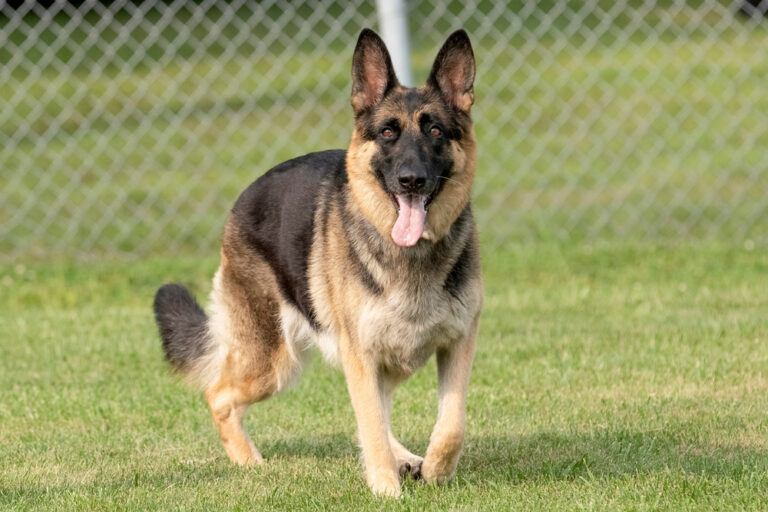
German shepherds have a more athletic, agile build with a medium-length double coat usually in black and tan or black and red, though they can also be white, black or sable. Their pointed ears stand erect and their long muzzle gives them a noble, wolf-like appearance.
Both breeds have strong jaws, though pitbulls tend to have a slightly wider bite. Pitbulls also have a unique "smile" where they pull their lips back to show their teeth, which is a submissive gesture, not an aggressive one.
Temperament and Personality
Pitbulls and German shepherds actually have more in common than not when it comes to general temperament. Both are intelligent, confident, courageous and intensely devoted to their families.
Pitbulls tend to be outgoing, friendly, affectionate and slow to bite or show aggression unless really provoked. They are very people-oriented and often do well in homes with children if socialized early. Pitbulls are also known for their goofy, playful nature and love a good game of tug or fetch.
German shepherds are more reserved with strangers and have strong protective instincts. While they can be aloof, they bond very closely with their owners and are extremely loyal. German shepherds need a lot of mental stimulation and prefer to have a job to do, which is why they excel in fields like law enforcement, search and rescue, therapy work and service dog roles.
Both breeds have a high prey drive, which means they like to chase moving things. However, this doesn‘t necessarily translate to aggression and many pitbulls and German shepherds can do well with other dogs and even cats if raised together. Dog selectivity can be an issue with both breeds, especially as they reach maturity, so ongoing socialization is important.
Training and Exercise Requirements
As highly intelligent working breeds, both pitbulls and German shepherds need a lot of daily exercise along with consistent training and socialization starting from puppyhood. A bored, unexercised dog of either breed is likely to become destructive or develop behavioral issues.
Pitbulls are very trainable and eager to please, but they can also be a bit headstrong at times. They tend to do best with positive reinforcement methods rather than heavy-handed punishment or alpha dog techniques. Pitbulls have a high tolerance for pain too, so aversive tools like prong collars are generally unnecessary and can backfire.
German shepherds are extremely trainable and have a long history of working in strict hierarchical roles that require unquestioning obedience. They tend to respect confident, consistent leadership but can become unruly or aggressive with an inexperienced owner who doesn‘t set clear boundaries. German shepherds excel at complex tasks and are very in tune with their handler‘s cues and body language.
Both breeds need at least an hour of vigorous exercise daily, preferably broken up into a couple sessions. In addition to leash walks, they benefit from activities that engage them mentally, like obedience training, puzzle toys, scent work and games like hide and seek. Dog sports such as agility, rally, flyball and dock diving are great for both pitbulls and German shepherds.
Health Concerns and Care
Both breeds are generally healthy but can be prone to certain genetic conditions. Responsible breeders will screen for these issues and provide health clearances.
For pitbulls, potential problems include hip dysplasia, heart disease, allergies and skin conditions. They may also be prone to weight gain, so it‘s important to monitor their food intake and keep them lean. A pitbull‘s short coat is easy to care for, requiring just occasional baths and brushing.
German shepherds can also suffer from hip and elbow dysplasia as well as degenerative myelopathy, a neurological disorder. Other concerns include gastric dilatation volvulus (bloat), eye problems and autoimmune disorders. German shepherds have a thick double coat that sheds heavily, so regular brushing is a must to keep loose hair under control. They may need more frequent baths than pitbulls.
Both breeds have an average lifespan of 10-12 years. Keeping them at a healthy weight, providing age-appropriate exercise, feeding a high-quality diet, keeping up with preventive care and getting prompt vet attention for any issues will all help your pitbull or German shepherd live a long, healthy life.
Suitability as Family Pets
Pitbulls and German shepherds can both make excellent family companions in the right home. The key is to provide them with early and ongoing socialization, consistent training, plenty of exercise and lots of positive attention.
Pitbulls tend to be very tolerant and patient with children, even clumsy toddlers who may accidentally poke or pull on them. They are known for their ability to form strong, loving bonds with all members of the family, including other dogs and cats they‘re raised with. Pitbulls generally retain a puppy-like playfulness and zest for life well into adulthood, which many people find endearing.
However, a pitbull‘s strength, excitability and prey drive can be a lot to handle, especially for the elderly, very small children or those who are not able to provide firm, consistent training and leadership. Pitbulls can be very mouthy and need to be taught bite inhibition from a young age. Some pitbulls are escape artists and can clear or dig under fences with ease.
German shepherds tend to pick a favorite person to bond most closely with but are still loving and protective of the whole family. They can be very gentle and patient with kids but may try to herd them or knock over small children in play. Some German shepherds have a high defense drive and are quick to bark at or chase perceived threats, which needs to be managed carefully.
A major consideration with German shepherds is the grooming. Their thick, dense undercoat sheds heavily year round and even more so during seasonal coat blows. German shepherds are best suited for an owner who is not deterred by a lot of vacuuming and lint rolling.
Misunderstandings About Pitbulls and German Shepherds
Unfortunately, both breeds have been the victim of negative stereotyping over the years. Pitbulls tend to make the news for tragic bite-related fatalities while German shepherds are sometimes typecast as aggressive guard dogs.
The truth is, aggression is not a breed-specific trait but rather the result of poor breeding, lack of socialization, abuse/neglect and irresponsible ownership. Well-bred, properly raised pitbulls and German shepherds are no more likely to bite than any other breed.
However, when pitbulls and German shepherds do bite, their size and strength can lead to more severe injuries compared to nips from smaller dogs. Pitbulls in particular were originally bred for dog fighting, which means they may be less likely to back down from a fight once triggered. For these reasons, both breeds have been unfairly targeted by breed specific legislation (BSL) in many areas.
The vast majority of pitbulls and German shepherds are loving, stable family pets who never show aggression toward people. But it‘s crucial for owners to manage their dogs carefully, avoid putting them in situations where they may feel threatened or defensive, and always supervise interactions with children or other animals.
Owner Experiences
When raised in a positive environment with proper training and socialization, both pitbulls and German shepherds can be loyal, loving and highly entertaining companions. Many owners report their pitties or shepherds are the sweetest, most affectionate dogs they‘ve ever had.
Kara Jensen of San Diego has owned both breeds and says they are more alike than different in terms of their devotion and desire to please. "I‘ve found both my pitbulls and German shepherds to be very in tune with my emotions," she says. "They always seem to know when I need some extra cuddles or playtime."
Manny Cabrera of Miami has been involved in pitbull rescue for over a decade. "These dogs never cease to amaze me with their resilience and capacity for love," he says. "I‘ve seen pitties who were used as bait dogs or fought, yet they are still so quick to trust and form bonds with people."
For Aiden Mueller of Seattle, German shepherds are the ultimate adventure buddies. "I love that my shepherd is always up for a hike, a swim, a trip to the dog park, you name it," he says. "But he‘s also happy to cuddle up on the couch with me at the end of the day."
Tiffany Ng, a certified dog trainer in Boston, has worked with countless pitbulls, German shepherds and mixes of both. "The biggest misconception about both breeds is that they are naturally aggressive," she explains. "In reality, most are incredibly sweet and just want to be loved. But they definitely need a lot of exercise, training and socialization to be their best selves."
Choosing Between a Pitbull and German Shepherd
Both pitbulls and German shepherds can be a tremendous addition to your family if you are prepared to meet their needs. When choosing between the two, consider your lifestyle, living situation, experience as a dog owner and what qualities you are looking for in a canine companion.
Pitbulls may be a better fit if you:
- Prefer a small to medium-sized dog
- Enjoy a goofy, highly social dog who wants to be with you all the time
- Want a dog who is gentle with kids and other pets
- Don‘t want to deal with a lot of shedding and grooming needs
- Can provide plenty of exercise, mental stimulation and socialization
German shepherds may be the better choice if you:
- Want a larger, highly protective dog
- Have experience with confident, strong-willed breeds
- Want a canine partner to do dog sports or outdoor activities with
- Enjoy the challenge of training a super smart dog
- Can keep up with coat maintenance and don‘t mind a lot of shedding
Ultimately, the right dog for you will depend more on the individual than the breed. Look for a reputable breeder or rescue organization that carefully screens their dogs for health and temperament. Spend time interacting with adult dogs and puppies to see which one you connect with the most. With proper care and training, your pitbull or German shepherd will be a cherished member of your family for years to come.



)