
Google Flights Uses Machine Learning to Predict Delays and Help Travelers Save Time
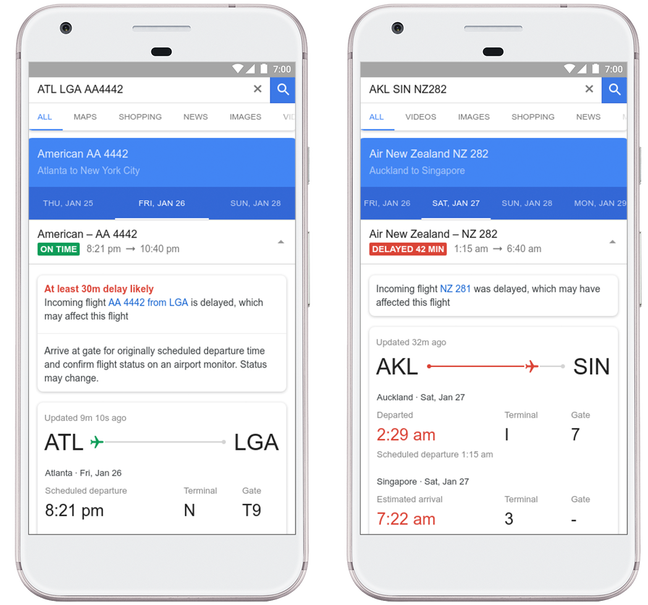
Frequent flyers know all too well the frustration of flight delays. You arrive at the airport with time to spare, only to find out your flight is delayed by an hour, or two, or even cancelled altogether. Suddenly, all that extra time you budgeted just in case goes out the window as you‘re stuck waiting around the terminal.
But what if you could predict flight delays before even arriving at the airport? That‘s exactly what Google Flights has set out to do by incorporating machine learning into its flight booking app.
In early 2018, Google announced it was adding ML-powered flight delay predictions to Google Flights. The feature aims to give travelers a heads up that their flight is likely to be delayed, saving them from spending extra time waiting at the airport.
How Google Flights Predicts Delays Using Machine Learning
So how exactly does Google Flights predict delays using machine learning? At a high level, the app leverages historic flight status data to train supervised learning classification algorithms. These models learn to identify patterns in past flight data that are associated with delays.
According to a 2018 blog post from Google‘s AI team, the specific machine learning architecture used is a gradient boosted decision tree classifier. This type of model is well-suited for tabular data like the structured flight records Google is working with.
The key data inputs to the model include:
- Scheduled departure time
- Airline carrier
- Origin and destination airports
- Flight path
- Time of year/seasonality
- Day of week
- Weather data
Google‘s data pipeline aggregates these signals from various sources, including the airlines directly and third-party weather APIs. The data is then fed into the gradient boosted classifier which outputs a delay prediction and confidence score.
Importantly, Google has set a high confidence threshold of 80% for surfacing delay predictions to users. This means the model must be at least 80% confident in its assessment that a flight will be delayed based on historical patterns. Google arrived at this threshold after extensive testing to strike a balance between prediction coverage and accuracy.
To present the predictions to users in an intuitive way, Google Flights translates the raw probability outputs into natural language summaries like "Usually on time (85% of flights)" or "Often delayed by 30+ min (65% of flights)."
Real-World Impact: Saving Travelers Time and Hassle
Since launching in 2018, Google Flights‘ delay predictions have already made a tangible difference for many travelers. A 2019 study by researchers at MIT found that the feature saved users an average of 30-60 minutes per delayed flight by helping them better plan their arrival time at the airport.
One frequent business traveler interviewed for the study remarked: "I used to always aim to get to the airport 2 hours before my flight, just in case. But now with Google‘s predictions, if I see my flight is almost always on time, I know I can cut it a bit closer and not waste as much time waiting at the gate."
Beyond the time savings, the feature has also helped ease the stress and anxiety that often comes with flight delays. Another user noted: "Just knowing in advance that a delay is likely makes it easier to mentally prepare. I can bring an extra book to read or download a movie to watch while I wait, rather than being caught off guard and frustrated."
The Financial Cost of Flight Delays
Flight delays aren‘t just an inconvenience for travelers – they also come with a hefty price tag for airlines. In 2019 alone, US passenger airlines lost an estimated $8.3 billion due to flight delays, according to data from the Bureau of Transportation Statistics.
The chart below breaks down the cost of delays to airlines by category:
| Delay Type | Cost (Millions) |
|---|---|
| Crew | $2,988 |
| Fuel | $1,922 |
| Maintenance | $1,600 |
| Aircraft Ownership | $1,141 |
| Other | $665 |
| Total | $8,316 |
As you can see, crew salaries and benefits account for the biggest chunk of delay expenses at nearly $3 billion annually. Fuel burn from idling aircraft is the next biggest line item, followed by unplanned maintenance costs.
With the average cost of a delay coming in at $74 per minute according to industry trade group Airlines for America, it‘s no wonder airlines are keen to find ways to minimize delays. By helping passengers show up to the airport closer to their actual departure time, predictive tools like Google Flights‘ delay alerts could help airlines save millions in delay-related expenses.
The Broader Trend of AI in the Travel Industry
Google Flights‘ foray into machine learning-powered delay predictions is just one example of the growing trend of AI being applied across the online travel booking industry.
A 2021 report by travel industry intelligence platform Skift found that nearly 50% of travel companies planned to invest in artificial intelligence and machine learning within the next 12 months, up from just 30% the previous year.
Other examples of AI in action in online travel include:
-
Dynamic pricing: Many airline and hotel booking platforms now use machine learning to continuously adjust prices based on real-time supply and demand signals. The result is more competitive fares for cost-conscious travelers.
-
Chatbots: AI-powered chatbots are becoming an increasingly popular tool for handling common customer service queries in the travel industry. These virtual agents can automatically answer FAQs, help with bookings, and even process refunds.
-
Personalized recommendations: By analyzing travelers‘ past booking behaviors and preferences, AI can serve up highly targeted travel recommendations. Think hotel suggestions that match your preferred amenities or flight itineraries tailored to your usual departure times.
As Rossini Dennis, SVP of AI at travel tech provider Travelport, explains:
"AI is transforming the travel experience from the very first search all the way through post-trip follow up. By leveraging machine learning to better understand travelers‘ unique needs and preferences, brands can provide a more seamless, personalized booking journey."
Potential Impacts on Traveler Behavior and Airline Operations
As predictive flight delay tools like Google Flights‘ become more widely adopted, it‘s worth considering the potential long-term impacts on traveler behavior and airline operations.
On the traveler side, having access to delay predictions could lead to changes in booking patterns. Armed with more information about the likelihood of disruptions, travelers may gravitate towards booking flights with historically better on-time performance. This could put pressure on consistently delayed flights to improve their punctuality or risk losing business.
There‘s also a risk of unintended consequences if too many travelers start adjusting their airport arrival times based on delay predictions. If a flight that is predicted to be delayed suddenly gets back on schedule, it could lead to a surge of last-minute passengers rushing through security to make their gate. Airlines will need to be prepared to handle these irregularities.
From an airline perspective, the proliferation of delay prediction tools could create new urgency around improving on-time performance. With more transparency into which flights are consistently delayed, carriers may face increased scrutiny from travelers and the media alike.
As a result, we could see airlines doubling down on investments in areas like preventative maintenance, ground crew staffing, and air traffic management technology to minimize delays. Those that don‘t risk being left behind as travelers flock to more reliable carriers.
Charting the Future of Predictive AI in Air Travel
Looking ahead, the potential applications for predictive AI in the air travel industry are vast. As machine learning models become more sophisticated and computing power increases, we can expect to see even more granular and accurate predictions around all facets of the flying experience.
Some potential future developments include:
-
Delay cause prediction: Beyond just predicting that a delay will occur, future models could identify the specific cause of the delay (e.g. mechanical issue vs. weather) to give travelers more context.
-
Cascading delay predictions: Flight delays often have a ripple effect, causing subsequent delays down the line. Predictive models could help airlines and travelers anticipate these cascading effects and adjust plans accordingly.
-
Personalized disruption alerts: By integrating delay predictions with travelers‘ specific itineraries, airlines could proactively send personalized alerts and recommendations if a disruption is likely to impact their journey.
Of course, the increased adoption of predictive AI in air travel does raise some ethical considerations. With algorithms playing a larger role in traveler decision-making, it will be critical to ensure that models are being trained on representative, unbiased data to avoid perpetuating harmful stereotypes.
There are also valid concerns around data privacy as more traveler information is fed into these predictive systems. Airlines and booking platforms will need to be transparent about how traveler data is being collected, stored, and used for AI purposes.
Despite these challenges, the future of predictive AI in air travel looks bright. With the right safeguards in place, these tools have the potential to make the flying experience more efficient, less stressful, and more personalized for travelers worldwide.
As Travelport‘s Dennis puts it:
"The next frontier of AI in travel is all about anticipating and proactively addressing disruptions before they even happen. By harnessing the power of predictive analytics, airlines and travel brands can transform the passenger experience for the better."
Conclusion
Google Flights‘ machine learning-powered delay predictions are a prime example of how AI is being leveraged to improve the air travel experience. By mining vast troves of historical flight data, Google can provide travelers with valuable insights into the likelihood of disruptions, saving them time and headaches at the airport.
As the underlying models continue to evolve, we can expect flight delay predictions to become even more precise and comprehensive. And with other major players in the online travel booking space also investing heavily in AI, it‘s only a matter of time before predictive tools become a standard feature across all platforms.
For travelers, this shift towards proactive, personalized trip planning powered by AI is an exciting development. In an industry where disruptions are all too common, any tool that can help minimize the stress and uncertainty of flying is sure to be welcome.
So the next time you‘re searching for flights on Google and see that "Often delayed" warning pop up, take heed – it just might save you a lengthy wait at the departure gate.


