
Great Dane vs Boxer: Differences Explained (With Pictures)
Introduction
When it comes to large, muscular dog breeds, Great Danes and Boxers are two that often come to mind. While both breeds are powerful and athletic, there are some key differences between them in terms of size, temperament, and overall care needs. In this article, we‘ll take an in-depth look at the Great Dane vs Boxer matchup to help potential owners decide which breed may be the best fit for their lifestyle and home.
Physical Characteristics
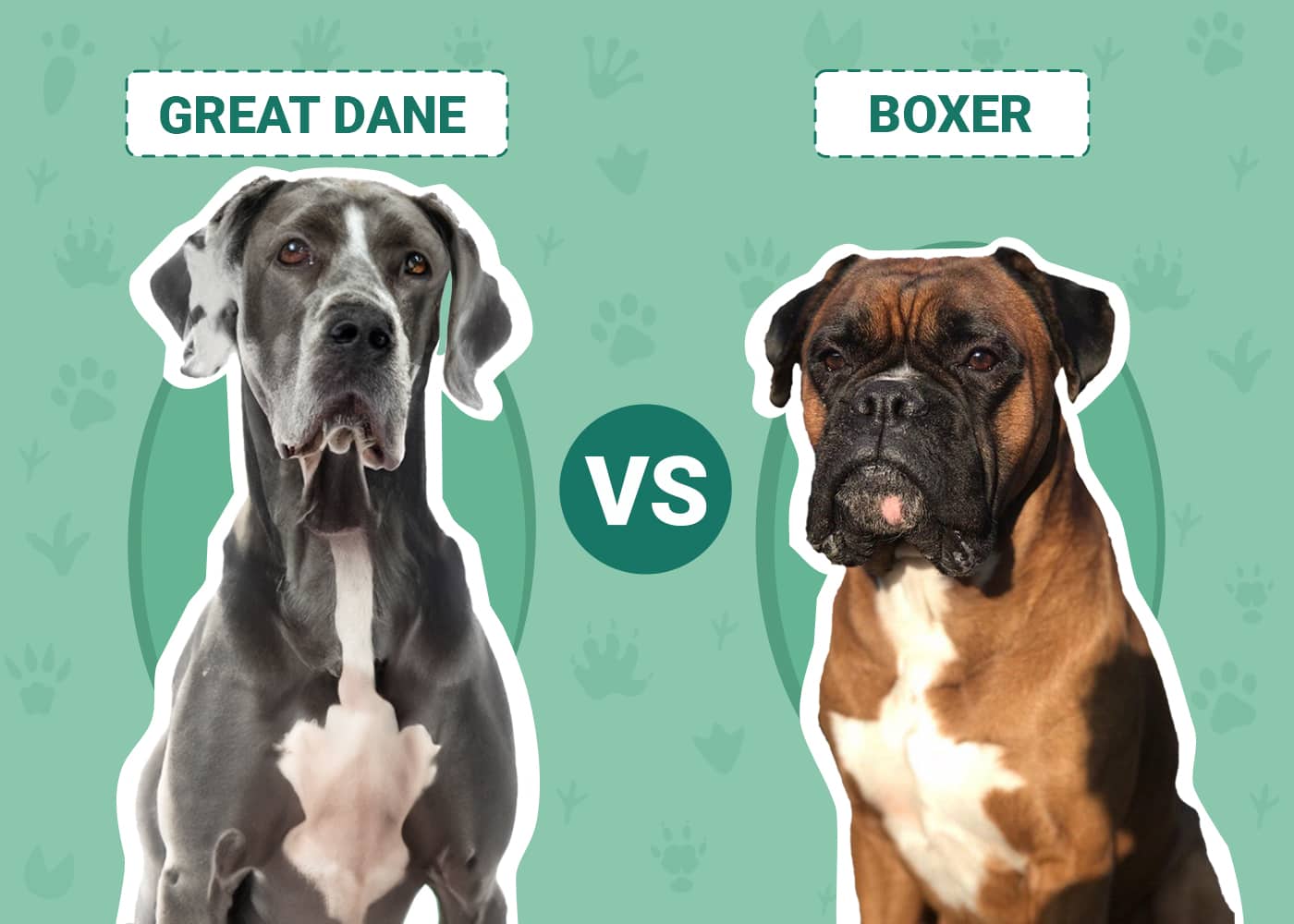
The most obvious difference between Great Danes and Boxers is size. Male Great Danes typically stand 30-32 inches tall at the shoulder and weigh 140-175 pounds or more, while females are usually 28-30 inches tall and 110-140 pounds. This makes them one of the largest dog breeds, sometimes described as "gentle giants."
In contrast, Boxers are considered medium-large, with males standing 23-25 inches and weighing 65-80 pounds and females at 21.5-23.5 inches and 50-65 pounds. So while still powerful and muscular, they are quite a bit smaller than Great Danes.
Both breeds have short, smooth coats that shed moderately and come in a range of colors. For Great Danes, common colors are fawn, brindle, blue, black, harlequin, and mantle. Boxers are typically fawn or brindle with white markings. One distinguishing feature of Boxers is their brachycephalic (shortened) muzzles, while Great Danes have longer, more rectangular heads.
Temperament and Personality
Great Danes and Boxers also differ quite a bit in terms of temperament. Great Danes are famous for being gentle, patient, and easygoing despite their imposing size. They are moderately playful and affectionate, but not particularly high energy. Properly socialized Great Danes usually get along well with children, strangers, and other animals, although they may try to chase small pets due to their history as hunting dogs.
Boxers, on the other hand, tend to be exuberant, playful, and quite energetic well into adulthood. They are intelligent, loyal, and protective of their families, which can translate into wariness around strangers if not socialized early on. Boxers often maintain a high play drive and can be boisterous or prone to jumping up, which may be too much for very small children. They also have a strong instinct to chase due to their history as working dogs.
Both breeds are generally agreeable and trainable, but Boxers may be a bit more headstrong and easily distracted than Great Danes. Early and ongoing training is essential to channel their energy and help them develop good manners. Great Danes are typically calmer and have lower intensity, but like all dogs still need proper training and socialization.
Exercise and Activity Needs
With their high energy and athleticism, Boxers need significantly more exercise than Great Danes. A healthy Boxer requires a minimum of 60-90 minutes of vigorous exercise daily, broken up into a few sessions. This can include jogging, running, playing fetch, and participating in canine sports. They also need plenty of mental stimulation through interactive play and training to prevent boredom and destructive behavior. Without enough outlets for their energy, Boxers can become hyperactive, anxious, and hard to manage indoors.
Great Danes, despite their size, have more moderate exercise needs. They require at least 30-60 minutes of moderate activity per day, such as walking, hiking, swimming, or playing. Engaging in low-impact activities is important to avoid putting too much strain on their joints. Great Dane puppies in particular should not be over-exercised, as this can contribute to orthopedic issues down the line.
Given their respective activity levels, Boxers do best in homes with securely fenced yards where they can run and play. Though they can adapt to apartment life if given enough outdoor exercise, they may be prone to barking, pacing, and destructive chewing if under-stimulated. Great Danes are often described as "apartment-friendly giants," as they are generally calm indoors and don‘t require a huge amount of space. However, it‘s important to remember that with their size comes some practical challenges like transporting them and finding rental housing that allows giant breeds.
Health Concerns and Care
As large and giant breeds, Great Danes and Boxers are both susceptible to certain health issues that prospective owners should be aware of. For Great Danes, top concerns include hip and elbow dysplasia, cardiomyopathy, bloat (gastric torsion), hypothyroidism, and osteosarcoma (bone cancer). Responsible breeders test for heart, eye, and thyroid problems to try to minimize risks. Even with good care, Great Danes have a relatively short lifespan averaging 7-10 years.
Boxers are particularly prone to heart conditions like arrhythmogenic right ventricular cardiomyopathy and aortic stenosis. They also have higher than average rates of cancer, hip dysplasia, hypothyroidism, and degenerative myelopathy. Prospective owners should look for breeders who perform health screenings and have results available. Boxers typically live 10-12 years on average.
For both breeds, maintaining a healthy weight, providing veterinarian-recommended nutrition, and keeping up with preventive care like vaccines and parasite control are critical for supporting overall health. Regular vet check-ups are a must to catch any developing issues early.
In terms of grooming, neither Great Danes nor Boxers have demanding coats. Brushing a few times a week and occasional baths are usually sufficient. However, Boxers in particular are notorious for drooling, and both breeds shed a fair amount, so regular cleanup is needed. Other routine care like nail trims, ear cleaning, and dental care is important for both.
Which Breed is Right For You?
Deciding between a Great Dane and Boxer depends on a variety of factors specific to your household and lifestyle. Both breeds tend to be good-natured and affectionate with family, but their differences in size and energy level are important considerations. Some key questions to ask:
-
Do I have sufficient space to house a giant breed comfortably and manage their cost of care? Great Danes will have a much bigger impact on your budget for food, supplies, and medical expenses.
-
Am I prepared to provide the extensive daily exercise and mental enrichment a Boxer needs? Falling short in this area will likely result in problem behaviors. Great Danes are a better choice for those who prefer a more low-key companion.
-
How do the ages and personalities in my household align with each breed‘s traits? Great Danes can accidentally knock over small children and frail adults but are generally more patient. Boxers are very energetic and physical, which can be overwhelming for reserved family members or too rough for babies and toddlers.
-
Is my home ready to welcome a dog of either breed‘s size and strength? Boxers are incredibly agile and may scale fences, while Great Danes can reach counters and shelves with ease. Puppy-proofing is a must.
Of course, no matter which breed you are considering, it‘s critical to do thorough research, locate responsible breeders, and be honest about what challenges you are equipped to handle. Meeting adult dogs of each breed can give you a better sense of their temperaments and needs in real life. Both Great Danes and Boxers require committed owners who are willing to put in the considerable time, effort, and resources required to raise a physically and behaviorally healthy dog. While they may not be a fit for every household, those who are prepared will be rewarded with a devoted, loving companion for years to come.


)