How Often Should You Really Be Cutting Your Dog‘s Nails? A Vet‘s Perspective
As a veterinarian and lifelong dog lover, I know that nail care is not the most exciting part of being a pet parent. Many dogs hate having their paws touched and some owners are nervous about accidentally hurting their pup in the process. But the truth is, keeping your dog‘s nails trimmed is absolutely essential for their health and comfort. Overgrown nails can lead to a host of painful problems, some of which may require veterinary treatment.
So how often should you really be cutting your dog‘s nails? The short answer is: it depends. On average, most dogs need a nail trim every 4 to 6 weeks. However, there are a number of factors that influence how quickly your individual dog‘s nails will grow and how often they‘ll need a manicure. Here‘s a closer look at what you need to know.
Why Nail Trims Matter
Your dog‘s nails are constantly growing, just like your own fingernails and toenails. In the wild, dogs naturally wear their nails down by digging, running, and scratching on various rough surfaces. But our domesticated pups spend most of their time walking on soft surfaces like grass and carpet, so their nails don‘t get worn down as much.
If left unchecked, overgrown nails can cause some serious problems for your pooch. Here are a few of the most common issues:
-
Pain and discomfort: Long nails alter the way your dog‘s foot contacts the ground, putting unnatural pressure on their toes and joints. Over time, this can lead to pain and inflammation.
-
Altered gait: When nails get too long, it changes the way your dog moves and carries themselves. They may start walking gingerly or even limping in an effort to avoid putting pressure on their painful feet.
-
Ingrown nails: In extreme cases, overgrown nails can actually curl all the way around and start growing into the paw pad. This is incredibly painful for your dog and can lead to infection if not treated promptly.
-
Torn or split nails: Long nails are more likely to snag on carpets, furniture, or other objects and get partially or fully torn off. Trust me, a torn nail is not something you want your pup to experience. It‘s very painful and may bleed a lot.
-
Joint stress: Over time, compensating for overgrown nails can put excess stress on your dog‘s joints and exacerbate conditions like arthritis. Keeping the nails short takes some of that stress off their joints.
Just how common are nail-related issues in dogs? One study found that 87% of older dogs have at least one foot or nail disorder (Ramos-Vara et al, 2000). Another study showed that 23.5% of dogs are affected by foot or nail disorders (O‘Neill et al, 2021). While not all of these are due to overgrown nails, it highlights how important it is to pay attention to your pup‘s paws and claws.
What Affects Nail Growth in Dogs?
So why do some dogs seem to need their nails trimmed all the time while others can go months between manicures? There are several key factors that influence nail growth in dogs:
-
Genetics: Some breeds are simply prone to faster nail growth than others. For example, Italian Greyhounds and other sighthounds often need more frequent trims.
-
Lifestyle: Dogs that spend a lot of time running and playing on hard surfaces like concrete may naturally wear their nails down more than couch potato pups.
-
Age and health status: Senior dogs and those with mobility issues often don‘t move around as much, so they‘re not wearing their nails down naturally.
-
Diet and nutrition: Biotin and omega fatty acids are important nutrients for nail health. Dogs with poor nutrition may have brittle, easily breakable nails.
Believe it or not, the time of year can also play a role in your dog‘s nail growth. Many owners report that their dog‘s nails seem to grow faster in the warm summer months. This may be due to dogs spending more time outdoors walking and playing when the weather is nice.
What Do Healthy Dog Nails Look Like?
Okay, so now you know why nail trims are important and what can affect your dog‘s nail growth. But how do you know if your pup‘s paws need some TLC? Here‘s what to look (and feel) for.
[Include labeled diagram of dog nail anatomy showing the quick, nerves, blood vessels, etc.]Healthy dog nails are:
- Smooth in texture, not rough or flaky
- Relatively straight rather than curled
- Short enough that they don‘t touch the ground when your dog is standing
Overgrown dog nails are:
- Starting to curl inward or sideways
- Making a loud "clicking" sound on hard floors when your dog walks
- Causing your dog to walk differently or limp
- Touching or dragging the ground when your dog is standing still
I recommend checking your dog‘s nails at least once a month to see what condition they‘re in. If you notice any signs that they‘re getting too long, it‘s time for a trim. You may need to check more often for puppies (their nails grow faster) and senior dogs (who aren‘t wearing them down as quickly).
Tips for Low-Stress Nail Trims
Many dogs don‘t exactly love getting their nails trimmed, but there are ways to make the process less stressful for both you and your pup. Here are my top tips:
-
Start early: The younger you start getting your dog used to having their paws handled, the better. If you have a puppy, make a habit of touching their toes and nails often so they learn it‘s no big deal.
-
Take it slow: If your dog is anxious about nail trims, don‘t rush the process. Take a few days to get them comfortable with you touching their paws before you even attempt to trim. Use lots of treats and praise!
-
Keep sessions short: Aim to trim just a couple nails at a time at first, especially if your dog is antsy. Keeping sessions short and sweet will help your dog have a more positive association with the experience.
-
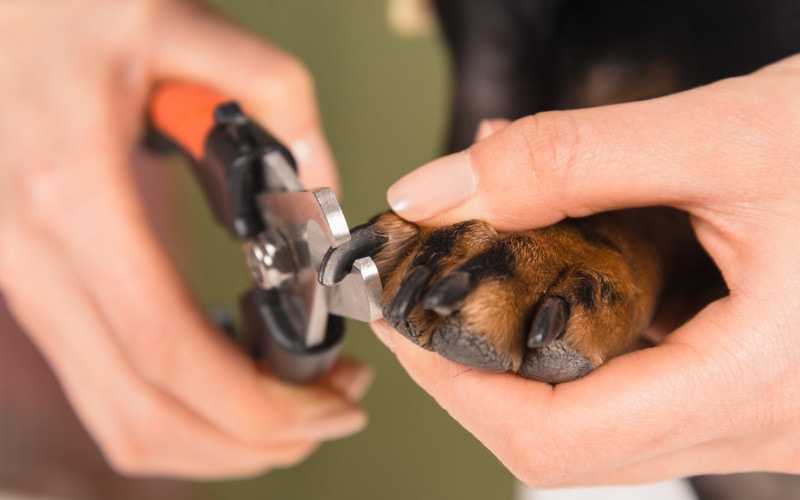
Use the right tools: Invest in a pair of quality dog nail clippers or a grinder designed specifically for pets. Cheap, dull clippers can crush the nail rather than cutting cleanly through.
-
Avoid the quick: Always err on the side of trimming less nail rather than risk cutting into the sensitive quick. If you‘re not sure where the quick ends, look for a chalky white ring on the nail – that‘s a sign you‘re getting close.
-
Reward often: Be sure to give your dog plenty of verbal praise, petting, and yummy treats throughout the nail trimming process. The more positive you can make it, the better.
Some dogs may tolerate a nail grinder better than clippers, as the vibration and sound can be less scary than the pressure of clippers. If you go this route, just be sure to keep your dog‘s fur out of the way and avoid grinding on any one nail for too long to prevent friction burns.
[Embed video tutorial on how to safely trim dog nails at home]Of course, some dogs simply won‘t sit still for a nail trim no matter what you try. In these cases, your best bet is to leave it to the professionals. Dog groomers and vet clinics are well-equipped to handle squirmy, uncooperative pups and can get the job done safely.
Real Dogs, Real Nail Trim Stories
Still not convinced that nail trims are doable? I asked some fellow dog lovers to share their experiences. Here‘s what they had to say:
"I was so nervous to cut my dog‘s nails at first, but I‘ve found that keeping treats nearby is key! I let him lick some peanut butter off a spoon while I trim and he hardly even notices. It‘s made the process so much easier." – Jessica R.
"My dog hates having his paws touched, but walking him on the sidewalk every day has made a huge difference in keeping his nails short. The concrete files them down naturally so I only have to trim every couple months." – Amir S.
"Nail trims used to be such a hassle with my dog – she would cry and pull her paws away any time I came near her with the clippers. But once I invested in a high-quality nail grinder, it was a total game changer. She tolerates it so much better and her nails have never looked healthier." – Isabelle P.
The Bottom Line
At the end of the day, there‘s no one-size-fits-all answer to how often you should be cutting your dog‘s nails. But checking your pup‘s paws regularly and trimming as needed (usually every 4-6 weeks) is key to keeping them healthy and comfortable.
If you‘re new to at-home nail trims, remember to be patient and keep things positive for your dog. And if you‘re ever unsure or uncomfortable with the process, don‘t hesitate to enlist the help of your veterinarian or groomer. We‘re always happy to lend a hand!
With a little practice and a lot of treats, nail trims can become just another part of your dog care routine. Your pup may never love the process, but they‘ll certainly appreciate the effort you put into keeping their paws in tip-top shape.
Happy trimming!
Sources
-
Kaimio, M., Saijonmaa-Koulumies, L. E., & Laitinen-Vapaavuori, O. (2007). Nail and foot disorders of the dog: a clinical study of 474 cases. Suomen Eläinlääkärilehti, 113(3), 143-150.
-
O‘Neill, D. G., Brodbelt, D. C., Pegram, C., Church, D. B., Geddes, R. F., & Volk, H. A. (2021). Life expectancy and etiological risk factors for mortality in companion dogs in the UK. Scientific Reports, 11(1), 1-12.
-
Ramos-Vara, J. A., Beissenherz, M. E., Miller, M. A., Johnson, G. C., Pace, L. W., Fard, A., & Kottler, S. J. (2000). Retrospective study of 338 canine oral melanomas with clinical, histologic, and immunohistochemical review of 129 cases. Veterinary Pathology, 37(6), 597-608.