Mini Goldendoodle vs. Mini Labradoodle: A Comprehensive Comparison for Dog Lovers
Introduction
As a dog lover, you may be drawn to the adorable, teddy bear-like appearance and friendly personalities of doodle mixes. Two of the most popular petite options are the mini Goldendoodle and mini Labradoodle. Both of these designer breeds combine the intelligence and hypoallergenic coats of Poodles with the affable natures of Golden Retrievers or Labrador Retrievers. But which pint-sized pup is your ideal match? In this in-depth guide, we‘ll delve into the key similarities and differences between mini Goldendoodles and mini Labradoodles to help you choose the perfect companion.
The Parent Breeds
To understand the traits of Goldendoodles and Labradoodles, it‘s helpful to look at the characteristics of their parent breeds:
Poodle
Poodles are highly intelligent, athletic dogs originally bred as water retrievers in Germany. They come in three sizes: Standard (over 15 inches tall), Miniature (10-15 inches tall), and Toy (under 10 inches tall). Poodles are known for their hypoallergenic, non-shedding coats that come in a variety of colors and patterns. They‘re highly trainable and excel in obedience, agility, and other canine sports.
Golden Retriever
Golden Retrievers are friendly, outgoing gundog originally bred in Scotland to retrieve waterfowl for hunters. They‘re medium-to-large dogs standing 21.5-24 inches tall and weighing 55-75 pounds. Goldens have thick, water-repellent double coats that shed moderately and come in various shades of gold. They‘re known for their gentle, patient personalities and make excellent family pets.
Labrador Retriever
Labrador Retrievers are another popular gundog breed originating in Newfoundland as water dogs and fisherman‘s helpers. Labs are medium-to-large dogs standing 21.5-24.5 inches tall and weighing 55-80 pounds. They have short, dense double coats that come in black, yellow, or chocolate and shed moderately. Labs are famously friendly, outgoing, and eager to please, excelling as family pets, service dogs, and hunting companions.
Mini Goldendoodle Overview
The mini Goldendoodle combines the Golden Retriever‘s friendly nature with the Poodle‘s intelligence and low-shedding coat in a compact package. Here‘s what you need to know about this merry mix:
History and Popularity
Goldendoodles first appeared in the 1990s as guide dog candidates, with mini Goldendoodles emerging later as breeders crossed Golden Retrievers with Miniature or Toy Poodles. While there‘s no official mini Goldendoodle registry, they‘ve become increasingly popular as apartment-friendly companion dogs. In a 2020 survey by rover.com, Goldendoodles ranked as the 6th most popular doodle mix, with minis being especially sought-after.
Size and Appearance
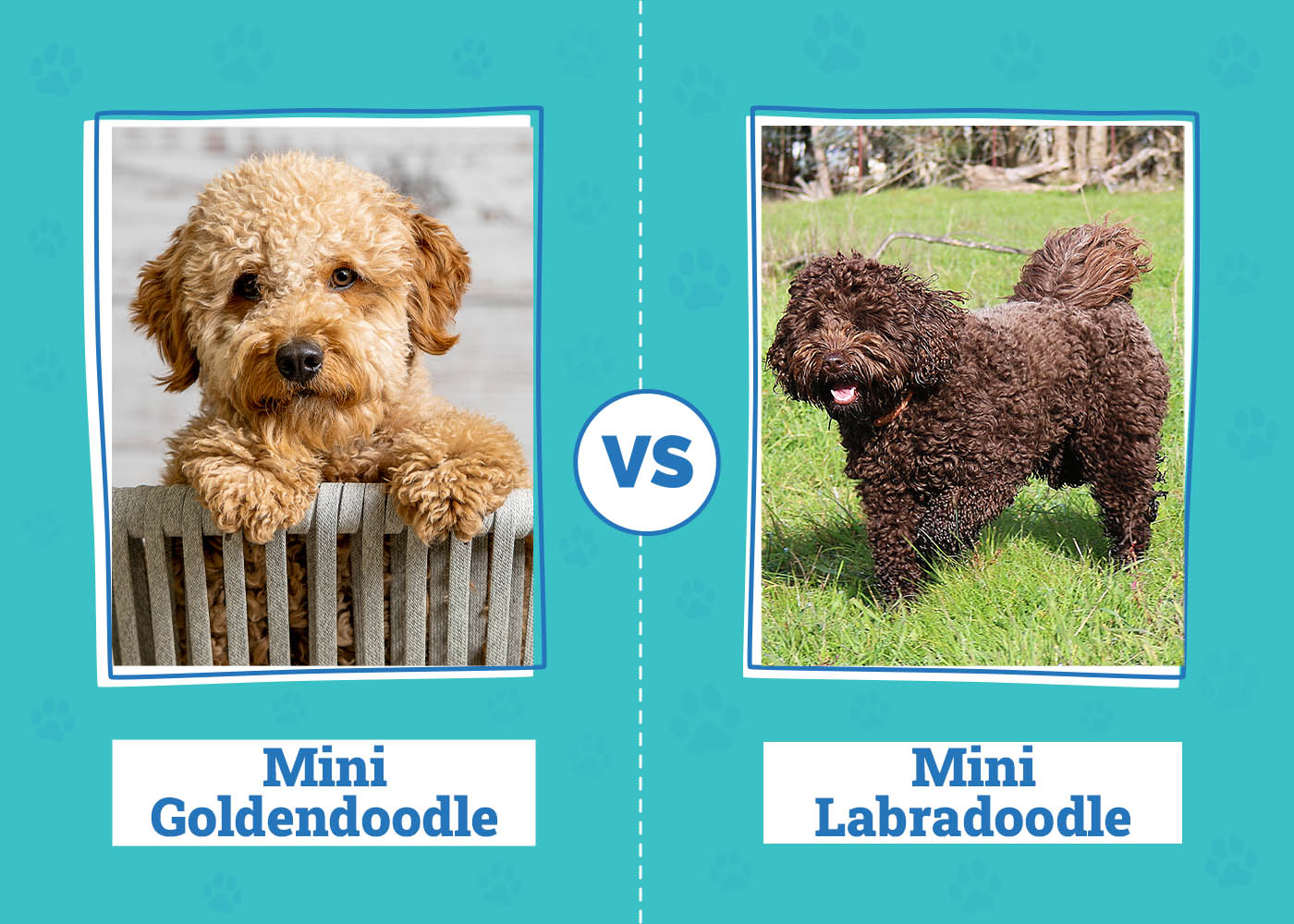
Mini Goldendoodles typically stand 13-20 inches tall and weigh 15-35 pounds fully grown, with males usually at the higher end of the range. They have compact, sturdy bodies with round heads, floppy ears, and dark, expressive eyes. Mini Goldendoodle coats are usually wavy or curly and come in a range of colors including cream, apricot, red, gold, chocolate, and parti blends.
Coat and Grooming
One of the main draws of mini Goldendoodles is their low-to-non-shedding coats, which many people find more allergy-friendly than shedding breeds. However, they still produce some dander and aren‘t completely hypoallergenic. Mini Goldendoodle coats require brushing every few days to prevent mats and tangles, plus trips to the groomer every 1-2 months for a trim, bath, nail clip, and ear cleaning. Expect to pay $50-100 per grooming session.
Temperament and Trainability
Mini Goldendoodles inherit the friendly, people-pleasing nature of their Golden Retriever parent, making them affectionate and eager to learn. They‘re highly social dogs who love being around their families and get along well with children, other dogs, and even cats. Mini Goldendoodles excel in basic obedience and can learn advanced tricks, but they may have a goofy streak and take longer to mature than more serious breeds.
For example, Buddy, a mini Goldendoodle I know, is the epitome of a social butterfly. He loves nothing more than bouncing up to greet everyone he meets with a wagging tail and a toy in his mouth, hoping for a game of fetch. He learned basic commands like sit, stay, and come quickly but still gets distracted by any opportunity to play at two years old.
Exercise and Enrichment Needs
As descendants of sporting dogs, mini Goldendoodles need plenty of physical and mental exercise to stay happy and healthy. Expect to provide at least 30-60 minutes of activity per day through walks, playtime, trips to the dog park, and training sessions. Mini Goldendoodles enjoy swimming, hiking, and playing fetch, but they‘re also happy to cuddle on the couch at the end of a long day.
A sample daily schedule for a mini Goldendoodle may include:
- 30-minute morning walk or play session
- 15-minute training session practicing tricks or obedience
- Several short potty breaks throughout the day
- 30-minute afternoon walk or visit to the dog park
- 15-minute evening chew session with a bully stick or frozen Kong
Health and Lifespan
Mini Goldendoodles have an expected lifespan of 12-15 years with proper care. As a hybrid breed, they may be prone to health issues affecting either parent breed, such as:
- Hip dysplasia
- Progressive retinal atrophy
- Von Willebrand‘s disease
- Patellar luxation
- Hypothyroidism
- Allergies
Choosing a reputable breeder who health tests parent dogs and provides a health guarantee can minimize risks. Providing your mini Goldendoodle a high-quality diet, age-appropriate exercise, and regular vet check-ups also promotes long-term health.
Mini Labradoodle Overview
The mini Labradoodle blends the friendly, outgoing nature of the Labrador Retriever with the intelligence and low-shedding coat of the Poodle. Here‘s an overview of this lovable mix:
History and Popularity
Labradoodles originated in Australia in the 1980s as hypoallergenic guide dogs, with mini Labradoodles developed later as more compact companions. According to the Worldwide Australian Labradoodle Association, over 70,000 Labradoodles have been registered globally since the 1980s, with mini and medium sizes particularly popular. In a 2021 survey by the Labradoodle Association of America, mini Labradoodles were the 4th most popular size.
Size and Appearance
Mini Labradoodles generally stand 14-16 inches tall and weigh 15-25 pounds fully grown, making them slightly smaller on average than mini Goldendoodles. They have sturdy, compact bodies with square heads, floppy ears, and friendly expressions. Coat types range from wavy fleece to curly wool and come in a variety of solid colors and patterns including chocolate, black, yellow, red, cream, parti, and phantom.
Coat and Grooming
Like mini Goldendoodles, mini Labradoodles usually inherit a low-shedding coat from their Poodle parent, making them popular among allergy sufferers. However, no dog is truly hypoallergenic, and individual reactions may vary. Plan to brush your mini Labradoodle at least 2-3 times per week, more often if they have a longer or curlier coat. Professional grooming every 6-8 weeks is also recommended to prevent matting and keep the coat clean and healthy. Budget $60-120 per grooming visit depending on your location and dog‘s coat type.
Temperament and Trainability
Mini Labradoodles typically inherit the friendly, outgoing personality of their Labrador parent along with the Poodle‘s intelligence and eagerness to please. They‘re generally social dogs who love being around their families and joining in daily activities. While mini Labradoodles are usually good with children and other pets, they may be more reserved with strangers compared to the ultra-outgoing mini Goldendoodle.
For example, Lucy, a mini Labradoodle I met at the dog park, was happy to play with other dogs but initially hung back when meeting new people, waiting for them to approach her first. With her family, she was affectionate and playful but also had an independent streak and could entertain herself with puzzle toys or a favorite chew.
Mini Labradoodles are bright and trainable but may have a mischievous side that requires patient, positive training methods. Start socialization and training early to mold good manners and build confidence.
Exercise and Enrichment Needs
Mini Labradoodles have moderate-to-high exercise needs and thrive with 45-90 minutes of physical activity per day. They enjoy brisk walks, swimming, retrieving, and playing with other dogs. Mental stimulation through interactive toys, food puzzles, and training sessions is also important to prevent boredom and destructive behavior.
A typical day for a mini Labradoodle may include:
- 30-45 minute morning walk or jog
- 15-minute obedience or trick training session
- A few short potty breaks
- Afternoon visit to the dog park or play date with canine pals
- 30-minute evening walk or backyard playtime
- Food puzzle or filled Kong while owners have dinner
Health and Lifespan
Mini Labradoodles have an average life expectancy of 12-14 years. Like all breeds, they may be prone to certain health issues such as:
- Hip and elbow dysplasia
- Eye problems like progressive retinal atrophy or cataracts
- Epilepsy
- Hypothyroidism
- Allergies
- Ear infections
Responsible breeders screen parent dogs for genetic issues and provide health clearances. Keeping your mini Labradoodle at a healthy weight, providing regular exercise, and scheduling annual vet check-ups can help prevent or catch health problems early.
Mini Goldendoodle vs. Mini Labradoodle: Similarities and Differences
Now that we‘ve covered each breed in detail, let‘s summarize how mini Goldendoodles and mini Labradoodles compare:
Similarities
- Both are crosses between retrievers and Poodles
- Low-to-non-shedding coats that require regular grooming
- Friendly, social personalities that crave human interaction
- Highly trainable and eager to please
- Need 30-90 minutes of daily exercise and mental stimulation
- Generally good with kids and other pets
- May be prone to separation anxiety if left alone too long
- Average lifespan of 12-15 years
Differences
- Mini Goldendoodles tend to be slightly larger at 13-20 inches and 15-35 pounds vs. mini Labradoodles at 14-16 inches and 15-25 pounds
- Mini Goldendoodles are usually more outgoing and less reserved with strangers than mini Labradoodles
- Mini Goldendoodles may be more content with shorter exercise sessions, while mini Labradoodles tend to have higher endurance
- Coat types and colors vary slightly, with mini Goldendoodles favoring wavy to curly fleece coats in shades of cream, apricot, and red and mini Labradoodles often having curlier, wooly coats in shades of chocolate, black, and yellow
- Different potential health issues based on parent breeds, with mini Goldendoodles more prone to eye and skin problems and mini Labradoodles more prone to joint issues
Which Breed is Right For You?
Both mini Goldendoodles and mini Labradoodles can make wonderful companions for the right owners. Consider a mini Goldendoodle if you‘re looking for:
- A social butterfly who loves meeting new people and dogs
- A playful, goofy personality to keep you laughing
- A cuddly lap dog who‘s content with moderate exercise
- A dog who‘s easier to train and less independent
A mini Labradoodle may be a better fit if you prefer:
- A friendly but slightly more reserved dog who takes time to warm up to strangers
- An active, athletic companion for hikes, runs, and outdoor adventures
- An independent problem-solver who can entertain themselves at times
- A dog with a slightly more predictable coat type and less grooming needs
Ultimately, the best way to choose between a mini Goldendoodle and mini Labradoodle is to meet both breeds in person, talk to reputable breeders and owners, and consider your lifestyle and preferences. While no dog is perfect, both of these doodle mixes have stolen countless hearts with their teddy bear looks and devoted personalities.
Conclusion
Mini Goldendoodles and mini Labradoodles are both adorable, allergy-friendly options for dog lovers seeking a pint-sized companion. While they share many traits like intelligence, trainability, and affectionate natures, they also have unique differences in personality, exercise needs, and appearance.
As a dog lover, you can‘t go wrong with either breed as long as you choose a reputable breeder, provide plenty of exercise and enrichment, and commit to regular training and grooming. Whether you fall for the outgoing charm of the mini Goldendoodle or the adventurous spirit of the mini Labradoodle, you‘re sure to gain a devoted best friend who will fill your life with love and laughter for many years to come.