The Loyal and Luculent Hound: Discovering the Hanover Hound
Amid the rolling hills and dense forests of Lower Saxony, Germany, a noble hound of unparalleled prowess has quietly guarded the secrets of the chase for centuries. With a keen nose, tireless gait, and unwavering loyalty, the Hanover Hound is a testament to the inimitable bond between hunter and hound. For those fortunate enough to know this rare breed, the Hanover Hound is the embodiment of what a true hunting companion should be.
A Breed Steeped in Tradition
The Hanover Hound‘s origins date back to medieval Germany, where the Liam Hound – a heavyweight scent hound – reigned supreme in the noble courts and hunting lodges of the day. From this ancient stock, the Hanover Hound emerged as a premier tracking dog in the 18th century, perfected by hunters and foresters in the Kingdom of Hanover.
Key figures like Baron von Bort auf Gresse and Oberlandjägermeister Friedrich von Reden played pivotal roles in refining the breed, establishing the Hanover Hound as the go-to choice for tracking wounded game across vast stretches of challenging terrain. The breed‘s tenacity, scenting ability, and melodious voice made them an indispensable ally in the field.
Despite their storied past and unparalleled ability, the Hanover Hound remains a rare sight outside of Germany. The breed was officially recognized by the Fédération Cynologique Internationale (FCI) in 1896, but has yet to gain full recognition from major kennel clubs like the American Kennel Club (AKC) or United Kennel Club (UKC).
This limited recognition, combined with the breed‘s highly specialized function and the dedication required to maintain working lines, has kept the Hanover Hound‘s population small. Current estimates suggest there are fewer than 1,000 Hanover Hounds worldwide, with annual registrations in Germany hovering around 50-100 puppies.
Built for the Chase
The Hanover Hound is a sterling example of form following function. Standing 19-22 inches at the shoulder and weighing 60-100 pounds, these sturdy hounds are built for endurance and agility in the field.
| Hanover Hound Size | Male | Female |
|---|---|---|
| Height (inches) | 20-22 | 19-21 |
| Weight (pounds) | 80-100 | 60-80 |
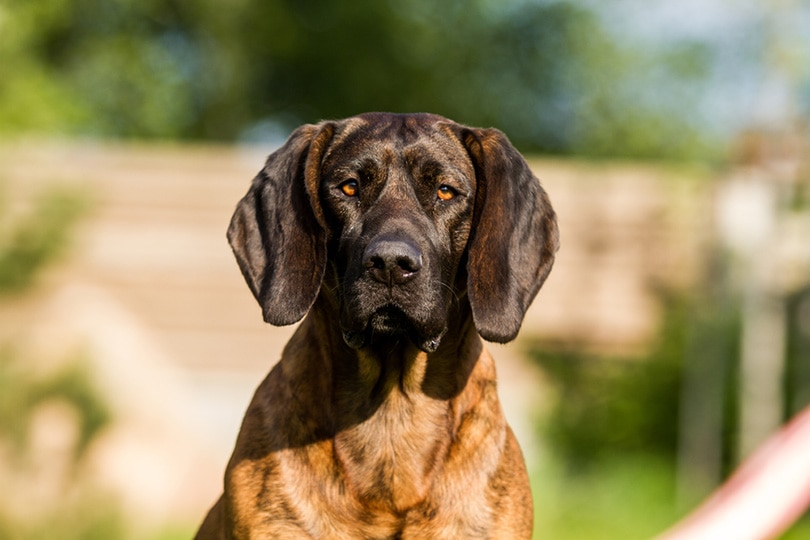
Their long legs, deep chests, and slightly arched backs enable them to cover ground efficiently, while their broad, strong jaws and teeth are designed for carrying game. The breed‘s short, dense coat – typically light to dark fawn or reddish-brown in color – provides protection from the elements without impeding movement.
But it‘s the Hanover Hound‘s head and expression that truly capture the heart of any dog lover. With long, velvety ears framing a gentle, intelligent face, the Hanover Hound‘s dark, soulful eyes speak volumes about the breed‘s sincere and devoted nature.
A Nose for the Job
In the world of hunting dogs, the Hanover Hound is a true specialist. Bred for generations to track wounded big game over long distances, these hounds possess an uncanny ability to follow even the faintest traces of a scent trail.
"The Hanoverian Hound is a tracking machine," explains Hans Wittmann, a German hunter and Hanover Hound owner. "Their nose is so sensitive, so discriminating, that they can follow a single deer for miles, even hours after it‘s been hit. It‘s like they can see the past with their noses."
This scenting prowess is thanks in part to the Hanover Hound‘s large, open nostrils and expansive nasal cavity, which provides ample space for scent-detecting olfactory receptors. But it‘s also a result of the breed‘s methodical, meticulous tracking style.
Unlike some hound breeds that barrel forward with reckless abandon, the Hanover Hound is a more calculated tracker. They work slowly and deliberately, nose to the ground, carefully unraveling the scent trail one step at a time. This measured approach allows them to stay on track even in challenging conditions, like dry, rocky terrain or areas with heavy cross-traffic.
When a Hanover Hound does pick up a scent, they let out a deep, melodious bay that carries far through the forest. This distinctive voice not only alerts the hunter to the hound‘s progress, but also helps drive and hold the game animal until the hunter can arrive.
As Carsten Mueller, a German Hanover Hound breeder and hunting guide puts it, "Listening to a Hanoverian on the track is like a symphony. Their voice has such clarity, such purpose. It‘s the sound of an animal doing exactly what it was born to do."
Partners in the Field and at Home
Beyond their undeniable skill as tracking specialists, what truly sets the Hanover Hound apart is their unshakeable bond with their human partners. These are not aloof, independent hounds, but rather deeply devoted companions who live to work in tandem with their people.
"A Hanoverian Hound is more than just a hunting dog," says Katrin Schneider, a lifelong Hanover Hound owner and enthusiast. "They are a true partner in every sense of the word. In the field, they are completely in tune with you, always watching, always ready to spring into action at the slightest signal. But at home, they are the most loving, gentle souls imaginable."
This emotional attunement and eagerness to please make Hanover Hounds highly biddable and trainable, a rare trait in the hound group. With positive reinforcement and consistent guidance, they can excel in obedience, tracking, and other dog sports in addition to their traditional hunting roles.
But while Hanover Hounds are more adaptable than many hounds, they are not couch potatoes by any stretch. These are high-energy, high-drive dogs that require ample exercise and mental stimulation to be content. A bored Hanover Hound is a destructive Hanover Hound, as many owners have learned the hard way.
"If you don‘t give a Hanoverian a job to do, they‘ll find one themselves," warns Mueller. "And chances are, it won‘t be one you like. These dogs need to work, need to feel useful. It‘s hardwired into them."
For experienced owners willing to put in the time and effort, however, the rewards of living with a Hanover Hound are immeasurable. The depth of the bond, the sense of partnership, the shared sense of purpose – it‘s a relationship unlike any other.
Preservation and Protection
With such a small population and so much to offer, the Hanover Hound is a breed in need of dedicated stewardship. Responsible breeders who prioritize health, temperament, and working ability are the lifeblood of the breed‘s future.
The German Hanoverian Scenthound Club (Deutsche Bracken-Club e.V.), founded in 1894, has been instrumental in preserving and promoting the Hanover Hound. The club maintains the breed standard, hosts performance tests and shows, and connects breeders and enthusiasts across Germany and beyond.
Proactive health testing is a critical component of responsible Hanover Hound breeding. Though generally healthy dogs with a lifespan of 10-14 years, the breed is prone to certain genetic conditions that can be minimized through rigorous screening.
| Common Health Issues | Percentage of Dogs Affected |
|---|---|
| Hip Dysplasia | 15-20% |
| Elbow Dysplasia | 5-10% |
| Eye Disorders | 10-15% |
| Bloat/GDV | 5% |
| Certain Cancers | 10-15% |
Data represents rough estimates from veterinary literature and breed club health surveys.
Prospective owners should seek out breeders who perform Orthopedic Foundation for Animals (OFA) or Penn-Hip exams on breeding stock to evaluate hip and elbow health, as well as genetic tests for inherited eye disorders and other breed-specific conditions. Supporting preservation breeders who prioritize these tests is crucial for the long-term welfare of the breed.
Beyond health concerns, ethical Hanover Hound breeders are also committed to placing pups in appropriate working or active companion homes. They carefully screen prospective buyers to ensure their hounds will have the opportunity to fulfill their potential and lead enriching lives.
"A good breeder is not just interested in selling puppies," says Schneider. "They want to make sure each dog ends up in a situation where they will be appreciated, challenged, and loved for who they are. That‘s what it means to be a steward of the breed."
A Once-in-a-Lifetime Hound
For those intrepid souls who are up for the challenge, sharing one‘s life with a Hanover Hound is a rare privilege. It‘s a chance to be part of something bigger, to connect with a centuries-old legacy of partnership and shared purpose.
That legacy is palpable every time afield with a Hanover Hound, as they deftly navigate the landscape with unwavering focus and drive. It‘s there in the gleam in their eye as they pick up a scent, in the stirring timbre of their voice as they herald a find.
But it‘s also there in the quiet moments at home, when a Hanover Hound rests their head on your knee and looks up at you with those dark, soulful eyes. In that gaze, you see not just affection, but understanding – an unspoken acknowledgement of the bond you share.
As Hanover Hound owner and devotee Klaus Fuchs reflects, "To be chosen by a Hanover Hound as their person is a soul-deep experience. It‘s not just about the hunting, although that‘s a big part of it. It‘s about the entirety of the relationship – the mutual respect, the shared joys and sorrows, the absolute certainty that you will always have each other‘s back, no matter what. It‘s a once-in-a-lifetime kind of bond."
Those fortunate enough to be chosen can attest: The Hanover Hound is more than just a breed – it is a way of life, a sacred trust, a testament to the inimitable connection between hound and human. To know a Hanover Hound is to glimpse the divine in the canine form, to witness the beauty and power of an ancient partnership that continues to endure and inspire to this day.