Pitbull vs Dogo Argentino: An In-Depth Comparison for Dog Lovers
Are you a dog lover trying to decide between adopting a Pitbull or a Dogo Argentino? While these two powerful breeds may seem similar at first glance with their muscular builds and short coats, there are some key differences to consider before making your choice. As a veterinarian and lifelong dog enthusiast, I‘m here to provide an in-depth comparison of Pitbulls and Dogo Argentinos so you can determine which breed is the best fit for your lifestyle and family.
We‘ll explore the history and original purpose of each breed, take a detailed look at their physical characteristics and size differences, and dive into what it‘s really like to live with a Pitbull or Dogo Argentino in terms of their temperament, training and exercise needs, health concerns, grooming requirements, and more. By the end of this guide, you‘ll have all the information you need to confidently choose the ideal canine companion.
Breed Histories and Original Purposes
To really understand these breeds, it‘s essential to look at where they came from and why they were originally developed. Pitbulls can trace their lineage back to England in the early 1800s, where they were unfortunately bred for the cruel blood sports of bull-baiting and dogfighting. When these practices were outlawed in 1835, Pitbulls transitioned into becoming versatile farm dogs and beloved family pets in the United States, valued for their strength, courage, and unwavering loyalty.
The Dogo Argentino, in contrast, is a much more recently established breed. They were developed in 1928 by an Argentinian doctor named Antonio Nores Martinez, who wanted to create the perfect big-game hunting dog. He crossed various breeds including the Cordoba Fighting Dog, Great Dane, Pointer, Boxer, and more, resulting in a powerful, agile dog that excelled at taking down wild boar and puma. While the Dogo Argentino is no longer used extensively for hunting, their strength, bravery, and protective instincts have made them valued guard dogs and devoted family companions.
Physical Characteristics and Size
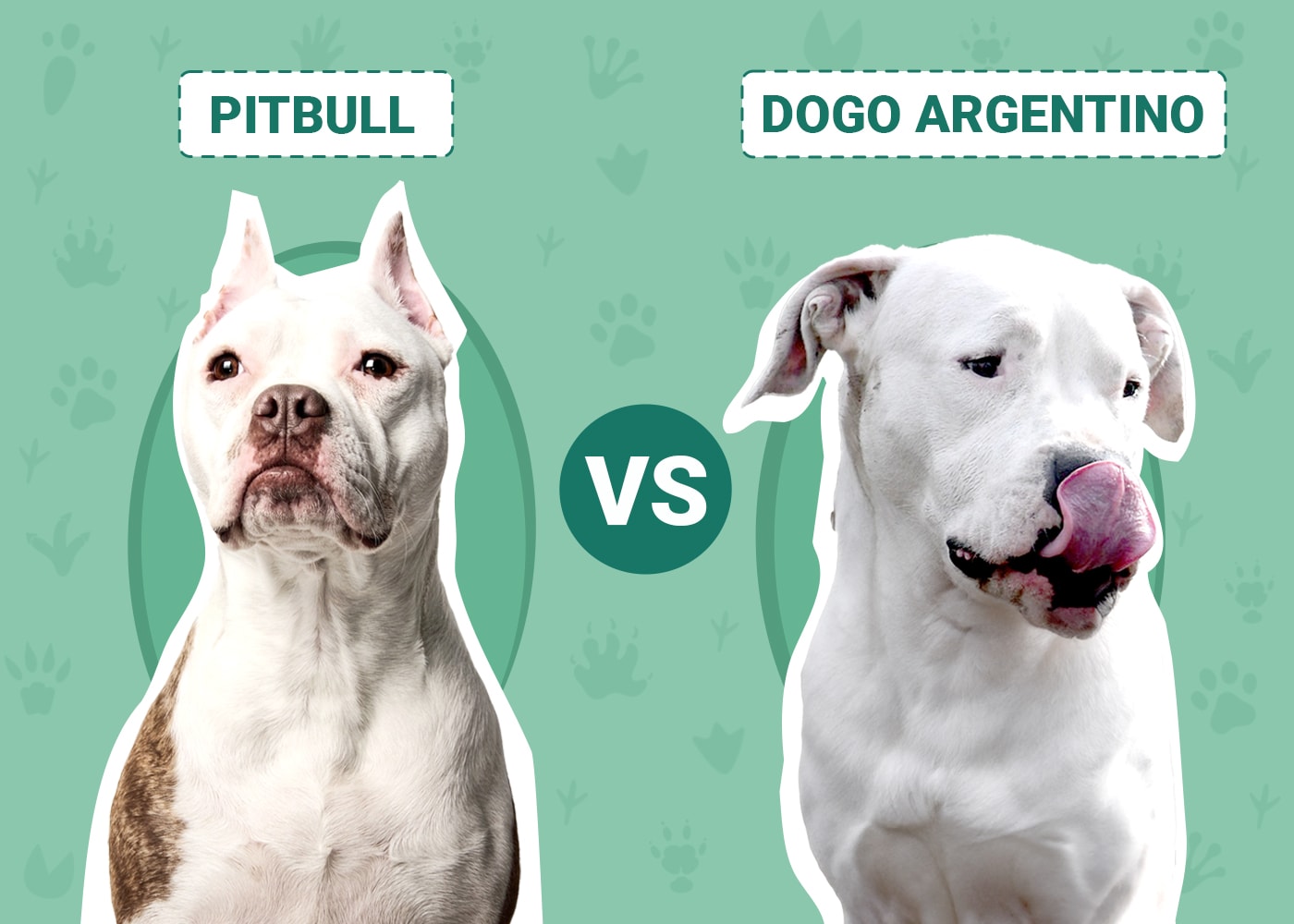
One of the most noticeable differences between Pitbulls and Dogo Argentinos is their size. Dogo Argentinos are significantly larger, as shown in this comparison table:
| Breed | Height | Weight |
|---|---|---|
| Pitbull | 17-21 inches | 30-65 pounds |
| Dogo Argentino | 24-27 inches | 80-100 pounds |
Beyond just height and weight, Dogo Argentinos have a more elongated, robust head shape compared to a Pitbull‘s characteristically wide, brick-shaped head. And while Pitbulls can have coats in a range of colors including black, fawn, and brindle, Dogo Argentinos sport a short, entirely white coat that gives them an imposing yet majestic appearance.
Both breeds have muscular, powerful physiques that showcase their strength and athleticism. However, the Dogo Argentino‘s larger size translates to greater physical presence and strength. As John Thompson, a Dogo Argentino breeder with over 20 years of experience, explained in an interview:
Dogo Argentinos were bred to be able to take down 400-pound wild boars, so they have immense power and tenacity in a fight. Pitbulls are certainly no slouches, but a Dogo can overpower them with sheer size and strength.
That said, size shouldn‘t be the only consideration when choosing between these breeds. Their temperaments, exercise needs, trainability, and other factors are just as important.
Temperament and Behavioral Differences
Pitbulls and Dogo Argentinos can both appear intimidating with their confident, muscular demeanors, but there are some notable differences in their personalities. In general, Pitbulls tend to be goofier, more enthusiastic, and overtly affectionate with their families. They love being the center of attention and aren‘t above acting like a jester to make their humans laugh.
Dogo Argentinos, on the other hand, tend to be more serious, dignified, and less outwardly excitable. They bond intensely with their family units but aren‘t necessarily seeking constant attention and playtime like Pitbulls. Diego Matteo, a certified dog behavior consultant specializing in large breeds, provided this insight:
Dogo Argentinos are more aloof with strangers and laser-focused on protecting their families and territory, while Pitbulls are usually wiggly social butterflies who want to meet everyone. Both breeds are famously loyal, but Dogos tend to be more one-person dogs versus a Pitbull‘s desire to befriend the whole gang.
Another major difference is prey drive, which is significantly higher in Dogo Argentinos due to their hunting heritage. They have a strong instinct to chase down and catch small, fleeing animals, so they‘re more likely to go after cats, rabbits, and other little pets. Pitbulls have moderate prey drive in comparison – they‘ll gladly chase a ball or squirrel, but they tend to coexist more peacefully with other household animals.
Both breeds can do well with other dogs if extensively socialized from puppyhood, but same-sex aggression (particularly between males) is more common in Dogo Argentinos. Erin Askeland, CPDT-KA and Training Manager at Camp Bow Wow, provided these statistics:
Around 20% of Dogo Argentinos will show some dog aggression by adulthood even with socialization, while only about 10% of Pitbulls have issues with dog-dog relationship. Neither are breeds you want to bring to the dog park without a lot of socialization with a variety of other dogs from a very young age.
With both breeds, diligent training and socialization from puppyhood is crucial to ensure they grow up to be well-mannered ambassadors. You can‘t skip out on training with these powerful pooches.
Training and Exercise Requirements
Pitbulls and Dogo Argentinos are intelligent, high-energy breeds that need extensive daily exercise to stay happy and healthy. A bored, under-stimulated power breed is a recipe for destructive behavior and bountiful mischief. Pitbulls need at least 1-2 hours of physical activity per day, while Dogo Argentinos require a minimum of 2 hours of vigorous exercise.
In terms of training, both breeds are smart and eager to please, but they do have a stubborn streak – especially as puppies. Clear, consistent boundaries and positive reinforcement techniques are essential. As professional dog trainer Katie Finley explains,
Pitties and Dogos respond best to upbeat training sessions with lots of praise, play, and high-value treats – think chicken, cheese, hot dogs. Punishment or scolding will only erode your bond and potentially bring out aggression. Short sessions throughout the day are better than one long class.
Socialization is also a crucial part of any training plan for these breeds. Exposing them to a wide variety of friendly people, calm dogs, and new environments from an early age (ideally 8-16 weeks) helps them grow into confident, well-adjusted adults. Enrolling in a puppy class can be a great way to jumpstart socialization and get hands-on training guidance.
If you can‘t commit to providing at least a few hours of exercise, play, and training every single day, then you may want to consider a lower-energy breed. Pitbulls and Dogos aren‘t couch potato dogs by any stretch.
Health and Grooming Needs
Pitbulls and Dogo Argentinos are both generally healthy breeds with lifespans around 10-15 years, but there are some specific health conditions to be aware of. Pitbulls have a higher incidence of hip dysplasia, heart disease, allergies, and thyroid issues, while Dogo Argentinos may be more prone to deafness (especially in dogs with a lot of white pigment) and bloat.
Annual vet check-ups, a nutritious diet tailored to large breeds, and avoiding over-strenuous exercise during puppyhood can help mitigate these risks. In terms of daily maintenance, these short-coated breeds are relatively low maintenance, requiring just occasional baths and brushing to keep their coat sleek and skin healthy.
However, those endearing wrinkles and jowls on a Pitbull‘s face will need regular cleaning with a damp cloth or doggy wipes to prevent irritation or bacterial buildup. And both breeds will need their nails trimmed every few weeks if they aren‘t wearing them down naturally. Dental care is also important – daily tooth brushing is ideal, or aim for 3-4 times per week at minimum.
Feeding and Nutrition
As large, athletic breeds, Pitbulls and Dogo Argentinos both require a high-quality, protein-rich diet to fuel their active lifestyles and maintain muscle mass. Puppies should be fed a large-breed puppy formula to ensure controlled growth, as too many calories and calcium can lead to skeletal issues. Adults typically do well on a chicken, fish, or lamb-based food with a protein content around 25-30% and healthy omega fatty acids for skin and coat health.
Proper portion control is essential with these breeds to prevent obesity, which can exacerbate joint issues and other health problems. A general guideline is 2-3 cups of food per day for Pitbulls and 3-5 cups daily for Dogo Argentinos, divided into two meals – but this will vary based on age, weight, and activity level. Your vet can help you determine the ideal serving size and recommend specific brands that fit your dog‘s needs.
Avoid giving table scraps, as this can lead to weight gain and reinforce begging behaviors. Stick to healthy, low-calorie treats like bits of carrot, apple, or lean meat instead. And always have fresh water available to keep your pup hydrated.
Choosing a Responsible Breeder
With their rising popularity and unfortunately negative reputations, Pitbulls and Dogo Argentinos have become a prime target for unscrupulous breeders looking to make a quick profit off these "tough" dogs. To avoid supporting inhumane breeding practices and improve your chances of getting a physically and mentally sound puppy, it‘s essential to choose your breeder carefully.
A responsible Pitbull or Dogo Argentino breeder will:
- Belong to breed-specific organizations like the United Kennel Club (UKC) or Dogo Argentino Club of America (DACA) and follow their ethical guidelines
- Conduct genetic health testing on all breeding dogs and puppies and provide proof to potential owners
- Allow you to visit their facility and meet the parent dogs in person – avoid any breeder who only wants to meet in a neutral location or ship a puppy sight-unseen
- Stick to breeding dogs with stable, friendly temperaments – no human aggression tolerated
- Provide a written contract detailing their health guarantee, spay/neuter requirements, and commitment to taking a dog back at any point if the owner can no longer keep them
- Extensively interview potential owners and refuse to sell to anyone they feel is a bad fit for the breed (e.g. a first-time owners, someone with an extremely sedentary lifestyle)
- Focus on quality over quantity by producing no more than a few litters per year
Red flags to watch out for include breeders claiming to have "rare" coat colors (like merle Pitbulls), refusing to show health screening results, selling puppies under 8 weeks old, or having puppies constantly available with no waiting list. Always be prepared to walk away if something doesn‘t seem right – a reputable breeder will be happy to answer all your questions openly and honestly.
Which Breed Is Right for You?
Choosing between a Pitbull and Dogo Argentino ultimately comes down to your lifestyle, living situation, and what you‘re looking for in a canine companion. Both breeds need dedicated owners willing to put in ample time for exercise, training, and socialization – these aren‘t dogs you can stick in the backyard and forget about.
Pitbulls may be a better fit if:
- You‘re looking for a goofy, wiggly, endlessly devoted medium-large dog
- You have prior experience with bully breeds or other strong-willed dogs
- You have the time and patience to train and socialize from puppyhood
- You live in a household with just adults or older children
Dogo Argentinos may be a better fit if:
- You‘re seeking a discerning guardian and protector rather than a social butterfly
- You‘re a highly active person who wants a tireless companion for long hikes, runs, and adventures
- You have experience handling large, powerful breeds, particularly more aloof / territorial types
- You don‘t have any small pets in your home (cats or little dogs that may trigger their prey drive)
Whichever breed you choose, you‘ll be getting a loyal, loving friend for life. Just be prepared to work hard to train them properly, give them plenty of love and structure, and stand up for them as an ambassador of these often-misunderstood breeds.
With the right care, socialization, and management, Pitbulls and Dogo Argentinos can be wonderful, friendly companions – it‘s up to responsible owners like you to help them shine.