The Enchanting Eurasier: A Comprehensive Guide for Dog Lovers
Imagine a dog with the fluffiness of a teddy bear, the loyalty of a devoted friend, and the gentle spirit of a born nurturer. That‘s the Eurasier – a relatively new breed that‘s capturing hearts worldwide. But what lies beneath that luxurious coat and winsome expression? Let‘s delve into the history, characteristics, and care of the captivating Eurasier dog.
A Meticulously Engineered Family Companion
The Eurasier‘s story begins in Germany in the 1960s, when visionary breeder Julius Wipfel set out to create the ultimate family dog. His goal was to combine the best traits of the Chow Chow, Wolfspitz (also known as the Keeshond), and later, the Samoyed.
Wipfel carefully selected breeding stock with stable temperaments, good health, and the type of coat he envisioned. The Chow Chow contributed its calm dignity and loyalty, while the Wolfspitz added liveliness and a fox-like appearance. The Samoyed infused a touch of playfulness and a striking white coat.
After years of meticulous breeding, Wipfel and his collaborator Charlotte Baldamus unveiled their creation: the Eurasier. The name, meaning "European-Asian," reflects the breed‘s dual heritage.
In 1973, the Eurasier gained official recognition from the Federation Cynologique Internationale (FCI). Today, the breed is part of the American Kennel Club‘s Foundation Stock Service, a stepping stone towards full AKC recognition.
A Stunning Spitz with Substance
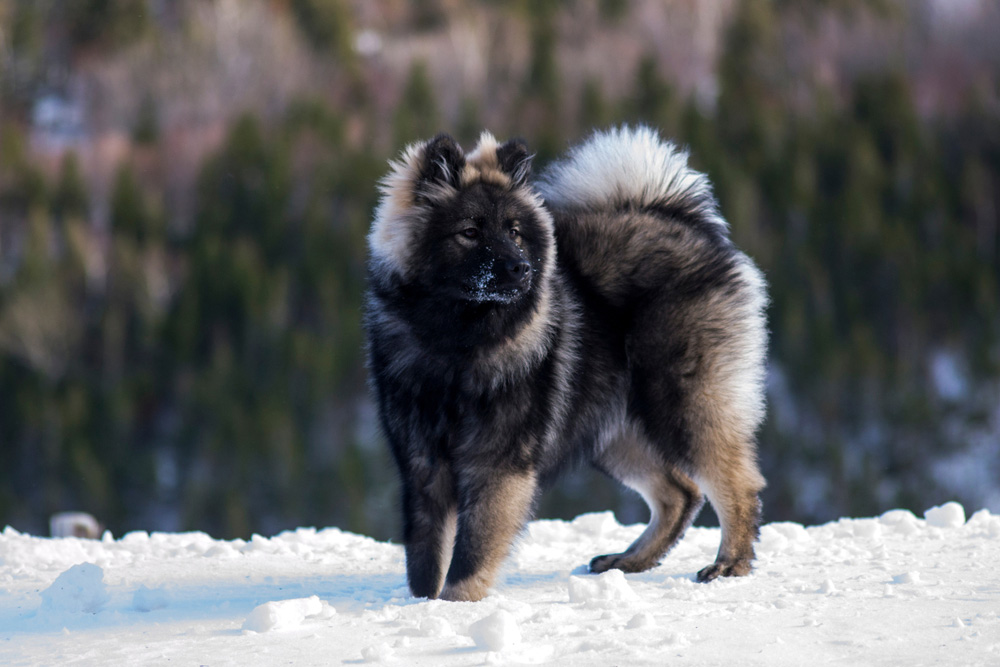
Eurasiers are undeniably eye-catching dogs. Medium in size, adults typically weigh between 40 and 70 pounds (18 to 32 kg) and stand 19 to 24 inches (48 to 61 cm) tall at the shoulder. The body is slightly longer than tall, with a deep chest and strong, straight legs.
The head is wedge-shaped, with a moderate stop and a tapered muzzle. The nose is black, and the lips are tight. The medium-sized, almond-shaped eyes come in shades of dark brown to amber, conveying a warm, intelligent expression. The triangular ears are medium-sized, set high, and carried erect.
The Eurasier‘s pièce de résistance is its plush, double coat. The undercoat is thick and woolly, while the outer guard hairs are medium-length and straight. A pronounced ruff around the neck, bushy breeches, and a plumed tail give the Eurasier a luxurious, almost regal appearance.
Coat colors include solid black, red, fawn, and wolf gray, as well as various shades of sable. White markings on the chest, toes, and tail tip are allowed. The Canadian Kennel Club also recognizes pure white Eurasiers, a nod to their Samoyed ancestry.
Grooming a Eurasier is a labor of love. Twice-yearly shedding seasons require daily brushing to remove loose hair and prevent matting. Regular nail trims, ear cleanings, and dental care are also essential. Bathing should be done sparingly to avoid stripping the coat‘s natural oils.
Gentle Souls with Inner Fortitude
The Eurasier‘s temperament is a harmonious blend of its parent breeds. Wipfel aimed to create a dog with the Chow Chow‘s loyalty and calm demeanor, the Wolfspitz‘s alertness and adaptability, and the Samoyed‘s friendliness and enthusiasm.
The result is a dog with an innate gentleness and sensitivity. Eurasiers are deeply devoted to their families and thrive on human companionship. They‘re not typically outgoing with strangers, preferring to observe from a polite distance. Proper socialization from puppyhood is essential to help them develop into confident, well-adjusted adults.
Eurasiers are intelligent and trainable, but they have a mind of their own. Positive reinforcement and consistency are key to motivating them. Harsh corrections or heavy-handed training methods will only shut down their desire to learn.
While not aggressive, Eurasiers have some protective instincts and make excellent watchdogs. They‘ll bark to alert their family to potential threats but are more likely to walk away from a fight than engage.
An Active Homebody
Eurasiers have moderate exercise needs, requiring about an hour of activity per day. They enjoy walks, hikes, and play sessions with their favorite humans. Mental stimulation is just as important, and Eurasiers excel in obedience, agility, rally, and other dog sports.
Despite their spitz heritage, Eurasiers are not built for extreme temperatures. Their thick coats make them prone to overheating in hot, humid weather. Access to shade and fresh water is a must during summer months.
At home, Eurasiers are content to relax and soak up affection from their family. They crave togetherness and don‘t do well when left alone for long periods. Separation anxiety can be an issue if not properly addressed.
Eurasiers are adaptable dogs that can thrive in various living situations, from apartments to spacious homes. The key is providing them with sufficient exercise, mental stimulation, and human interaction. They‘re excellent with children and other dogs when raised together, but their prey drive may make them unsuitable for homes with cats or small animals.
Health and Longevity
Eurasiers have a typical lifespan of 12 to 14 years. As a relatively young breed, they‘ve so far avoided many of the hereditary health issues that plague other purebreds. However, like all dogs, they‘re susceptible to certain conditions.
Hip and elbow dysplasia, common in medium to large breeds, can cause lameness and arthritis. Responsible breeders screen their breeding stock for these orthopedic issues using x-rays evaluated by the Orthopedic Foundation for Animals (OFA) or PennHIP.
Eye disorders, such as distichiasis (extra eyelashes that rub against the cornea) and entropion (inward-rolling eyelids), have been reported in Eurasiers. Annual eye exams by a board-certified veterinary ophthalmologist can catch these problems early.
Hypothyroidism, a deficiency of thyroid hormones, can cause weight gain, lethargy, and skin problems. A simple blood test can diagnose this condition, which is manageable with daily medication.
To minimize health risks, choose a Eurasier puppy from a reputable breeder who performs health screenings and provides a written guarantee. Feeding a high-quality diet, maintaining a healthy weight, and providing regular veterinary care can also help ensure a long, healthy life.
The Rarity Factor
With less than 9,000 Eurasiers registered worldwide, this breed is still a rarity, especially outside of Europe. In the United States, the Eurasier Club of America estimates there are only about 200 Eurasiers nationwide.
Finding a Eurasier puppy can be a challenge, as responsible breeders often have long waiting lists. Expect to pay upwards of $2,500 for a well-bred pup, with some breeders charging even more.
For those willing to open their hearts to an adult dog, Eurasier rescue organizations occasionally have dogs available for adoption. These may be retired show or breeding dogs, or Eurasiers surrendered due to changes in family circumstances.
Is a Eurasier Your Ideal Match?
For the right person, the Eurasier is a dream come true. With their teddy bear looks, balanced personalities, and devotion to family, they make exceptional companions for active households.
However, Eurasiers are not for everyone. Their sensitivity and need for human interaction mean they don‘t tolerate being left alone for long periods. Their thick coats require regular grooming, and their rarity can make them difficult to find and afford.
If you‘re willing to provide plenty of love, socialization, training, and exercise, a Eurasier will reward you with unwavering loyalty and a lifetime of companionship. As one Eurasier owner put it, "They‘re not just dogs, they‘re family members with fur."
In the end, bringing home a Eurasier means gaining a gentle shadow, a devoted friend, and a piece of living art. For those lucky enough to share their lives with one of these extraordinary dogs, the experience is truly priceless.