The Estonian Hound: A Rare and Fascinating Scent Hound
Breed History and Origins
The Estonian hound is a captivating and uncommon breed that originated in the small Baltic nation of Estonia in northern Europe. Developed primarily in the 1930s and 1940s, these charismatic dogs were purpose-bred to be skilled and determined hunters well-suited to the dense forests and harsh conditions of their homeland.
Estonian hounds arose from crosses of various scent hound breeds imported to Estonia, including English harriers, Swiss laufhunds, local Russian-Estonian hounds, and even beagles. The goal was to create a hardy, medium-sized hound with the athleticism and work ethic to trek long distances in challenging terrain and weather while trailing game by scent.
These agile and driven dogs proved their value in Estonia as eager and able hunting companions, but they remain quite rare in most other parts of the world. The breed was not officially recognized by the Estonian Kennel Club until 1954, with the FCI accepting the Estonian hound in 1998. To this day, the Estonian hound has yet to be recognized by major kennel clubs like the AKC, though it was accepted into the AKC Foundation Stock Service in 2022.
Physical Characteristics
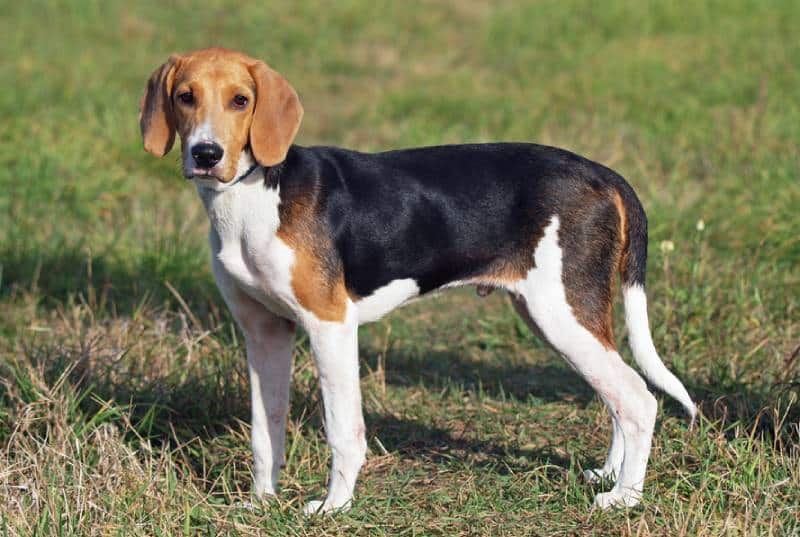
Standing 17-22 inches tall at the shoulder and weighing 33-44 pounds on average, the Estonian hound is a lithe and leggy dog of medium size. They have a noble and alert expression conveyed by their dark oval eyes and mobile, drooping ears that fold forward.
The short, dense coat is a defining feature of the breed, most commonly seen in the classic tricolor pattern of a black saddle over white with tan points. The fur is coarse in texture and very thick, providing ample protection from cold weather and underbrush when hunting. Lighter white markings often appear on the muzzle, chest, legs, and tail tip.
Estonian hounds have a slightly longer than tall body structure, with a deep chest and strong loin that hint at their endurance. The long tail is thick at the base and tapers to a point, carried upright with a slight curve when the dog is active. Oval feet with firm, tight toes and thick pads help them handle rough terrain with ease.
Temperament and Personality
Bred to work cooperatively in packs, Estonian hounds are very friendly and outgoing by nature. They are affectionate and gentle with their human family, including children, and typically get along well with other dogs. Estonian hounds crave companionship and are happiest when they can be active participants in household life rather than left alone for long periods.
This is an alert and inquisitive breed with a bright, engaged expression and lively demeanor. Estonian hounds are very playful and energetic, always up for an adventure or game. They retain a puppyish zest for life well into adulthood.
With their strong hunting background, Estonian hounds have a single-minded drive to follow scent trails. Their powerful nose leads the way, often to the exclusion of other cues, so a securely fenced area is a must to prevent wandering. Recall training is notoriously challenging for scent hounds, as they tend to "tune out" everything but the smell they are trailing. Estonian hounds also have a strong prey drive, so they are not reliable off leash and may view cats and other small furry pets as potential quarry.
These quick-witted dogs need ample mental stimulation in addition to physical exercise. They greatly enjoy scent work, tracking, and other nose-centric pursuits to keep their intelligent minds productively occupied. Puzzle toys and varied training activities are also helpful to prevent boredom, which can lead to undesirable behaviors like excessive baying, chewing, or digging.
While very trainable in the sense of being eager to learn and please their handler, Estonian hounds have a definite independent streak. They are more inclined to make their own decisions and test boundaries than blindly obey every command. Initially developed to hunt with minimal direction, these dogs have minds of their own. A firm and consistent but positive training approach brings out the best in their keen intelligence and desire to cooperate.
Exercise and Activity Level
As hunters bred for all-day endurance and tenacity on the trail, Estonian hounds are athletic, high-energy dogs with significant exercise needs. They require a minimum of 60-90 minutes of vigorous activity daily, and even more is better. In addition to long walks or jogs, Estonian hounds greatly benefit from active play sessions, training exercises, and mentally stimulating pursuits like nose work or field trials.
A large, securely fenced yard is ideal for allowing these active and curious dogs to stretch their legs and follow their nose in between structured activities. Access to a safe, enclosed area for off-leash exploration is valuable, as these independent hounds are not well-suited to life on a lead. Adequate exercise and enrichment outlets are crucial, as a bored or under-stimulated Estonian hound is likely to become destructive, hyperactive, or prone to excessive baying.
These rugged, agile dogs tend to have good stamina and can make excellent hiking or jogging partners for outdoorsy, active owners. They often enjoy swimming as well and can be trained for dock diving or other dog sports. Estonian hounds thrive with human companionship on their adventures and do best in a household where they receive plenty of attention and interaction throughout the day.
Training
Estonian hounds are bright, sensitive dogs who respond best to positive reinforcement training with enthusiasm, consistency, and clear communication. Like many hounds, they have a "what‘s in it for me" attitude and are more motivated by rewards than praise. Food and toy prizes are very effective training tools, as is the opportunity to engage in favorite pursuits like sniffing or chasing.
Short, game-like training sessions appeal to these dogs‘ playful nature and eagerness to engage with their handler. Repetitive drilling tends to evoke frustration or zoning out. Making the desired behaviors seem like great fun is the secret to success with Estonian hounds.
Patience and a sense of humor go a long way in working with these amiable but self-directed dogs. They can have occasional stubborn streaks and a short attention span, especially if bored or distracted by an interesting scent. But they are also clever problem solvers who enjoy a mental challenge and can excel in advanced obedience, scent work, trick training, and many dog sports when given motivating incentives.
Early and ongoing socialization is important for Estonian hounds to become confident, well-mannered companions. These curious, outgoing dogs tend to be very friendly, but proper exposure to various people, animals, places, and experiences is still necessary to help them develop into adaptable adult dogs. Puppy classes are an excellent way to jump-start training and social skills.
One of the greatest training challenges with Estonian hounds is their powerful impulse to follow a scent to the exclusion of all else. Teaching a solid recall and strong "leave it" is imperative for off-leash control, but even the best-trained hound is still likely to refuse to disengage from an enticing trail. Visual barriers and secure containment are essential management tools for these single-minded scenthounds.
Estonian hounds are also very vocal dogs who communicate with a melodic baying howl. While this can be an endearing trait in the field, it may be disruptive in urban or close-quarters living situations. Teaching a "quiet" command and providing ample exercise outlets can help minimize nuisance vocalization, but it is still wise to carefully consider the breed‘s potential noisiness, especially for apartment life or noise-sensitive neighbors.
Grooming and Care
The short, dense coat of the Estonian hound is very low-maintenance and requires minimal grooming. Weekly brushing with a hound mitt or rubber curry brush is usually sufficient to remove loose hair and dirt and redistribute natural skin oils. These dogs tend to shed moderately year-round, with a heavier seasonal shed once or twice a year.
Occasional baths are only necessary if the dog becomes visibly dirty or develops an odor, as the breed‘s harsh coat is quite resistant to collecting debris. When bathing, use a mild, moisturizing shampoo to avoid drying out the skin.
The long, drooping ears of Estonian hounds do trap moisture and should be checked and cleaned weekly to stave off infections. Gently wipe the outer ear flap and visible inner tissues with a cotton ball and canine ear cleanser, taking care not to insert anything into the ear canal itself.
Other routine grooming needs include regular nail trims every 2-4 weeks with a heavy-duty clipper or grinder designed for thick hound nails, and dental hygiene with daily tooth brushing or other oral care products as recommended by a veterinarian.
Health and Life Expectancy
The Estonian hound is generally a robust, long-lived breed with a life expectancy of 12-16 years on average. As a very rare breed, they have a limited gene pool but have thus far not shown excessive incidence of hereditary disorders. However, due to their scarcity, population-wide health data is minimal compared to more common breeds.
Like many medium-to-large deep-chested dogs, Estonian hounds can be prone to bloat, a potentially life-threatening condition in which the stomach fills with air and twists on itself. Feeding several smaller meals per day instead of one large serving and limiting exercise immediately after eating can help lower the risk. Close monitoring for pale gums, unproductive retching, restlessness, and a swollen belly is critical for prompt treatment.
Ear infections are the most common minor health concern in Estonian hounds due to their long, folded ears that tend to trap moisture and debris. Weekly cleaning and prompt veterinary care for any signs of redness, odor, excessive wax, or irritation are important to prevent chronic or serious infections.
Skin allergies are another potential issue and may manifest as itchiness, recurrent ear or skin infections, hair loss, or gastrointestinal distress. Identifying and eliminating the offending trigger, whether environmental or food-based, is the first step in managing allergies, followed by veterinary treatment for secondary infections and anti-itch medications if needed.
As with many athletic breeds, Estonian hounds can also be subject to orthopedic issues like hip dysplasia or cruciate ligament tears. Maintaining a lean body condition, providing joint support supplements, and using ramps or stairs to access vehicles or furniture may help reduce joint stress and inflammation. Any persistent limping or reluctance to move requires veterinary evaluation.
Obesity is a concern for food-motivated Estonian hounds and can exacerbate many other health conditions. Monitoring body condition and calorie intake, limiting treats, and ensuring adequate daily exercise are important to maintain a healthy weight. Annual or semi-annual veterinary wellness exams can also catch many potential problems early for the best prognosis.
Breed Popularity and Acquisition
The Estonian hound is still an exceptionally rare breed, even in its native Estonia where it is honored as the national dog. In 2020, Estonian hound registrations with the Estonian Kennel Club comprised only about 4% of the total, with just 59 individual dogs recorded.
In the United States, the breed is virtually unknown, with only a handful of Estonian hounds in the entire country and no AKC recognition to date beyond the FSS. The United Kennel Club has included the Estonian hound in its registry since 2006 but considers it a rare breed without current studbooks or a breed club.
Given their scarcity, Estonian hound puppies are difficult to find in North America and often must be imported from breeders in Estonia, which has only a small population of dogs. Most Estonian hounds in the US are found in the hands of hunters or breed fanciers seeking to promote these talented but uncommon scenthounds.
Prospective owners should be prepared to spend considerable time on a waiting list and pay premium prices for a puppy from health-tested imported lines, as well as potentially travel out of state or out of country to obtain one. Responsible breeders are few and far between, so patience and persistence are key to finding an Estonian hound to join your family.
Is the Estonian Hound Right For You?
For an active individual or family seeking a good-natured, trainable hound for hunting, hiking, nose work, or other dog sports, the Estonian hound can be a rare gem of a companion. Their friendly, playful, affectionate nature and zest for life are endearing qualities in an easygoing household pet.
However, the breed‘s high exercise needs, strong prey drive, and baying bark are important considerations that make them unsuitable for sedentary owners, apartment life, or homes with pocket pet mammals. Fenced yard space and a commitment to providing ample physical and mental stimulation are must-haves.
The Estonian hound‘s tenacious scent drive and independence can also make them a challenge for first-time or hands-off owners to keep safely contained. Underground electronic fencing is not recommended for this single-minded scenthound. Even the most reliable recall may fail in the face of an alluring trail to follow.
Fans of scent hounds will find much to admire in the Estonian hound‘s focused, friendly, yet free-thinking character and charming tri-color looks reminiscent of a harrier or beagle. For hunters, outdoorsy athletes, and experienced hound lovers, the Estonian hound can be a distinctive and delightful breed to welcome into an energetic household. Just be prepared to search far and wide for the chance to share your life with one of these rare canine comrades.