The Majestic Greek Sheepdog: A Comprehensive Breed Guide

If you‘re looking for a loyal, intelligent and hard-working companion, the Greek Sheepdog may be the breed for you. But with only around 3,000 of these majestic dogs left in the world, mostly concentrated in their native Greece, you‘ll be one of the lucky few to welcome a Greek Sheepdog into your life.
Also known as the Greek Shepherd or Greek Shepherd Dog, this ancient breed has a long and proud history of guarding and herding livestock in the rugged mountains of Greece. With their keen intelligence, unwavering courage, and deeply protective nature, Greek Sheepdogs have proven themselves invaluable partners to shepherds for thousands of years.
But the rise of modern farming practices has led to a sharp decline in the breed‘s numbers, putting the Greek Sheepdog at risk of disappearing altogether. Recent preservation efforts aim to save the breed and promote its many wonderful qualities. If you have the time, space and experience to properly care for a Greek Sheepdog, you may find yourself with the most devoted and hard-working companion you‘ve ever had.
History of the Greek Sheepdog
The story of the Greek Sheepdog is inextricably tied to the history of sheepherding in ancient Greece. For millennia, shepherds have relied on these robust, intelligent dogs to guard their flocks against predators and help herd sheep across the steep mountain slopes and valleys of the Greek countryside.
It‘s believed that the breed originated over 3,000 years ago and shares ancestry with other ancient livestock guardian dogs from the Balkan region, including the Yugolslavic Shepherd Dog and Bulgarian Shepherd Dog. In fact, some argue that these similar breeds are actually the same landrace of white shepherding dog that developed across the Balkans, only separated into distinct "breeds" in recent centuries by political borders.
Whichever the case, Greek Sheepdogs proved their worth as indispensable herding and guard dogs, not only protecting sheep from wolves and other dangers, but also serving as gentle play companions to the children in their shepherd‘s family. The dogs lived closely with their flock, working independently with minimal human guidance.
This traditional shepherding lifestyle remained largely unchanged for thousands of years. But in the mid-20th century, new farming practices began to replace the old ways of tending sheep. As grazing land shrank and demand for wool and lamb declined, many shepherds were forced to abandon their flocks and working dogs.
As a result, the population of purebred Greek Sheepdogs has dwindled to alarming lows – a 2003 breed survey found less than 3,000 registered dogs remaining worldwide. The vast majority live in Greece, with only a scattered few found in other countries. Breed enthusiasts are working hard to preserve the Greek Sheepdog and have initiated breeding programs to carefully build their numbers back up. But the breed‘s future remains precarious.
Physical Characteristics
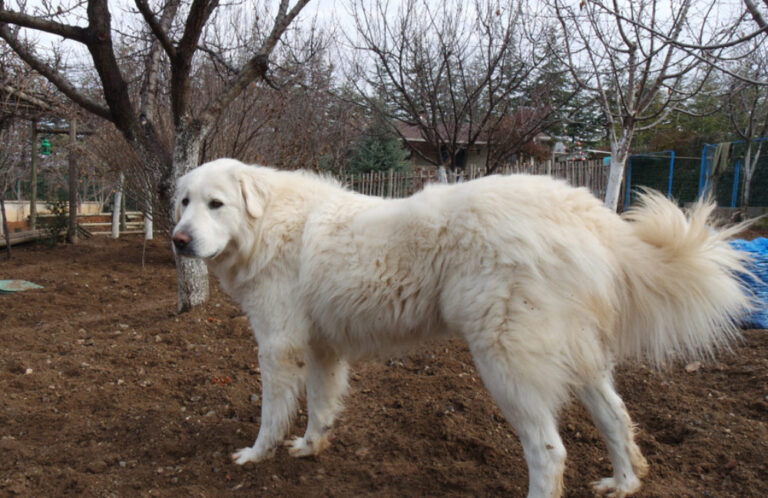
Greek Sheepdogs are large, muscular dogs with a commanding presence. Females stand 24-27 inches tall and weigh 65-90 pounds, while the larger males reach 28-32 inches and 100-130 pounds. They have strong, substantial bone structure and a deep chest, conveying the strength and stamina needed for long days herding in the mountains.
One of the breed‘s most striking features is its thick, dense coat, which is weather-resistant and designed to protect against the harsh elements. The outer coat is long, coarse and flat or slightly wavy. Males typically have a thicker ruff of hair around the neck and chest that gives them a lion-like appearance. Underneath is a soft, downy undercoat. Most Greek Sheepdogs are solid white, often with patches of tan, fawn, brown or black, but varied colors are accepted.
The head is large and wedge-shaped, with a slightly domed forehead and well-developed stop. Ears are medium-sized and hanging, usually covered in thick fur. Expressive almond-shaped eyes are typically brown, although blue eyes do occur. The long tail is carried low and curves slightly upward, often with a plume of feathering.
Temperament and Personality
Greek Sheepdogs are known for their calm, steady temperament and serious demeanor. As quintessential working dogs, they are happiest when given a job to do and thrive on having a sense of purpose. Greek Sheepdogs develop an intensely strong bond with their family and can be aloof or wary around strangers if not properly socialized.
The breed‘s deeply protective instincts mean they will fearlessly defend their "flock" – whether that‘s sheep or human family members. Greek Sheepdogs have an acute sense for distinguishing between normal situations and potential threats. When faced with danger, they spring into action with a mighty bark and bold stance. These guarding tendencies can become problematic without proper training and socialization from an early age.
Greek Sheepdogs are highly intelligent and perceptive. They were bred to work independently, without much direction from humans, so they can have a stubborn or willful streak. Training requires patience, consistency and positive reinforcement. Fortunately, Greek Sheepdogs are eager learners and aim to please their owners.
As sensitive dogs attuned to their environment, Greek Sheepdogs need gentle handling, never harsh corrections. They are affectionate and devoted to their family, enjoying attention but not demanding it. Although good with children they know, Greek Sheepdogs may be overly protective of kids when strangers are present.
Exercise and Living Requirements
As a breed developed to roam the mountainsides all day, Greek Sheepdogs have high exercise needs that are not suited for apartment or city living. They require at least an hour of vigorous exercise daily, along with plenty of mental stimulation. Greek Sheepdogs thrive with space to run and burn off energy, so a securely fenced yard is ideal.
True to their heritage as outdoor working dogs, Greek Sheepdogs do well living outside in most climates. However, they should have access to shelter from the elements and, most importantly, quality time with their humans. Isolation can lead to boredom, anxiety and problem behaviors.
The breed‘s thick coat allows them to tolerate cold weather quite well, and they actually tend to prefer cooler temperatures. Greek Sheepdogs are prone to overheating in hot weather and should be closely monitored for heatstroke. Regular brushing is important to prevent painful matting, especially when shedding the undercoat.
With their imposing size and substantial exercise needs, Greek Sheepdogs are not low-maintenance dogs. But for experienced owners willing to put in the necessary time and effort, the rewards are immeasurable. A well-cared-for Greek Sheepdog is a fiercely loyal companion and tireless worker with unmatched guarding ability.
Health Issues
Greek Sheepdogs are generally healthy dogs with few breed-specific concerns. As a rare breed, genetic issues are less likely thanks to greater biodiversity than highly popularized breeds. However, like many large breeds, hip dysplasia can occur. Responsible breeders screen for this condition.
Bloat is another potential issue owners should be aware of. Also called gastric dilatation volvulus, bloat is a life-threatening condition in which the stomach fills with gas and twists on itself, cutting off blood supply. Symptoms come on suddenly and can quickly lead to death if untreated. To prevent bloat, avoid feeding one large meal per day and restrict exercise immediately after meals.
The Greek Sheepdog‘s large, hanging ears are prone to infection if not kept clean and dry. Check ears weekly for redness, discharge or odor, and gently clean with a vet-approved solution. Trim hair around the ears for better air circulation.
Other health considerations include eye disorders like progressive retinal atrophy, skin problems such as allergies or hot spots, and joint issues including elbow dysplasia and arthritis. Choose a reputable breeder who performs health screenings, and schedule regular vet check-ups to catch any potential problems early.
Finding a Greek Sheepdog
As one of the rarest breeds in the world, finding a purebred Greek Sheepdog outside of Greece is extremely challenging. The few breeders who have them often keep puppies within Greece to help preserve and promote the breed in its homeland.
If you live outside Greece and have your heart set on a Greek Sheepdog, be prepared to spend considerable time and money on your search. You‘ll likely need to import a puppy from a Greek breeder, which involves added costs and paperwork. It‘s crucial to work with a reputable, ethical breeder committed to breeding healthy dogs true to the breed standard. Avoid breeders offering to ship a puppy without first meeting you.
In Greece, several breeders and breed organizations are working to boost Greek Sheepdog numbers through careful breeding programs. The Greek Kennel Club and Greek Sheepdog Breeders Association are good resources to connect with knowledgeable and responsible preservation breeders.
Prices for purebred Greek Sheepdog puppies vary widely depending on breeder reputation, pedigree and your location, but in general, expect to pay over $1,000. Factor in additional costs for shipping, vet care, supplies, training and food.
You may be tempted to pass on a purebred puppy in favor of a Greek Sheepdog rescue or shelter dog, which is generally a good idea. However, these dogs are so rare that they almost never end up in rescue. You may have better luck looking for similar breeds more common outside Greece, such as the Maremma Sheepdog or Kuvasz.
Is the Greek Sheepdog Right For You?
For experienced dog owners with plenty of space, time and energy to commit to an active working companion, the Greek Sheepdog may be an unmatched breed. Their loyalty, courage and partnership with humans is the stuff of legend.
But Greek Sheepdogs are not for everyone. As independent thinkers and instinctual guardians, they need committed training and socialization from an early age. They are not content to be couch potatoes and can become frustrated and destructive without a job to do. Greek Sheepdogs also tend to be vocal, thanks to their history as alert barking guard dogs.
Novice owners may find the breed overwhelming and do better with a less challenging breed. Greek Sheepdogs are sensitive and respond poorly to harsh training methods – they need a confident, consistent and positive approach. The breed‘s rarity means finding a knowledgeable trainer is also difficult.
If you already have other dogs, especially small dogs or cats, a Greek Sheepdog may not be the best choice. Their strong prey drive is difficult to train away. The same goes for families with very young children who may be knocked over by a Greek Sheepdog‘s size and enthusiasm.
On the other hand, if you are fully committed to providing the training, exercise and care this breed needs, you‘ll be rewarded with one of the most dedicated and hard-working companions imaginable. Greek Sheepdogs thrive with plenty of space to roam and a job to do, whether that‘s hiking, herding or participating in a dog sport like carting. They are also superb therapy dogs thanks to their calm, stable nature.
No matter how you spend your days, a Greek Sheepdog will be by your side – or more likely, a few paces ahead, scouting for potential threats and herding you along to safety. It‘s this unwavering dedication that has earned the Greek Sheepdog a legendary reputation as one of the world‘s finest sheepdogs and most loyal companions. With effort to promote and preserve the breed for future generations, that legacy is sure to endure.