The Mighty yet Gentle English Mastiff: A Guide for Dog Lovers
Introduction
As a lifelong dog lover and veterinarian, I‘ve had the privilege of getting to know many different breeds. But few have captured my heart quite like the English Mastiff. These giant, magnificent dogs are truly special – not just for their impressive size, but for their equally huge hearts.
In this ultimate guide, we‘ll explore the most fascinating aspects of the Mastiff, from their ancient origins to their unique personality quirks. Whether you‘re considering adding a Mastiff to your family or simply curious to learn more, this article will give you a deep appreciation for these gentle giants. Let‘s dive in!
A Breed of Historic Proportions
The Mastiff‘s story begins thousands of years ago in Asia, where giant dogs likely served as war dogs and big game hunters. "There is a mural in the cave of Cuevas del Castillo near Madrid that dates back 12,000 years ago that depicts men and a huge Mastiff-type dog hunting together," states The Mastiff Club of America.1
Historians believe Phoenician traders brought early Mastiff ancestors to Britain around the 6th century BC. Here, the Romans encountered the dogs and enlisted them to fight in the arenas – the first evidence of their military prowess.2
For centuries, English Mastiffs served as war dogs, guardians, and estate sentries. During the World Wars, the breed nearly faced extinction due to food rationing and orders to euthanize large dogs. It was American breeders who reintroduced them to England to help preserve these historic hounds.
Massive in Size and Stature
There‘s no denying the English Mastiff is a big dog – in fact, it‘s one of the largest breeds in terms of mass. Males stand at least 30 inches at the shoulder and weigh anywhere from 160 to 230 pounds. Females are only slightly more petite at 27.5 inches tall and 120-170 pounds.3
But many Mastiffs exceed these averages. The current record holder for world‘s heaviest dog was an English Mastiff named Aicama Zorba who weighed a whopping 343 pounds Another Mastiff, Zorba, set the record for longest dog at over 8 feet from nose to tail.
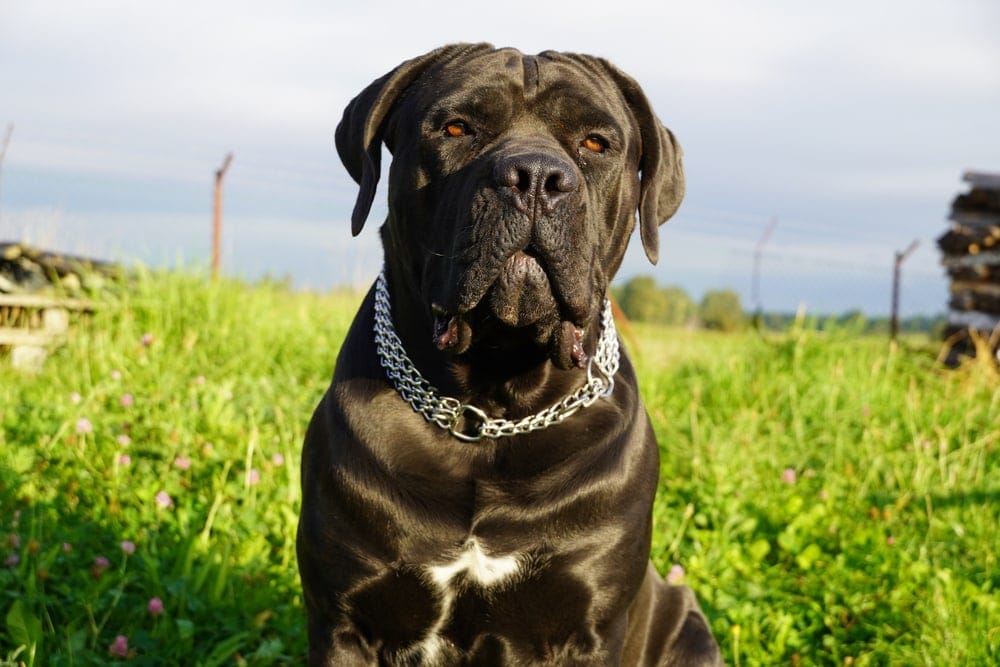
Mastiffs have an imposing presence, with a large head, wide chest, and sturdy, powerful legs. "The impression is one of grandeur and dignity," describes the official breed standard.3 Their short coat comes in fawn, apricot, or brindle. A distinguishing feature is the black mask around the eyes and muzzle.
Despite their size, Mastiffs mature slowly in both body and mind. They don‘t reach their full adult size until 3-4 years old. Puppies grow rapidly, gaining 2-3 pounds per week on average. This chart shows typical Mastiff growth patterns:5
| Age | Male Average Weight | Female Average Weight |
|---|---|---|
| Birth | 1-2 lbs | 1-2 lbs |
| 1 month | 13-20 lbs | 11-17 lbs |
| 2 months | 25-45 lbs | 20-40 lbs |
| 3 months | 45-65 lbs | 35-55 lbs |
| 6 months | 110-140 lbs | 80-120 lbs |
| 9 months | 140-175 lbs | 100-140 lbs |
| 1 year | 175-190 lbs | 120-160 lbs |
| 2 years | 180-220 lbs | 130-170 lbs |
Gentle Giants with Hearts of Gold
The English Mastiff may look intimidating, but beneath that massive exterior lies a heart of gold. Mastiffs are famous for being gentle, affectionate, and utterly devoted to their families. They are patient and protective with children, earning them the nickname "nanny dog."
As natural guardians, Mastiffs have an instinct to defend their loved ones. Their mere size and deep bark is usually enough to deter intruders. When raised with proper training and socialization, they are not prone to aggression without real provocation.
Mastiffs are confident and chill, content to lounge around for much of the day. They love being with their people and may follow you from room to room. Many seem to forget they are no longer lap dog sized! Expect snoring, drool, and leaning.
Owners describe Mastiffs as peaceful and dignified, with a special sensitivity. They pick up on emotions and seem to know when you need their calming presence. But they have a silly side too, doing endearing things like sitting on your feet or rolling over for belly rubs.
While generally laidback, Mastiffs also have a stubborn streak and are very food motivated. Positive training goes a long way to teach them manners. These dogs thrive when treated as true family members – isolation or neglect can lead to destructive behaviors.
Caring for Your Gentle Giant
Bringing home a Mastiff means being prepared for their unique needs:
Space: Mastiffs do best in larger homes with a securely fenced yard. They need room to spread out (preferably on your bed or couch). Access to a grassy area is key for potty breaks.
Exercise: A couple half-hour walks plus playtime each day suits the average Mastiff. Avoid excess running or jumping to protect their growing joints. Mental stimulation through training also helps tire them out.
Diet: Quality nutrition is a must for Mastiffs, especially while growing. Look for life-stage appropriate foods formulated for giant breeds with proper calcium content. Know that you‘ll likely go through 50+lb bags very quickly!
Grooming: Mastiffs shed moderately year-round and heavily in spring and fall. Brush them a few times a week with a rubber curry brush or hound glove. Don‘t forget to clean and dry between their skin folds and wrinkles.
Healthcare: Due to their size, Mastiffs are prone to orthopedic problems like hip and elbow dysplasia. Annual vet check-ups and joint supplements may help mitigate this. Bloat is a life-threatening risk – avoid exercise around mealtimes.
Other health concerns include eye problems (cherry eye, ectropion), hypothyroidism, and certain cancers. Choosing a responsible breeder who health tests breeding stock reduces risks. Keeping Mastiffs fit also relieves strain on their bodies.
Training and Socialization
Starting early is the key to a well-mannered Mastiff. These sensitive dogs respond best to positive reinforcement – think praise, treats, and play as rewards. Avoid scolding as it can make them shut down.
Socialization is crucial during the first 3-4 months. Let your Mastiff experience the world in a positive way: meeting new people, animals, sights, sounds, and surfaces. Proper exposure makes for a confident, stable dog.
Obedience training helps Mastiffs learn good manners and strengthens your bond. Teach them to walk nicely on leash, sit, stay, and come when called. Work on these cues in increasingly distracting locations.
Many Mastiffs excel in dog sports like conformation, obedience, cart pulling, and agility (with modifications for their joints). Another fantastic role is therapy work. Their gentle, intuitive nature shines when comforting people in hospitals, schools, and nursing homes.
Finding Your Perfect Mastiff
When seeking a Mastiff puppy, look for a reputable, ethical breeder. Avoid pet stores, puppy mills, or online sellers who cannot prove health clearances or let you visit their facility.
"A responsible breeder will be very inquisitive about you and your lifestyle. They should provide health certifications, pedigrees, and a written contract. Expect to wait for the right puppy," advises the Mastiff Club of America.6
Alternatively, consider adopting an adult Mastiff. Many end up in rescues due to owners underestimating their size and needs. Rescued Mastiffs can make wonderful companions if given proper care and training.
Fascinating Mastiff Facts
The English Mastiff has no shortage of surprising trivia and tales:
-
A Mastiff named Kora served in Iraq as a military working dog, earning the honorary rank of sergeant. She was even featured on trading cards
-
Two Mastiffs named Buster and Ginger held the record for "World‘s Oldest Canine Wedding Party" in 2018. The ceremony raised over £2000 for charity.8
-
The Mastiff has appeared in art throughout history, from 13th century frescoes to 19th century paintings by artists like Sir Edwin Henry Landseer.
-
Celebrity Mastiff owners include Marlon Brando, Christina Aguilera, Bob Dylan, Ving Rhames, Lauren Bacall, and Jon Bon Jovi.
-
Mastiffs starred in many films, such as "The Sandlot," "Hotel for Dogs," "Rocky," "Marmaduke," and the animated "Up!"
Final Thoughts
It‘s hard not to fall completely in love with the English Mastiff. Their ancient legacy, awe-inspiring size, and boundless affection make them truly remarkable dogs. I have seen firsthand the joy and fulfilment Mastiffs bring to families who can meet their needs.
Of course, caring for a giant breed is no small feat. Mastiffs require abundant space, food, training, and healthcare throughout their lives. But for dog lovers up to the challenge, you will never find a more loyal, loving companion at your side (or on your sofa).
My hope is that this guide provided a comprehensive look at this majestic breed and the dedication involved in responsible Mastiff ownership. With a better understanding, more people can appreciate the wonder of the English Mastiff – in all their giant, drooly, yet utterly endearing glory!