The Olde English Bulldogge: Recreating a Healthier Bulldog Breed
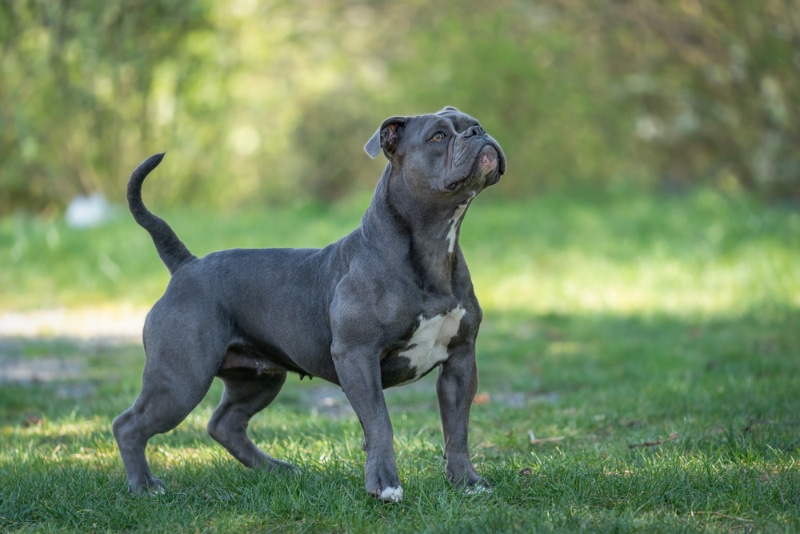
Have you heard of the Olde English Bulldogge? Despite its growing popularity, this brawny but friendly breed is often overlooked in favor of its more well-known cousin, the English Bulldog. But for those in the know, the Olde English Bulldogge offers the best of both worlds – the gentle disposition of the Bulldog with the athleticism of breeds like the American Bulldog and Pit Bull Terrier.
As a lifelong dog lover and veterinarian, I‘m fascinated by the history of how breeds develop and change over time in response to different needs and preferences. The Olde English Bulldogge is a prime example of how dedicated breeders can "turn back the clock" on some of the negative changes caused by generations of selective breeding, leading to a healthier, more functional dog.
The Cruel History of Bull Baiting
To understand the Olde English Bulldogge, we first have to look at the grim origins of its ancestor, the Old English Bulldog. This breed rose to prominence in the 1500s as a dog used for bull baiting, a blood sport where a pack of dogs were set upon a tethered bull and encouraged to pin the animal down by its nose.
Unfortunately, bull baiting was a popular form of "entertainment" in England for centuries. People would gather in arenas called "bear gardens" to watch bulldogs tussle with bulls, bears, and other large animals like horses and boars. Spectators placed bets on which dog would grab the bull, how long they could hang on, or which dog would survive the longest.
For bulldogs to be successful at this gory task, they needed to be ferocious, powerful, and relentless. They also needed wide mouths and recessed noses to allow them to breathe while maintaining their grip on a bull. Sadly, physical features we find adorable in today‘s bulldogs – like their wrinkled faces and stocky, muscular build – were originally shaped by the practical needs of bull baiting.
It wasn‘t until 1835 that bull baiting was finally outlawed in England under the Cruelty to Animals Act 1835. This law prohibited the use of dogs for baiting any larger animals. Around this same time, new laws cracked down on dog fighting as well.
The Plight of the Bulldog
Once bull baiting and dog fighting were banned, there was little need for the ferocious Old English Bulldog. The breed‘s numbers rapidly declined as a result. Some admirers of the Old English Bulldog did keep small populations going and sought to transform the breed into a companion dog.
To "soften" the Old English Bulldog‘s temperament and appearance, breeders crossed them with smaller, companion breeds like Pugs. The resulting dogs gradually became shorter, heavier, and more exaggerated in features like their flatter faces, thicker necks, and widers chests. By the 1860s, the modern English Bulldog had largely replaced the Old English Bulldog.
While adorable, English Bulldogs unfortunately suffer from a slew of health issues directly related to their body structure. According to a study from the Journal of Veterinary Internal Medicine, brachycephalic breeds like bulldogs are 11 times more likely to develop upper airway disorders compared to non-brachycephalic breeds.
Other common health problems in English Bulldogs include:
- Hip dysplasia: 72% affected (Orthopedic Foundation for Animals)
- Elbow dysplasia: 36% affected (OFA)
- Degenerative myelopathy: 4% affected (OFA)
- Cherry eye
- Skin fold dermatitis
- Heat intolerance
- Dental crowding and malocclusion
Sadly, many English Bulldogs cannot mate or give birth naturally due to their anatomy. Artificial insemination and C-sections have become the norm for the breed. Even with the high level of veterinary intervention English Bulldogs require, their average lifespan is only around 8-10 years.
Turning Back Time
Seeing the suffering caused by breeding English Bulldogs to such extremes, some breeders became determined to bring back the healthier build of the original Old English Bulldog. The most successful of these efforts was undertaken by David Leavitt, who began his "Olde English Bulldogge" breeding program in 1971.
Leavitt‘s goal was to create a dog with the stable temperament and classic bulldog look, but with the longer lifespan and athleticism of breeds like the American Bulldog which more closely resembled the Old English Bulldogs of the past. He carefully selected English Bulldogs that had less exaggerated features and crossed them with American Bulldogs, Bullmastiffs, and Pit Bull Terriers.
The resulting Olde English Bulldogge, recognized by the United Kennel Club since 2001, has a taller, leaner body compared to the English Bulldog. While still a brachycephalic breed, Olde English Bulldogges have a less flattened face with a muzzle about the length of 1/3 to 1/2 the skull. They also lack the excessive skin folds of the English Bulldog. This means Olde English Bulldogges are much less likely to suffer from breathing problems, overheating, and skin infections.
Olde English Bulldogges have an average height of 16-20 inches at the shoulder and weigh 50-80 pounds. They have an expected lifespan of 10-14 years, a significant improvement over English Bulldogs. While still prone to some bulldog health issues like hip dysplasia and cherry eye, Olde English Bulldogges are overall a sturdier, healthier breed.
The Gentle Guardian

So what‘s it like to own an Olde English Bulldogge? These confident, muscular dogs are more energetic and athletic than English Bulldogs. They need moderate exercise in the form of daily walks, playtime, and training sessions. While fairly adaptable, Olde English Bulldogges do best in homes where they get plenty of attention and aren‘t left alone for long periods.
True to their bulldog roots, Olde English Bulldogges tend to be affectionate, gentle companions. They often do well with children and other dogs when properly socialized. Angie Smith, an Olde English Bulldogge breeder in Ohio, describes the breed as "a loyal, courageous dog who is also a real people-lover. They want nothing more than to spend time with their humans."
However, it‘s important for Olde English Bulldogge owners to understand that these are still powerful, confident watchdogs. Brad Anderson, a veterinarian in Alabama, cautions that, "An under-socialized Olde English can be aloof with strangers and may show aggression to other dogs, especially those of the same sex. Exposing them to lots of friendly people and dogs from an early age is a must."
As with any breed, the Olde English Bulldogge‘s temperament and trainability is heavily influenced by socialization, training, and breeding. Getting your Olde English Bulldogge from a responsible preservation breeder who prioritizes health and temperament testing is key to having a well-adjusted companion.
How Do They Compare?
The differences between Olde English Bulldogges (OEB) and English Bulldogs are significant when it comes to health and build. Here‘s a quick comparison:
| Trait | Olde English Bulldogge | English Bulldog |
|---|---|---|
| Height | 16-20 in | 14-15 in |
| Weight | 50-80 lbs | 40-50 lbs |
| Lifespan | 10-14 years | 8-10 years |
| Muzzle | Medium, 1/3-1/2 of skull | Very short |
| Nose | Slightly pushed back | Extremely pushed back |
| Eyes | Almond shaped, no drooping | Round, some drooping |
| Skin | Tight with minimal wrinkles | Very loose with heavy wrinkles |
| Neck | Medium, muscular | Very short and thick |
| Chest | Broad, deep | Very wide and deep |
| Legs | Straight, substantial | Short, bowed |
| Feet | Compact, may turn slightly out | Splayed |
| Gait | Free, powerful stride | Rolling, unsteady gait |
In temperament, the OEB tends to be more energetic, athletic, and protective compared to the calmer, less active English Bulldog. Both breeds share the affectionate, people-oriented, sometimes stubborn personality of the bulldog type.
Health Considerations
While Olde English Bulldogges are healthier on average than English Bulldogs, there are still some conditions owners should be aware of. These include:
- Hip and elbow dysplasia
- Hypertrophic cardiomyopathy
- Entropion or cherry eye
- Hypothyroidism
- Allergies
- Demodectic mange
Choosing an Olde English Bulldogge breeder who performs health screenings on their dogs is crucial. Basic screenings should include hip and elbow x-rays and an eye exam. Some breeders also test for heart and thyroid problems. Avoid any breeder who breeds OEBs significantly over or under the breed standard, as this can lead to health issues.
Keeping your Olde English Bulldogge at a healthy weight with proper nutrition, moderate exercise, and preventive vet care can help reduce their risk for problems like joint disease and heart issues. Regular brushing, nail trims, and wrinkle cleaning (for dogs that have them) are also important for Olde English Bulldogge care.
Fun Facts
- The famous Olde English Bulldogge Winston won Best of Breed at the Westminster Kennel Club show in 2009 and 2015.
- Celebrity Olde English Bulldogge owners include Jon Stewart and Vin Diesel.
- In 2018, an Olde English Bulldogge named Cadence heroically saved his owner from a house fire, barking to alert the family and even trying to pull his owner to safety.
- Olde English Bulldogges sometimes compete in dog sports like weight pull, barn hunt, and nosework that highlight their strength and working ability.

Is the Olde English Bulldogge Right For You?
As with any breed, the Olde English Bulldogge has its pros and cons. Fans of the breed love their confident but loving nature, convenient grooming needs, and unique look. They often make good companions for active singles or families who can give them the attention and care they need.
On the other hand, the Olde English Bulldogge may not be the best fit for novice owners or those who can‘t commit to their training and exercise needs. As a fairly rare breed, finding a responsible breeder can also be a challenge. Potential owners must be prepared for some of the health issues Olde English Bulldogges share with other bulldog breeds.
If you‘re considering adding an Olde English Bulldogge to your family, do your research first. Talk to reputable breeders and meet a few adult dogs to see if the breed is compatible with your lifestyle. With proper care and training, the Olde English Bulldogge can be a devoted companion for many happy, healthy years.