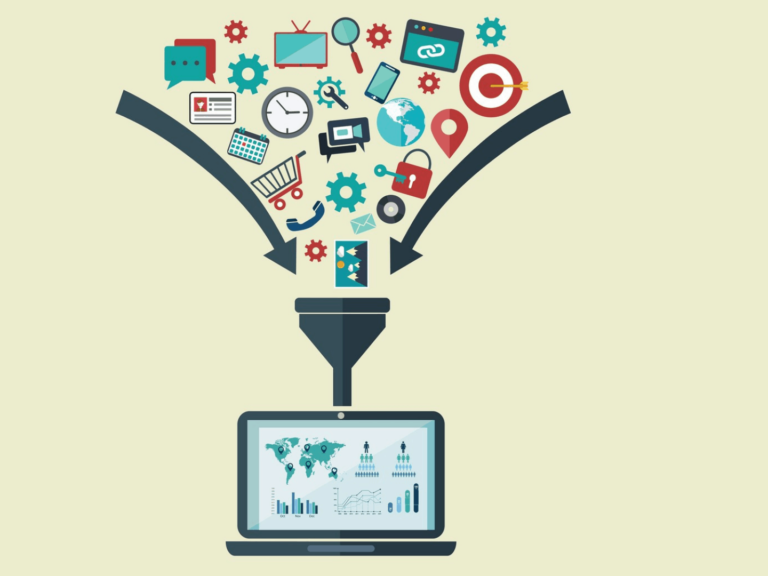
Unlocking the True Potential of Your Data with ETL and ELT Pipelines: An AI and ML Expert‘s Perspective
Introduction
In the era of big data and artificial intelligence, organizations are collecting and storing massive amounts of data from various sources. However, the true value of this data can only be realized through effective integration and transformation processes. ETL (Extract, Transform, Load) and ELT (Extract, Load, Transform) pipelines have emerged as crucial tools for unlocking the potential of data, enabling organizations to gain valuable insights and drive data-driven decision-making.
According to a recent report by MarketsandMarkets, the global data integration market size is expected to grow from USD 11.6 billion in 2020 to USD 19.6 billion by 2025, at a Compound Annual Growth Rate (CAGR) of 11.0% during the forecast period [^1]. This growth is fueled by the increasing demand for data-driven insights and the need for efficient data integration solutions.
In this article, we will explore the world of ETL and ELT pipelines from an AI and ML expert‘s perspective, delving into their differences, advantages, and best practices for implementation. We will also discuss how AI and ML can enhance these processes and explore real-life examples of successful ETL and ELT implementations. By the end of this article, you will have a comprehensive understanding of how to unlock the true potential of your data using ETL and ELT pipelines.
ETL vs. ELT: An In-Depth Comparison
ETL and ELT are two common approaches to data integration, each with its own strengths and use cases. Let‘s take a closer look at the pros and cons of each approach.
ETL (Extract, Transform, Load)
Pros:
- Data quality: ETL allows for data cleansing, validation, and transformation before loading it into the target system, ensuring higher data quality and consistency.
- Flexibility: ETL tools offer a wide range of transformation capabilities, enabling complex data manipulations and aggregations.
- Scalability: ETL pipelines can handle large volumes of data and can be scaled independently of the target system.
Cons:
- Latency: ETL processes can be time-consuming, especially when dealing with large datasets, resulting in delayed data availability.
- Complexity: ETL pipelines can be complex to design and maintain, requiring specialized skills and expertise.
- Resource-intensive: ETL processes often require significant computational resources, especially during the transformation stage.
ELT (Extract, Load, Transform)
Pros:
- Real-time data processing: ELT enables faster data loading and real-time data availability, as transformations occur within the target system.
- Simplified architecture: ELT eliminates the need for a separate transformation layer, simplifying the overall data integration architecture.
- Leveraging target system capabilities: ELT allows you to utilize the processing power and parallel processing capabilities of the target system for transformations.
Cons:
- Data governance: ELT may provide less control over data quality and lineage compared to ETL, as transformations occur within the target system.
- Limited transformation capabilities: ELT relies on the target system‘s native capabilities for transformations, which may be limited compared to dedicated ETL tools.
- Increased load on the target system: ELT places the transformation workload on the target system, which can impact its performance if not properly managed.
Choosing the Right Approach
When deciding between ETL and ELT, consider the following factors:
- Data volume and velocity: If you are dealing with large volumes of data or require real-time data processing, ELT may be the better choice.
- Transformation complexity: If your data transformations are complex and require advanced manipulation capabilities, ETL tools may be more suitable.
- Target system capabilities: Evaluate the processing power and parallel processing capabilities of your target system to determine if it can handle the transformation workload in an ELT approach.
- Data governance and quality requirements: Consider the level of control and data quality assurance needed. ETL provides more control over data quality, while ELT relies on the target system‘s capabilities.
The Role of AI and ML in Enhancing ETL and ELT Processes
Artificial Intelligence (AI) and Machine Learning (ML) have the potential to revolutionize ETL and ELT processes, enabling organizations to unlock even greater value from their data. Let‘s explore how AI and ML can enhance these data integration pipelines.
Automated Data Discovery and Profiling
One of the key challenges in data integration is understanding the structure, quality, and relationships of data across multiple sources. AI and ML techniques can automate the process of data discovery and profiling, saving significant time and effort.
For example, ML algorithms can analyze data patterns and statistics to infer data types, identify key relationships, and detect anomalies or inconsistencies. This automated profiling helps data engineers and analysts gain a better understanding of the data landscape and make informed decisions during the ETL or ELT process.
Intelligent Data Transformation and Cleansing
AI and ML can also play a crucial role in automating and optimizing data transformation and cleansing tasks. Traditional ETL processes often involve manual mapping and transformation logic, which can be time-consuming and error-prone.
By leveraging ML algorithms, ETL and ELT pipelines can learn from historical data patterns and suggest intelligent transformations. For example, ML models can be trained to identify and correct data quality issues, such as missing values, outliers, or inconsistent formats, reducing the need for manual intervention.
Furthermore, natural language processing (NLP) techniques can be applied to extract insights from unstructured data sources, such as text documents or social media feeds, enabling their integration into the ETL or ELT pipeline.
Predictive Analytics and Anomaly Detection
Integrating AI and ML into ETL and ELT pipelines opens up new possibilities for advanced analytics, such as predictive modeling and anomaly detection.
By incorporating ML models into the data integration process, organizations can enable real-time predictions and insights. For instance, an e-commerce company can use ML models to predict customer churn or recommend personalized products based on real-time data from various sources.
Anomaly detection is another area where AI and ML can add significant value. By analyzing data patterns and identifying deviations from normal behavior, ML algorithms can help detect data quality issues, security breaches, or fraudulent activities in real-time, enabling proactive remediation.
Challenges and Best Practices
While AI and ML offer immense potential for enhancing ETL and ELT processes, there are also challenges and best practices to consider:
-
Data quality and governance: Ensuring data quality and governance is crucial when integrating AI and ML models into data pipelines. Regularly validate and monitor the performance of ML models to avoid biased or inaccurate predictions.
-
Scalability and performance: AI and ML workloads can be computationally intensive, requiring careful consideration of scalability and performance. Leverage distributed computing frameworks and cloud-based services to handle large-scale data processing efficiently.
-
Model interpretability and explainability: Ensure that the AI and ML models integrated into ETL and ELT pipelines are interpretable and explainable. This helps build trust in the insights generated and enables effective decision-making.
-
Continuous monitoring and retraining: Regularly monitor the performance of AI and ML models and retrain them as necessary to adapt to changing data patterns and business requirements. Implement automated monitoring and alerting mechanisms to detect model drift or degradation.
Real-Life Examples of Successful ETL and ELT Implementations
Let‘s take a look at some real-life examples of companies that have successfully implemented ETL or ELT pipelines to unlock the potential of their data.
Netflix and ELT
Netflix, the global streaming giant, handles massive amounts of data generated by millions of users worldwide. To process and analyze this data in real-time, Netflix adopted an ELT approach. They extract raw data from various sources, load it into a cloud-based data lake, and then use powerful data processing tools like Apache Spark to perform transformations and generate insights.
By leveraging ELT and AI/ML techniques, Netflix is able to:
- Personalize user experiences by recommending content based on viewing history and preferences.
- Optimize content delivery by predicting popular titles and pre-positioning them in local caches.
- Analyze user behavior and engagement metrics to inform content acquisition and production decisions.
As a result, Netflix has been able to maintain its position as a leader in the streaming industry, with over 200 million subscribers worldwide [^2].
Airbnb and ETL
Airbnb, the popular online marketplace for lodging and experiences, relies heavily on data to drive its business decisions. They implemented an ETL pipeline to extract data from multiple sources, including user interactions, bookings, and listings. The data goes through a series of transformations, including data cleansing, enrichment, and aggregation, before being loaded into a centralized data warehouse.
By leveraging ETL and AI/ML techniques, Airbnb is able to:
- Detect and prevent fraudulent activities, such as fake listings or suspicious bookings, using ML-based anomaly detection.
- Optimize pricing and demand forecasting by analyzing historical data and market trends.
- Personalize user experiences by recommending listings and experiences based on user preferences and behavior.
Airbnb‘s data-driven approach has been instrumental in its growth, with the company serving over 4 million hosts and 800 million guest arrivals to date [^3].
The Future of Data Integration: Emerging Trends and Technologies
The field of data integration is constantly evolving, driven by advancements in technology and changing business needs. Let‘s explore some emerging trends and technologies that are shaping the future of ETL and ELT pipelines.
Blockchain and Decentralized Data Integration
Blockchain technology has the potential to revolutionize data integration by enabling secure, decentralized, and tamper-proof data sharing across organizations. By leveraging blockchain-based smart contracts, organizations can establish trust and transparency in data transactions, eliminating the need for intermediaries.
Decentralized data integration platforms, such as Ocean Protocol [^4], are emerging to enable data sharing and monetization while preserving data privacy and ownership. These platforms allow organizations to securely share and access data assets, creating new opportunities for collaborative analytics and insights.
Edge Computing and Real-Time Data Integration
With the proliferation of Internet of Things (IoT) devices and the need for real-time data processing, edge computing is becoming increasingly important in data integration. Edge computing brings data processing closer to the source, reducing latency and enabling faster decision-making.
ETL and ELT pipelines are evolving to incorporate edge computing capabilities, allowing for real-time data integration and analysis at the edge. This is particularly relevant in industries such as manufacturing, healthcare, and transportation, where real-time insights are critical for optimizing operations and making timely decisions.
Serverless and Cloud-Native Data Integration
Serverless computing and cloud-native architectures are transforming the way ETL and ELT pipelines are designed and deployed. Serverless platforms, such as AWS Lambda and Google Cloud Functions, allow organizations to run data integration tasks without managing the underlying infrastructure.
Cloud-native data integration solutions, such as Apache Beam and Apache Spark, provide scalable and fault-tolerant data processing capabilities in the cloud. These technologies enable organizations to build and deploy ETL and ELT pipelines that can seamlessly scale up or down based on data volume and processing requirements.
Conclusion
ETL and ELT pipelines are essential tools for unlocking the true potential of data in today‘s AI and ML-driven world. By understanding the differences between these approaches and leveraging the power of AI and ML, organizations can effectively integrate and transform their data to drive valuable insights and informed decision-making.
As we move forward, emerging trends and technologies, such as blockchain, edge computing, and serverless architectures, will continue to shape the future of data integration. Organizations that stay ahead of the curve and adopt these technologies will be well-positioned to harness the full potential of their data assets.
However, it is crucial to prioritize data governance, security, and privacy throughout the data integration process. Implementing best practices, such as data quality checks, access controls, and continuous monitoring, will ensure the integrity and confidentiality of data while enabling data-driven innovation.
By embracing ETL and ELT pipelines, along with AI and ML techniques, organizations can unlock the true potential of their data, driving business growth, operational efficiency, and competitive advantage in the era of big data and artificial intelligence.
[^1]: MarketsandMarkets. (2020). Data Integration Market by Component, Deployment Model, Organization Size, Vertical, and Region – Global Forecast to 2025. https://www.marketsandmarkets.com/Market-Reports/data-integration-market-149743079.html[^2]: Netflix. (2021). About Netflix. https://about.netflix.com/en
[^3]: Airbnb. (2021). About Us. https://news.airbnb.com/about-us/
[^4]: Ocean Protocol. (2021). The Decentralized Data Economy. https://oceanprotocol.com/