Will a Pomeranian Be a Perfect Fit for Your Feline-Friendly Family? An In-Depth Guide
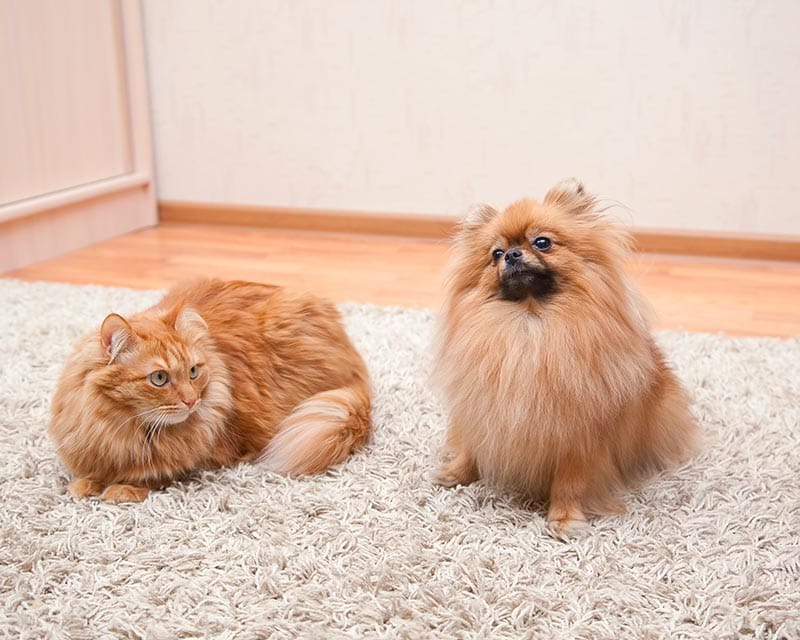
As a veterinarian and lifelong dog devotee, I‘m often asked whether certain breeds are a good match for households with cats. One of the most common queries is about the spunky and adorable Pomeranian. Many prospective Pom parents who already have a feline family member wonder if this lively little dog will mesh or clash with their kitty.
The short answer is that with the right introductions, training, and management, Pomeranians can absolutely learn to live peacefully with cats. However, there are some important things to know about the Pomeranian personality and how to set up both your pooch and your pussycat for a harmonious relationship. In this comprehensive guide, we‘ll dive into all things Pom-and-cat, from breed background to introduction how-tos to real-life success stories.
The Pomeranian Personality: A Closer Look
To understand how a Pomeranian might get along with a cat, it‘s helpful to start with a deep dive into the breed‘s typical temperament. According to the American Kennel Club, Pomeranians are "vivacious" and "cocky" little dogs with "a big dog personality in a compact body." They are curious, bold, and full of energy.
These traits are a reflection of the Pomeranian‘s history as a companion breed. Poms were developed from larger Spitz-type dogs in the Pomerania region of Europe (hence their name) and were favored as lap dogs by royalty and nobility. While they‘re no longer used for herding or sledding like some of their Spitz cousins, Poms retain an alert, lively spirit and strong devotion to their humans.
Some key Pomeranian personality points that relate to their ability to get along with cats include:
-
Outgoing nature: Poms are generally friendly and sociable dogs that enjoy being around their families and other pets. They are not typically shy or withdrawn.
-
Adaptability: Pomeranians are adaptable to many different types of households and can do well in apartments or homes with cats when properly socialized and trained.
-
Lower prey drive: While every dog is an individual, Poms tend to have a lower prey drive than many breeds since they were bred primarily for companionship. They are less likely to view cats as something to chase down.
-
Playfulness: Pomeranians are energetic, playful dogs that can make great playmates for cats when matched well. Their small size makes them a good physical match for felines.
-
Intelligence: Poms are smart little dogs that are generally easy to train. They tend to be good problem-solvers, which can help them learn to communicate and live harmoniously with cats.
Of course, every Pomeranian is a unique individual that may or may not perfectly match the breed stereotype. Genetics, socialization, and training all play a role in shaping each dog‘s personality. But generally speaking, Pomeranians have the foundational temperament to be good companions for cats.
Setting Up for Success: Pomeranian and Cat Introductions
Bringing a new Pomeranian into a home with a resident cat (or vice versa) requires careful planning and management. The goal is to set up both pets for a low-stress, positive association with each other right from the start. Here is a step-by-step breakdown of how to introduce your Pomeranian and cat:
-
Start with separation. Set up a comfortable space for your Pomeranian and your cat in separate areas of your home, with no ability to access each other. This allows them to get used to each other‘s presence in the home without face-to-face contact.
-
Allow each pet to explore the other‘s area separately. Let your Pomeranian and your cat take turns sniffing around the area where the other spends time. You can also swap out their blankets or beds so they get used to each other‘s scent.
-
Make initial introductions with a barrier. Put your Pomeranian behind a baby gate or in their crate and allow your cat to approach. Let them sniff and observe each other while preventing any chasing or pouncing. Offer treats and praise for calm behavior.
-
Progress to short, supervised interactions. Once both pets are acting calm and curious (not fearful or aggressive) with the barrier, you can try short meetings in a controlled space. Keep your Pomeranian on a leash and let your cat come and go freely. Redirect any chasing from your Pom with toys or treats.
-
Let your cat set the pace. It‘s essential to let your cat control their engagement with your Pomeranian, especially early on. Never force your kitty to interact if they aren‘t interested. Prioritize your cat feeling safe and like they can always escape if needed.
-
Gradually allow more freedom together. As your Pomeranian and cat show consistent positive interactions, you can slowly allow them more time loose together under your supervision. But be sure to maintain separate feeding areas and litter box spaces that your Pom can‘t access.
Even after the initial introduction period, it‘s important to actively supervise your Pomeranian and cat when they are together. Step in if you notice any troubling behaviors, like your Pom being too rough or your cat getting overstimulated. Separate them if they need a break.
It‘s also essential to provide your cat with plenty of elevated resting spaces and escape routes away from your Pomeranian. Cat trees, tall scratching posts, and shelves are great options. Baby gates can help keep your Pom out of certain rooms like the litter box area.
Pomeranian Training and Socialization for Life with Cats
In addition to a careful introduction, training and socialization are key for helping your Pomeranian learn to coexist peacefully with cats. From puppyhood, it‘s ideal for Poms to have positive exposure to friendly, cat-savvy felines. Look for a breeder or rescue organization that prioritizes socialization and ask about your potential pup‘s experience with cats.
If you‘re bringing an adult Pomeranian into your cat-owning home, it‘s important to ask about their history with other animals. An adult Pom that was raised with cats will likely adjust to a new kitty companion much faster than one with an unknown or sketchier history with felines.
Regardless of your Pomeranian‘s age or background, ongoing training is essential for maintaining harmony between your pooch and your pussycat. Some important skills and commands to teach your Pom include:
-
"Leave it": This cue tells your Pomeranian to ignore something they‘re focused on, like chasing after your cat. It‘s an important safety and management tool.
-
"Place": Teaching your Pom to go settle on a specific bed or mat on cue is helpful for giving your cat space when they need it. It‘s also a great way to prevent your Pom from begging at your cat‘s food bowl.
-
"Come": A reliable recall is always important, but especially when you have cats and dogs living together. If your Pom starts to chase your kitty, you want to be able to call them back to you quickly.
-
Impulse control: Helping your Pomeranian build overall impulse control is key for preventing overly excited or rough behavior around your cat. Training games like "It‘s Yer Choice" and "Doggie Zen" are great for this.
It‘s also essential to make sure your Pomeranian is getting enough physical and mental exercise each day. A tired, happy Pom is much more likely to leave your cat alone and relax calmly than one with pent-up energy. Puzzle toys, snuffle mats, and plenty of walks are all great outlets for your Pomeranian‘s natural verve.
Spotting Signs of Pomeranian-Cat Conflict
Even with the most careful introductions and diligent training, there may be bumps in the road when it comes to your Pomeranian and cat‘s relationship. It‘s important to know the warning signs of conflict brewing so you can intervene early. Here are some red flags to watch out for:
-
Intense staring or stalking: If your Pomeranian is constantly laser-focused on your cat or following their every move, it could be a sign of predatory behavior brewing. Interrupt this with a "Leave it" cue and redirect your Pom to another activity.
-
Growling or hissing: Growling from your Pomeranian or hissing from your cat are clear communication that they are uncomfortable. Give them space and separate them calmly.
-
Raised hackles or puffed-up fur: When your Pom‘s hair stands up along their back or your cat‘s tail looks like a bottle brush, it means they are feeling threatened or aggressive. Again, it‘s time for a break.
-
Chasing or swatting: If your Pomeranian won‘t stop chasing your cat (even when interrupted) or if your cat keeps smacking your Pom, it‘s a sign that they need more training and management. Go back to interactions with barriers and more structure.
-
Hiding or avoidance: If your cat starts hiding more than usual or your Pom seems to be avoiding certain areas of the home, they may be feeling stressed or frightened by the other. Make sure they have plenty of escape routes and safe spaces.
If you‘re struggling to help your Pomeranian and cat coexist, don‘t hesitate to reach out to a certified dog trainer or veterinary behaviorist for guidance. They can help troubleshoot your specific situation and come up with a plan to keep everyone feeling safe and content.
Real-Life Pomeranian and Cat Friendship Stories
While every Pomeranian-cat dynamic is unique, there are countless heartwarming examples out there of these two species becoming the very best of friends. As a vet, I‘ve had the pleasure of witnessing many Pom-kitty bonds that showcase just how wonderfully they can get along.
One pair that sticks out in my mind is Daisy the Pomeranian and her feline sister, Luna. Their owner adopted Daisy as a puppy and carefully introduced her to five-year-old Luna, following all the steps we‘ve outlined here. With patience and plenty of positive reinforcement, the two slowly developed a beautiful friendship.
Now, Daisy and Luna are practically inseparable. They nap together in sunny spots on the couch, chase each other playfully around the house, and even groom each other. Their owner reports that Luna has become much more confident and playful since Daisy came into her life. It‘s amazing to see how a dog and cat can truly enrich each other‘s worlds.
Another sweet story comes from one of my Pomeranian-owning colleagues. Her Pom, Teddy, was five years old when she adopted a tiny tabby kitten named Olive. She was a bit nervous about the introduction, as Teddy had never lived with cats before. But she took things slowly and made sure Olive always had an escape route.
To her surprise and delight, Teddy was immediately smitten with his pint-sized feline companion. He seemed to sense just how fragile she was and instantly defaulted to gentle, nurturing body language. Olive quickly learned that Teddy was a safe and warm snuggle buddy, and their bond grew from there.
While these stories showcase the magic that can happen when Pomeranian meets cat, it‘s important to remember that not all Pom-kitty relationships are destined to be so picturesque. Some pairs may develop a more distant but peaceful dynamic, while others may always require close supervision and management. But when a great match comes together, it‘s truly a joy to behold.
The Bottom Line: Can Pomeranians and Cats Be Friends?
As a lifelong dog lover and veterinarian, I can confidently say that Pomeranians can absolutely be good with cats. Their typically friendly, adaptable, and trainable nature makes them strong candidates for harmonious cat-dog households. However, it‘s not quite as simple as just tossing a Pom and a kitty together and expecting them to work it out.
Careful introductions, ongoing training and socialization, and smart home management are all key for helping a Pomeranian and a cat develop a positive relationship (or at least a peaceful détente). It‘s also important to respect each animal‘s individuality and give the cat agency in the budding friendship.
Realistic expectations are essential, as well. Not every Pomeranian and cat pair is going to become attached at the hip, and that‘s okay. As long as both pets feel safe, have their needs met, and aren‘t experiencing undue stress, a distant but cordial relationship is still a success in my book.
If you‘re considering bringing a Pomeranian into your feline-ruled home (or vice versa), there are a few key things to keep in mind. First, do your research and choose a reputable, cat-savvy Pomeranian breeder or rescue. Explain your household situation and ask lots of questions about each potential dog‘s socialization and behavior history.
Next, prepare a detailed plan for introducing and integrating your Pomeranian and cat. Lean on expert resources like certified trainers and veterinary behaviorists to guide your process, and be ready to go at the pace your pets set. Don‘t rush things or force interactions.
Finally, embrace lifelong training for your Pomeranian and stay vigilant about your cat‘s comfort and safety. Well-trained dogs and confident kitties are a great foundation for a successful multi-species household. With some savvy, patience, and a dash of good luck, you may just find yourself with the heartwarming Pom-cat love story of your dreams.