
Top 10 Duck Hunting Dog Breeds (With Pictures)
The Top 12 Duck Hunting Dog Breeds for 2023
For avid duck hunters, a well-trained hunting dog is an invaluable companion that plays a crucial role in a successful hunt. While many different breeds can be trained to hunt ducks, a few stand out as being especially well-suited to the task thanks to generations of selective breeding.
These dogs possess an innate drive to retrieve waterfowl, a water-resistant coat that protects them from cold conditions, the stamina to spend all day in the field, and a tractable nature that makes them easier to train. A good duck dog is a hunter‘s best asset for recovering more birds with less loss.
Whether you‘re looking for your first duck dog or want to add another retriever to your pack, here are the top 12 breeds that excel at duck hunting.
- Labrador Retriever
The ever-popular Labrador Retriever tops the list of best duck hunting dogs and for good reason. Labs possess all the essential qualities needed in a waterfowl retriever:
- Eagerness to please and highly trainable
- Intelligent with excellent memory for commands
- Strong, athletic build with good stamina
- Instinctive retrieving drive
- Webbed feet and otter-like tail for powerful swimming
- Short, dense coat that resists water and burrs
- Gentle, soft mouth for delivering birds undamaged
Labs have consistently ranked as the most popular breed in the U.S. for the past 30 years, valued as much for their friendly, outgoing nature as their hunting prowess. Their versatility makes them a top choice for hunters who also want an affectionate family pet.
- Chesapeake Bay Retriever
A breed that originated along the icy waters of the Chesapeake Bay in the 19th century, "Chessies" are built for toughing out brutally cold conditions. Their coats have a dense undercoat topped with a harsh, oily outer coat that resists water and ice.
Chessies are known for their courage, determination, and incredible work ethic. Powerful swimmers, they are often used for hunting sea ducks in rough conditions. They have an independent streak and can be stubborn, requiring a firm hand in training. But hunters who earn their trust and respect are rewarded with a tough, loyal companion.
- Golden Retriever
Known for their signature flowing golden coat and friendly nature, Golden Retrievers also make capable duck dogs. Like their cousin the Labrador, Goldens are eager to learn, biddable, and possess strong natural retrieving instincts.
Compared to Labs, Goldens tend to have a softer, more sensitive temperament and may be better suited to gentler training methods. Their long coat requires more maintenance to prevent tangles and matting. However, for hunters who want an easy-going, affectionate dog to share hearth and home, Goldens are an excellent choice.
- Nova Scotia Duck Tolling Retriever
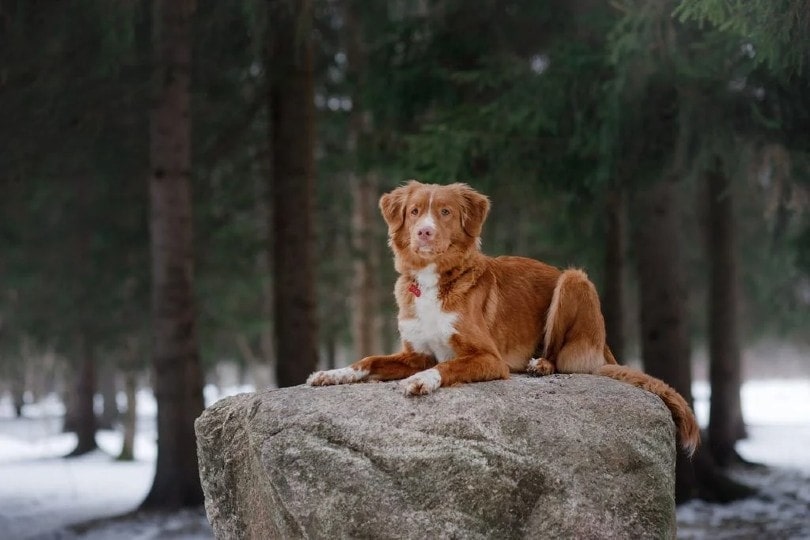
The smallest of the retrievers, Nova Scotia Duck Tolling Retrievers were originally bred to toll, or lure, ducks within range of hunters by playing along the shoreline, much like a red fox. When the hunter shoots, the quick, agile Toller springs into action, marking and retrieving the downed birds.
Tollers are becoming increasingly popular thanks to their keen intelligence, strong work ethic, and small/medium size. They have a playful, high-energy nature and need plenty of exercise to stay happy. Their water-repellent double coat comes in shades of red and requires regular brushing.
- American Water Spaniel
One of the few breeds developed entirely in the United States, the American Water Spaniel was bred to be an all-around hunting dog specializing in retrieving ducks from small boats. This medium-sized spaniel is an eager and energetic worker with strong retrieving instincts.
AWS have a curly, water-resistant coat that protects them while swimming in cold conditions but sheds minimally. Happy and friendly, they make good family dogs as long as they get enough exercise. Like many spaniels, AWS can have an independent streak and do best with positive reinforcement training methods.
- Boykin Spaniel
Another American original, the Boykin Spaniel originated in South Carolina in the early 20th century as an all-purpose hunting dog specializing in turkey and waterfowl. Nicknamed the "little brown dog," Boykins are the smallest of the hunting spaniels but possess outsized enthusiasm and endurance.
Boykins have a medium-length coat with feathering on the legs, chest, and ears to protect them from briars and icy water. Eager to please and quick learners, they respond well to reward-based training. They also make cheerful, easy-going companions and are content to curl up on the couch after a day in the field.
- Irish Water Spaniel
Among the oldest and tallest of the spaniels, the Irish Water Spaniel was bred to retrieve ducks and geese in the cold, choppy waters around Ireland. Their distinctive curly coats make them instantly recognizable. Consisting of dense, tight curls with a natural oiliness, the coat keeps them warm and dry while retrieving in all conditions.
Irish Water Spaniels are known for their intelligence, devotion to their owners, and clownish sense of humor. They are energetic working dogs that need a job to do and plenty of exercise. Their curly coats shed very little but require regular brushing and trimming to prevent matting.
- Standard Poodle
Although more associated with the show ring than the duck blind nowadays, the Standard Poodle was originally bred as a retrieving water dog. The name "poodle" comes from the German word "pudel," which refers to splashing in water.
Poodles have several traits that make them excellent duck dogs. Their dense, curly coats have a water-resistant texture that keeps their skin dry while swimming. They are also highly intelligent, easy to train, and have a strong retrieving instinct.
While most hunters don‘t keep their Poodle in the traditional "continental" clip with shaved hindquarters, a shorter trim on the body helps prevent their long coats from getting tangled with burrs and debris. Poodles can be sensitive and do best with gentle, consistent training.
- German Shorthaired Pointer
A versatile hunting breed developed in Germany in the 19th century, German Shorthaired Pointers are equally adept at pointing, flushing, tracking, and retrieving game on land or in water. GSPs have a water-resistant coat, webbed feet, and a powerful swimming stroke that helps them excel as duck dogs.
Intelligent and eager to please, GSPs are highly trainable and thrive on having a job to do. They need lots of daily exercise to stay physically and mentally stimulated. While they tend to have a lower cold tolerance than breeds with thicker coats, neoprene vests can help them stay warm while duck hunting in winter.
- English Springer Spaniel
Named for their skill at "springing" or flushing game, English Springer Spaniels are a popular choice for duck and upland bird hunters. Their medium size, strong retrieving instinct, and tractable nature make them effective in the duck blind or field.
The Springer‘s medium-length coat with moderate feathering helps protect them while swimming through icy water to make retrieves. Compact and agile, they can easily navigate a boat or blind. Springers tend to be eager to learn and respond well to reward-based training but may be sensitive to harsh corrections.
- Flat-Coated Retriever
Originally bred as a dual-purpose retriever for both waterfowl and upland game, the Flat-Coated Retriever has many qualities that make it well-suited for duck hunting. They are strong, agile swimmers with a water-repellent coat, webbed feet, and an otter-like tail.
Flat-Coats are known for being intelligent, good-humored, and optimistic. They have a sensitive nature and respond best to positive reinforcement rather than heavy-handed training. Their long coat does require regular brushing and grooming to prevent matting, especially when hunting.
- Curly-Coated Retriever
Among the oldest of the retriever breeds, the Curly-Coated Retriever was popular with English gamekeepers and hunters in the 18th century for its excellent nose, strong swimming ability, and protective coat. The tight, crisp curls of the coat are water-resistant and help the dog withstand cold conditions.
Curly-Coats tend to be intelligent, confident, and proud. They can have an independent streak and are not ideal for first-time dog owners or those new to training a hunting dog. With firm, fair handling and plenty of mental stimulation, Curlies make highly effective duck dogs.
Tips for choosing and training your duck dog
No matter which breed you choose, proper training is essential to transform your dog from a rambunctious puppy to a disciplined hunting companion.
The key is starting basic obedience training early, usually around 7-8 weeks old, and keeping sessions short and fun. Gradually introduce your pup to the sights, sounds, and smells associated with hunting, like decoys and boats.
Let your pup explore the water and retrieve bumpers to encourage a positive association. Teaching a reliable recall is also critical for your pup‘s safety and your sanity as a handler.
As your pup matures, you can begin teaching more advanced skills like hand signals, blind retrieves, and honoring another dog‘s retrieve. Many hunters also enlist the help of a professional trainer to fine-tune their dog‘s skills.
If you have your heart set on a started or finished duck dog, be prepared to spend more compared to buying a puppy. You can also adopt an older dog from a rescue that rehomes former hunting dogs.
Whichever route you choose, remember that owning a duck dog is a commitment that extends beyond hunting season. Make sure you have the time and resources to keep your dog mentally stimulated and physically active year-round. The bond you develop with your four-legged hunting partner will be well worth the effort.


)