The Alusky: Your Guide to the Ultimate Husky-Malamute Hybrid
Are you fascinated by wolf-like dog breeds? Do you dream of having an energetic, brilliant canine companion to share your active lifestyle? If so, the Alusky — a cross between a Siberian Husky and an Alaskan Malamute — might just be your dream dog. But before you rush out to find an Alusky puppy, it‘s crucial to understand what makes this unique breed tick. As a veterinarian and proud Alusky owner for over a decade, I‘m here to give you the complete scoop on these remarkable dogs.
The Origins of the Alusky
The Alusky is a relatively new designer breed believed to have first emerged in the 1990s. The goal was to create the ultimate arctic companion dog by combining two of the most iconic cold weather breeds: the Siberian Husky and the Alaskan Malamute.
Siberian Huskies, originally developed as endurance sled dogs by the Chukchi people of Siberia, are known for their athleticism, work drive, and striking blue or multi-colored eyes. Alaskan Malamutes, bred by the Mahlemut Inupiaq people of Alaska to haul heavy loads in brutal conditions, are larger, stronger, and have a thick, wolf-like coat.
Crossing these two breeds results in a dog with the best traits of both: the Husky‘s speed and stamina plus the Malamute‘s power and rugged good looks. The first Aluskies proved to be such excellent working and adventure companions that the breed quickly gained popularity among mushers, skiers, hikers, and other outdoor enthusiasts.
Physical Characteristics
An Alusky‘s appearance can vary depending on which parent breed they favor, but in general, they are medium to large dogs with a muscular, athletic build. Here are some key physical traits:
- Size: Males typically stand 25-28 inches and weigh 75-100 pounds, while females are 23-26 inches and 65-85 pounds.
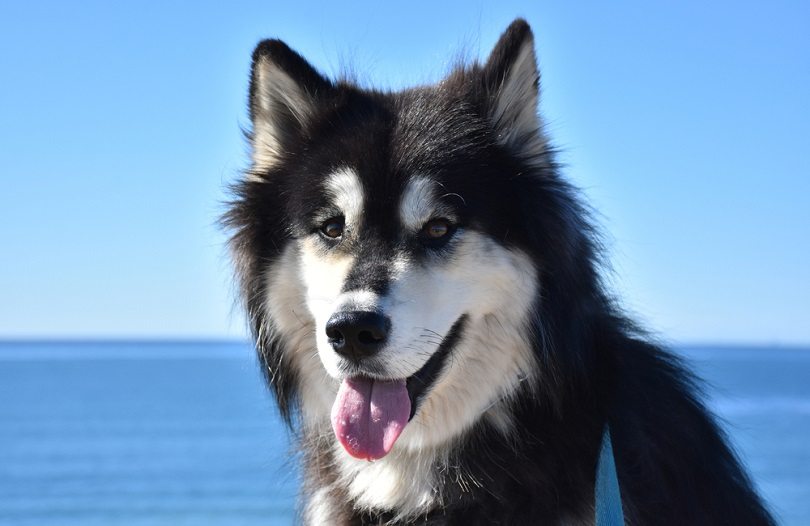
- Head: Aluskies have a broad head with a slightly rounded forehead, tapering to a wolf-like muzzle of medium length. Ears are erect, triangular, and set high on the head.
- Eyes: Almond-shaped eyes come in shades of blue, brown, or amber; some Aluskies may have one blue and one brown eye (heterochromia) or parti-colored eyes.
- Coat: The Alusky sports a thick double coat, with a dense, wooly undercoat and straight, coarse guard hairs. The coat is medium to long, especially around the neck and shoulders (the "ruff"), on the back of the legs, and the tail plume.
- Colors: Aluskies come in a wide variety of colors and patterns including black, white, gray, sable, red, agouti, or a combination. Facial masks and white/cream markings are common.
- Tail: The tail is heavily furred and carried in a sickle curve over the back when alert or excited.
While striking to look at, an Alusky‘s beauty is more than fur deep. These dogs are true athletes, with a body built for power and endurance. From their deep chest to their muscular hindquarters and nimble, oval-shaped feet, every part of an Alusky is designed to work hard and play harder.
Temperament and Personality
Aluskies are known for being intelligent, energetic, loyal, and affectionate with their humans. They bond very closely to their families and crave attention and interaction. In fact, Aluskies hate being left alone so much that isolation can lead to severe separation anxiety and destructive behaviors.
While generally good with children, especially if raised with them, Aluskies may play too rough for little ones. They tend to do well with other dogs if socialized early, but their strong prey drive can make them unreliable around small pets like cats or rabbits.
One of the most notable Alusky traits is their sheer zest for life. These are dogs that live to work and play hard. Aluskies have boundless energy and stamina, with the ability to run and pull for miles without tiring. They‘re happiest when active and engaged, whether that means jogging, hiking, sledding, skijoring, practicing agility or obedience, or even just playing intense games of fetch or tug.
As highly intelligent dogs, Aluskies need mental stimulation as much as physical exercise. Boredom is the enemy — a tired Alusky is a good Alusky! Puzzle toys, interactive games, and training sessions are a must to keep their agile minds challenged.
Aluskies can also have an independent streak, especially if they take after their Husky parent. They‘re not always eager to please and may question your authority if you‘re not a confident leader. Patience, consistency, and positive reinforcement are key to training an Alusky. Harsh corrections will only damage your bond.
Exercise and Living Requirements
An Alusky is the ultimate canine athlete, with exercise needs that far exceed the average dog. Expect to provide a minimum of 1.5-2 hours of vigorous activity every single day, rain or shine. This could include:
- Running/jogging
- Hiking and backpacking
- Bikejoring or skijoring
- Playing fetch or frisbee
- Swimming
- Participating in dog sports like agility, rally, weight pull, or mushing
Without enough exercise, Aluskies are prone to destructive boredom behaviors like excessive barking, howling, digging, or chewing. A tired Alusky is a good Alusky!
Because of their high activity needs, Aluskies are not suited for apartment living or sedentary owners. A spacious home with a large, securely fenced yard is ideal. Aluskies are notorious escape artists, so fences should be at least 6 feet high with concrete reinforcement along the base to prevent digging.
Even with a fenced yard, Aluskies should never be left unattended outdoors. Their strong prey drive and wanderlust will send them after small animals or on far-ranging adventures. Aluskies should always be leashed when not in a secure area.
Training and Socialization
Early, consistent training and socialization are critical for Alusky puppies. These intelligent dogs learn quickly, but they can also be independent thinkers with selective hearing. Establishing leadership and clear boundaries from day one will make for a much happier relationship.
Positive reinforcement methods work best with sensitive, strong-willed Aluskies. Reward them with high-value treats, praise, and play for good behavior and obedience. Avoid harsh corrections, as Aluskies may shut down or become resentful. Keep training sessions short, fun, and challenging to hold their interest.
One of the first commands every Alusky should learn is a reliable recall. This breed‘s desire to run and roam makes a strong "come" essential for off-leash adventures. Practice often in a variety of situations, always rewarding generously when they obey.
Socialization is also key for this naturally wary breed. Expose your Alusky puppy to a wide variety of people, animals, places, and experiences to boost their confidence and prevent shyness or aggression. Puppy classes are a great way to jump-start socialization in a controlled setting.
Grooming and Care
Aluskies have a thick, lush double coat that requires regular upkeep. Expect to brush them at least 2-3 times per week, if not daily, to prevent matting and remove loose fur. They shed moderately year-round and heavily twice per year during seasonal coat "blows."
Luckily, Aluskies are relatively clean dogs without a strong odor. They only need occasional baths, unless they‘ve rolled in something stinky. Other grooming needs include regular ear cleaning, dental care, and nail trims.
To keep your Alusky comfortable in hot weather, never shave their coat. The double layer actually insulates them from heat and sun as well as cold. Provide plenty of shade and water if your Alusky spends time outdoors in the summer.
Health and Lifespan
As a hybrid breed, Aluskies may inherit health issues common to Siberian Huskies or Alaskan Malamutes. According to the Orthopedic Foundation for Animals, these include:
- Hip dysplasia (affects 8.4% of Huskies, 10.3% of Malamutes)
- Elbow dysplasia (1.2% of Huskies, 6.1% of Malamutes)
- Hypothyroidism (2.8% of Huskies, 2.6% of Malamutes)
- Inherited eye disorders like cataracts, corneal dystrophy, and progressive retinal atrophy
Responsible Alusky breeders screen their stock for these issues to minimize risk. Prospective owners should ask to see health clearances on a puppy‘s parents before committing.
With proper care, exercise, and nutrition, the average Alusky lifespan is 10-14 years. Keeping your dog at a healthy weight, providing age-appropriate exercise, and scheduling regular vet checkups can help maximize longevity.
Is an Alusky Right for You?
Aluskies are not the easiest breed, but for the right person, they can be the most rewarding canine companion imaginable. You may be a great fit for an Alusky if:
- You‘re a highly active person who enjoys outdoor adventures in all weather
- You have experience with northern breed dogs or are willing to learn about their unique needs
- You‘re committed to providing plenty of daily exercise, training and interaction
- You have a securely fenced yard or property for your Alusky to roam
- You don‘t mind a dog that sheds heavily and requires regular grooming
- You‘re looking for an affectionate, devoted companion to share your life
On the flip side, an Alusky is probably not the best choice if:
- You live in an apartment or small home without a yard
- You work long hours or travel frequently and can‘t meet an Alusky‘s interaction needs
- You prefer a couch potato canine or struggle to provide enough exercise
- You want a dog that‘s easy to train and always obedient
- You can‘t handle heavy shedding and regular grooming
- You have small pets like cats or rabbits that an Alusky may chase
Only you can decide if you‘re ready for the commitment and challenge of living with an Alusky. It‘s a big decision, but for those who take the plunge, the payoff is immense.
Finding an Alusky
If you‘ve decided an Alusky is the breed for you, take your time finding a responsible breeder. Avoid places that always have puppies available, sell online with no screening, or operate from unknown locations like private homes or parking lots. Quality Alusky breeders want the best for their dogs and have nothing to hide.
Signs of a reputable Alusky breeder include:
- Performing health clearances on breeding stock and making results available to puppy buyers
- Allowing you to meet the puppy‘s parents and tour their facility
- Asking you to sign a contract requiring spay/neuter and specifying what they‘ll provide if health or temperament issues arise
- Offering guidance and support for the puppy‘s entire life, including taking dogs back if the owner can no longer keep them
- Charging a higher price for puppies — expect $1200-$2500, depending on location and pedigree
You can also check rescue networks and shelters for Aluskies in need of new homes. Adopting an older dog lets you skip the challenging puppy stage and have a better idea of temperament. Plus, by opening your home to an Alusky in need, you‘ll gain a grateful companion for life.
Why Aluskies Are Awesome
Sharing your life with an Alusky means constant adventure, laughter, and love. Get ready for:
-
Unlimited energy and enthusiasm. There‘s never a dull moment with an Alusky! These dynamos live life to the fullest and want you to come along for the ride, whether that means hiking, swimming, learning new tricks, or snuggling on the couch after a long day of play.
-
Comedian-level entertainment. Aluskies are goofballs at heart, always finding creative ways to make you laugh. From "talking" with silly vocalizations to playing keep-away with your slippers, Aluskies know how to infuse every day with joy and humor.
-
All-weather adventure buddies. With their arctic ancestry, Aluskies are unfazed by even the nastiest weather. Be it a blizzard or a heat wave, they‘re always ready to head outside and seize the day. Just be sure to keep them safe and comfortable in extreme temperatures.
-
Loyal, loving family members. Above all, Aluskies are devoted companions who bond heart and soul with their people. They may test your patience as mischievous puppies, but with time, training, and trust, Aluskies mature into faithful friends who would do anything for you.
Of course, no breed is perfect, and Aluskies do come with challenges. They shed enough to stuff pillows daily, have selective hearing when it comes to commands, and consider the trash can an all-you-can-eat buffet. Your yard may never be free of holes, and don‘t even think about leaving a roast unattended on the counter.
But for Alusky lovers, the positives far outweigh the quirks. Living with an Alusky means embracing an active, adventurous lifestyle and gaining a loving, loyal companion who keeps you laughing and learning every day. Once you go Alusky, you never go back — you‘re in for the wildest, most rewarding ride of your life.