American Cane Corso vs Italian Cane Corso: A Comprehensive Comparison
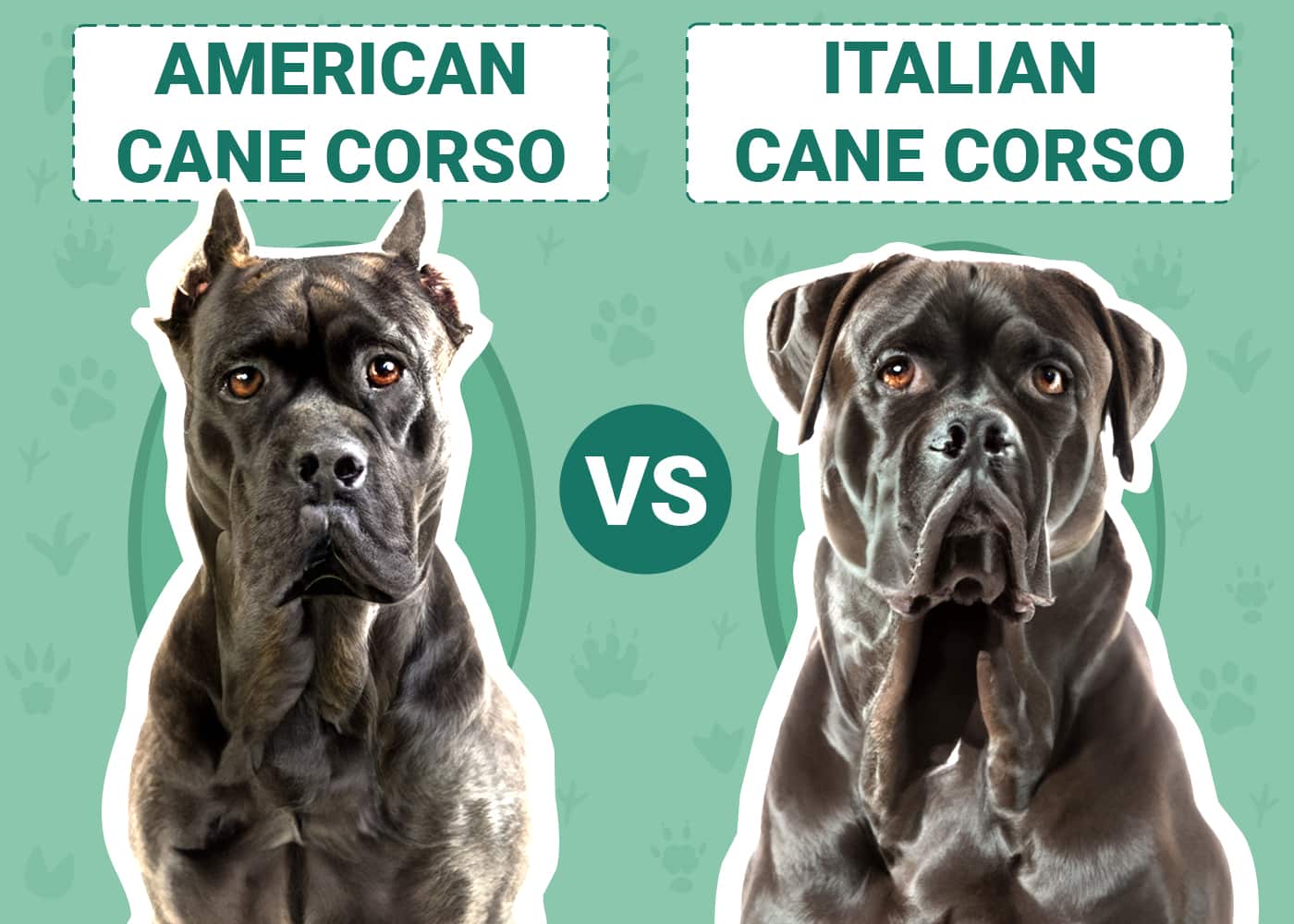
The Cane Corso is a majestic and powerful dog breed that has captured the hearts of many dog lovers around the world. However, there is much debate and confusion surrounding the differences between the American Cane Corso and the Italian Cane Corso. Some argue they are two distinct breeds, while others believe they are simply variations of the same breed.
In this in-depth article, we will dive deep into the history, temperament, appearance, and training considerations of both the American and Italian Cane Corso. By the end, you will have a clear understanding of the key differences between these two magnificent breeds and be able to determine which one may be the right fit for you and your lifestyle. Let‘s get started!
The Origins and History of the American and Italian Cane Corso
To truly understand the differences between the American and Italian Cane Corso, we must first look at their origins and how they evolved over time.
The Cane Corso breed as a whole can trace its roots back to ancient Italy, where they were used as guard dogs, war dogs, and hunting companions by the Romans. According to the Cane Corso Association of America, the breed is descended from the canis pugnax, a type of Roman war dog that was used in combat.
Over time, the Cane Corso became a versatile working breed used for various tasks such as guarding property, herding livestock, and even assisting with wild boar hunts. However, by the mid-20th century, the breed had nearly gone extinct as farming became more mechanized and the need for such all-around working dogs diminished.
It was around this time that the breed split into two distinct lines – the Italian Cane Corso and the American Cane Corso.
The Italian Cane Corso remained true to its historical roots and was carefully bred back from near extinction by dedicated Italian breeders starting in the 1970s. The goal was to preserve the breed‘s original temperament, working ability, and physical characteristics as much as possible. The Italian Cane Corso was officially recognized by the Italian Kennel Club (ENCI) in 1994.
The American Cane Corso, on the other hand, emerged when the breed was imported to the United States in the 1980s and 1990s. Some American breeders began crossing Cane Corsos with other mastiff-type breeds like the Neapolitan Mastiff, as well as non-mastiff breeds like the Rottweiler and even the Pit Bull, to develop a dog with a more aggressive temperament suitable for protection work.
This new American Cane Corso type developed a reputation for being larger, more muscular, and having a more intimidating appearance compared to the Italian Cane Corso. Some breeders also began advertising these exaggerated Cane Corsos as "King Corsos" or "American Corsos."
However, it‘s important to note that the American Kennel Club (AKC), which officially recognized the Cane Corso in 2010, does not distinguish between an American and Italian Cane Corso. They are considered one breed with a single breed standard.
That said, many Cane Corso experts and enthusiasts argue that enough generations have passed to consider the American Cane Corso and Italian Cane Corso two distinct bloodlines with recognizable differences in appearance and temperament. Responsible breeders tend to specialize in breeding one line or the other to maintain the characteristics of each type.
Temperament and Personality Differences
One of the biggest differences between the American Cane Corso and Italian Cane Corso is their temperament and personality. While both are loyal, intelligent, and protective companions, there are some notable distinctions.
The Italian Cane Corso is known for being even-tempered, eager to please, and relatively easy to train in the hands of an experienced owner. They bond strongly with their families and are affectionate with those they know and trust. While vigilant and territorial, they tend to have a stable temperament and only act aggressively when a real threat is perceived.
Italian Cane Corsos are more likely to be aloof with strangers rather than outwardly aggressive. When properly socialized, they can be tolerant of other dogs and even live peacefully with other pets in the household, although caution should always be exercised due to their powerful builds and prey drive.
In contrast, the American Cane Corso has gained a reputation for being more high-strung, dominant, and confrontational, likely due to the influence of more aggressive breeds in their bloodline. They tend to be more territorial and quicker to react aggressively, even to perceived threats.
American Cane Corsos require an extremely experienced and confident owner that can establish clear boundaries and leadership from an early age. They may be more challenging to train and are less likely to tolerate other dogs or pets in the home.
Of course, it‘s important to remember that temperament can vary significantly from one individual dog to another, even within the same bloodline. Genetics, socialization, training, and environment all play a role in shaping a dog‘s personality. However, if you are considering a Cane Corso, it‘s essential to be realistic about the general temperament tendencies of the American vs. Italian lines and whether you have the experience and lifestyle to manage them.
Physical Appearance and Size
At first glance, the American and Italian Cane Corso may look very similar. Both are large, muscular, and athletic dogs with short coats, broad chests, and powerful heads. However, there are some physical differences that can help distinguish the two types.
The American Cane Corso is generally larger and heavier-boned than the Italian Cane Corso. Males can stand up to 28 inches tall at the shoulder and weigh upwards of 140 pounds, while females may reach 26 inches and 120 pounds. Their heads are typically more massive and blocky, with a shorter, wider muzzle.
The American Cane Corso‘s coat is also slightly longer and thicker compared to the Italian Cane Corso‘s very short and close-lying coat. Recognized coat colors include black, fawn, chestnut brindle, and gray brindle.
The Italian Cane Corso, on the other hand, is a bit more refined and less bulky in appearance. Males typically stand 24-27 inches at the shoulder and weigh 99-110 pounds, while females stand 23-26 inches and weigh 88-99 pounds. Their heads are still large and imposing but proportionate to their more athletic build.
The Italian Cane Corso‘s coat is very short, stiff, and shiny, with the same color variations as the American type. Some Italian Cane Corsos may have a gray mask on their faces.
Training Considerations
As mentioned earlier, both the American and Italian Cane Corso are intelligent, powerful breeds that require dedicated training and socialization from a young age. However, there are some differences in trainability and handling between the two types.
The Italian Cane Corso is generally considered easier to train and more responsive to positive reinforcement methods compared to the American Cane Corso. They are eager to please their owners and have a strong work ethic, making them well-suited for advanced obedience, tracking, and even agility training.
That said, Italian Cane Corsos still need a firm and consistent leader to guide them. They can be independent thinkers and may test boundaries, so it‘s essential to establish clear rules and routines early on.
The American Cane Corso, with its more dominant and strong-willed personality, can be more challenging to train and may require a firmer hand. They are less likely to tolerate mistakes or inconsistencies in their training and may become uncooperative or even aggressive if they sense their owner is not in control.
Positive reinforcement methods can still be effective with American Cane Corsos, but owners must be prepared to set strict boundaries and follow through with commands. Punishment-based training methods are never recommended, as they can escalate aggression and damage the dog‘s trust in their owner.
For both types of Cane Corso, early socialization is critical to help them learn to discriminate between real and perceived threats. They should be exposed to a variety of people, places, and situations from a young age to build their confidence and social skills. Ongoing training and mental stimulation throughout their lives will also be necessary to keep them happy and well-behaved.
The Ideal Cane Corso Owner
Given their size, strength, and protective nature, Cane Corsos are not suitable for everyone. They require a dedicated owner that can provide them with consistent training, socialization, and exercise throughout their lives.
For the Italian Cane Corso, an ideal owner would be:
- Experienced with large, guardian breeds
- Confident and able to establish clear leadership
- Committed to positive reinforcement training methods
- Able to provide plenty of exercise and mental stimulation
- Prepared to socialize their dog extensively
- Has a securely fenced yard or property
- No young children or small pets in the household
The American Cane Corso requires an even more experienced and skilled handler due to their more dominant and territorial nature. In addition to the qualities listed above, an American Cane Corso owner should also be:
- Comfortable with a more confrontational and aggressive temperament
- Able to physically control a large, powerful dog
- Prepared to manage a higher level of dog and human aggression
- Willing to work with a professional trainer if needed
- Able to provide even more vigorous exercise and training
Both types of Cane Corso need an owner that is home often and able to provide plenty of companionship and interaction. They are not well-suited for households where they will be left alone for long periods.
Conclusion
The American Cane Corso and Italian Cane Corso are two magnificent breeds that have much in common, yet distinct differences in history, temperament, and appearance. While the American Kennel Club considers them one breed, many experts argue that the American and Italian bloodlines have diverged enough to be considered separate types.
The Italian Cane Corso is a moderately aggressive breed with a more stable temperament and trainability, while the American Cane Corso, sometimes called the "King Corso," tends to be larger, stronger, more dominant, and more territorial.
Both types of Cane Corso require an experienced owner that can provide focused training, socialization, and exercise throughout their lives. Cane Corsos should always be treated as individuals, with their unique personalities and needs taken into account.
If you are considering adding a Cane Corso to your life, be sure to do your research and choose a reputable breeder that thoroughly health tests their breeding stock and carefully selects for stable temperaments. With the right genetics, socialization, training, and care, a Cane Corso can be a devoted and impressive companion that will protect you and your family for years to come.