Are Dalmatians Good with Kids? A Dog Lover‘s Honest Take
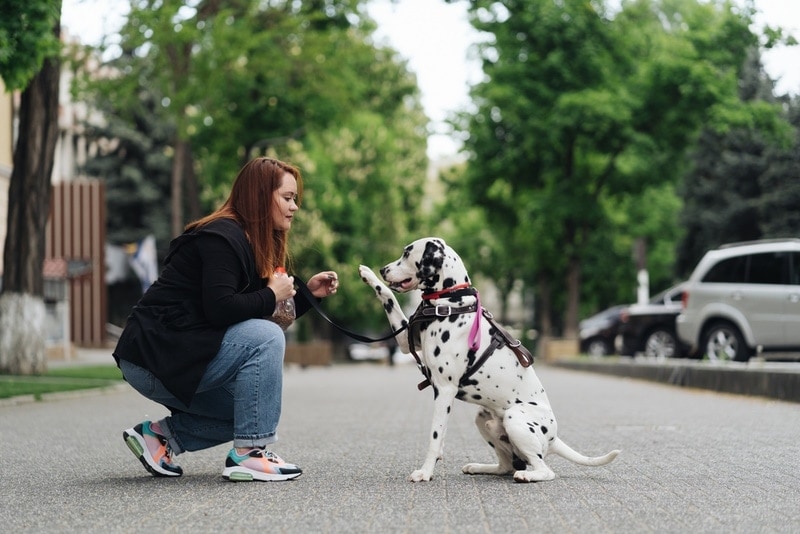
Dalmatians are one of the most iconic dog breeds, thanks in large part to their starring role in Disney‘s 101 Dalmatians franchise. Their sleek, spotted coats and floppy ears have charmed families for generations. But as any dog lover knows, finding the right canine companion for your crew goes beyond looks.
If you‘re considering adding a Dalmatian to your family, you may be wondering – are Dalmatians good with kids? As a lifelong dog devotee and Dalmatian aficionado, I‘ll give you the straight scoop on Dal temperament, personality quirks, and how to set your spotted pup up for success with children.
Diving into the Dalmatian Personality
Dalmatians were originally bred to be coaching dogs, running for miles alongside horse-drawn carriages. According to the Dalmatian Club of America, this history contributes to the breed‘s athleticism, endurance, and people-loving personality.
A well-bred, well-socialized Dalmatian has many wonderful traits – they are typically outgoing, intelligent, affectionate, and eager to please. They can be charmingly silly and playful. Many Dals adore human companionship and will follow their favorite people from room to room. Dalmatians also tend to make alert watchdogs and will bark to let you know if anything seems amiss.
However, Dalmatians were bred to work and run all day – they are not couch potatoes by any stretch. A Dal needs vigorous daily exercise, both physical and mental, to stay happy and mentally balanced. Without enough activity and stimulation, Dalmatians can become high-strung, anxious, and destructive.
Jessica Hatch, a Dalmatian breeder of 20 years, emphasizes that Dals need a job. "Dalmatians are very intelligent dogs that need an outlet for both their minds and their energy," Hatch says. "If you don‘t give them a constructive job to do, they‘ll find their own – and you probably won‘t like it. A bored Dal is often a destructive Dal."
Dalmatians can also be a bit stubborn and independent at times. They are sensitive, intuitive dogs that get their feelings hurt easily. Using positive reinforcement training methods is key – a heavy-handed or impatient approach will cause your Dal to shut down.
It‘s also important to note that Dalmatians shed constantly and are not a good choice for neat freaks or allergy sufferers. A Dal‘s short, dense coat sheds year-round and those trademark spots wind up everywhere.
Dalmatians by the Numbers
Now let‘s look at some Dalmatian statistics:
- Dalmatians rank 56th out of 197 breeds in AKC popularity as of 2023
- The average Dalmatian lifespan is 11-13 years
- Adult Dalmatians typically weigh 45-70 pounds and stand 19-24 inches tall
- Dalmatians have a bite force of 305 PSI (for comparison, a German Shepherd‘s bite force is 238 PSI)
- In temperament tests measuring stability, aggressiveness, friendliness and protectiveness, the average Dalmatian scores 82.4%
One crucial Dalmatian fact is that the breed is prone to deafness due to their unique spotted pigmentation. According to a study by Louisiana State University, 8% of Dalmatians are born completely deaf and 22% are born with hearing in only one ear. Reputable breeders use a BAER (Brainstem Auditory Evoked Response) test to check Dalmatian puppies‘ hearing, but there is no ethical way to completely eliminate deafness from the breed.
Dalmatians are also prone to urinary stones and skin allergies. According to the Dalmatian Club of America, males are more likely to develop urinary stones while females more often have skin issues. Buying from a responsible breeder who tests for health issues is crucial for getting a Dal with the best chance at a healthy life.
Kid Compatibility: Yay or Nay?
With proper socialization and positive training, a Dalmatian can be a delightful, affectionate playmate for kids. Many Dals adore romping and playing games like hide-and-seek and tag with children. However, there are several factors to consider:
Size and Enthusiasm
Dalmatians are large, muscular, high-energy dogs. A happy Dalmatian greeting could easily knock a small child down. Families with babies, toddlers, or preschoolers may want to wait on a Dal until the kids are older and sturdier.
"Dalmatians can be a good fit for homes with kids aged six and up who can handle some enthusiastic puppy energy," says Pat Gilman, a Dalmatian rescuer for 15 years. "A gentle, well-socialized adult Dal can work in homes with younger kids too. It really depends on the individual dog."
Training and Socialization
Early, ongoing socialization and positive training are a must for raising a well-mannered Dalmatian. Hatch, the Dal breeder, recommends enrolling Dalmatian puppies in a positive puppy kindergarten class right away.
"In puppy class, Dalmatians can learn key skills like impulse control, taking treats gently, greeting people politely, and paying attention to their handler around distractions," Hatch explains. "These are all so important for a Dal that will live with kids."
Supervision is also a must. Even a friendly, well-meaning Dalmatian can accidentally knock down or mouth a child in over-exuberant play. Accidents happen in the blink of an eye, so never leave dogs and small kids together unattended.
Deafness
Living with a deaf Dalmatian requires some special accommodations that families with small children should consider carefully. Deaf dogs startle more easily and are often deep sleepers. They must be trained with hand signals and touched gently to wake them.
Children need to learn to be careful when approaching a sleeping deaf Dalmatian so they don‘t accidentally frighten the dog. Gilman says deaf Dalmatians can still make wonderful family companions, but advises placing them in homes with kids mature enough to understand and respect the dog‘s needs.
Exercise Needs
Dalmatians are a high-octane breed that need extensive daily exercise to stay mentally and physically fit. A fenced yard or a safely enclosed area for off-leash romping is ideal. Kids can help meet a Dal‘s exercise needs with plenty of active play, but adults will need to commit to giving the dog several vigorous walks or runs per day as well.
If your family craves a low-key lapdog, a Dalmatian is likely not the right fit. Dals are bright, busy dogs that will make their own fun if you don‘t provide them with enough stimulation – often in destructive ways.
"A Dalmatian needs more than just a walk around the block," Gilman says. "They do best with active families that will give them a good run or other strenuous physical activity every single day, rain or shine."
Grooming and Shedding
Dalmatians have short, dense, constantly shedding coats. Frequent brushing and vacuuming are a must to keep the hair tumbleweeds at bay. Luckily, Dalmatians don‘t have a doggy odor and only need occasional baths. Their shedding is the biggest issue for neat freaks to contend with.
Finding Your Ideal Dalmatian
If your family has decided a Dalmatian would be a great addition after considering the breed‘s needs, your best bet is to either find a reputable breeder or adopt through a Dalmatian rescue group.
A responsible breeder will have their Dalmatians tested for health issues, temperament, and hearing. They‘ll work to match you with a puppy or dog that is a good personality fit for a family with kids.
"I want to set my dogs and their new families up for success," Hatch says. "If a family with small kids wants a Dalmatian, I‘ll suggest they either go with an adult dog that has a proven track record of being gentle and tolerant with children or get a puppy from my most laid-back, kid-friendly line."
Adopting an adult Dalmatian from a rescue group is another great option. Many wonderful Dals wind up in rescue through no fault of their own. Look for a dog that has been fostered in a home with kids and has an easygoing, resilient temperament.
Dalmatian Celebrity Spotlight
Many famous folk have been charmed by the Dalmatian‘s spots over the years. Some celebrity Dal owners include:
- Marc Jacobs
- Cruella de Vil (well, sort of!)
- Samantha from Sex and the City
- Dodie Smith, author of The Hundred and One Dalmatians book
- Rob Thomas from Matchbox 20
President George Washington even had a Dalmatian named Madame Moose!
The Downsides of Dalmatian Fame
While Dalmatians can make excellent companions for the right homes, many Dals have sadly ended up in shelters over the years because they were acquired for the wrong reasons.
"The years after the live-action 101 Dalmatians movie came out in 1996 were a very difficult time for Dalmatian rescue," Gilman recalls. "So many people got Dalmatian puppies because of the movie without doing their research. When the spotty pups grew into big, exuberant dogs that shed like crazy and needed tons of exercise and training, they were given up in droves. Dalmatian rescues were overwhelmed for several years."
The Dalmatian Club of America has worked hard to educate prospective owners that Dalmatians are not ideal for the average family. They are smart, athletic, sensitive dogs that require extensive exercise, training, and companionship.
"Dalmatians should never be chosen just because you like their looks or you loved them in a movie," Hatch urges. "They are not for everyone. But for experienced dog owners that are active and willing to put in the training and socialization time, Dalmatians are incredibly rewarding, endearing companions."
| Breed | Popularity Rank | Temperament Test Score | Average Weight | Energy Level |
|---|---|---|---|---|
| Dalmatian | 56 | 82.4% | 45-70 lbs | High |
| Golden Retriever | 3 | 85.6% | 55-75 lbs | Moderate |
| Labrador Retriever | 1 | 92.3% | 55-80 lbs | Moderate |
| Boxer | 14 | 83.4% | 60-70 lbs | High |
| Beagle | 7 | 80.3% | 18-30 lbs | Moderate |
Dalmatian Fun Facts
- The Dalmatian is named for the Dalmatia region of Croatia, where the breed originated.
- A group of Dalmatians is called a "coach."
- Dalmatian puppies are born pure white and develop their spots as they mature.
- In the 1800s, Dalmatians often ran alongside firefighting wagons, leading to their reputation as firehouse mascots.
- Dalmatians have been used as circus performers, trail hounds, retrievers, ratters, shepherd dogs, sentinels, and draft dogs pulling carts.
- A purebred Dalmatian always has black or liver brown spots. Lemon, brindle, blue, or long-coated Dalmatians are disqualified from the show ring.
While Dalmatians in the movies are fun to watch, the real-life breed is a serious commitment. Dals require devoted owners willing to stay active with them and put in the training time. They shed constantly and their exuberant nature can be overwhelming for small children or people wanting a quiet, low-key dog.
But for experienced dog lovers with an active lifestyle, Dalmatians can be incredible companions – smart, silly, deeply loving, and totally devoted. Just do your research and make sure your family is a good fit for the breed‘s needs before you fall for that cute spotted coat. With proper socialization and training, a Dalmatian can make a wonderful, entertaining best friend for many years to come.