Are Miniature Schnauzers Good With Cats? A Dog Lover‘s Guide
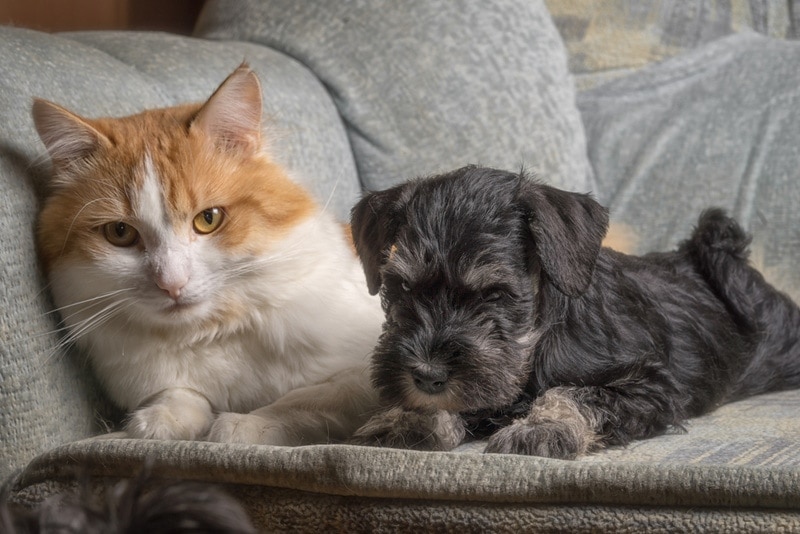
Miniature Schnauzers are spunky, affectionate companions that have won the hearts of dog lovers worldwide. But what about those of us who adore both dogs and cats? If you‘re considering adding a Miniature Schnauzer to your feline-friendly family, you‘ve probably found yourself wondering: are Miniature Schnauzers good with cats?
As a lifelong Miniature Schnauzer devotee and veterinarian, I‘m happy to report that the answer is often yes—but it‘s a little more complicated than a simple yay or nay. While many Miniature Schnauzers can learn to accept cats as treasured family members, especially when raised together from puppyhood, others may never fully suppress their hardwired prey drive around felines.
Whether a particular Miniature Schnauzer will thrive in a household with cats depends on factors like the individual personalities of the animals involved, the amount and quality of training and socialization the dog receives, and how committed the owner is to facilitating positive interspecies interactions. In this comprehensive guide, I‘ll delve into the ins and outs of Miniature Schnauzer-cat cohabitation so you can set your pets up for success.
The Marvelous Miniature Schnauzer
Miniature Schnauzers may be pint-sized, but they pack a ton of personality into their compact frames. Weighing 11 to 20 pounds and standing 12 to 14 inches tall at the shoulder, these bearded charmers are known for their alert expressions, sturdy build, and jaunty self-confidence.
Despite being classified as members of the American Kennel Club‘s Terrier Group, Miniature Schnauzers are a far cry from your typical tenacious terrier. Bred down from their larger Standard Schnauzer cousins in the late 1800s by crossing them with Affenpinschers, Poodles, and other small breeds, Mini Schnauzers were designed to be all-around farm dogs and ratters. They are more mellow and amiable than many true terriers, but still boast the smarts and spirited nature that made their ancestors invaluable vermin-hunting partners.
So what does this unique heritage mean for a Miniature Schnauzer‘s potential to peacefully coexist with cats? Let‘s take a closer look at some key Miniature Schnauzer traits and how they could influence feline friendliness.
Miniature Schnauzer Temperament and Trainability
Miniature Schnauzers are active, inquisitive dogs with a zest for life and love of their people. They tend to be less independent and obstinate than many terriers, with a more biddable nature that makes them highly responsive to training. Like most intelligent breeds, Mini Schnauzers need plenty of mental stimulation to prevent boredom-induced mischief. They excel at obedience, agility, and other canine sports that allow them to put their brilliant brains to work.
While Miniature Schnauzers are generally good-natured and adaptable dogs, they do have a bit of a stubborn streak and can develop a habit of excessive barking if not provided with adequate exercise and enrichment. Positive reinforcement training beginning early in puppyhood is essential for nurturing a well-behaved, well-socialized Mini Schnauzer.
According to a survey by the Miniature Schnauzer Club of America, over 60% of respondents described their Mini Schnauzers as friendly toward strangers, with 75% reporting that their dogs got along well with children and other dogs. This affable, adaptable disposition bodes well for a Miniature Schnauzer‘s ability to adjust to living with cats, given proper introductions and training.
High Prey Drive: The Schnauzer Stumbling Block
Like any breed with a history of hunting small furry creatures, Miniature Schnauzers have deeply ingrained predatory instincts that are readily triggered by fast movement. Even the most mild-mannered Mini Schnauzer may find it impossible to resist chasing a scurrying squirrel or darting housecat. In a 2017 study of over 1,600 pet dogs representing more than 100 breeds, terriers and terrier mixes were among the types of dogs most likely to chase and attempt to catch small animals.
This powerful prey drive is hard-wired into a Miniature Schnauzer‘s DNA and cannot be completely eliminated, even with extensive training. Learning to redirect and manage a Mini Schnauzer‘s natural urge to chase is key to keeping the peace in a multi-species household. While some Miniature Schnauzers may eventually learn to view cats as part of their pack, others will always feel compelled to chase them given the opportunity. It‘s important for Miniature Schnauzer owners to be realistic about the limits of training and never assume their dog is "cured" of the instinct to pursue felines.
Factors Affecting Miniature Schnauzer and Cat Compatibility
So what are the chances a Miniature Schnauzer will be able to share turf with a cat? While there‘s no surefire way to predict any individual dog‘s success in a feline-inhabited home, some general guidelines can help you assess the odds of a harmonious household.
Age at Introduction
Miniature Schnauzers that grow up alongside cats from puppyhood are much more likely to learn to peacefully coexist than those with no kitty experience prior to adulthood. Puppies under 12 weeks old are in a critical socialization window in which they are primed to form positive associations with new sights, sounds, people, and animals they encounter. A Mini Schnauzer pup raised with cat siblings will come to view felines as a normal part of their environment rather than novel prey objects.
Adopting an adult Miniature Schnauzer into a home with resident cats is a bit trickier, but often still doable if you have the time and patience to carefully orchestrate their integration. While an adult dog may be less malleable than a puppy, Mini Schnauzers remain receptive to learning throughout their lives. Choosing a Schnauzer that has a history of successful cat interactions will stack the deck in your favor.
Socialization and Training
Early socialization and lifelong training are the twin pillars of crafting a cat-compatible Miniature Schnauzer. The more positive exposure to felines your Mini Schnauzer has from a tender age, the better their chances of growing into a respectful roommate. When introducing a Miniature Schnauzer puppy to your cats, focus on rewarding the pup for calm, polite behavior and gently redirect any attempts to chase.
Even an adult rescue Schnauzer with an unknown cat history can be conditioned to tolerate felines with a gradual desensitization and counter-conditioning program. The key is breaking the introduction process into baby steps, using ample rewards to create a positive association with the cat, and never pushing the dog past their comfort zone. Enlist the help of a certified fear-free trainer or veterinary behaviorist to create a customized training plan for your Miniature Schnauzer.
Individual Personalities
Not all Miniature Schnauzers are created equal when it comes to cat-chasing compulsions. Some Mini Schnauzers are hardwired with higher prey drive than others and may never be fully trustworthy around small animals, while their more laid-back cousins can learn to be perfect feline friends.
Similarly, confidence and sociability levels vary among individual cats and impact their ability to stand up to a curious canine. Bold, dog-savvy cats are more likely to earn a Miniature Schnauzer‘s respect than scaredy cats that flee at the first sign of a wagging tail. When adopting a cat to join your Schnauzer crew, look for a kitty that is relaxed and unruffled in the presence of dogs.
Setting Up Your Miniature Schnauzer and Cat For Success
Introductions and Beyond
The path to Miniature Schnauzer-cat harmony starts with a series of controlled, positive introductions. Keep your Schnauzer leashed and lavish them with tasty treats and praise for focusing on you instead of the cat. If the dog begins to zone in on the cat, cheerfully redirect their attention with a cue like "watch me" or "leave it." Let your cat approach the dog on their terms—never force interactions. With each successive meeting, gradually increase the freedom of the dog as long as they remain calm and respectful.
Once your Miniature Schnauzer demonstrates that they can consistently ignore the cat or interact politely, you can begin allowing them to mingle more freely. However, it‘s crucial that you always actively supervise their interactions. Even the most reliable Miniature Schnauzer may lapse into old chasing habits in a moment of overexcitement. Be prepared to quickly intervene if your Schnauzer gets too focused on the cat or begins to pursue them.
Management and Enrichment
Successful Miniature Schnauzer-cat cohabitation involves more than just training—it also requires physical and mental enrichment for both species and a bit of household choreography. Providing your Miniature Schnauzer with ample exercise, playtime, and outlets for their natural behaviors will help keep them mentally stimulated and less likely to pester the cat out of boredom or pent-up energy.
Your cat should have access to plenty of elevated perches and hidey-holes that allow them to escape from the dog when needed. Cat trees, overhead walkways, and gated rooms give your kitty the freedom to choose when they feel like engaging with their canine sibling. It‘s also a good idea to feed your cat in a dog-proof zone like a gated kitchen or on a high surface to prevent your Miniature Schnauzer from scarfing down their food.
Knowing When to Get Help
Even with textbook introductions and training, some Miniature Schnauzer-cat combinations simply aren‘t meant to be. It‘s important to recognize the signs your Schnauzer may be developing an unhealthy fixation on your feline and to intervene before a serious incident occurs. Red flags include:
- Intense staring or stalking behavior directed at the cat
- Chasing the cat and being unable to redirect
- Growling, snapping, or otherwise behaving aggressively around the cat
- Chasing the cat to the point that they cannot escape and become cornered
If you notice any of these concerning behaviors, it‘s time to hit the pause button and seek guidance from a professional. A certified trainer or veterinary behaviorist can help you get to the root of your Miniature Schnauzer‘s cat issues and develop a customized behavior modification plan.
The Tail End
With their charisma, trainability, and adaptable nature, Miniature Schnauzers can make fantastic feline companions under the right circumstances. The most successful Miniature Schnauzer-cat duos are built on a foundation of early socialization, positive reinforcement training, and lifelong management. By setting clear boundaries, providing ample enrichment for both species, and staying attentive to subtle signs of tension, you can help your Miniature Schnauzer and cat cultivate a beautiful friendship.
While there‘s no guarantee any individual Miniature Schnauzer will learn to love your cat, most can at least master the art of respectful indifference. The occasional game of chase may still ensue, but with patience, persistence, and a dash of canine-feline chemistry, your Miniature Schnauzer and cat can absolutely share a loving home in peace.
References
-
Miniature Schnauzer Temperament Survey Results. American Miniature Schnauzer Club. 2016.
-
Mehrkam, L. R., & Wynne, C. D. L. (2017). Dogs (Canis familiaris) prefer to approach and interact with other dogs of similar body size. Animals, 7(8), 59.
-
Reisner, I. (2003). Differential diagnosis and management of human-directed aggression in dogs. The Veterinary Clinics of North America. Small Animal Practice, 33(2), 303–320.
-
Bain, M. (2009). Aggression toward unfamiliar people and animals. In D. F. Horwitz & D. S. Mills (Eds.), BSAVA Manual of Canine and Feline Behavioural Medicine (2nd ed., pp. 211-222). British Small Animal Veterinary Association.
-
Introducing Your Dog to a New Cat. PetMD. 2021.