Beyond Wolves: Meet the Giant Dog Breeds That Dwarf Their Ancestors

As any dog lover knows, canines come in an astounding array of shapes and sizes. From tiny Chihuahuas that can fit in a purse to enormous Great Danes that dwarf their owners, domestic dogs showcase an incredible range of physical diversity. But even the mighty wolf—the ancestor of all modern dogs—would seem small in comparison to some of today‘s giant breeds.
Through selective breeding over thousands of years, humans have shaped dogs to suit our various needs as hunters, herders, guardians, and companions. This artificial selection has resulted in dogs that look and behave drastically differently from their wild ancestors. In the case of giant breeds, dogs have been supersized to take on big game, guard livestock from bears and wolves, perform rescues, and simply make impressive companions.
How Big Are Wolves Compared to the Biggest Dogs?
The typical gray wolf—the species from which all modern dogs descend—weighs between 50 to 130 pounds and stands 26 to 32 inches tall at the shoulder. Males are larger than females by an average of 20%. However, several domestic dog breeds consistently exceed even the largest wolves in both height and weight.
| Breed | Male Height (in) | Male Weight (lbs) |
|---|---|---|
| English Mastiff | 30+ | 160-230 |
| Great Dane | 30-32 | 140-175 |
| Irish Wolfhound | 32-35 | 115-180 |
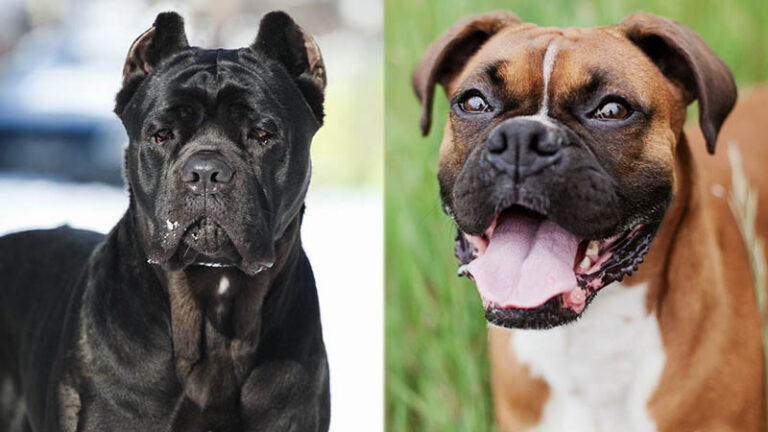
| Neapolitan Mastiff | 26-31 | 130-155 |
| Leonberger | 28-31.5 | 110-170 |
| Anatolian Shepherd | 29 | 80-150 |
| Newfoundland | 28 | 130-150 |
| Gray Wolf (Typical) | 26-32 | 50-130 |
Table 1: Comparison of male height and weight ranges between giant dog breeds and gray wolves.
As the table shows, several breeds tower over even the biggest wolves, with Irish Wolfhounds and Great Danes reaching astounding heights of 32-35 inches. English Mastiffs take the crown for sheer mass, with males routinely exceeding 200 pounds. In fact, the record for heaviest dog ever is held by an English Mastiff named Aicama Zorba, who weighed in at a scale-breaking 343 pounds!
Origins and Original Purposes of Giant Dog Breeds
Many of today‘s giant breeds were developed centuries ago for specific working purposes. Here‘s a closer look at the fascinating histories behind these supersized canines:
-
English Mastiff: One of the most ancient breeds, Mastiffs have served as war dogs, guardians, and big game hunters for millennia. They were used by the Romans in battle, traveled with Hannibal‘s army across the Alps, and later became popular with English nobility as estate guardians.
-
Great Dane: Despite its name, the Great Dane actually originated in Germany, where it was used to hunt wild boar and guard estates. These tall, elegant dogs were later refined by German nobles into the "Apollo of dogs" we know today.
-
Irish Wolfhound: As its name suggests, this breed was developed in Ireland to hunt wolves. These swift, muscular sighthounds were so adept at the task that they played a significant role in wolves going extinct in Ireland by the late 1700s.
-
Neapolitan Mastiff: This ancient Italian breed served as a war dog and guard dog since the time of the Roman Empire. Their loose skin and heavy wrinkles made it difficult for opponents to gain a firm grip on them in battle.
-
Leonberger: A relatively new breed, the Leonberger was developed in the 1800s in Germany as a companion animal and family guardian. They were bred to resemble lions, as their name suggests.
-
Anatolian Shepherd: This ancient livestock guardian breed originated in Turkey, where it was used to protect flocks from formidable predators like wolves and bears. They are still used for this purpose in their native region today.
-
Newfoundland: This Canadian breed was developed as an all-purpose working dog, used by fishermen to pull in heavy nets, haul carts loaded with fish, and perform water rescues. Their webbed feet, thick double coats, and strong swimming abilities made them ideally suited for their roles.
Although these breeds were originally developed for specific working tasks, most are now primarily kept as companions. However, their original instincts and physical abilities still shine through and should be considered by prospective owners.
Living with Giants: What to Know About Owning a Giant Breed Dog
While gentle and loving with their families, giant breed dogs have some special needs due to their immense size. Dr. Susan Larson, a veterinarian specializing in giant breeds, notes that "Owning a giant breed dog is a big commitment in every sense of the word. They require more space, more food, more training, and often have shorter lifespans than smaller dogs."
Some key considerations for potential giant breed owners include:
-
Space: Giant breeds need room to move and stretch out. They are not well-suited to small apartments or homes without a yard. Ideally, they should have access to a securely fenced outdoor space for exercise.
-
Training: Although typically gentle, giant breeds still need training and socialization from an early age to ensure they are well-behaved around people and other animals. Obedience training is a must to maintain control over such a large, strong animal.
-
Food and Supplies: Feeding a giant breed is a bigger expense than a typical dog. They may go through 60-100 lbs or more of food per month. They also need oversized beds, crates, and bowls.
-
Exercise: While giant breeds have lower exercise needs than some high-energy breeds, they still require daily walks and playtime to maintain physical and mental health. Care must be taken not to over-exercise growing puppies to avoid joint issues.
-
Health: Many giant breeds are prone to specific health concerns like hip and elbow dysplasia, arthritis, bloat, and heart problems. Choosing a responsible breeder who health tests their breeding stock is crucial. Giant breeds also tend to have shorter lifespans of 6-10 years.
Despite these extra considerations, giant breed enthusiasts find the experience of living with these majestic animals to be incredibly rewarding. "There‘s just something special about the bond you form with a dog that‘s the size of a small pony," says John Thompson, president of a Mastiff rescue group. "They may have a shorter time with us, but they leave an enormous imprint on our hearts."
Could a Giant Dog Breed Take on a Wolf?
While many of today‘s giant breeds have ancestors that were used to hunt or guard against wolves, a modern pet dog would likely not fare well in a fight against a wild wolf. Wolves are athletic, agile predators with powerful jaws and sharp teeth. They also typically fight in packs, which no single dog could be expected to overcome.
Even giant breeds originally used for wolf hunting, like the Irish Wolfhound, have been bred for different characteristics over the centuries since wolves went extinct in their native lands. Today‘s hounds retain the chase instinct, but they do not have the same aggression or battle experience as their ancestors.
In a hypothetical encounter, a giant breed dog‘s best defense would be its sheer size and powerful appearance, which may deter a wolf from considering it as prey. However, experts agree it‘s unwise to count on any pet dog fending off a wild predator.
The best approach is to appreciate giant breed dogs for the gentle companions they are today, not the wolf hunters of long ago. With responsible breeding and care, these impressive animals can lead long, healthy lives as cherished family members. Their great size serves mainly to provide more of them to love.
A Breed Apart: How Dogs Grew and Shrank Through Selective Breeding
It‘s a fascinating quirk of evolution that the largest and smallest of dogs—from 200-pound Mastiffs to 5-pound Pomeranians—are all members of the same species, Canis familiaris. They are also all descended from a single wolf ancestor, believed to have been domesticated by humans some 15,000-30,000 years ago.
So how did dogs end up with such incredible size diversity? The answer lies in selective breeding by humans for different physical and behavioral traits. Over thousands of years, breeders chose dogs with traits that were useful or desirable, such as large size for guarding or hunting, small size for companionship, or specific coat types for certain climates.
Because many physical traits are controlled by just one or a few genes, these characteristics could be substantially changed through selective breeding in a relatively short time. For example, a 2007 study found that the small size of breed like Chihuahuas is regulated by a single gene (IGF1) that differs from the version found in wolves.
In essence, all the modern diversity of dogs was already present in the genome of the original ancestral wolf population. Selective breeding simply allowed certain genetic variants to become amplified and fixed in different lines of dogs over time, resulting in the huge range of shapes and sizes we see today.
So the next time you marvel at an enormous 200-pound English Mastiff or a pint-sized 5-pound Pomeranian, remember that these vastly different creatures are actually close cousins—and a testament to the power of selective breeding and the vast genetic potential of the ancestral wolf.
With ongoing breeding programs to develop ever-more-specialized dogs, and even initiatives to breed the "world‘s largest dog", it‘s likely that the size limits of the species have not yet been reached. As our understanding of canine genetics grows, breeders may gain more direct control over specific genes regulating growth and size.
However, animal welfare advocates caution that breeding exclusively for extreme traits like giant size can lead to health and quality of life issues for the dogs. Responsible breeders must prioritize health, temperament, and functionality—not just record-breaking size.
For dog lovers, the incredible size diversity of dogs is just one more reason to be in awe of our canine companions. From Chihuahuas to Great Danes, these endlessly varied creatures showcase the vast spectrum of the species that has evolved alongside humans for millennia.
At the far end of that spectrum, giant breeds like Mastiffs, Wolfhounds, and Great Danes remind us of the power of selective breeding to reshape an entire species. Although they now primarily serve as gentle companions, these majestic animals carry in their genes the legacy of distant wolf ancestors and the marks of centuries of human influence. To gaze into their soulful eyes is to ponder the depths of the human-dog bond across time—a connection that has transformed both species and continues to enrich our lives in innumerable ways, large and small.