
Dingo vs Dog: An In-Depth Comparison
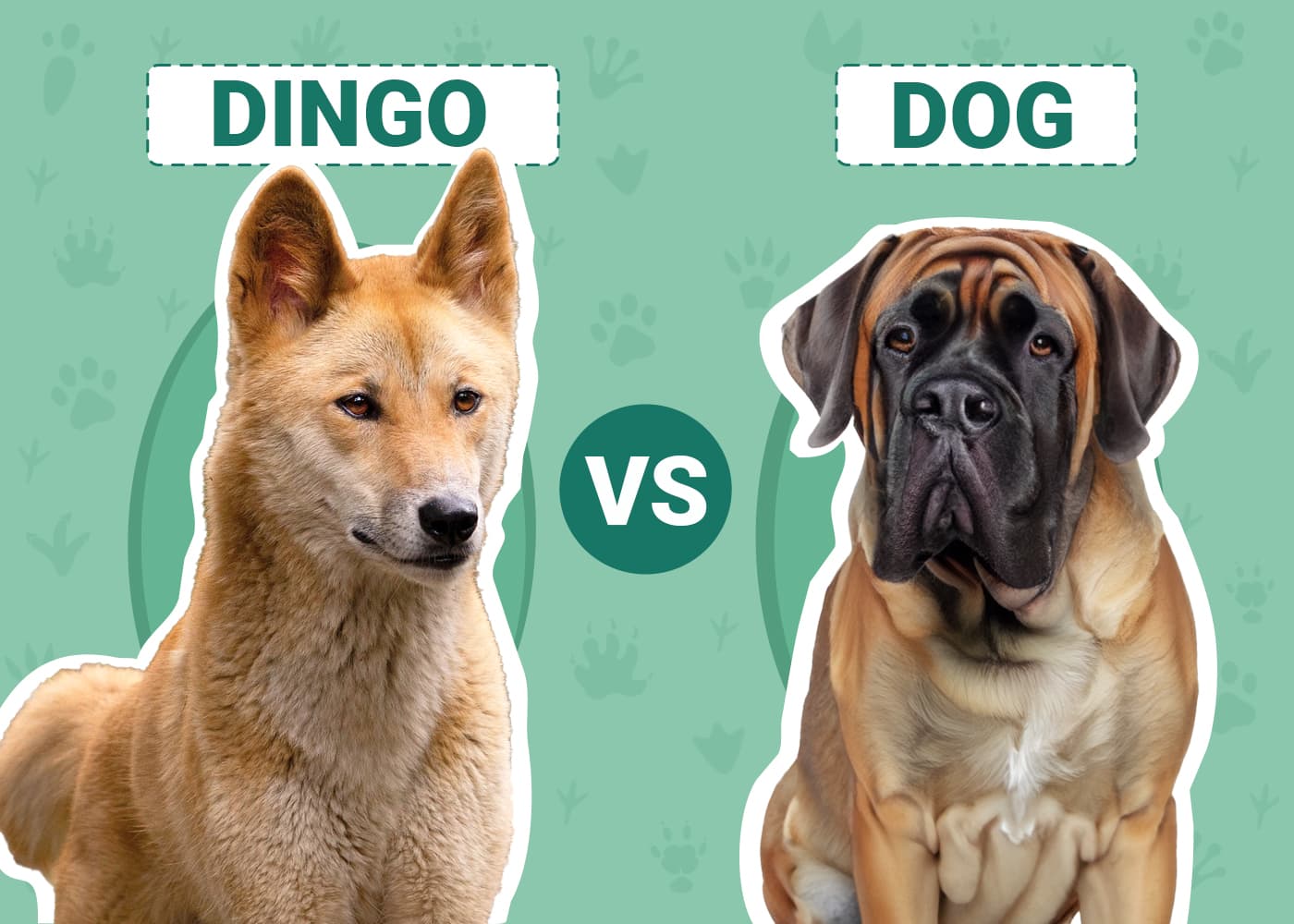
As a dog lover and veterinarian, I find canine diversity endlessly fascinating. From the tiniest Chihuahua to the most massive Mastiff, the sheer variety within the species Canis familiaris is truly remarkable. But what about dogs that aren‘t quite dogs – like the dingo?
The dingo is a canine conundrum: undeniably doglike, yet uniquely wild. In this article, we‘ll dive deep into the world of the dingo and explore how this iconic Australian animal compares to the domestic dogs we know and love.
Evolutionary Roots
To understand the differences between dingoes and dogs, it helps to start with their evolutionary history. While the exact origin of the dingo is still debated, the current scientific consensus is that they are the descendants of East Asian domestic dogs that were brought to Australia somewhere between 3,500-5,000 years ago.
Over thousands of years of living wild on the island continent, dingoes diverged from their domestic ancestors and adapted to become Australia‘s top predator. Meanwhile, dogs living with humans continued along a different evolutionary path, being selectively bred for various roles as hunters, herders, guardians and companions.
In fact, the domestic dog is the most diverse land mammal on earth in terms of physical appearance. Through selective breeding, humans have created hundreds of distinct breeds with traits suited for different purposes – a testament to the dog‘s incredible adaptability.
| Trait | Dingoes | Domestic Dogs |
|---|---|---|
| Ancestors | Domestic dogs from East Asia | Gray wolves |
| Domestication status | Wild, largely undomesticated | Domesticated for 15,000-30,000 years |
| Number of breeds | 0 | 350+ |
| Breed diversity | No variation; consistent type | Extreme variation in size, shape, coat |
Table 1: Key differences in the evolutionary background of dingoes and domestic dogs. Sources: Smith, 2015; Irion et al., 2003; Parker et al., 2017
Physical Characteristics
Because they haven‘t been subject to selective breeding, dingoes have remained remarkably consistent in appearance across Australia. Most dingoes are a ginger or sandy color with white points, though a small percentage are black and tan. Purebred dingoes always have erect ears, a bushy tail, and white hair on their feet and chest.
Anatomically, dingoes resemble a medium-sized domestic dog, but with some notable differences:
- Longer muzzles and larger canine teeth for hunting
- Narrow chests and tucked-up abdomens for speed and agility
- Highly flexible wrists and necks for maneuvering in dense cover
- Longer limbs relative to body size for efficient running
In contrast, domestic dogs have been bred in every size, shape and color imaginable, from the squat, wrinkly Pug to the lean, long-legged Borzoi. This amazing physical diversity has allowed humans to create specialized breeds for different jobs.
| Trait | Dingoes | Labrador Retriever |
|---|---|---|
| Coat color | Ginger/sand with white points | Black, chocolate or yellow |
| Shoulder height | 52-60 cm (20-24 in) | 55-57 cm (21-22 in) |
| Body weight | 13-20 kg (28-44 lb) | 25-36 kg (55-80 lb) |
| Lifespan | 10 years in wild; up to 20 in captivity | 10-12 years |
Table 2: Physical comparison of dingoes and Labrador Retrievers. Sources: Crowther et al., 2014; Australian Dingo Foundation, 2023; American Kennel Club, 2023
Behavior and Temperament
As wild animals, dingoes exhibit behaviors distinct from domestic dogs. In the wild, dingoes live in family groups consisting of a breeding pair and their offspring, defending territories of up to 80 square kilometers. They communicate through howling, which can serve to locate other pack members, attract mates, or warn off intruders.
Dingoes are opportunistic predators, hunting anything from insects and rodents to kangaroos and livestock. They play a vital ecological role by controlling populations of rabbits, rats and mice. These prey drive behaviors are hard-wired and difficult to extinguish, even in captive-bred dingoes.
Compared to domestic dogs, dingoes are generally warier of humans and harder to train. Though they can form bonds with people, especially when raised from a young age, dingoes lack the innate human-oriented behaviors that make dogs such eager companions. Even socialized dingoes will remain aloof and independent compared to dogs.
The cooperative, human-focused nature of today‘s dogs is a product of millennia of selective breeding. "The social genius of dogs is that they‘re very good at understanding humans – they‘re very good at reading our gestures and expressions," explains dog cognition expert Dr. Brian Hare. "They use humans as tools to solve problems."
Breeds like Labrador Retrievers exemplify the traits that make dogs so well-suited to human companionship: outgoing, biddable, adaptable and eager to please. With proper socialization and training, a well-bred Lab will be friendly towards strangers, gentle with children, and responsive to commands – all qualities that are challenging and often impossible to achieve with a dingo.
Suitability as Pets
The differences in behavior and temperament between dingoes and dogs make them hugely divergent in their suitability as companion animals. Domestic dogs have been purpose-bred for thousands of years to thrive in human homes and bond closely with their owners. Today‘s breeds offer an unmatched variety of personalities, energy levels and care requirements to fit different lifestyles.
Dingoes, on the other hand, remain essentially wild animals even when born in captivity. They generally make challenging and potentially dangerous pets. Dingoes require extensive socialization from a very young age, and even then, their wild instincts can lead to destructive behaviors and human-directed aggression.
Many Australian states have strict regulations around keeping dingoes, and it is illegal to keep them as pets in the United States. Experts stress that pet dingoes should never be acquired on impulse and are only suitable for knowledgeable adults who can commit to their unique needs.
"A dingo is not a dog and can‘t really be treated like a dog," says dingo conservationist Lyn Watson. "They might be fun and cute as puppies but they‘re undomesticated, wild animals, and they stay that way."
Sadly, many pet dingoes end up in rescue after proving too difficult to handle. For all but the most dedicated and experienced owners, a domestic dog breed is hands down a better choice for a family pet.
Interbreeding and Conservation
Though dingoes and dogs are considered distinct subspecies, they are genetically similar enough to produce fertile offspring. Unfortunately, this has become a serious conservation issue for dingoes. As dog ownership has grown more popular in Australia, interbreeding between wild dingoes and free-roaming pet dogs has led to widespread hybridization.
Recent DNA studies suggest that over 90% of wild dingoes in NSW and Victoria are now hybrids to some degree. This influx of domestic dog genes threatens the genetic integrity and survival of dingoes as a unique subpopulation.
Protecting the remaining pure dingoes is crucial for preserving their ecological role as apex predators. Dingoes help maintain balanced and diverse ecosystems by controlling prey populations and competing with introduced predators like foxes and cats. Conservation efforts aim to reduce hybridization by promoting responsible pet ownership and restricting the release of dogs in dingo habitats.
8 Fascinating Dingo Facts
-
Dingoes have a fixed breeding season (typically March-April), unlike domestic dogs which can breed year-round. Females give birth to litters of 1-10 pups after a 9-week gestation.
-
The dingo‘s scientific name, Canis lupus dingo, reflects its status as a subspecies of the gray wolf (Canis lupus). However, some researchers propose classifying the dingo as a separate species, Canis dingo.
-
Dingoes cannot bark in the same way that dogs do, but they can make short, monosyllabic "woofs" for warning or defense. Their most iconic vocalization is a drawn-out howl.
-
The average wild dingo weighs just 15-20 kg (33-44 lb), but they are skilled hunters capable of bringing down prey as large as red kangaroos and water buffalo.
-
Dingoes have an unusual gait in which both right feet move together, followed by both left feet. This bounding motion helps them efficiently cover vast distances in search of prey.
-
Aboriginal Australians have a long history of incorporating dingoes into their culture and mythology. Some traditional stories depict the dingo as a guide or protector, while others portray it as a trickster or thief.
-
A famous case of a dingo attack occurred in 1980, when 9-week-old Azaria Chamberlain disappeared from a campsite at Uluru. Her parents were wrongfully convicted of murder before a 2012 inquest ruled that a dingo had indeed taken the baby.
-
Though dingoes are an introduced species, they have been in Australia long enough to be considered a naturalized part of the ecosystem. They even predate on more recent introduced pests like European rabbits and cane toads.
Conclusion
In the end, comparing dingoes and dogs is a bit like comparing apples and oranges. While they share many physical and genetic similarities, they‘ve been shaped by profoundly different evolutionary pressures and histories.
Domestic dogs have been our beloved companions for millennia, their behaviors and traits purposefully molded to create the ultimate human-friendly animals. From the ever-popular Labrador Retriever to the myriad other breeds, today‘s dogs are a testament to the power of selective breeding and the unbreakable human-canine bond.
Dingoes, by contrast, remain enigmatic outsiders – not quite wolf, not quite dog. As wild predators, they are important players in the delicate balance of Australian ecosystems, but their interactions with humans are often fraught with misunderstanding and conflict.
For those of us who adore dogs as pets and partners, the dingo is unlikely to ever fill that role. Instead, we can appreciate them from afar, marveling at their tenacity, adaptability and unique place in the canine family tree. By supporting conservation efforts and respecting the dingo‘s wildness, we can ensure that these iconic animals continue to thrive in the rugged landscapes they‘ve called home for thousands of years.


