Male vs Female Miniature American Shepherds: An In-Depth Guide
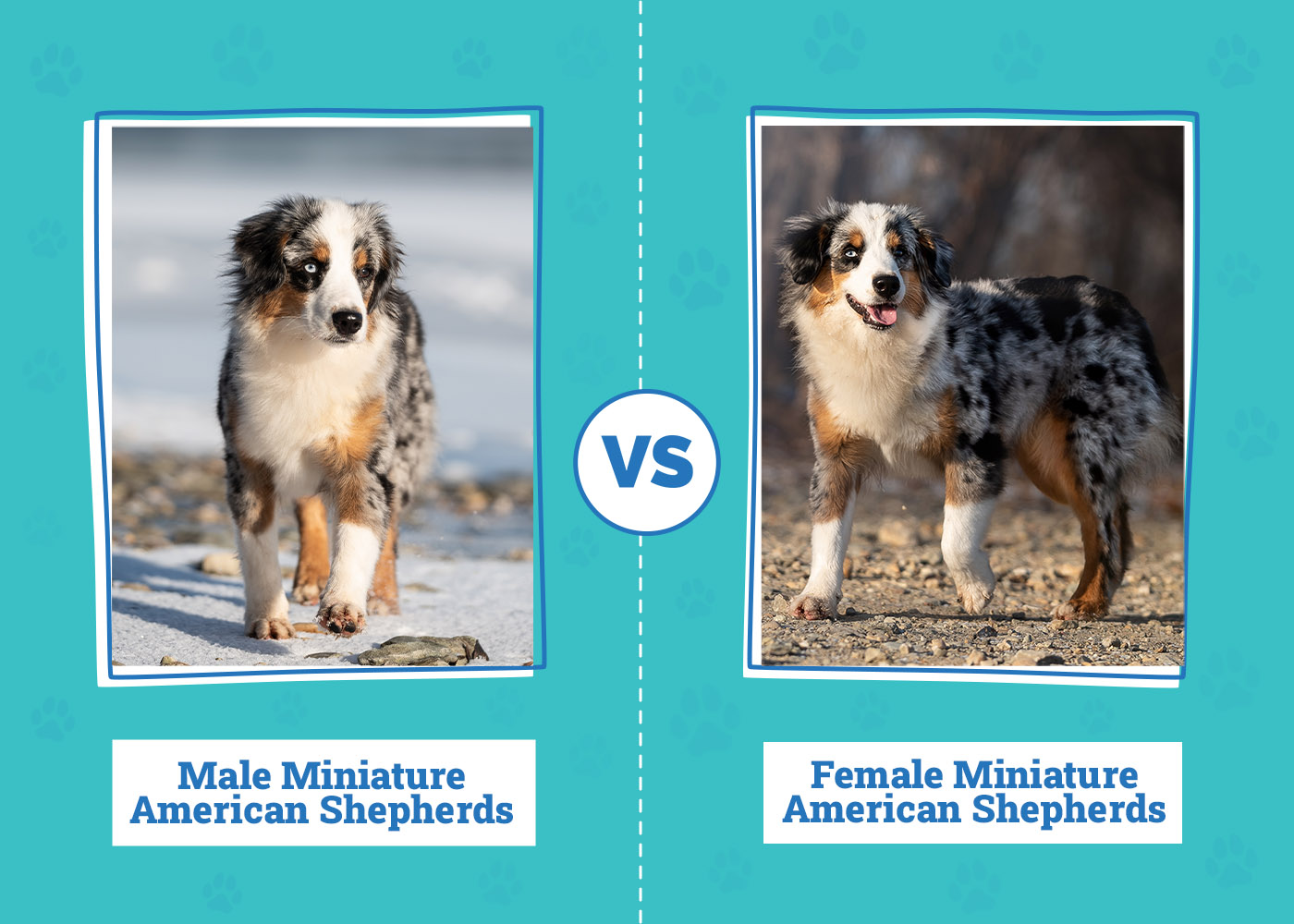
As a veterinarian and lifelong dog lover, I‘m always excited to help prospective owners find their perfect canine match. If you‘re considering adding a miniature American shepherd to your family, one of the first decisions you‘ll face is whether to choose a male or female. While both sexes share the intelligence, work ethic, and showstopping looks that define this all-American breed, there are some subtle physical and behavioral differences to keep in mind.
Meet the Miniature American Shepherd
First recognized by the AKC in 2015, miniature American shepherds have quickly won hearts with their compact size, keen minds, and endlessly versatile skill sets. Developed by selectively breeding small Australian shepherds, "mini Aussies" are more than just scaled-down versions of their larger cousins.
| Mini American Shepherd | Australian Shepherd | |
|---|---|---|
| Height | 13-18 inches | 18-23 inches |
| Weight | 20-40 pounds | 40-65 pounds |
| Personality | Sensitive, devoted | Bold, independent |
| Energy Level | High | High |
| Trainability | Very high | High |
| Ideal Home | Active companion | Working/active companion |
While both breeds need plenty of exercise and stimulation, miniature American shepherds are better adapted to city and apartment living than Australian shepherds. Their softer, more handler-focused personalities also tend to make them a better fit for hobby homes and families looking for an affectionate, trainable companion.
Physical Differences Between Male and Female Minis
At first glance, male and female miniature American shepherds look very similar. Both sexes boast the same striking coat colors and patterns, from black tri to blue merle to red and everything in between. But look closer and you‘ll notice some subtle size and build differences:
-
Size: Males are usually larger, standing 14-18 inches at the shoulder and weighing 30-40 pounds on average. Females tend to be more petite at 13-17 inches and 20-35 pounds.
-
Bone structure: Males are typically more heavy-boned and muscular than females, with blockier heads and thicker necks. Females have a more refined, elegant build.
-
Coat: Both sexes have a double coat with a thick, weather-resistant topcoat and soft undercoat. But males often have a plusher, more luxurious coat and fuller "mane" around the neck and chest. Females may have a slightly shorter, sleeker coat.
Of course, these are generalizations and there‘s plenty of individual variation. I‘ve met female minis who outweigh their brothers and males with dainty, almost feminine features. Observing the parents and littermates is the best way to predict how a puppy may turn out.
Temperament and Personality Differences
Ask a group of mini American shepherd owners about the biggest difference between males and females and you‘ll hear one word come up over and over: goofball. Male minis have a well-earned reputation as the class clowns of the dog world, always ready with a silly face or play bow to get a laugh out of their humans.
As one owner put it, "Living with a male mini is like having a permanent toddler. They never really grow up, always wanting to play and be the center of attention. But that‘s part of their charm – they keep you young at heart."
Females, on the other hand, often have a more serious, mature demeanor. They tend to be more focused and task-oriented than males, with a strong desire to please and an uncanny ability to anticipate their owners‘ needs.
Another experienced owner described her female mini as "my little shadow, always watching and ready to spring into action at the slightest cue. She‘s not as outwardly affectionate as my male, but I know she‘d walk through fire for me."
This doesn‘t mean female minis are all work and no play – they still have a mischievous streak and love a good game of fetch or tug. But they may have a better "off switch" than males, content to cuddle up for a nap after a mentally stimulating training session or hike.
Both sexes tend to be good with respectful children and other dogs when properly socialized. But males may be more tolerant of clumsy toddler affection and playful doggy overtures, while females are more likely to step in and "babysit" or herd unruly charges.
Training and Exercise Needs
With their keen intelligence and eagerness to please, both male and female miniature American shepherds excel at obedience, agility, and trick training. But there are some differences in learning style and focus to consider:
-
Motivation: Males are often more food and play motivated than females, making them easier to train with positive reinforcement like treats and tug games. Females may be more praise and task motivated, thriving on verbal encouragement and a sense of partnership with their handler.
-
Focus: Females tend to be less distractible and more zeroed-in on their handler than males, especially when they sense an important job to do. Males are more likely to have an "ooh, squirrel!" moment and take a little longer to mature and settle into training.
-
Stubbornness: Both sexes can have a stubborn streak, but it may show up in different ways. Males are more likely to engage in selective hearing when something else catches their interest, while females may dig in their heels if they think they know a better way to do something.
As for exercise, both male and female minis need lots of it – at least an hour of vigorous activity like running, hiking, or fetch every day. They also thrive on mental stimulation like puzzle toys, nose work, and trick training.
While males may have slightly higher overall energy levels, the difference is negligible for most owners. The key is providing consistent outlets for both sexes to burn off steam and use their big brains, lest they find their own entertainment in the form of destructive chewing or nuisance barking.
Health Concerns for Male and Female Minis
Despite their small size, miniature American shepherds are generally robust and healthy dogs with an average lifespan of 12-15 years. But like all breeds, they can be prone to certain genetic health issues. Some of these conditions appear to affect one sex more than the other:
| Condition | Affected Sex | Prevalence |
|---|---|---|
| Hip dysplasia | Equal | 8.2% |
| Patellar luxation | Equal | 4.1% |
| Cataracts | Equal | 3.7% |
| Multi-drug sensitivity (MDR1) | Equal | 2.5% |
| Epilepsy | Males | 1.9% |
| Cryptorchidism | Males | 1.5% |
| Urinary incontinence | Spayed females | 1.2% |
| Pyometra | Intact females | 0.8% |
| Mammary cancer | Unspayed females | 0.5% |
*Data from the Orthopedic Foundation for Animals (OFA) and American Miniature Shepherd Club (AMSC)
The best way to stack the deck in favor of a healthy pup is to choose a responsible breeder who health tests their stock and provides a written contract. But even with careful selection, accidents and illnesses can happen. Scheduling regular vet visits and investing in pet insurance can help catch and treat any issues early.
Spay and Neuter Considerations
Whether and when to spay or neuter is a personal decision that every mini owner must make in consultation with their veterinarian. But research increasingly suggests that waiting until a dog has finished growing, around 1-2 years old, may have health benefits for both sexes.
Studies have shown that dogs spayed or neutered before puberty have a higher risk of certain cancers like lymphoma and mast cell tumors, as well as orthopedic issues like hip dysplasia and cruciate ligament tears. This may be due to the role that sex hormones play in bone and joint development.
For female minis, some experts now recommend "ovary-sparing spay" procedures that remove the uterus but leave the ovaries intact. This approach lowers the risk of pyometra and unwanted litters while preserving normal hormone function.
Delaying neuter for male minis may reduce the risk of certain cancers and joint problems, but it also means dealing with testosterone-fueled behaviors like marking, roaming, and humping for longer. An experienced, dedicated owner may be able to manage these issues with training and supervision until the time is right.
Ultimately, the decision of when (or if) to spay/neuter depends on an individual dog‘s health, temperament, and lifestyle. Frank conversations with your breeder and vet can help you make the best choice for your furry friend.
Which Sex is Right for You?
Now that we‘ve covered the key differences between male and female miniature American shepherds, you may be wondering which sex is the best fit for your home and lifestyle. Of course, every dog is an individual and there are plenty of exceptions to these broad generalizations. But here are some factors to consider:
-
Energy level: If you‘re looking for a high-octane hiking or agility partner, a male mini may be your perfect match. Females can be every bit as energetic and athletic, but may have an easier time settling down at home.
-
Training: If you‘re new to dog training or prefer a softer, more sensitive partner, a female mini may be more your speed. Males can be brilliant students, but may need a little extra patience and humor to stay on track.
-
Affection: If you can‘t get enough of slobbery kisses and 40-pound lap dogs, a male mini will be happy to oblige. Females show their love in more subtle ways, and may be less likely to bowl you over with physical affection.
-
Other pets: If you have a mellow older dog or skittish cats, a female mini‘s maturity and focus may be a better fit than a rambunctious male pup. But a well-socialized male can also learn to be a gentle playmate and protector.
-
Children: Both sexes tend to be good with kids when raised together, but males may have an edge in the toddler-wrestling department. Females often excel at giving older kids a sense of responsibility and partnership.
At the end of the day, the most important factors in choosing a male or female mini are your individual preferences and the temperament of the breeder‘s parent dogs. Meeting the pups in person and observing their interactions is the best way to find your perfect match.
With an open mind and heart, you may just find that the right dog chooses you – boy or girl. As long as you provide plenty of love, exercise, training, and veterinary care, your mini American shepherd will be a devoted best friend for life.