
Pitbull vs Great Dane: The Differences (With Pictures)
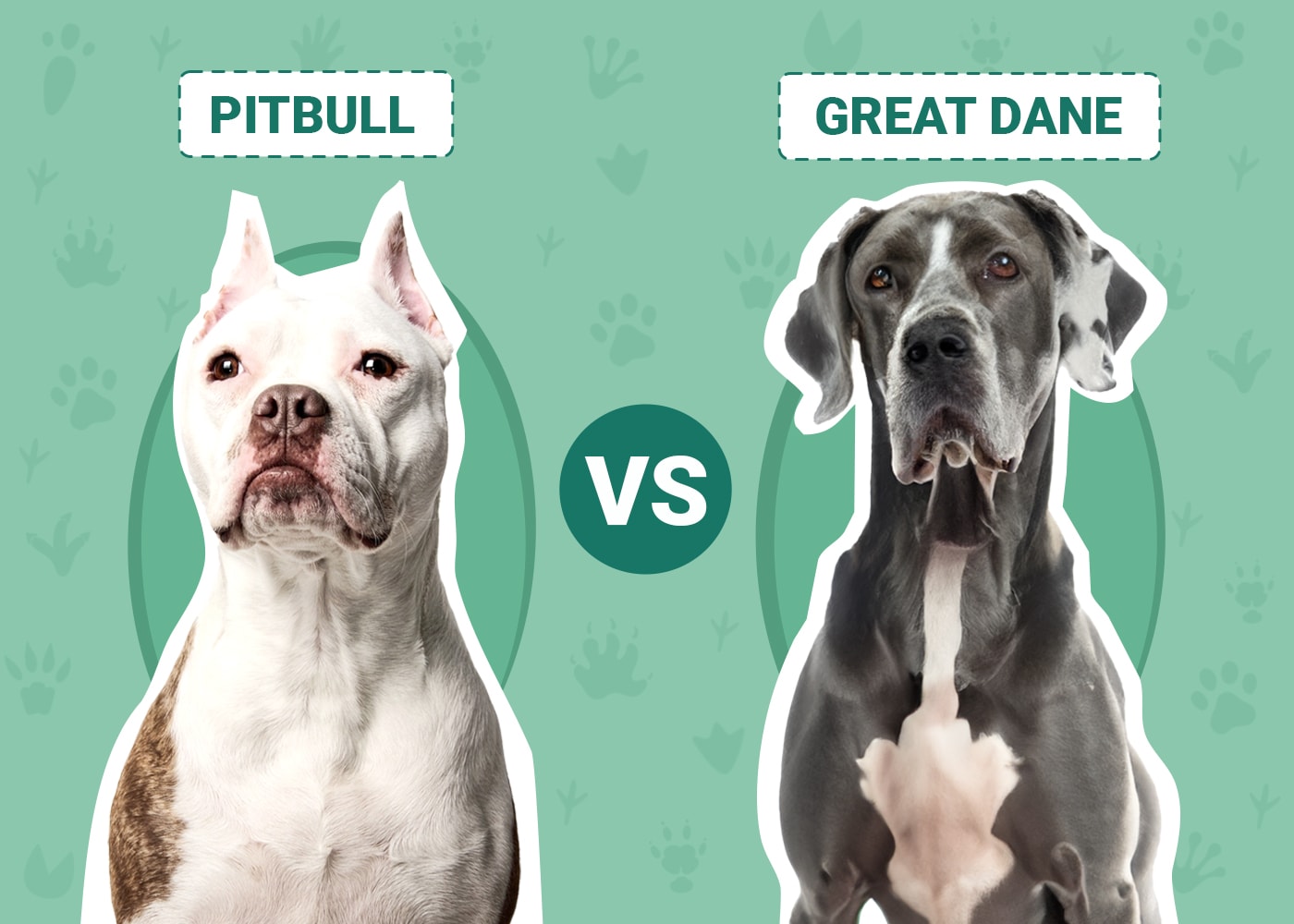
Choosing the right dog breed is one of the most important decisions you‘ll make as a prospective pet owner. If you‘ve narrowed down your options to the American Pitbull Terrier and the Great Dane, congratulations – you clearly have a taste for larger-than-life canine companions! But while these two breeds may both be on the big side, they have some crucial differences that are important to understand before you make your choice. In this in-depth guide, we‘ll take a close look at Pitbulls vs Great Danes across key aspects like physical characteristics, temperament, training, health, and more. By the end, you‘ll have a clear idea of which breed is the best fit for your lifestyle and home. Let‘s dive in!
Pitbull vs Great Dane: Physical Differences
The first distinction you‘ll notice between Pitbulls and Great Danes is their size. While Pitbulls are considered a medium-large breed, Great Danes are truly enormous. Here‘s how they stack up:
Pitbull:
• Height – 17 to 21 inches
• Weight – 30 to 65 pounds
Great Dane:
• Height – 28 to 32 inches (males), 28 to 30 inches (females)
• Weight – 140 to 175 pounds (males), 110 to 140 pounds (females)
As you can see, the average Great Dane is more than twice as tall and heavy as the average Pitbull. In fact, Great Danes are officially the tallest dog breed in the world according to Guinness World Records. The current record holder is Zeus, an Ohio Great Dane measuring an astounding 44 inches from foot to withers.
Beyond sheer mass, Pitbulls and Great Danes differ in their proportions and features as well. Pitbulls have extremely muscular, athletic frames with broad chests and powerful legs. Their heads are large and blocky with wide jaws. Uncropped Pitbulls have small, folded ears and medium-length tails that taper to a point.
Great Danes, in contrast, have lean, square-shaped heads atop long, thick necks leading to deep chests and slim waists. Their paws are compact and cat-like. Uncropped Great Dane ears are medium-sized and folded while their tails are long and tapered. Despite their imposing height, Great Danes have a regal, elegant stance.
Both breeds have short, dense coats that shed moderately and require minimal grooming. Pitbulls come in a wider variety of colors including black, white, brindle, fawn, blue, red, and gray. They may also have patterns like spots and patches. Great Danes have a more limited color palette of brindle, fawn, blue, black, or harlequin (white with black patches).
Temperament: The Gentle Giant vs The Loyal Goofball
You‘ve probably heard Pitbulls and Great Danes described respectively as "dangerous" and "gentle giants". But the truth about their personalities is more nuanced. Let‘s look at some key traits:
Pitbulls are famous for their loyalty, attaching intensely to their owners and becoming true "velcro dogs". They crave human companionship and don‘t tolerate being left alone for long periods. Pitbulls also tend to be playful and energetic with a goofy, fun-loving side. They usually get along well with children if socialized early. However, many Pitbulls have a high prey drive and may show aggression towards other animals, especially dogs.
With proper training and socialization from puppyhood, Pitbulls can learn to coexist peacefully with other pets. But they may not be a great choice for first-time dog owners or households with small furry animals. Pitbulls also have a strong guarding instinct and may be suspicious of strangers without careful socialization.
Great Danes, on the other hand, are often thought of as "gentle giants" – and for good reason. They tend to be calm, patient, and mild-mannered, getting along well with kids, strangers, and other animals. Great Danes are also renowned couch potatoes, preferring to lounge around with their humans rather than roughhouse or chase.
However, like Pitbulls, Great Danes do have protective instincts and may be wary of unfamiliar people or dogs. Males in particular can show same-sex aggression if not neutered. And while Great Danes aren‘t as clingy as Pitbulls, they still thrive on human interaction and may become anxious or destructive if isolated too much.
Both breeds have impressive intelligence, scoring above average on canine IQ tests measuring skills like memory, obedience, and problem-solving. In a study by neuropsychologist Stanley Coren, Pitbulls and Great Danes tied in 48th place out of 138 breeds assessed. However, Pitbulls may be slightly more eager to please and responsive to rewards while Great Danes can be a bit more strong-willed.
Training and Exercise Needs
Given their strength and smarts, both Pitbulls and Great Danes require consistent training and socialization from an early age. Positive reinforcement methods work best as these sensitive breeds may shut down with harsh corrections. Short, frequent sessions are ideal to hold their attention.
Pitbulls especially need a firm hand to curb their natural stubbornness and establish clear boundaries. Untrained Pitbulls may exhibit undesirable behaviors like pulling on leash, jumping up on people, or resource guarding. But with patient, reward-based training, they can excel at obedience and even dog sports like agility and weight pulling.
Great Danes are generally easier to train thanks to their laidback dispositions and people-pleasing tendencies. They typically pick up basic commands like sit, stay, and down with ease. However, it‘s important to start leash training early before they reach their full size and strength. A full-grown Great Dane can easily overpower a small human if not taught polite leash manners!
Housebreaking is another crucial aspect of training for these big breeds. Both can be slow to pick up potty skills, but Pitbulls are usually a bit quicker on the uptake than Great Danes, who may not have full bladder control until 6 months or later. Crate training can be very helpful in teaching house manners to either breed.
When it comes to exercise, Pitbulls definitely have the edge in energy and endurance. They require at least an hour of vigorous physical activity every day, preferably broken up into multiple sessions. Brisk walks, jogging, swimming, frisbee, and tug are all great ways to keep Pitbulls fit. Puzzle toys and games are also important to engage their busy brains.
If not given enough exercise and mental stimulation, Pitbulls may become hyperactive, destructive, and difficult to handle. A tired Pitbull is a good Pitbull! Great Danes, in contrast, are more like sprinters than marathon runners. They should get 30-60 minutes of moderate activity per day, but nothing too strenuous, especially as puppies when their bones and joints are still developing. Adult Great Danes enjoy long sniffy walks, trotting, and romping but will tire quicker than Pitbulls.
It‘s crucial not to overexercise Great Danes as their large frames are prone to orthopedic issues like hip dysplasia. Avoid letting them bound up and down stairs or jump on/off furniture too much.
Health and Lifespan
As with many purebred dogs, both Pitbulls and Great Danes are predisposed to certain health problems. For Pitbulls, the most pressing concerns are:
• Hip dysplasia – abnormal formation of hip joint, causing pain and lameness
• Heart disease – valve malformations, rhythm irregularities, enlarged heart
• Thyroid disease – over- or under-active thyroid gland
• Skin problems – allergies, demodectic mange, zinc-responsive dermatosis
• Eye problems – cataracts, progressive retinal atrophy
Responsible Pitbull breeders will test breeding stock for hip, heart, thyroid, and eye diseases. When buying a Pitbull puppy, be sure to ask for proof of health screenings in both parents.
Pitbulls also have some of the highest rates of canine cancer, especially bone cancer (osteosarcoma). Studies by the American Kennel Club Canine Health Foundation have identified genetic mutations in Pitbulls that increase their osteosarcoma risk. Keeping Pitbulls lean, feeding a high-quality diet, and providing plenty of exercise can help mitigate cancer risk.
With good care, the average lifespan for Pitbulls is 12-14 years. Some may live well into their teens.
Great Danes, sadly, are one of the shortest-lived dog breeds with an average lifespan of only 7-10 years. They are prone to many of the same health problems as Pitbulls, plus some unique issues related to their size:
• Bloat (gastric dilatation volvulus) – stomach twists and fills with gas, cutting off blood flow
• Cardiomyopathy – heart muscle weakens and fails to pump blood effectively
• Osteosarcoma
• Hypothyroidism
• Hip and elbow dysplasia
• Wobbler syndrome – malformation of cervical vertebrae causing neck pain and neurologic issues
• Entropion – inward-rolling eyelids that irritate the cornea
Bloat is the number one killer of Great Danes, affecting up to 40% of the breed. Symptoms come on suddenly and can be fatal within hours if not treated with emergency surgery. Preventing bloat involves feeding smaller, frequent meals, avoiding exercise right after eating, and in some cases, prophylactic gastropexy surgery to tack the stomach in place.
Advances in genetic testing have allowed some of these problems to be reduced through selective breeding. The Great Dane Club of America has a robust health testing program and maintains a database of pedigrees for breeders to make informed mating choices.
Still, all Great Danes (even those from health-tested lines) should be monitored closely for signs of bloat, heart failure, and bone cancer. Having pet insurance and/or a dedicated savings account for vet emergencies is a must for Great Dane owners.
The Pitbull Stigma and BSL
No discussion of Pitbulls would be complete without addressing the controversial topic of breed stereotypes and legislation. For decades, Pitbulls have been portrayed in the media as inherently vicious and aggressive, largely due to their historical association with dogfighting.
High-profile incidents of Pitbulls attacking humans have only reinforced this fearsome reputation in the public consciousness. According to DogsBite.org, a national dog bite victims‘ group, Pitbulls and their mixes were responsible for 66% of fatal dog attacks in the US between 2005 and 2017 despite making up only about 6% of the pet dog population.
In response to concerns about Pitbull aggression, many jurisdictions have enacted breed-specific legislation (BSL) either banning or severely restricting ownership of Pitbulls and similar breeds. A 2019 estimate by the Animal Legal and Historical Center found over 900 US cities with some form of BSL on the books.
Common restrictions include mandatory spay/neuter, muzzling in public, liability insurance, secure enclosures, and microchipping. The ultimate goal of these laws is to eliminate the Pitbull population through attrition.
However, BSL remains highly contentious among animal welfare advocates who argue such policies are misguided and ineffective. Pitbull proponents say aggression is influenced more by training, socialization, and environment than genetics. They point out that breed identification in dog bite cases is often inaccurate and that regulated Pitbulls frequently end up euthanized in shelters.
Recent research has lent some support to these claims. In a 2019 literature review by Companion Animal Psychology, the majority of studies found no clear link between breed and aggression when controlling for other factors. And according to the ASPCA, jurisdictions that have repealed BSL have not seen subsequent increases in dog bites.
Still, it‘s important for potential Pitbull owners to understand that BSL may impact their rights and responsibilities as a dog parent, even if they believe such laws are unjustified. If you live in an area with BSL, be sure to research the specific rules and restrictions that apply to you. Failure to comply could result in steep fines and even having your dog seized.
No such laws or stigma exist for Great Danes, although they too can exhibit aggression if not properly socialized. In fact, the "gentle giant" stereotype may lead some owners to underestimate the importance of training and boundaries with this breed.
The Bottom Line
Pitbulls and Great Danes are both affectionate, loyal, and intelligent breeds that can make wonderful companions for the right households. However, they have some key differences in size, energy level, trainability, and lifespan that prospective owners should weigh carefully.
Pitbulls may be a better fit for experienced owners seeking an active, affectionate sidekick who will keep them on their toes. Pitbull ownership also requires a commitment to ongoing socialization and training, as well as an understanding of potential legal liabilities in BSL jurisdictions.
Great Danes are generally better suited for laid-back households seeking a calm, gentle presence to share the couch with. But their shorter lifespans and higher risk of fatal health problems like bloat mean potential owners should be prepared to provide attentive vet care and have a financial cushion for emergencies.
Whichever breed you‘re leaning towards, be sure to do your research, find a responsible breeder, and start training and socialization the day you bring your new pup home. With a solid foundation of positive experiences and clear guidance, both Pitbulls and Great Danes can grow into wonderfully devoted four-legged family members.


)