Saint Bernard vs Bernese Mountain Dog: A Comprehensive Comparison
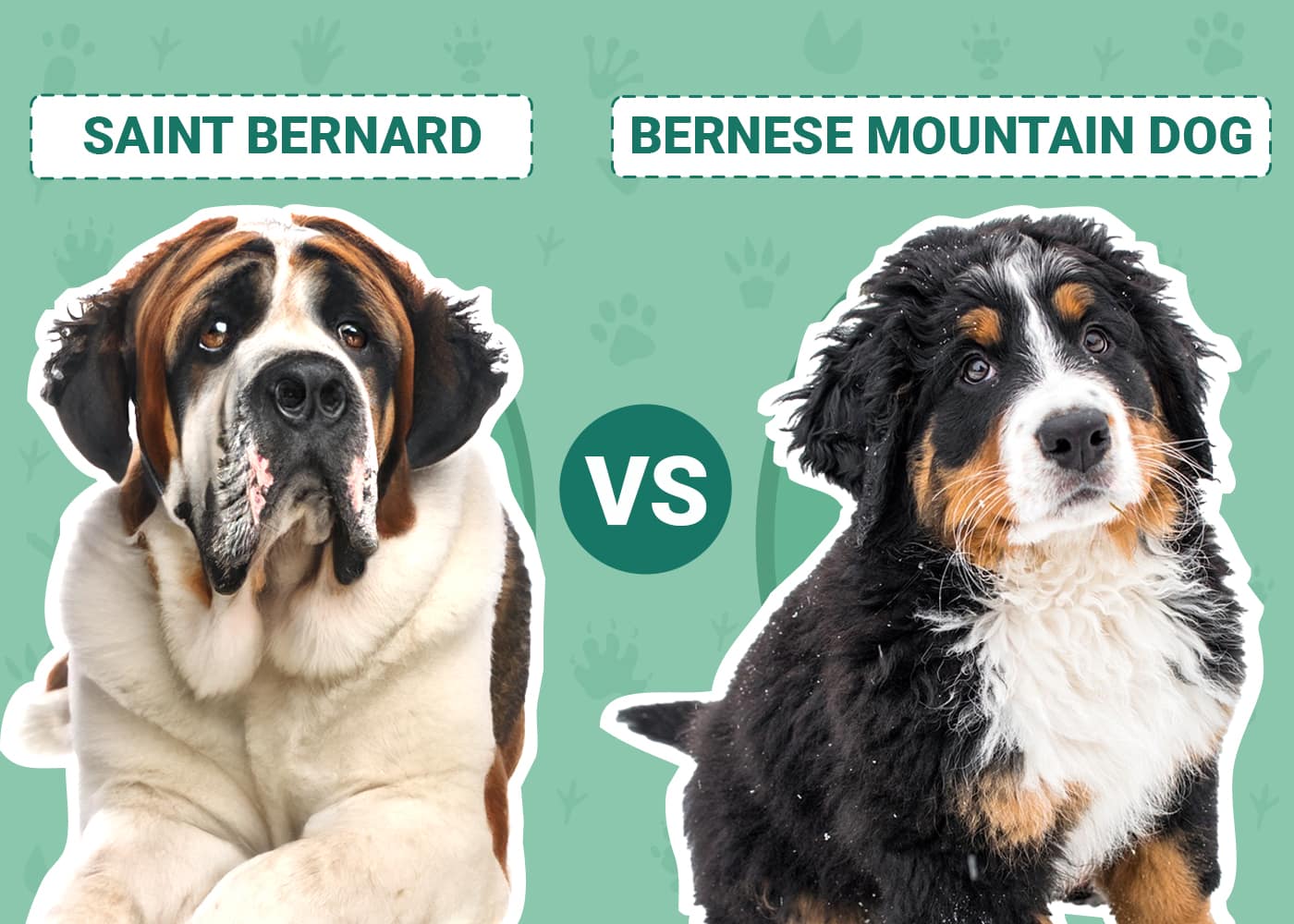
If you‘re considering adding a large, lovable working dog to your family, you may be wondering about the differences between the Saint Bernard and Bernese Mountain Dog breeds. While both of these gentle giants can make wonderful companions, they have some notable distinctions in appearance, temperament, health, and care needs. In this in-depth guide, we‘ll explore all the key factors to help you determine which breed may be the best fit for your lifestyle.
Origins and History
Both the Saint Bernard and Bernese Mountain Dog were developed in Switzerland as working dogs, but for quite different original purposes.
The Saint Bernard has its roots in the Swiss Alps and northern Italy, where the dogs were bred by monks as early as the 1660s. For centuries, the Saint Bernard served as a rescue dog, helping the monks locate travelers lost in the snow and lead them to safety. The thick coat and large size enabled the dogs to traverse deep snow and withstand frigid temperatures. The breed gained worldwide fame and recognition through tales of heroic rescues.
In contrast, the Bernese Mountain Dog‘s ancestors were general purpose farm dogs in the region around Bern, Switzerland. They were used to herd cattle, pull carts loaded with goods, and be watchful guardians. It wasn‘t until 1907 that the first breed club was formed, at which time they were given the name Bernese Mountain Dog. While still a capable working breed, today the Berner is primarily a beloved family companion.
Physical Characteristics
The Saint Bernard and Bernese Mountain Dog are both large breeds, but the Saint Bernard is typically bigger and heavier. A male Saint Bernard stands 28-30 inches tall at the shoulder and weighs 140-180 pounds, while females are 26-28 inches and 120-140 pounds. The Bernese Mountain Dog is 25-27.5 inches and 80-115 pounds for males, and 23-26 inches and 70-95 pounds for females.
The two breeds have some similarities in their sturdy, muscular build, but the Saint Bernard has a more powerful appearance with a massive head and a body that is slightly longer than tall. The Bernese Mountain Dog is slightly less substantial and has a body that is square or just slightly longer than tall.
Both breeds have thick double coats that provide protection from cold weather. The Saint Bernard‘s coat can be either short and dense or medium-length and wavy, while the Bernese Mountain Dog‘s coat is always moderately long, straight or slightly wavy. The Berner‘s coat is also thicker and fluffier.
The Saint Bernard‘s coat comes in two standard colors – red and white or brindle and white. The Bernese Mountain Dog is tricolor – primarily black with white chest, muzzle, and blaze up the forehead, and distinctive rust markings above the eyes, on the cheeks, chest, and legs.
Temperament and Personality
The Saint Bernard and Bernese Mountain Dog are both known for being gentle, patient, and tolerant dogs who adore their families. However, there are some nuances to their personalities.
The Saint Bernard is famously calm, easygoing, and somewhat lazy. They‘re content to relax at home all day and can adapt well to apartment living if given regular walks. While not overly playful, they are affectionate with family and very patient with children. They tend to be friendly with everyone and are not particularly good watchdogs.
The Bernese Mountain Dog has moderate energy and a strong desire to be close to their family. They may follow you from room to room and can develop separation anxiety if left alone too much. While gentle and patient with kids, the Berner does better with older children who know how to respectfully interact with dogs. They need a bit more exercise and activity than the Saint but are still usually calm and easygoing in the home.
Overall, the Saint Bernard may be a better fit for an inactive household, while the Bernese Mountain Dog is ideal for a moderately active family, especially one with older kids. Both breeds need plenty of companionship, socialization and should live indoors as part of the family – they are not suited to living outdoors or being left alone for long periods.
Training and Socialization
Early socialization and training are a must for both the Saint Bernard and Bernese Mountain Dog. As large breeds, they must learn good manners, impulse control, and how to greet people appropriately from puppyhood. Enrolling in a puppy socialization class is an excellent way to get started.
The Saint Bernard can be a challenge to train, as the breed is known for being a bit stubborn and self-willed. They respond best to positive reinforcement with plenty of treats and praise. Consistent, patient training is key. The Bernese Mountain Dog tends to be more biddable and eager to please, making training a bit easier. However, some can be sensitive, so a gentle approach is still important.
For both breeds, ongoing training is just as important as early puppy classes. Taking adolescent and adult dogs to group classes helps reinforce good manners and provides mental stimulation.
Exercise Needs
While they may look like gentle giants, both Saint Bernards and Bernese Mountain Dogs require a fair amount of daily exercise to stay physically and mentally healthy. The Bernese Mountain Dog, with their herding and carting background, tends to have higher exercise needs overall.
For the Saint Bernard, a few 30 minute walks per day plus some playtime is usually sufficient. They enjoy hikes and outings but may get tired and need breaks. The Bernese Mountain Dog thrives with more activity – ideally an hour or more of walking/jogging/hiking plus plenty of playtime. High-impact activities like jumping and agility are not recommended for either breed, as their large size puts them at risk of joint injuries.
In addition to physical exercise, both breeds benefit from mental stimulation in the form of interactive toys, puzzle feeders, scent games, and ongoing training. This helps prevent boredom and destructive behaviors.
Grooming Requirements
With their thick double coats, both the Saint Bernard and Bernese Mountain Dog require a fair amount of grooming to keep their coats and skin healthy. The Saint Bernard‘s shorter coat is a bit easier to maintain, but they shed heavily and may drool excessively.
Brushing a few times a week and the occasional bath is usually sufficient for the Saint Bernard. During seasonal sheds, daily brushing may be needed to keep loose hair under control. Regular checks for any skin irritation or hot spots are also important, especially in the skin folds on the face and neck.
The Bernese Mountain Dog‘s longer, thicker coat requires more frequent brushing – ideally a few times per week, plus extra brushing during the heavier seasonal sheds. Staying on top of tangles and mats is important to prevent skin issues. Regular baths, nail trims, and ear cleanings are also key.
Health and Lifespan
As large breeds, both the Saint Bernard and Bernese Mountain Dog are prone to certain health issues and have relatively short lifespans compared to smaller dogs. The average lifespan for a Saint Bernard is 8-10 years, while the Bernese Mountain Dog tends to live 7-10 years.
Some health issues that can affect both breeds include hip and elbow dysplasia, eye problems like entropion and ectropion, heart conditions, hypothyroidism, and bloat. The Saint Bernard may be especially prone to heat exhaustion, while the Bernese Mountain Dog has higher rates of cancer, including histiocytic sarcoma and lymphoma.
To help a Saint Bernard or Bernese Mountain Dog live the healthiest life possible, it‘s important to work with a reputable breeder who does extensive health testing on their breeding dogs. Staying on top of preventive care like vaccines, parasite control, and regular vet check-ups is also key. Proper diet and exercise throughout the dog‘s life can help prevent obesity which can worsen joint issues.
Fun Facts
The Saint Bernard‘s reputation as a rescue dog was enhanced by the legend of Barry, a dog who saved the lives of 40-100 people in the early 1800s.
A Bernese Mountain Dog named Brod became an international sensation in 2016 when his human had him "testify" in a British courtroom in a custody dispute. The judge allowed Brod in the courtroom so he could determine which person the dog preferred.
The Saint Bernard was popularized in the Beethoven film franchise of the 1990s-2000s about a lovable but destructive Saint Bernard. However, the dogs who played him were actually Saint Bernard/Great Dane mixes to safeguard against joint issues!
Owners of Bernese Mountain Dogs may want to check out the Bernese Mountain Dog Club of America‘s Berner University, which offers educational resources on training, health, grooming and more to help Berner owners be the best guardians possible.
Bottom Line
The Saint Bernard and Bernese Mountain Dog are two of the most beloved giant breeds in the world. Both can make excellent family companions for the right home. The key is being honest about what energy level and grooming needs are the best fit.
Very laid-back owners may appreciate the calm, easygoing nature of the Saint Bernard, while moderately active households may find the Bernese Mountain Dog‘s energy level is a better fit. Those who don‘t mind drool and want a somewhat lower-maintenance coat will likely do better with a Saint, while those willing to take on more brushing may love the gorgeous tri-color coat of the Berner. But both require dedicated socialization, training, and plenty of attention to thrive.
Ultimately, the choice between a Saint Bernard and Bernese Mountain Dog comes down to personal preference and lifestyle. But those who open their heart and home to either breed will be rewarded with a loyal, loving companion for many years to come.