The Bloodhound‘s Nose: A Marvel of Nature

As a dog lover and veterinary expert, I never cease to be amazed by the incredible abilities of our canine companions. And when it comes to the sense of smell, few breeds can match the awe-inspiring prowess of the Bloodhound. With their large, drooping ears, wrinkled skin, and powerful noses, these gentle giants have been used for centuries to track everything from lost people to fugitives on the run. In this blog post, we‘ll take a deep dive into the anatomy, history, and scenting feats of the Bloodhound, and explore what makes their noses truly a marvel of nature.
Anatomy of a Super Sniffer
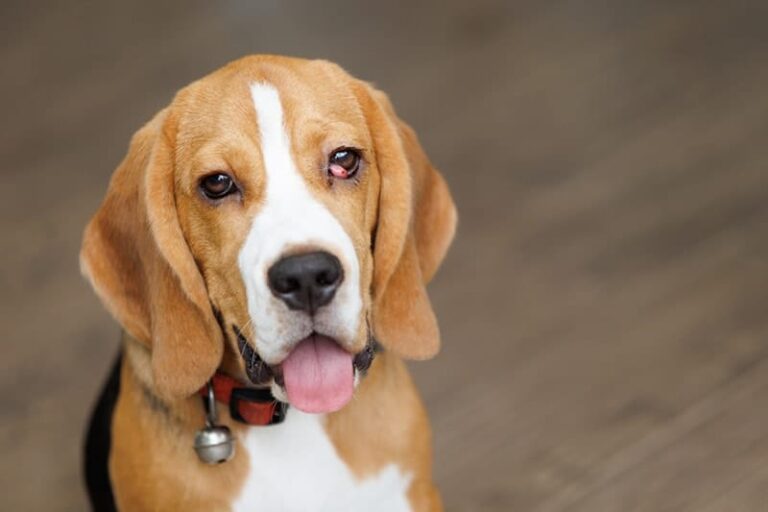
To understand just how impressive a Bloodhound‘s sense of smell really is, let‘s start with some basic anatomy. Like all dogs, Bloodhounds have a special organ in their noses called the olfactory epithelium, which is packed with scent receptors. But while the average dog has around 150-300 million of these receptors, Bloodhounds boast a whopping 300 million or more. That‘s about 40 times more than a human nose! In fact, the Bloodhound‘s olfactory area is among the largest of all dog breeds, surpassing even other scent hounds like Basset Hounds and Beagles.
But it‘s not just the number of scent receptors that sets Bloodhounds apart. These dogs also have some unique physical features that help them to maximize their scenting abilities. For example, those long, droopy ears aren‘t just for show – they actually help to kick up scent particles from the ground and funnel them towards the nose. Similarly, a Bloodhound‘s wrinkled skin helps to trap scent molecules close to the nose, allowing the dog to create a detailed "scent profile" of its target.
Another key component of the Bloodhound‘s scenting abilities is its vomeronasal organ, also known as the Jacobson‘s organ. This special sensory organ, located in the roof of the mouth, allows the dog to detect pheromones and other chemical signals that are undetectable to the human nose. When a Bloodhound picks up a particularly interesting scent, you may see them open their mouth and curl their lips back, exposing their teeth in a gesture known as the "flehmen response." This allows the scent molecules to reach the vomeronasal organ more easily, giving the dog even more information about their target.
| Breed | Number of Scent Receptors |
|---|---|
| Bloodhound | 300 million |
| German Shepherd | 225 million |
| Beagle | 225 million |
| Labrador | 220 million |
| Human | 5-6 million |
The Nose Knows: Bloodhound Scenting Feats
So just how far can a Bloodhound follow a scent trail? According to some experts, these dogs can track a scent for over 130 miles and can even detect odors that are over 300 hours old. In one famous case from 1977, a Bloodhound named Nick Carter successfully tracked down a missing person after following a scent trail that was over 300 miles long and 14 days old.
But Nick Carter is far from the only Bloodhound to achieve incredible scenting feats. In 2017, a Bloodhound named Ludivine became an internet sensation after accidentally joining a half-marathon in Alabama and finishing in seventh place, all while following her nose. And in 2019, a Bloodhound named Remi made headlines after helping to locate a missing dementia patient who had wandered away from a care facility in California.
Bloodhounds are also incredibly persistent when it comes to tracking. Once they‘ve locked onto a scent, they‘ll follow it tirelessly until they reach their target or the trail goes cold. This single-minded determination, combined with their highly sensitive noses, makes them invaluable partners for law enforcement and search-and-rescue teams.
According to a 2019 survey by the National Police Bloodhound Association, Bloodhounds are used by over 500 law enforcement agencies across the United States, with an average success rate of 75% in criminal cases. And in search and rescue operations, Bloodhounds have been found to be up to 93% successful in locating missing persons, compared to just 37% for human searchers alone.
From Hunting Hounds to Modern Marvels
The Bloodhound‘s incredible scenting abilities are the result of centuries of selective breeding and development. The breed‘s origins can be traced back to medieval Europe, where they were known as "lymers" and used for hunting deer and wild boar. In the 7th century, the Abbey of St. Hubert in Belgium began breeding these dogs specifically for their tracking abilities, creating the foundation for the modern Bloodhound.
Over time, the Bloodhound‘s reputation as a skilled tracker spread throughout Europe. They were used by aristocrats and royalty for hunting, as well as by law enforcement for tracking down criminals and escaped prisoners. In fact, one of the earliest recorded uses of Bloodhounds for police work was in 1805, when a pack of these dogs was used to track down a gang of thieves in England.
The Bloodhound‘s popularity as a scent tracking dog continued to grow in the 19th and 20th centuries. In the United States, they played a key role in the development of modern police work, with many departments establishing their own Bloodhound units. Today, Bloodhounds are still prized for their scenting abilities and are used by law enforcement agencies, search and rescue teams, and even the military around the world.
The Science of Scent Tracking
But what exactly makes the Bloodhound‘s nose so well-suited for scent tracking? To answer that question, we need to take a closer look at the science behind how dogs perceive and process scent.
When a dog inhales, air flows through the nasal passages and over the olfactory epithelium, where scent molecules bind to receptors and trigger nerve impulses that are sent to the brain for processing. But the Bloodhound‘s nose is uniquely adapted for maximum scent detection. For one thing, the Bloodhound‘s nasal passages are longer and more complex than those of other breeds, allowing for more surface area for scent molecules to bind to receptors.
In addition, the Bloodhound‘s large, pendulous ears and wrinkled skin help to trap and concentrate scent molecules around the nose. This allows the dog to create a more detailed "scent picture" of their target, even in challenging environments like dense forests or urban areas.
But scent tracking isn‘t just about the nose itself. It‘s also about how the dog‘s brain processes and interprets the information it receives. When a Bloodhound is on the trail, they‘re not just following a single scent, but rather a complex mixture of odors that can change over time due to factors like wind, humidity, and temperature.
To navigate this "scent landscape," Bloodhounds rely on a concept known as "scent pooling." As they move along the trail, they‘ll often pause and sniff the ground in a circular motion, creating a "pool" of scent that they can use to determine the direction and strength of the trail. They may also "cast" or zigzag back and forth across the trail to pick up on any changes in the scent picture.
Training and Handling a Bloodhound
Of course, having a powerful nose is only half the battle when it comes to scent tracking. To be truly effective, a Bloodhound needs to be properly trained and handled by a skilled and experienced owner or handler.
Bloodhound training typically begins at a young age, with puppies being exposed to a variety of scents and obstacles to build their confidence and problem-solving skills. As they mature, they‘ll move on to more advanced training in specific scent work disciplines, such as trailing, tracking, or search and rescue.
One key aspect of Bloodhound training is the use of positive reinforcement techniques. Rather than using punishment or force, handlers will typically reward their dogs with treats, praise, or playtime when they successfully complete a task or locate a target. This helps to build a strong bond between dog and handler and keeps the dog motivated and engaged in their work.
But training a Bloodhound isn‘t just about teaching them to follow a scent trail. It‘s also about teaching them to work effectively as part of a team. Bloodhounds need to be able to take direction from their handlers, ignore distractions, and stay focused on the task at hand, even in challenging or stressful situations.
This requires a significant investment of time, energy, and resources on the part of the handler. Bloodhounds are large, strong dogs that require plenty of exercise, mental stimulation, and socialization to thrive. They also have some unique grooming needs, such as regular cleaning and drying of their skin folds and ears to prevent infections and other health issues.
A Nose for the Future
As we‘ve seen, the Bloodhound‘s incredible sense of smell is the result of a complex interplay of anatomy, physiology, and behavior. But what does the future hold for these remarkable dogs and their powerful noses?
One exciting area of research is the use of Bloodhounds and other scent detection dogs in medical diagnosis. Studies have shown that dogs can be trained to detect a variety of diseases and conditions, from cancer to diabetes to COVID-19, simply by sniffing samples of blood, urine, or breath.
While these studies are still in the early stages, they offer a tantalizing glimpse into the potential for dogs to play a greater role in healthcare and disease prevention. Imagine a future where a Bloodhound‘s nose could help to detect cancer in its earliest stages, or where a diabetic alert dog could warn their owner of dangerous changes in blood sugar levels.
But even as we look to the future, it‘s important to remember the rich history and legacy of the Bloodhound breed. For centuries, these dogs have served as loyal companions, skilled hunters, and invaluable partners in law enforcement and search and rescue operations. They have captured the hearts and imaginations of people around the world with their unique appearance, gentle nature, and awe-inspiring scenting abilities.
As a dog lover and veterinary expert, I feel privileged to have the opportunity to work with and learn from these incredible animals. And I hope that by sharing their story and science with others, we can deepen our appreciation and understanding of the Bloodhound‘s remarkable nose and the many ways in which it continues to benefit and enrich our lives.
Conclusion
In conclusion, the Bloodhound‘s sense of smell is truly a marvel of nature, shaped by centuries of evolution and selective breeding. With their powerful noses, unique physical features, and unwavering determination, these dogs have played a vital role in human history and continue to serve as invaluable partners in a wide range of fields and disciplines.
But the Bloodhound‘s story is about more than just their incredible scenting abilities. It‘s also a story of the deep and enduring bond between humans and dogs, and the many ways in which we have learned to work together and support each other over the centuries.
As we look to the future, it‘s clear that the Bloodhound‘s nose will continue to play a vital role in our lives, from solving crimes and saving lives to potentially revolutionizing medical diagnosis and treatment. And as dog lovers and experts, it‘s up to us to continue to study, celebrate, and protect these remarkable animals, and to share their story with the world.
So the next time you see a Bloodhound on the trail, take a moment to marvel at the incredible power and potential of their nose. And remember that behind every successful scent track is a skilled and dedicated handler, a team of hardworking professionals, and a centuries-long legacy of partnership, perseverance, and love.
Sources
-
American Kennel Club. (2021). Bloodhound. Retrieved from https://www.akc.org/dog-breeds/bloodhound/
-
Berns, G. S., Brooks, A. M., & Spivak, M. (2015). Scent of the familiar: An fMRI study of canine brain responses to familiar and unfamiliar human and dog odors. Behavioural Processes, 110, 37-46.
-
Browne, C., Stafford, K., & Fordham, R. (2006). The use of scent-detection dogs. Irish Veterinary Journal, 59(2), 97-104.
-
Furton, K. G., & Myers, L. J. (2001). The scientific foundation and efficacy of the use of canines as chemical detectors for explosives. Talanta, 54(3), 487-500.
-
Gadbois, S., & Reeve, C. (2014). Canine olfaction: Scent, sign, and situation. In A. Horowitz (Ed.), Domestic Dog Cognition and Behavior (pp. 3-29). Springer.
-
Jezierski, T., Adamkiewicz, E., Walczak, M., Sobczyńska, M., Górecka-Bruzda, A., Ensminger, J., & Papet, E. (2014). Efficacy of drug detection by fully-trained police dogs varies by breed, training level, type of drug and search environment. Forensic Science International, 237, 112-118.
-
National Police Bloodhound Association. (2019). Bloodhound Survey Results. Retrieved from https://www.npba.com/bloodhound-survey-results/
-
Oesterhelweg, L., Kröber, S., Rottmann, K., Willhöft, J., Braun, C., Thies, N., … & Gehl, A. (2008). Cadaver dogs–a study on detection of contaminated carpet squares. Forensic Science International, 174(1), 35-39.
-
Settles, G. S. (2005). Sniffers: Fluid-dynamic sampling for olfactory trace detection in nature and homeland security—The 2004 Freeman Scholar Lecture. Journal of Fluids Engineering, 127(2), 189-218.
-
Wasser, S. K., Davenport, B., Ramage, E. R., Hunt, K. E., Parker, M., Clarke, C., & Stenhouse, G. (2004). Scat detection dogs in wildlife research and management: application to grizzly and black bears in the Yellowhead Ecosystem, Alberta, Canada. Canadian Journal of Zoology, 82(3), 475-492.